
- Home
- Distribution Center Roofing
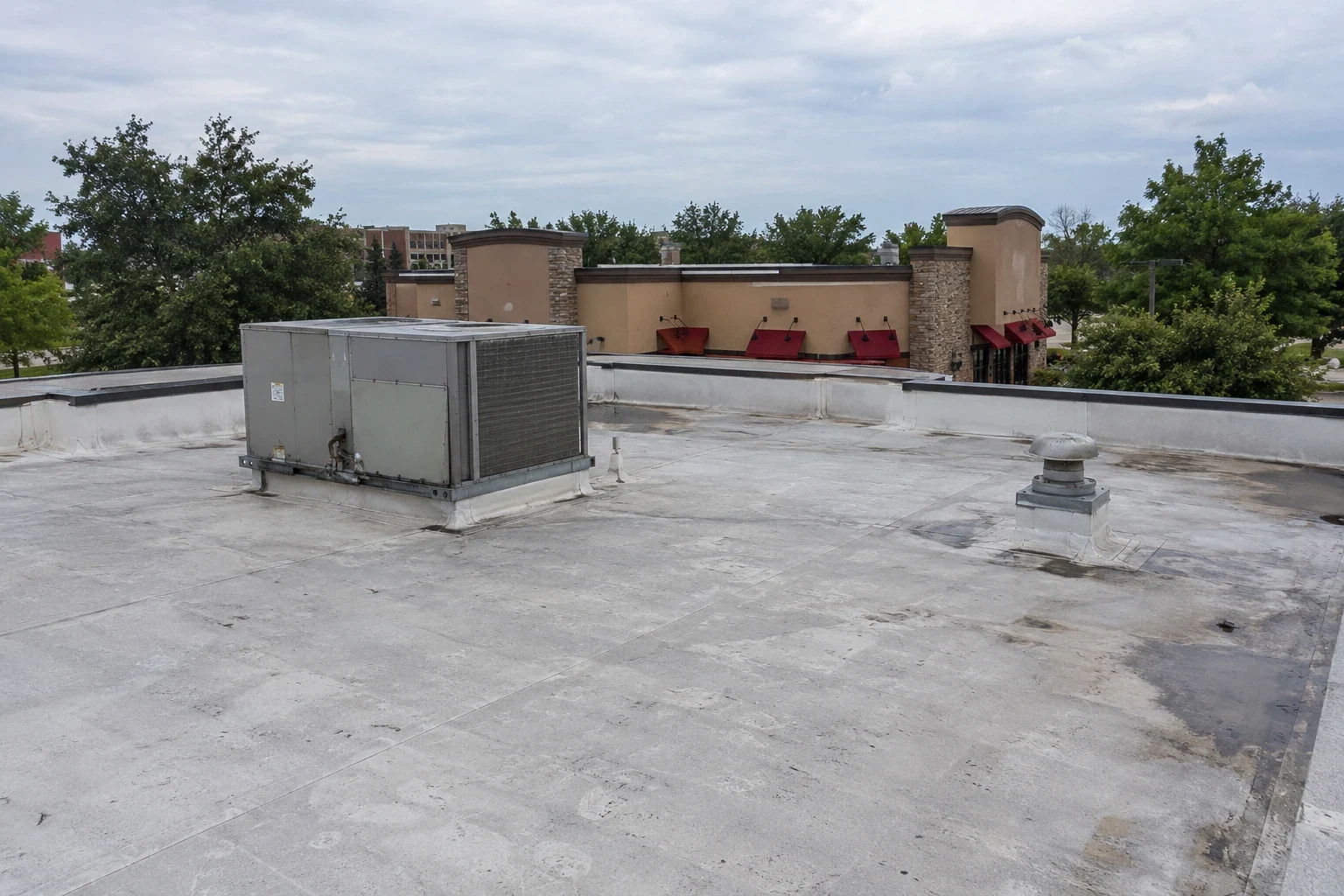
Distribution Center Roofing in South Fulton, GA
A distribution center runs on a clock. Trucks arrive at all hours. Shifts overlap. Conveyors and sortation lines sit under long roof spans. The use sets the first question for a roofer: what cannot stop? The roof zone over the sort floor and over the dock doors gets the closest protection plan. The mechanism that changes the sequence is the shift schedule, because a roof job that ignores it will stall the building.
South Fulton is a southside Atlanta-metro city about fifteen to twenty minutes by drive from Atlanta and Hartsfield-Jackson airport, with a development authority that names logistics and distribution as an existing strength. Those facts frame the market. They do not set the roof assembly of any one building. We read each roof on site, zone by zone, and write down what we find.
A cold-chain operation inside the same shell changes the picture. A cold storage roof adds vapor drive from the warm side and from the cold side, and the insulation takes a beating. When a distribution building houses a cooler or freezer section, that zone is rated apart from the rest.
Roof mechanism: equipment, penetrations and foot traffic
A large fulfillment building often carries many rooftop units, exhaust fans, smoke vents, roof hatches and conduit runs. Each is a penetration and a point of foot traffic. Service crews walk the same paths daily. Over time, those paths wear the membrane and loosen flashing. We count the penetrations by zone and map the service routes.
Walk pads go on the routes. Curbs are checked for movement, and base flashing is probed. Fan housings that vibrate loosen their fasteners, so we tighten what we can and list what needs a trade. Where solar or new equipment is planned, the load and the penetrations are reviewed first, as described for solar-ready roofing.
Fire protection adds roof penetrations too: sprinkler risers, smoke vents and heat-release hatches. Each has a flashing that must stay watertight and operable. We test hatch seals, check vent curbs and note any panel that no longer closes. A hatch that sticks open in a storm is both a leak and a code problem.
Drainage and overflow on wide spans
A wide roof drains to a few points. A clogged drain puts water on the deck, and a deck with heavy equipment already carries a lot. We clear strainers, test flow and check overflow scuppers at every visit. A secondary path must exist at the height the design requires. The record shows each drain before and after clearing.
Ponds are measured for depth and duration after rain. Persistent ponds near equipment suggest settlement. A moved curb opens its flashing next. The repair may include supports as well as the membrane. Photographs are repeated from the same positions at each visit.
Where skylights exist, they tend to age together. Domes yellow, gaskets crack and curbs open at the corners. We list them by position with the date of last service. Replacing them as a group, in a planned phase, avoids answering one failure after another.
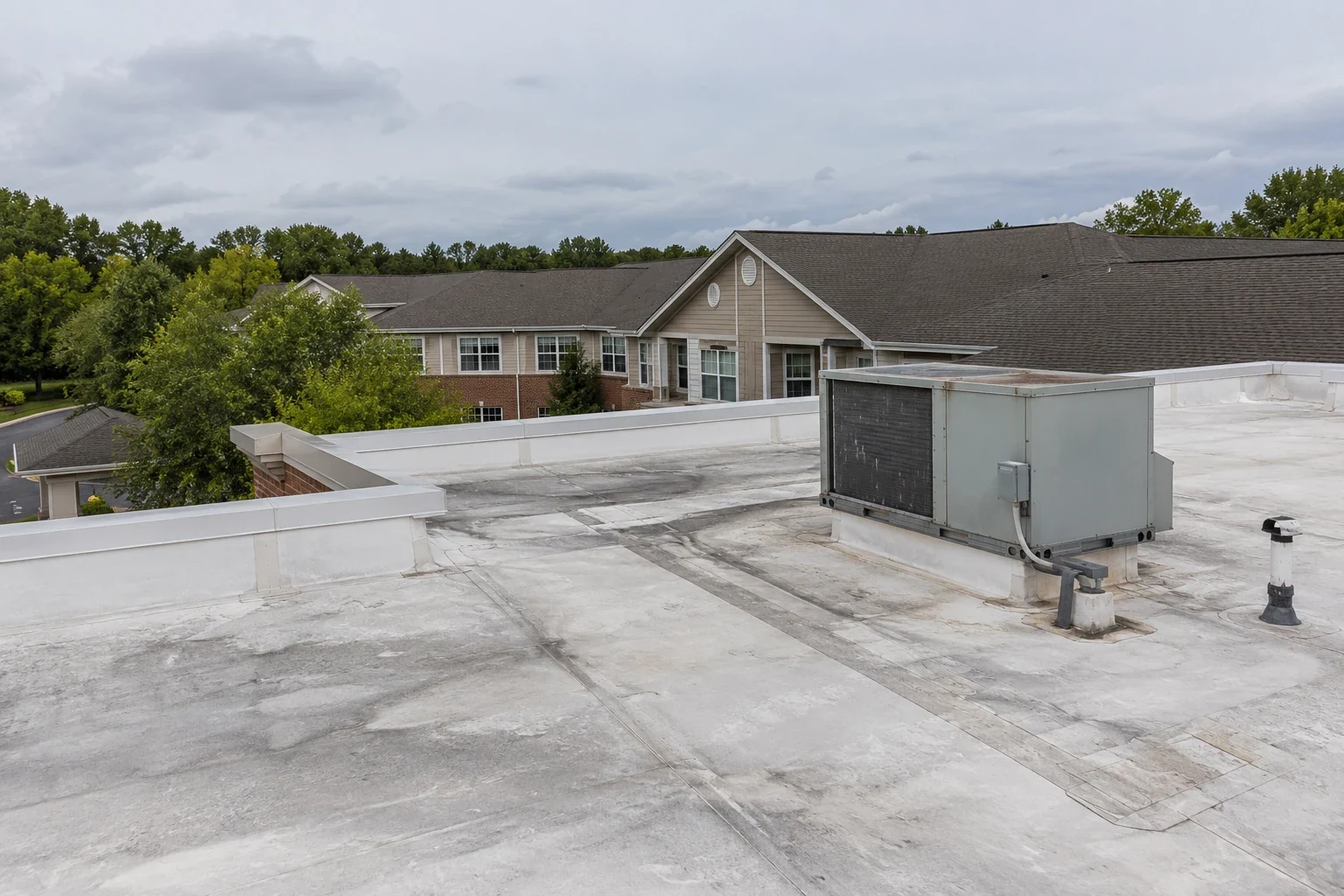
Weather: spring storms and summer heat
The Peachtree City warning area logs damaging thunderstorm winds in every month, averaging 19 days a year with a spring and summer lean. For hail, the weather service puts north and central Georgia at roughly seven large-hail days annually, with April on top. Tornadoes can occur in any month, and March through May hold most of them.
NOAA calls Georgia summers long, hot and humid; Atlanta passes 95 degrees on only about seven days in an ordinary year, but a sort floor adds heat from below. A roof over a hot sort floor adds heat from below. We schedule repairs around the heat of the day, and we check seams and sealants for softening. After any major storm, we walk edges and corners, photograph lifted laps and compare with earlier images.
Roof access in a busy site needs control. Gates, escorts and badging may apply. We record who has the key, how the crew is let in, and what safety orientation the operator requires. Those details go into the schedule so the crew does not stand at a gate on the day.
Scope options and approvals
Local faults take repair. A sound deck with dry board suits a recover or a coating. Wet insulation spread across a zone means that zone is torn off. A moisture survey and test openings decide which. Phased replacement lets a building keep running, with each phase finished watertight before the next opens.
Permits in South Fulton now run under the 2024 IBC with Georgia amendments, in effect since the first of 2026, and the state energy code remains the 2015 IECC with its supplements. The scope lists permit and code questions before the date is set, since long lead times can affect a tight program.
Cost follows area, layers, insulation, penetrations and the phasing the operation allows. Night and weekend work carries premiums that the scope shows as a separate line. Wet insulation and deck repair are unit-priced, and the final cost follows the area measured on the roof, not a guess.
Access and sequencing: shifts and docks
The plan starts with the shift calendar. Lifts stay off dock aprons during truck peaks. Material staging uses a lane that does not block trailers. Noisy work moves to the quietest shift the building can offer. Each phase has its own dry-in limit and close-in point. The access log records every entry by name and time.
The development authority points to I-85, I-285, SR 138 and regional rail as logistics advantages, which is why truck routing into the Fulton Industrial District or along South Fulton Parkway belongs in the roof schedule. A warehouse roof follows a similar method with a lighter equipment count.
A general contractor building a new fulfillment shell can ask us to review the roof at substantial completion. The review checks drains, penetrations and flashings against the specified assembly, and findings go to the installer in a written list while the warranty period is being set. A manufacturing plant shell gets the same review.
Records for operators and owners
At the end the owner receives photographs, the plan showing the repair boundary, test results and product data. An operator who leases the building gets the same file, which helps when a lease assigns roof duties. A condition report updates each season and shows change between visits.
Send the roof plans and the access window
Can roof work happen while the center operates around the clock?
Yes, with a plan built on the shift calendar. Work moves by roof zone, lifts stay off dock aprons and noisy steps go to quiet shifts. Agree the staging lane and the access log in writing before the first lift.
Why do rooftop units matter so much?
Each one adds a curb, flashing and foot traffic. Over time, service routes wear the membrane. Walk pads and curb checks keep that wear in check.
Can we add solar or new equipment?
Possibly, after a load and penetration review. The structural drawings set the limit. Photograph the roof before and after the work so any damage can be traced.
What if a leak shows over the sort floor?
We set a temporary dry-in the same day, protect equipment below and trace the source uphill. The permanent repair follows in a dry window.
Do hail reports prove my roof is damaged?
No. Regional hail data is a reason to inspect. Dated marks counted per test square support a repair or a claim.