
Roof Damage Repair
- Home
- Roof Damage Repair
- Roof Damage Repair
Roof Damage Repair in South Fulton, GA
Damage leaves a pattern, and the pattern names the cause. Lifted edge metal points to wind. Bruised membrane in a scattered field points to hail. A long seam that has pulled apart points to movement. We read the pattern before we scope the fix. South Fulton, GA gives the pattern plenty of sources: hot, humid summers, damaging thunderstorm winds in every month, and a spring peak for hail and tornadoes.
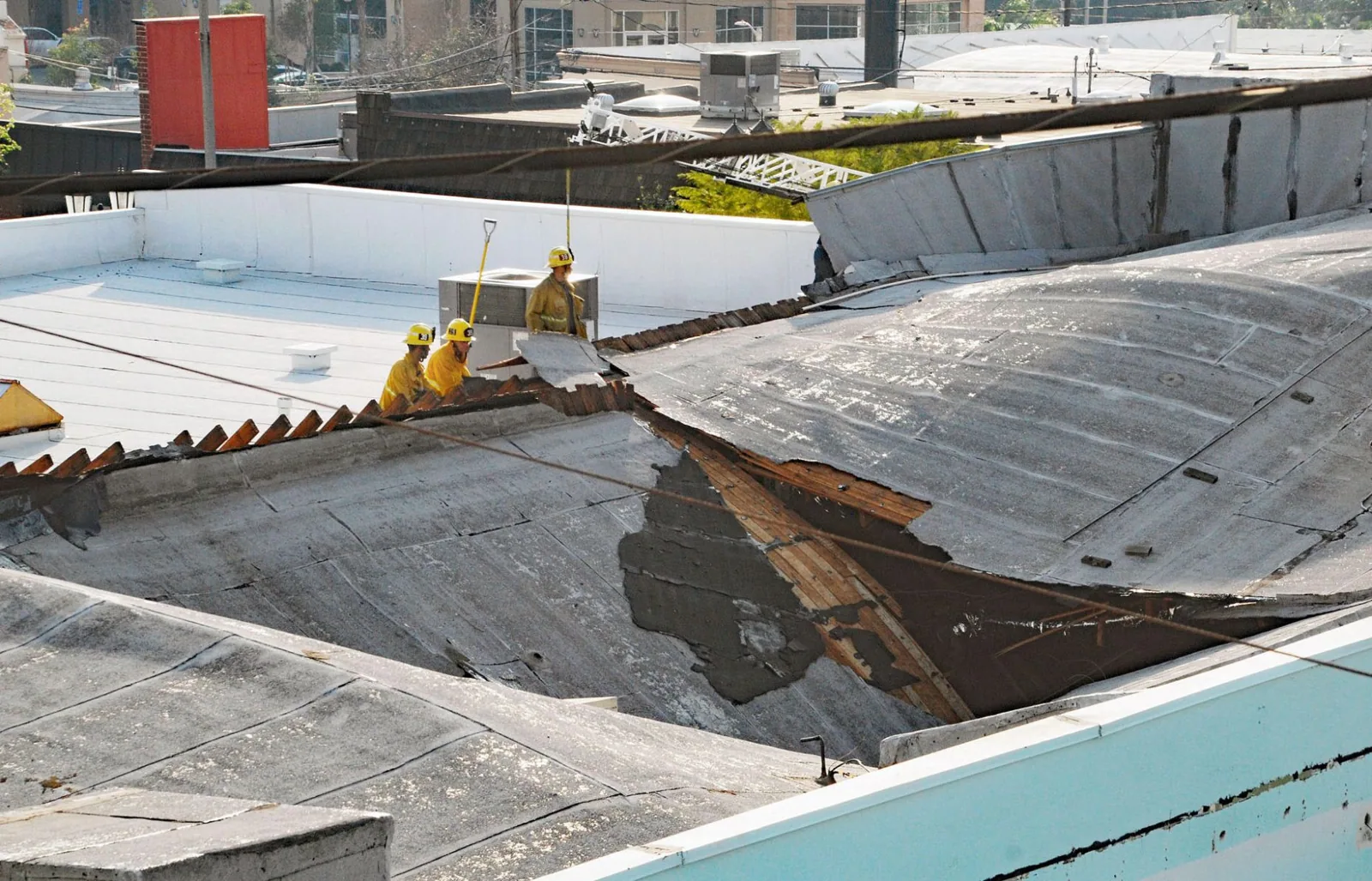
Wind Damage Roof Repair
Commercial wind damage roof repair in South Fulton, GA: perimeter checks, fastener line repair, edge metal resets and a clear close-in limit.
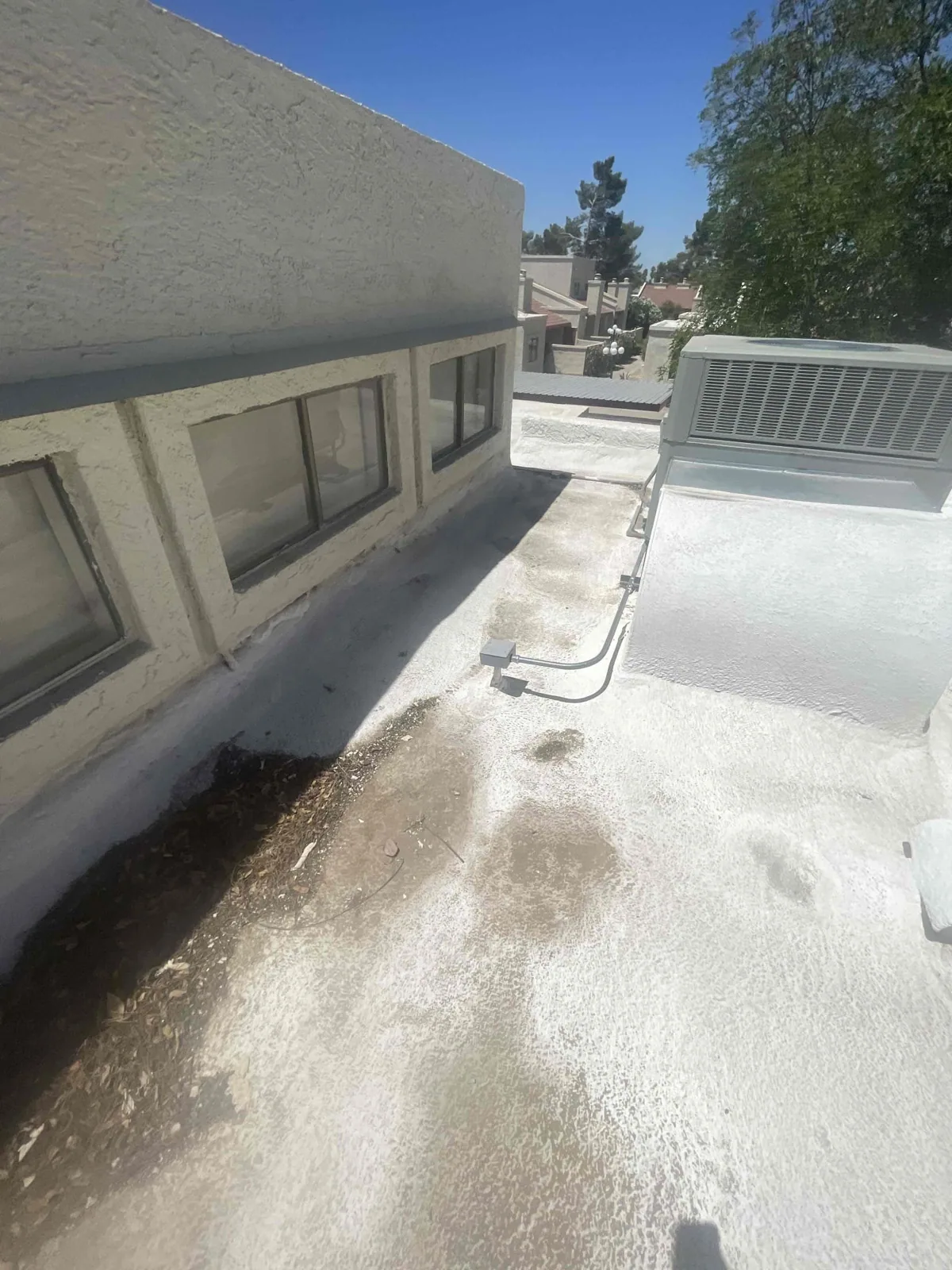
Ponding Water Roof Repair
Ponding water roof repair in South Fulton, GA: drain plane mapping, deck deflection checks, tapered insulation and drain fixes for low-slope commercial roofs.
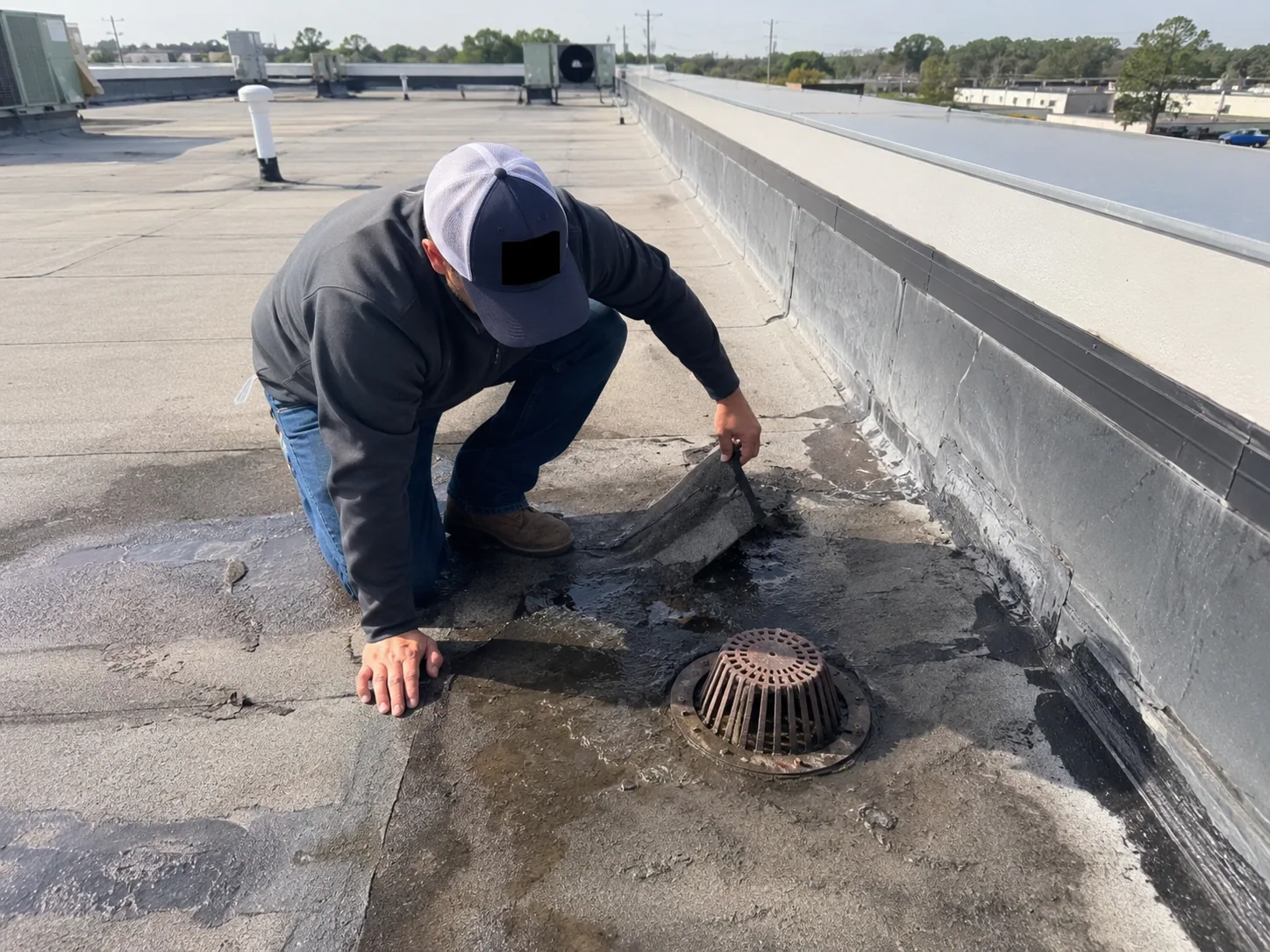
Flashing Failure Repair
Commercial flashing failure repair in South Fulton, GA: parapet, curb and penetration close-in points rebuilt after heat movement, storms and aging sealants.
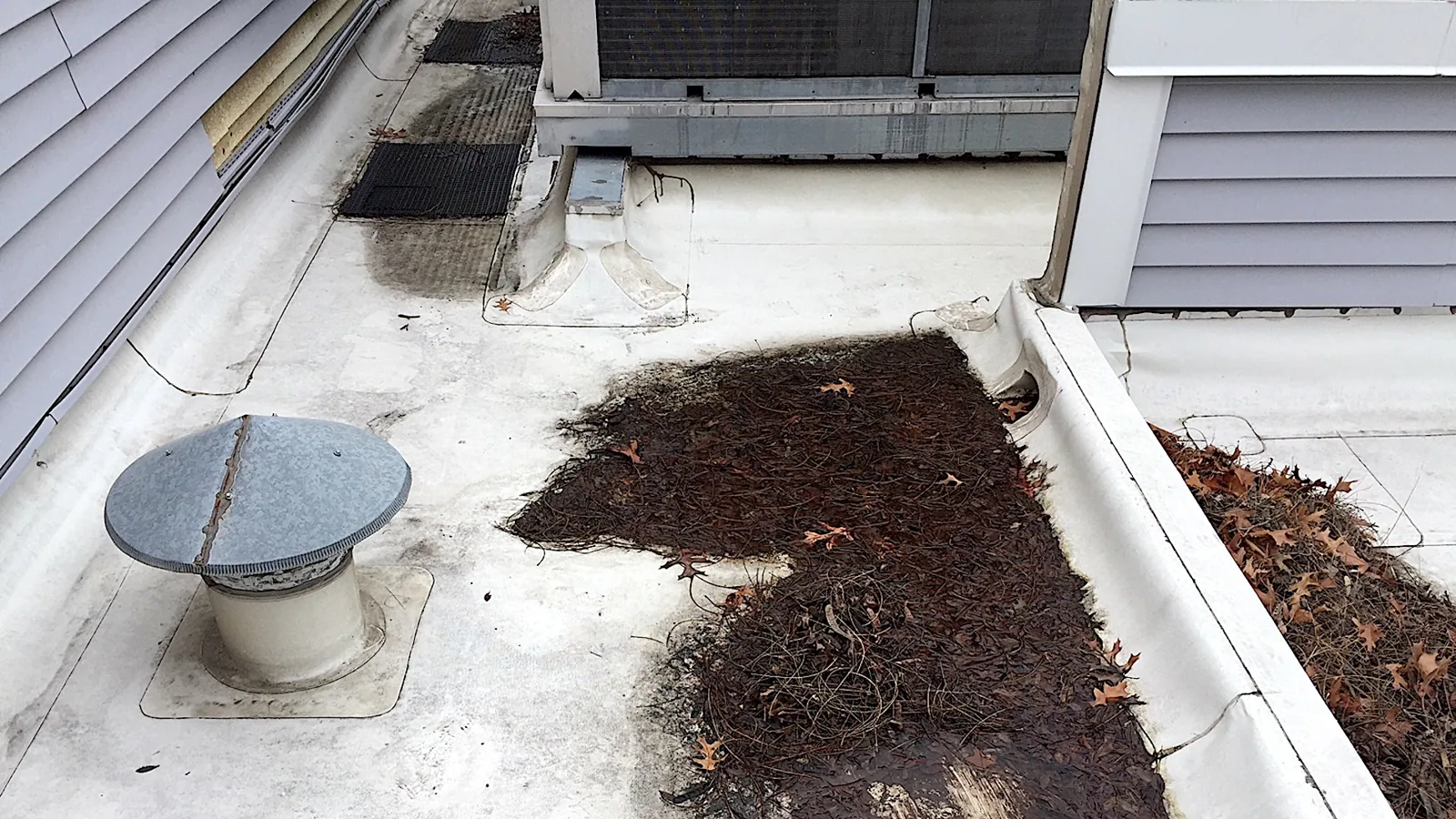
Seam Failure Repair
Split and open seam repair for commercial roofs in South Fulton, GA: weld probing, lap re-bonding, metal seam resealing and scope set by the wet boundary.
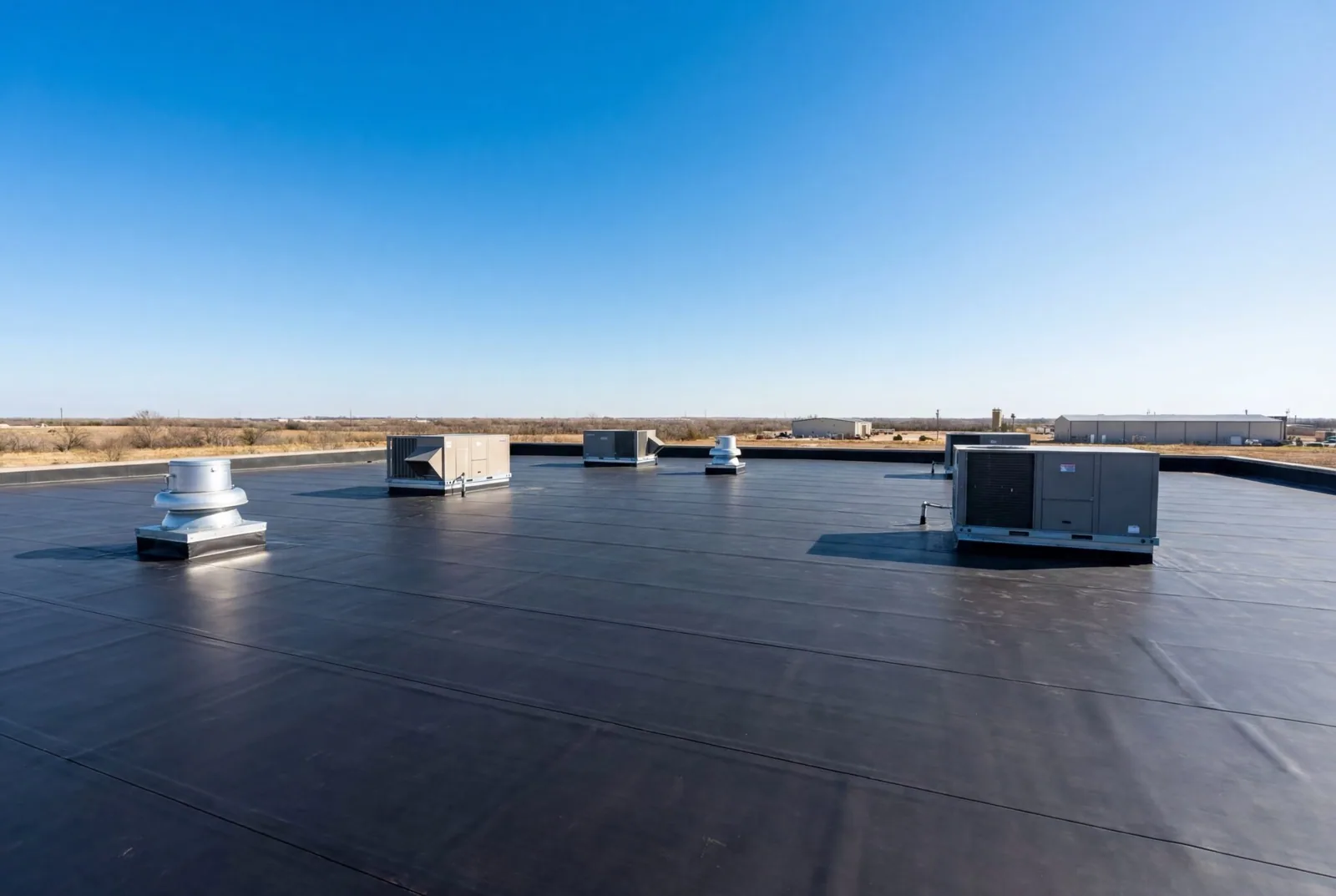
Membrane Puncture Repair
Membrane puncture and foot-traffic damage repair on commercial roofs in South Fulton, GA, with traffic path mapping, patch methods and service route protection.
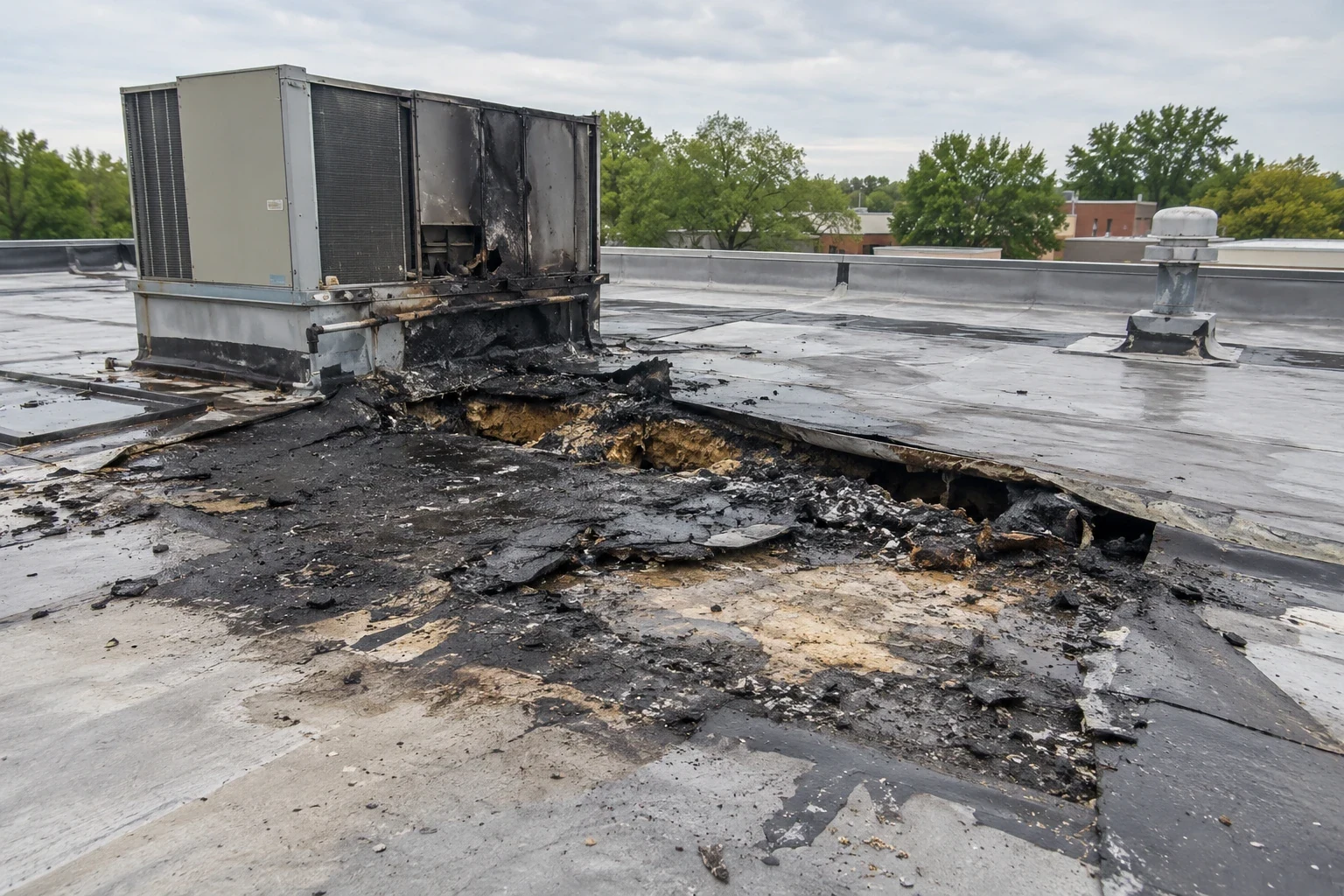
Fire Damage Roof Repair
Fire and smoke damage roof repair in South Fulton, GA: deck assessment, burned layer removal, water-soaked insulation and dry-in limits after a fire.
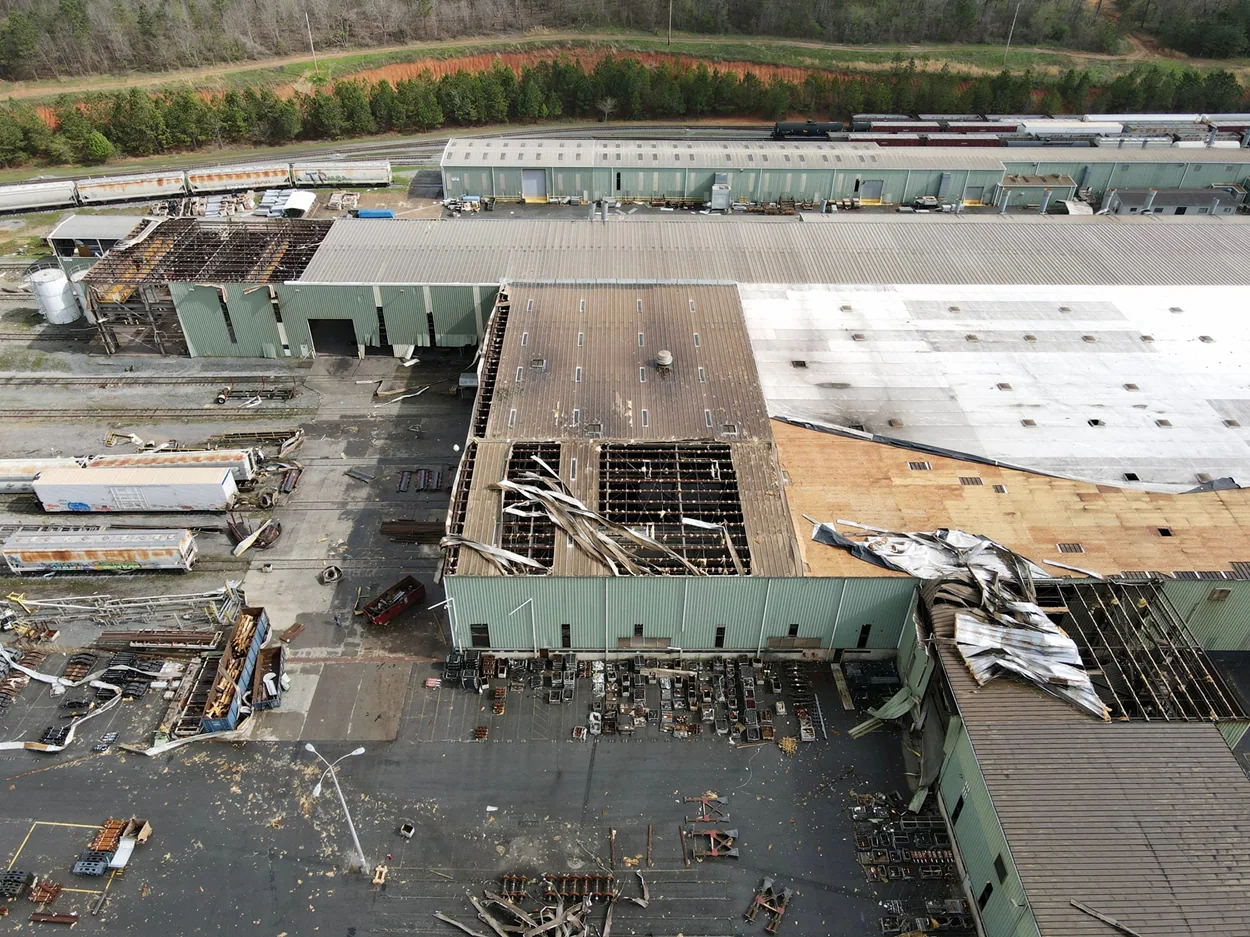
Hail Damage Roof Repair
Hail damage roof repair for South Fulton, GA commercial buildings: bruise testing, coating and metal checks, and moisture scans after spring storms.
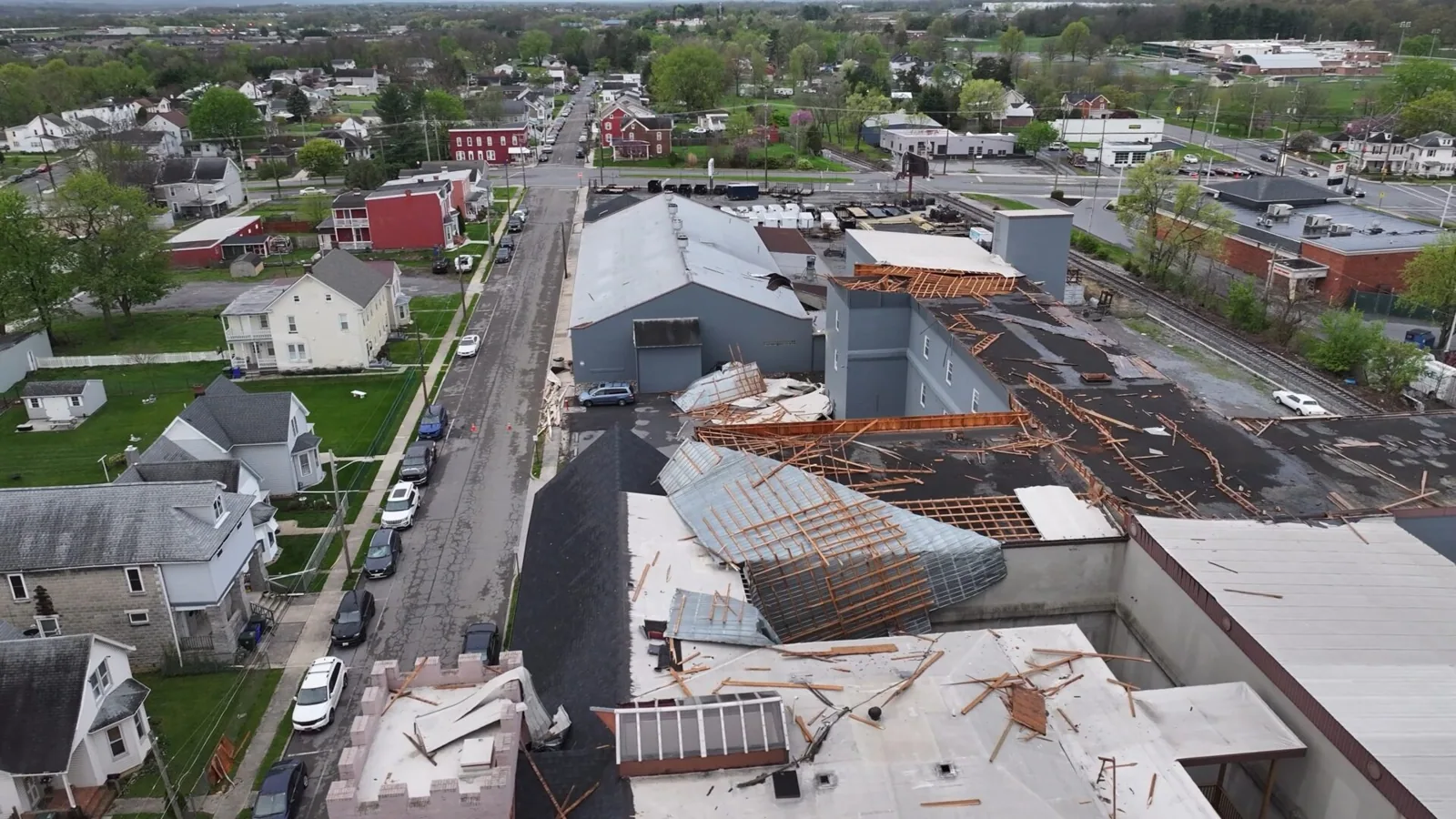
Tornado Damage Roof Repair
Tornado damage roof repair in South Fulton, GA: structural clearance, emergency tarping, debris removal and phased rebuilds for storm-struck commercial roofs.
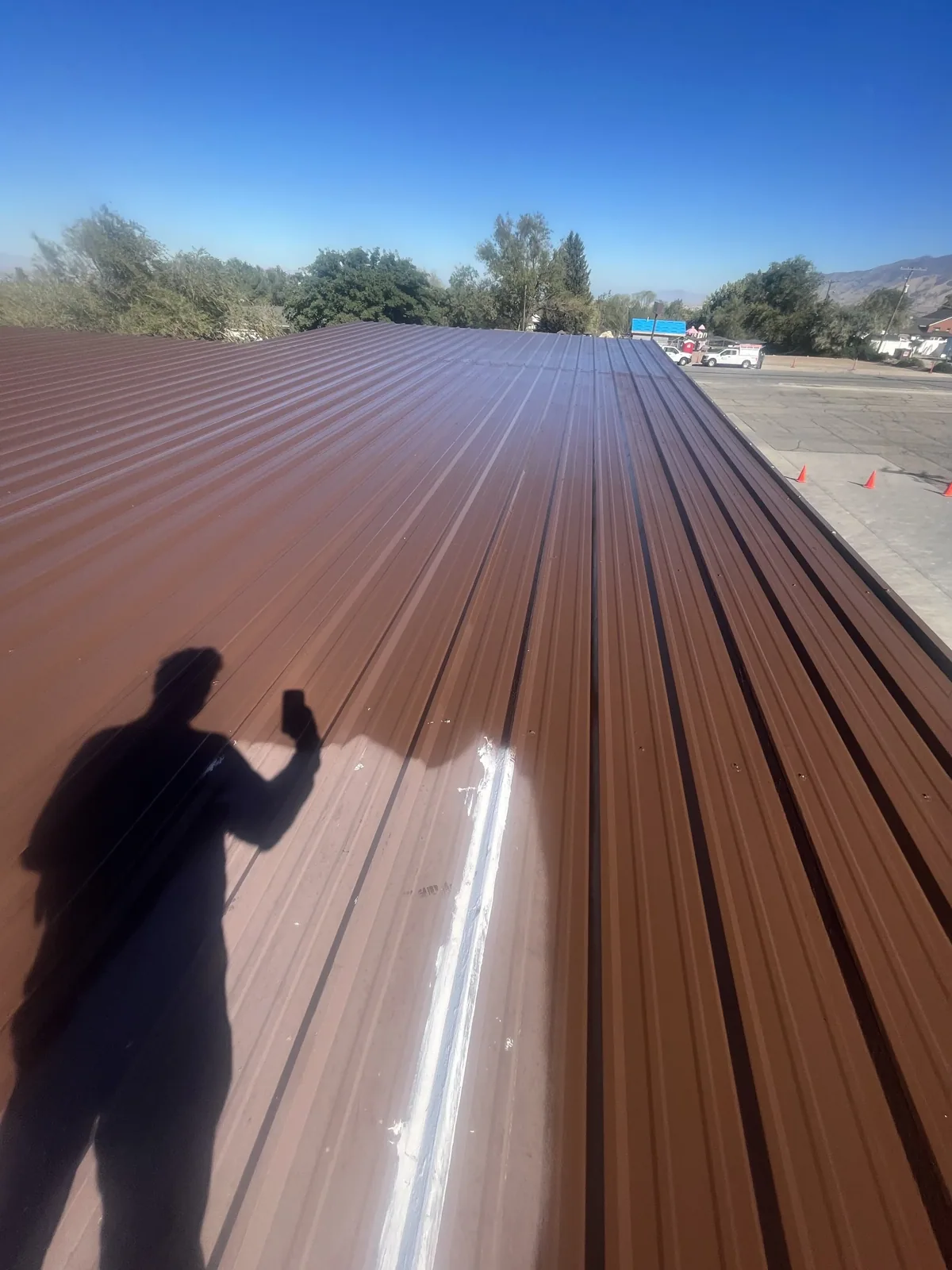
Heat and UV Roof Damage Repair
Heat and UV roof damage repair in South Fulton, GA: chalking, crazing, shrinkage and blistering found early, then restored with coatings, patches or recovers.
Storm: wind, hail, and tornado damage
Wind presses hardest at corners and perimeters, so a wind-damaged roof gets checked first at the edge metal and the fastener line. Across its warning area, the National Weather Service averages roughly 19 days a year of damaging wind. In the north and central Georgia warning area, large hail averages about seven days annually and peaks in April, so a hail-damaged roof is a spring question. The EF-2 tornado documented in South Fulton in March 2018 ran between Fairburn and Campbellton. A tornado-damaged roof needs a structural look at the deck and its attachment before any membrane work.
Water: ponding, seams, and flashings
Standing water finds the low spot in a deck profile and loads it. Fixing ponding water means adjusting drainage or slope before it adds a new surface. A failed seam opens where two sheets meet, and a failed flashing opens where the roof meets a wall, curb, or pipe. Both let water reach the insulation below. Both are repaired by cleaning, prepping, and re-sealing to a sound substrate.
Surface: punctures, heat, and fire
A dropped tool, a service technician, or a fallen limb can cut through a membrane, and a membrane puncture needs a patch that bonds to a dry, clean sheet. Summer heat and UV break down surfaces slowly, so heat and UV damage is repaired by restoring the surface before the layers below go. After a fire, fire damage work removes charred and heat-affected layers back to sound material, and checks the deck.
Timing: dry-in first, permanent scope second
An active leak gets a safe first step in any hour, holidays included. We tarp or patch to hold the building, mark the wet boundary, and define the close-in limit. A permanent repair follows once the deck dries and the scope is approved. Photos and roof-zone notes taken during the first visit support the owner's insurance file.
Describe the damage and the building
How do I tell hail damage from age wear on a membrane?
Hail leaves random, round impact marks with a bruise in the layer beneath, often across a whole slope. Age wear follows exposure, such as sun-facing edges or seams. We cut a test opening where it matters and photograph both.
What should happen in the first hour of a roof leak call?
A crew arrives to secure the opening and protect the interior. The wet boundary is marked on the roof and on the plan. Permanent scope waits for dry conditions and the owner's approval.
Will repair after a wind event need a permit?
A like-for-like patch often proceeds without one, while work that changes the assembly runs under the 2024 International Building Code with Georgia Amendments, which the City of South Fulton says took effect January 1, 2026. We confirm with the city before ordering material.
Does ponding always mean the deck is failing?
No. Shallow ponding after rain can come from drain location or a minor low spot. Water that stays for days, or a deck that sags between supports, calls for structural review before a new membrane goes on.