
- Home
- PVC Roofing
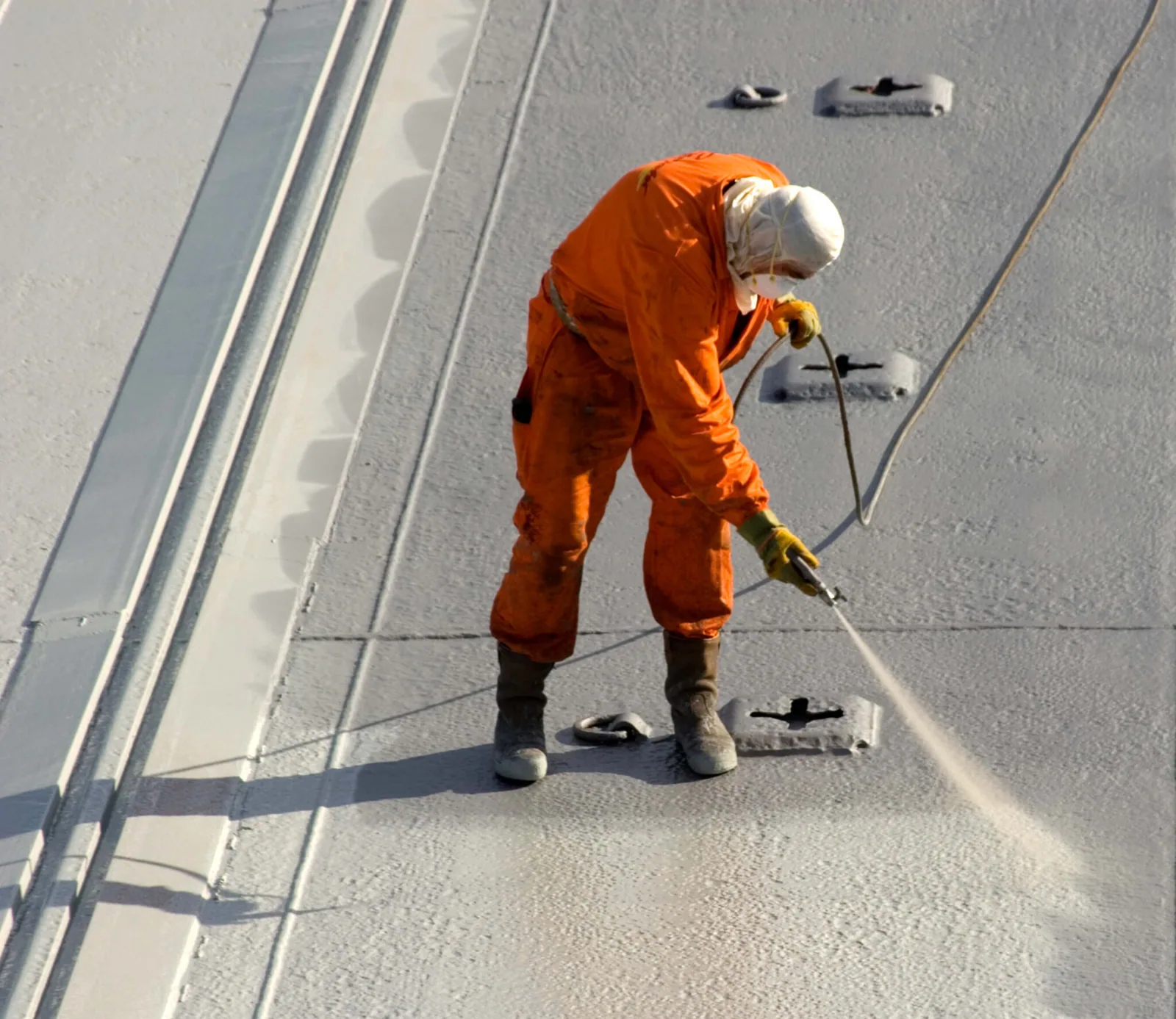
PVC Roofing in South Fulton, GA
The South Fulton Development Authority lists food production and advanced manufacturing among existing strengths. Where a plant vents exhaust, grease or process vapor onto its roof, PVC is the single-ply sheet often chosen for that exposure. Start with the building use, then the roof zone over the process area, then the mechanism that changes the sequence. That mechanism is contact between the sheet and what leaves the stacks.
PVC is a welded thermoplastic membrane. Seams are fused with hot air, and flexible plasticizers keep the sheet pliable. Over years, plasticizer can migrate out and the sheet can stiffen and shrink. Our walk checks the weld lines, the flexibility of the sheet and the flashing at every vent. Each finding is tied to a roof zone and a photograph.
The authority also names aerospace-component work among existing strengths. Where an assembly area sits under a roof, dust, drips and noise during a reroof can stop a line, so we ask for those limits at the first call. They go into the scope as work-hour windows and as areas that stay closed.
Roof mechanism: grease, chemicals and heat
Grease and many chemicals attack some membranes. PVC resists a wide range of them, which is why it appears over kitchens, labs and process rooms. It does not make the roof immune. Exhaust that runs hot can soften the sheet near the outlet. Vapors can collect in low spots. We map the sheet around every outlet and compare it with the field.
By NOAA's description Georgia summers are long, hot and humid, and about seven days a year in Atlanta pass 95 degrees Fahrenheit. That regional figure says heat will cycle the sheet each season. Near an exhaust fan, the local temperature can run well above the regional number. We record staining, softening and shrinkage by zone, and we note the date.
Condensation is the other mechanism. Warm moist air from a wash room rises to the deck and condenses on the underside when the deck is cold. The stain looks like a roof leak. It lines up with the interior source and shows up on cool mornings. We compare the interior pattern with the roof plan before opening any seam. A vapor fix may be the real repair.
Inspection findings: welds, plates and terminations
Weld quality decides how long PVC lasts. A good weld shows a clean bead and no gaps. A poor weld shows dirt in the lap or a bead that peels under a probe. We run the probe along every lap on a test pass and mark openings in feet. T-joints get extra attention.
Shrinkage shows at walls and curbs. The sheet pulls the flashing off the substrate and leaves a gap. We measure the gap in inches at selected walls. A gap that grows between visits is a trend. Punctures from foot traffic are logged by position. A seam failure and a flashing gap often share a cause, and the record keeps both entries together.
Pipe boots and stack collars get a pull test. Each boot is checked for cracks, tight clamps and clean welds. A boot is cheap to replace before a leak and costly after one. We count penetrations by zone and log their condition.
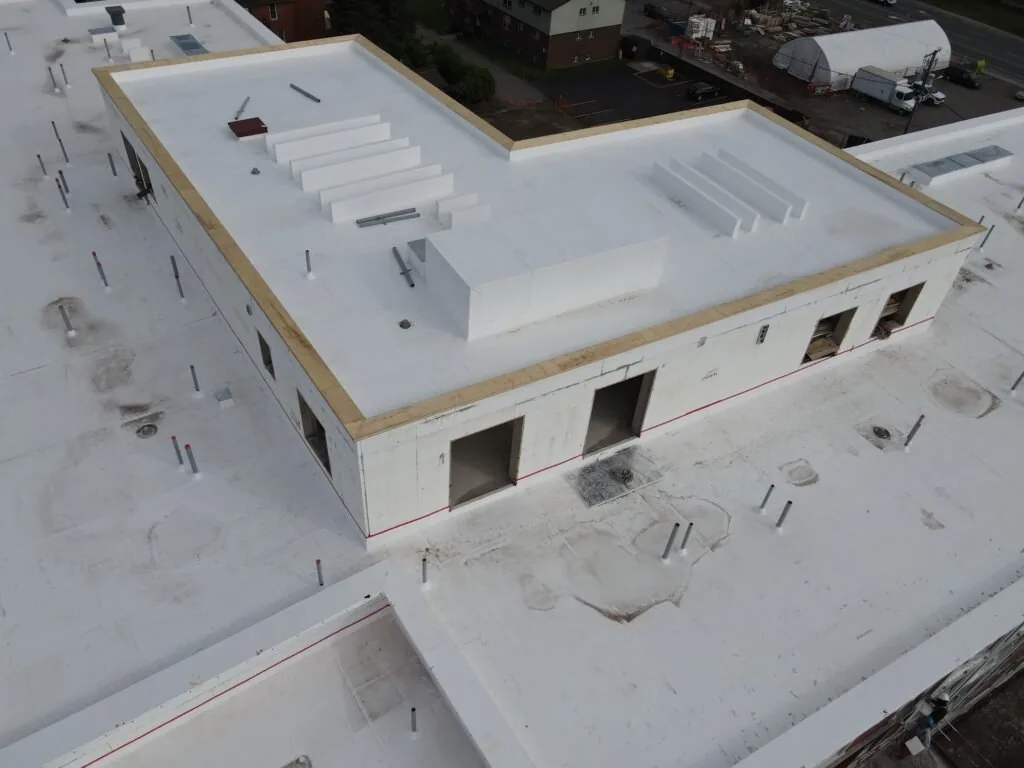
Scope options: weld repair, recover or tear-off
A dry roof with local faults takes weld repair, patches and new flashing. Over a sound deck with dry board, a recover goes on with a cover board and a new PVC sheet. Wet board across a zone calls for tear-off of that zone. A test opening and an infrared survey show which path applies.
Material compatibility matters here. Old bitumen or asphalt contacts can react with PVC, so a separation layer goes between them. Seams are never welded over dirty or oily surfaces. Georgia's State Minimum Standard Codes list the 2024 IBC with Georgia amendments. The city's permit page puts the start date at January 1, 2026. Energy review still follows the 2015 IECC as amended in Georgia.
Insulation under PVC is often polyiso or a similar board, and cold storage or wet process rooms below can push moisture into it. A core shows the board's condition and thickness. Wet or crushed board is cut out to dry material before the new layer goes on. The cut-out boundary is marked on the plan and photographed.
PVC is one of several single-ply choices, alongside TPO. The choice follows the exposure, the insulation and the budget, not a catalog line.
Access and sequencing: operating plants
A plant cannot stop for a roof. Work moves by roof zone. The area over sensitive production is closed in last or scheduled for off hours. We confirm the staging route, the lift position and the loading schedule before the date is set. Logistics and advanced manufacturing are named strengths for South Fulton, and any shipping dock below the work sets its own windows.
The NWS warning area gets damaging thunderstorm winds all twelve months, about 19 days a year, and large hail about seven days a year, with April the peak. Those figures set the fallback date. Every phase ends at a dry-in limit and a close-in point that keep the building shut to weather. Sites in the Oakley industrial corridor use the same sequence.
Hail peaks in April and tornadoes cluster in March, April and May across the north and central Georgia area. A plant with a scheduled shutdown can place the roof work inside it, and an early-spring roof walk catches winter damage ahead of the storm peak.
Trade handoff: stacks, curbs and tie-ins
Mechanical trades set curbs and stacks. Electricians run conduit. Each handoff is a hole in the roof. We flash after the trade finishes, not before, and we photograph the finished detail. If a stack is moved, the old penetration is closed with a welded patch and the repair is logged.
Owners with several plants can use the same record on each. A manufacturing plant roof and a KEE roof over a grease-heavy kitchen both need their exposure noted in the first paragraph of the file. Condition reports carry that detail forward.
Closeout means photographs of every flashing, the plan with weld lines marked, test results and product data. Cleaning instructions for the sheet go in too, since grease build-up near vents is a maintenance item.
Send the roof plans and the access window
Is PVC the right sheet over a food plant roof?
Often, because it resists grease and many chemicals better than some other single-ply sheets. We recommend confirming the exposure first: list what leaves each stack and how hot it runs. Then pick the sheet and the flashing for that zone, not for the whole roof.
What causes PVC to become brittle?
Plasticizer migrating out of the sheet over years, helped by heat. A flexibility test on a cut sample shows how far it has gone. Test before a repair, since a hard sheet will not accept a new weld.
Can PVC be welded to an old roof?
Only to compatible material. Contact with old asphalt or oily surfaces can ruin a bond. A separation layer or a clean cut-out gives the new weld a sound edge.
How do I keep the plant running during a reroof?
Work by roof zone, finish the area over sensitive production last, and set the dry-in limit each day. We recommend tying each phase to the shipping schedule and agreeing the staging route in writing.
Do weather reports prove storm damage?
No. Regional storm data is a reason to inspect. A repair or a claim rests on counted, dated photographs of the marks themselves.