
- Home
- Modified Bitumen Roofing
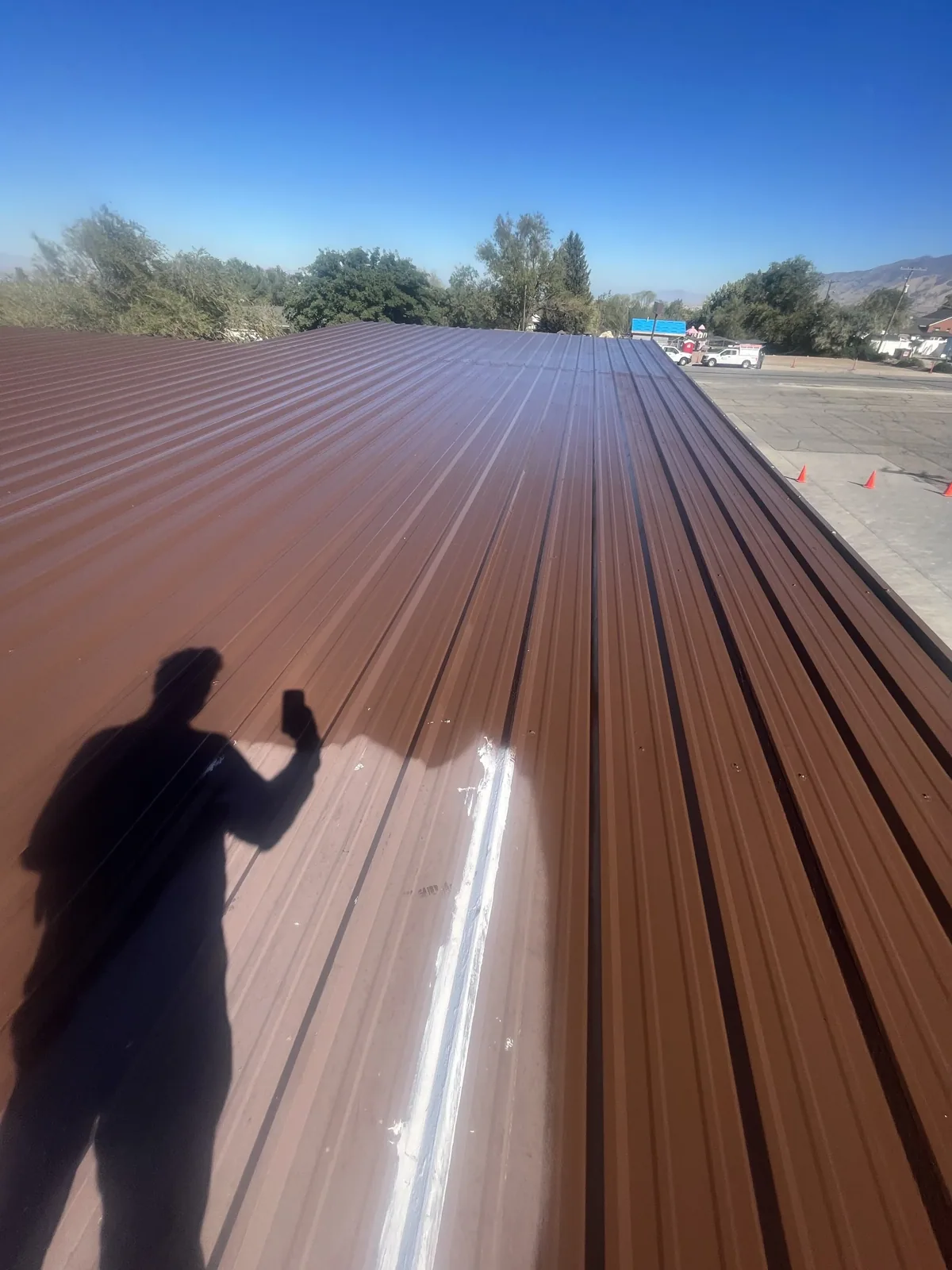
Modified Bitumen Roofing in South Fulton, GA
Modified bitumen is a common low-slope system on warehouses, schools and office buildings. The building use sets traffic and equipment. The roof zone sets drainage and edge exposure. The mechanism that changes the sequence is the layered stack: a base ply, sometimes more, and a granulated cap. Each ply can fail on its own. Our first walk reads the cap, then the laps, then the flashing.
Modified bitumen is asphalt blended with a polymer. SBS is rubber-like and stays flexible in cold. APP is plastic-like and holds up in heat. Plies are joined by torch, hot mop, cold adhesive or self-adhesion. The method matters for repair. A torch needs hot-work controls. A cold-applied repair needs dry, warm surfaces. The record notes which applies.
With more than 90 square miles inside its limits, South Fulton holds business districts on Roosevelt and Old National highways and a large suburban and rural footprint. Roof ages and systems differ from building to building. We do not assume a modified bitumen roof is old or new. A date stamp, a permit record or a core sample sets the age, and the file says how it was found.
Roof mechanism: how the stack wears
Four wear patterns repeat. Granules wash off the cap and expose asphalt to sun. Laps open where heat pulled them apart. Blisters rise where trapped moisture turns to vapor. The surface cracks into a pattern like alligator skin on an old roof. Each pattern points to a cause we can photograph and measure.
NOAA describes long, humid Georgia summers, and Atlanta counts about a week of days over 95 degrees Fahrenheit. Hot sun softens asphalt, and humid air feeds moisture into the stack. We read the roof for granule loss, blistering and soft spots, and the surface decides when it disagrees with the weather table.
Insulation under a modified bitumen stack is often rigid board with a base sheet over it. Trapped moisture in that board is what lifts blisters and rots the base ply. A cover board between board and cap protects the stack on a recover and spreads foot traffic load. We note whether one is present at each test point.
Inspection findings: laps, blisters and flashing
The walk starts at the drains. Then we trace laps along each roof zone, pressing at the edges. We mark open laps in feet. We count blisters and note whether they are intact or broken. A broken blister is an open hole. Flashings come last: base flashing height, termination bar, counterflashing and sealant.
Soft spots underfoot mean wet insulation. We mark them with paint and photograph them from two angles. An infrared moisture survey maps the wet area, and a test opening confirms it. The wet boundary joins the repair boundary on the roof plan. Edge and corner zones get an extra pass, since wind lifts the first rows.
Granule loss near drains and scuppers is normal runoff. Bare asphalt in the field is not. We photograph bare areas and compare them across visits. A different membrane may suit a roof that has lost most of its surfacing, but only after moisture tests show the board below is dry.
Storm peaks: wind, hail and tornado season
Across the NWS Peachtree City warning area, damaging thunderstorm winds blow in every month, on about 19 days a year, more in spring and summer. Large hail is heaviest in April across northern and central Georgia, falling on about seven days in an average year. Tornadoes can occur in any month, with the bulk in March, April and May.
Hail can bruise a granulated cap and crack the asphalt beneath it. Wind can peel a lap. We inspect after any major storm and compare the roof with the earlier photographs. March 2018 brought an EF-2 tornado to South Fulton, which the NWS tracked between Fairburn and Campbellton, so spring schedules here carry a fallback date.
Spring is the busy season for repairs. After each storm, we check laps on the windward side and flashing at walls. Any open lap gets a temporary seal the same day, and the permanent patch waits for dry, warm conditions.
The records from those visits build the trend. A lap that opened after one storm and stayed tight after repair is a closed item. A lap that reopens is a signal the substrate is moving.
Scope options: patch, recover or tear-off
Local lap openings and punctures take patches of compatible cap sheet. A broken blister is cut out, dried and patched. A restoration coating can extend a sound roof with dry insulation. A recover fits a sound deck with dry board. Wet insulation or a failed deck calls for tear-off.
The city's permit page lists the 2024 IBC and Georgia amendments as the code for new permits from January 1, 2026. The state energy code is the older 2015 IECC, supplemented and amended. Hot work, such as torch application, may need a permit and fire watch. The scope lists those items and offers torch-free options.
Cost follows area, number of plies, insulation depth, penetrations and the method chosen. A torch-free repair can cost more in materials and less in fire-watch labor. The scope lists both so the owner can weigh them. Wet board and deck repair are separate unit-priced lines.
Access and sequencing: occupied buildings
An occupied school or office cannot absorb fumes, heat or noise from a torch. We offer cold-applied and self-adhered options where occupancy limits hot work. Fresh air intakes are covered, and the work moves away from them. Along the Cascade Road corridor and nearby business areas, staging space is checked before the lift is booked.
For a warehouse or distribution site, the roof phases are tied to the loading schedule. Every phase gets its own dry-in limit and close-in point. Built-up roofing uses a similar ply logic, so records for both systems share a format. On closeout the owner receives photographs, the repair-boundary plan, test results and product data.
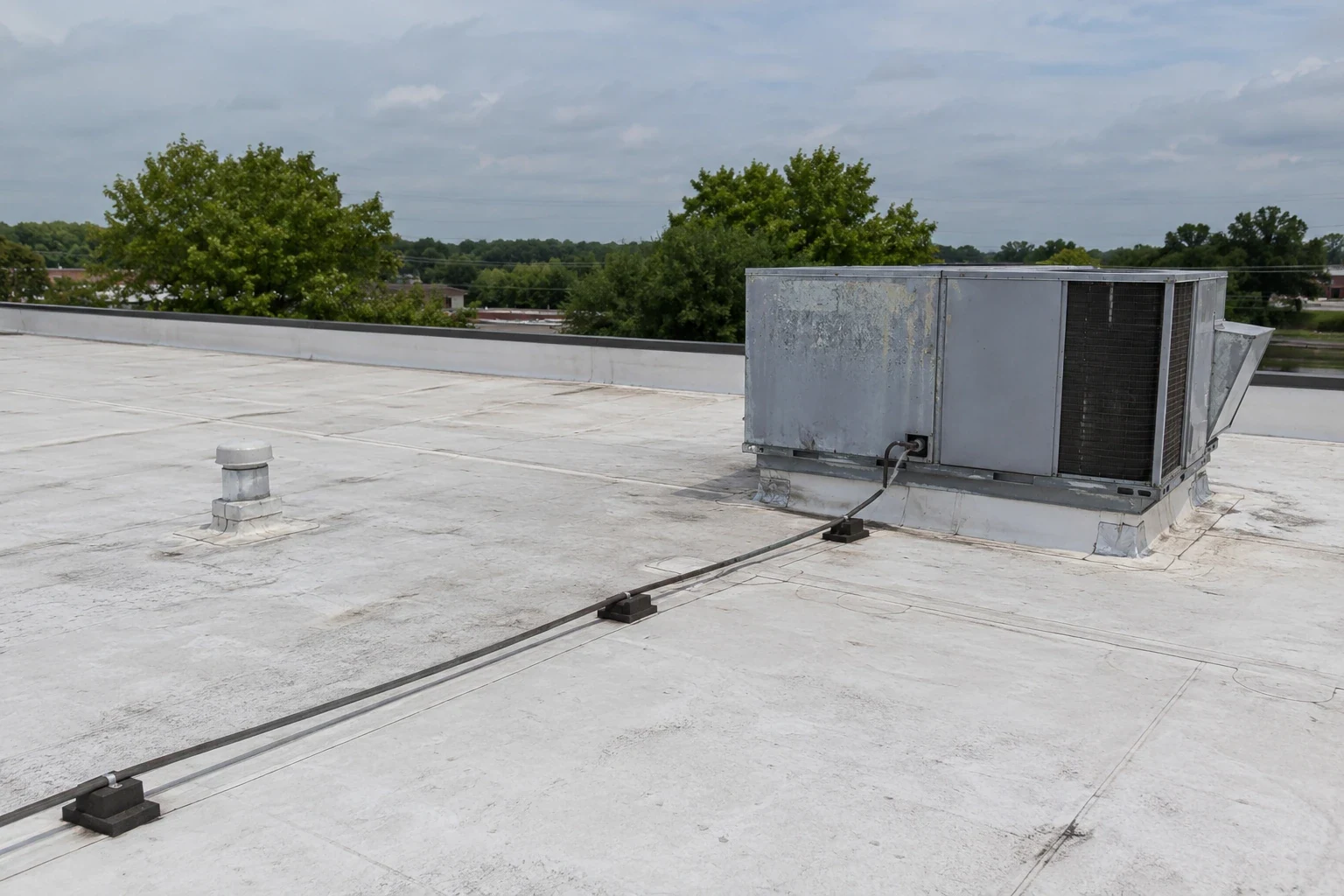
Rooftop equipment on a modified bitumen roof sits on curbs flashed with the same material. We check curb flashing at each unit, count the units and note which ones need service. A leak at a curb is among the cheapest to fix and the costliest to ignore.
Closeout covers every ply change, every patch location and the product data for each material. Torch work adds the permit, the fire-watch log and the end-of-day check. The packet gives the next manager a clear history of what was done to the stack.
Send the roof plans and the access window
What is the difference between SBS and APP?
SBS is rubber-modified and stays flexible in cold. APP is plastic-modified and resists heat well. The right one depends on the existing system and the repair method. We recommend identifying the type before choosing patch material.
Can blisters be left alone?
Small intact blisters can be watched and photographed. Broken ones are open holes and need patching. Cut one open to see whether moisture sits below it, and record the result.
Do I need a permit for torch work?
Often a hot-work permit and a fire watch are required, and some buildings forbid open flame. Ask the building official, and consider cold-applied or self-adhered options on occupied sites.
Is granule loss a reason to replace?
Not alone. It exposes asphalt to sun and shortens life. If laps are tight and insulation is dry, a coating can extend the roof. If laps are open and board is wet, plan for tear-off.
How soon after a storm should the roof be checked?
As soon as it is safe to walk. Photograph laps, edges and bruises, and compare them with earlier photographs. A regional storm report alone does not prove damage.