
- Home
- Solar-Ready Roofing
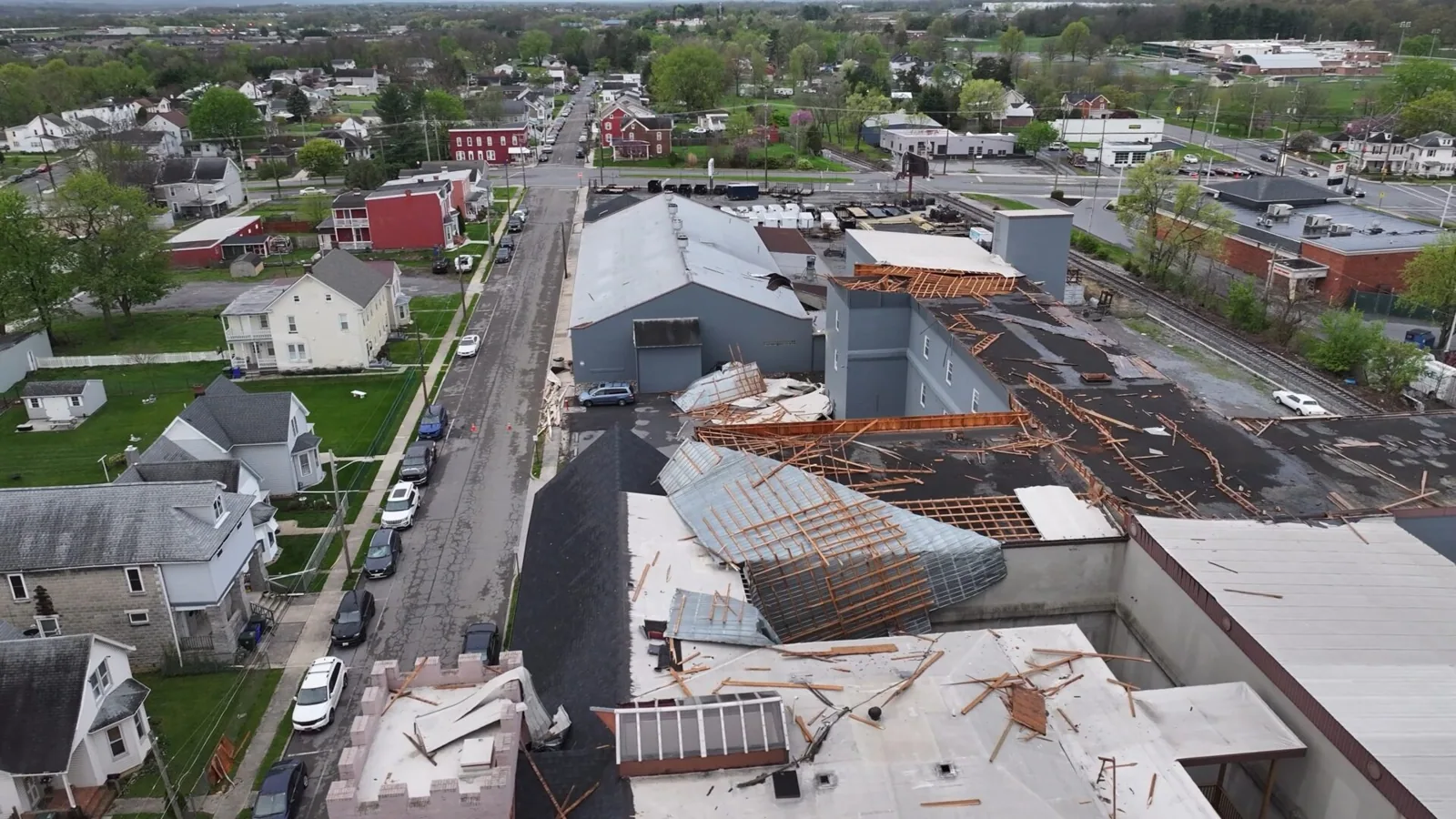
Solar-Ready Roofing in South Fulton, GA
A solar array outlasts a short-lived roof, and that mismatch is the whole problem. Panels sit on a roof for decades. If the membrane beneath fails in year eight, someone has to lift the array, fix the roof and set it back. Planning avoids that. In South Fulton, GA, the roof also faces hail that peaks in April, damaging thunderstorm winds in every month and long hot summers. We work in two directions: preparing a roof to carry future panels, and servicing a roof that already has them. In both cases the roof comes first.
Building use: large decks and long horizons
Large, low-slope roofs on distribution, manufacturing and flex buildings are the natural hosts for arrays. The development authority reports more than 4,000 acres of developable land and lists industrial parks, flex space and logistics sites. New buildings and reroofs on that land can be designed with arrays in mind. Existing roofs near the Fulton Industrial District and along the South Fulton Parkway can be assessed for retrofit.
The owner's horizon matters, and so does the lease: a tenant who funds an array needs the roof under it to stay sound for the whole payback period. A building held for decades suits a long-life roof under an array. A building likely to sell soon may do better with a simple reservation: clear space, a structural note and conduit pathways, with panels left to the buyer.
Roof mechanism: loads, penetrations and wind
An array adds weight, wind load and traffic. Ballasted systems rest on the roof with concrete blocks, spreading load without penetrating, but they add significant weight. Attached systems fasten to the structure through the membrane, which means penetrations that must be flashed. Both change how the roof drains, how wind flows across it and where water collects.
Wind is a primary load. Damaging winds appear in every month of the NWS record, at roughly 19 days a year, so mounting must resist uplift at edges and corners. Hail is the second. Large stones fall on about seven days a year in the warning area, and while panels are tested for impact, the roof beneath still takes debris and meltwater. Heat is the third. Panels shade the membrane in places and trap heat in others, creating uneven aging. With Atlanta passing 95°F on about seven days a year, the hot, still surface under dark panels ages differently from an exposed one.
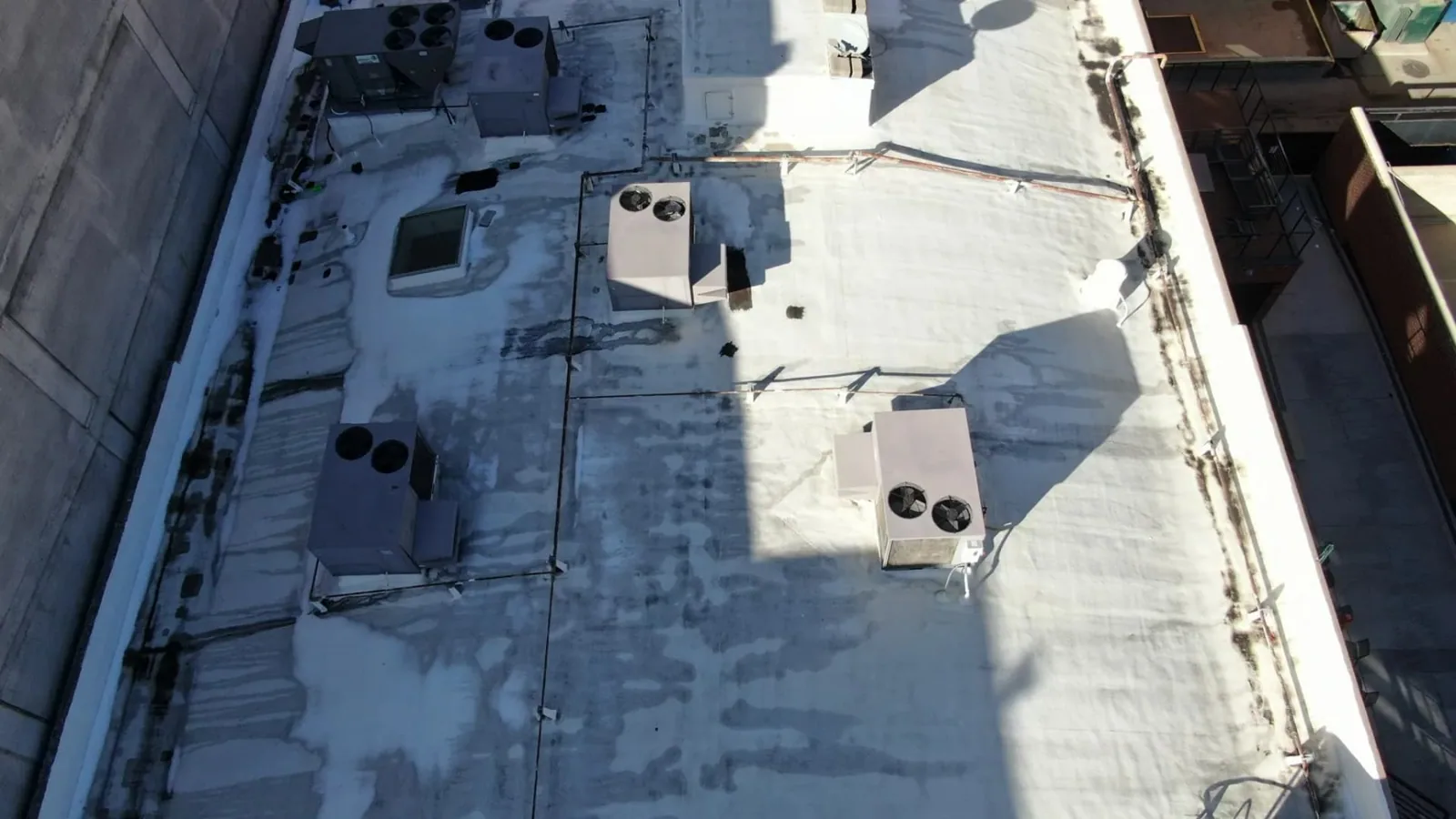
Inspection findings: is the roof ready
Readiness has four checks. Structure: drawings, deck type and spans show whether the roof can take added load. Remaining life: a moisture survey and cores show whether the membrane and insulation will last as long as the array. Drainage: slope, drain count and ponding history show whether panels will block or redirect water. Layout: equipment, curbs, skylights and walkways show where panels can and cannot go.
If the answers are good, the roof is ready and the design moves to mounting. If not, the roof is repaired, recovered or replaced first, and a full replacement is the usual answer when the stack is wet or the membrane is near the end of its life. A roof with only a few years of service left does not belong under an array meant to run far longer, and the numbers go in the file so the owner and the installer read the same estimate of remaining service. The roof capital plan sets the timing so roof work comes before panel work and not after.
Scope options: reserve, prepare, reset
Three scopes cover most cases. In a reserve scope, the crew marks array zones, record structural limits, leave conduit sleeves and set curb heights that suit future racking. Prepare: replace or recover the roof now with a membrane and cover board suited to panel traffic, add walkways and install flashing for planned supports. Reset: for roofs with panels already in place, detach the array, repair or replace the roof beneath, and reinstall.
A reflective membrane under panels can improve performance, and a cool roof surface reduces heat load around the array. For metal roofs, standing seam panels accept clamp-on mounts that avoid penetrations, which helps preserve the roof's seal. Whatever the system, the roofing warranty position needs to be known before attachment. The warranty file records manufacturer conditions for mounting, and we report what the papers say without restating them.
Access and sequencing: trade handoffs around the array
Solar work brings an electrical contractor, a racking crew and sometimes a crane. The roofing plan sets the order: roof repairs first, then walkways and curbs, then racking, then panels, then wiring. Each handoff gets a walk with photographs, so any damage to the membrane is caught and logged at the moment it occurs.
For a detach-and-reset job, the electrical contractor de-energizes and removes panels, the roofer works the open area, and the electrical contractor reinstalls. The plan names a close-in point, so the roof is watertight even if panels sit stacked on the ground for a few days. Panels are stored on supports that avoid damage and trip hazards. Cables are tagged by string so reinstallation matches the original layout. Before the array goes back, the roofer signs off the repaired area, and the electrical contractor confirms continuity, so each trade closes its own scope on the record.
Timing: schedule around storm peaks
Tornadoes occur in all months but cluster from March through May, and hail peaks in April. Work that opens a roof or lifts panels should finish ahead of that stretch, or wait until after it. Heat matters too: working on dark surfaces in July wears out crews and softens adhesives. Late winter and early autumn give the best windows.
The 2024 IBC with Georgia Amendments became effective in the city on January 1, 2026. Structural and fire provisions for roof-mounted systems are checked against the adopted editions, and the permit path is confirmed before material is ordered. Energy code points under the 2015 IECC with Georgia amendments are noted in the scope. After installation, a yearly roof walk checks flashing at supports, drain flow around racking and any membrane wear along wiring routes. Owners with smaller roofs, on Old National Highway or elsewhere, can use the same checks at a smaller scale.
Send the roof plans and the array layout
Should we replace the roof before installing solar?
If the roof has less remaining life than the array, yes. Panels sit for decades, and removing them later for a reroof costs far more than doing the roof first. A moisture survey and cores tell us the remaining life, and the capital plan sets the sequence. A roof with plenty of life can stay.
Ballasted or attached mounting?
Ballasted systems avoid penetrations but add weight and need a deck that can carry it. Attached systems add little weight but need flashed penetrations. We recommend the one that fits the structure and the wind exposure, and we check roof warranty conditions for either before choosing.
What happens to the roof warranty?
It depends on the manufacturer's terms, which sit in the owner's papers. We read them, note any mounting conditions and report what they say. Some require approved flashings or notice before work. We make sure the installer sees the same conditions before any penetration is made.
Can a roof with panels be repaired?
Yes. Small repairs can be made around and under racking where access allows. Larger repairs need a detach-and-reset, with the electrical contractor handling the array. The plan names a close-in point so the roof stays watertight while panels are off.