
- Home
- College Park
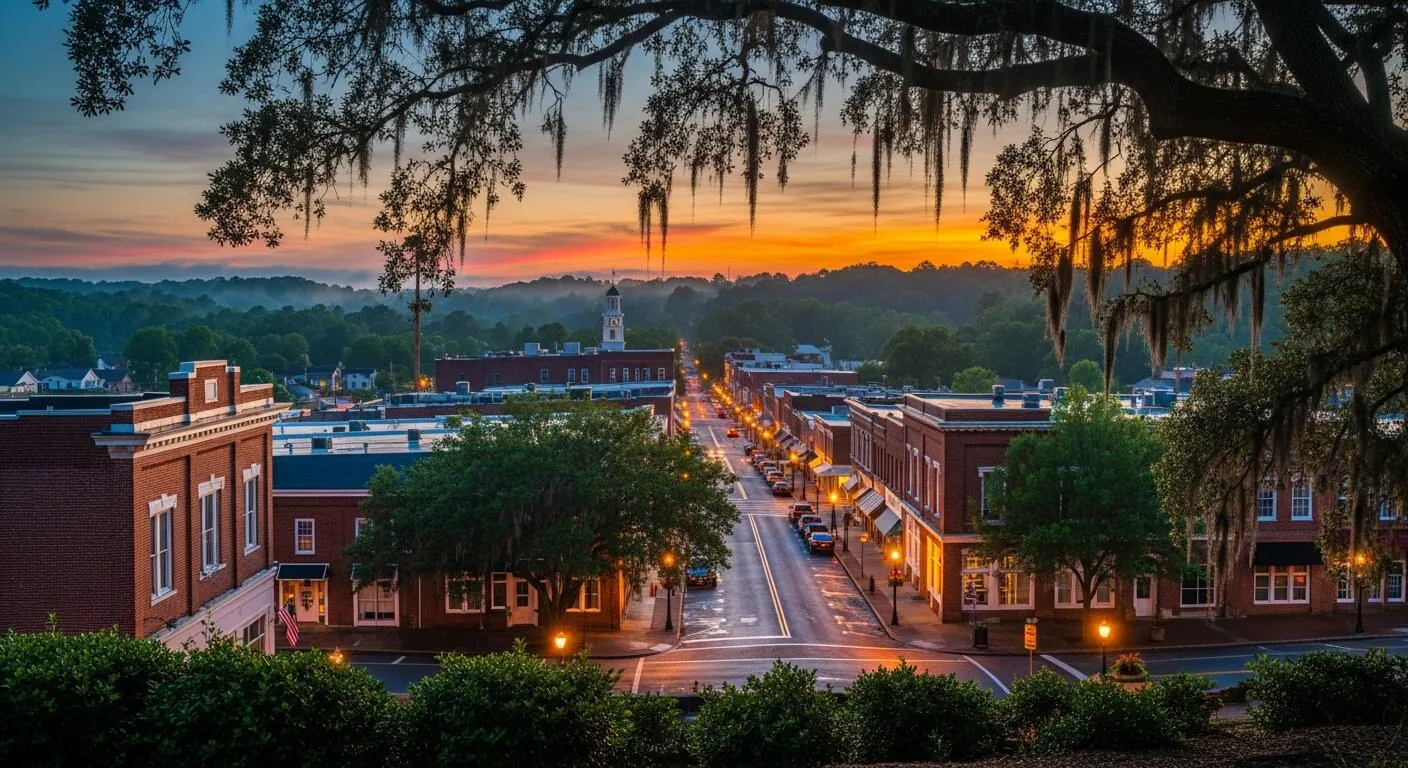
Commercial Roofing in College Park, GA
College Park promotes its location, and the roofs under that promise are the ones that have to hold. The city's economic-development department describes support for commercial corridor and downtown revitalization. It reports more than 200 acres of city-owned land available for commercial, retail, and industrial site selection. It highlights direct airport access, major highways, SkyTrain, and MARTA as regional transportation links. In College Park, GA the walk begins at the building's use, then moves up to the roof zone over it. Revitalized buildings, vacant buildings, and new buildings each need a different first question.
The GC needs the question answered before a scope is priced. What does the roof carry now, and what will the building ask of it next?
Building use: corridor stores, downtown space, and open sites
Three kinds of property fit the city's description. Existing corridor and downtown buildings with tenants or without. Land that may host new commercial, retail, or industrial buildings. And everything between, such as a shell that is being brought back into use. Each wants something different from its roof.
We do not assume what any building holds. We ask the owner about use and history, then read the roof. A tenanted store needs a plan that keeps it open. A vacant building needs a fast, honest read of what the roof can carry before the interior budget is set. A new building needs a first-year walk and a closeout file. The report tells each owner which situation applies. It also states what is known and what is not. If a roof section could not be reached, or a layer could not be seen, the report says so and names the test that would settle it. That list becomes the agenda for the next visit, and it keeps a reuse budget from resting on a guess about what lies under the sheet.
Roof mechanism: idle time, reuse, and the load that comes next
A vacant building's roof does not stop aging. Drains clog. Sealant dries. A small leak runs for months, and wet board spreads the damage. A building brought back into use then adds equipment, which adds curbs and cuts. Each curb is flashed to the sheet, and each cut is logged by date and trade. If the sheet is brittle, new flashing may not bond, so we test bond strength before choosing a detail. If the deck has rusted or rotted at the cut, the repair widens, and the scope shows the new boundary with a photograph.
Heat and storm add to the stress. Heat accumulates on an empty roof just as it does on an occupied one, and the Atlanta record shows nearly a week of days above 95 degrees in an ordinary year. Damaging thunderstorm winds reach the region in every month, so a weakened roof is tested all year. A roof weakened by idle years takes both harder. Before a reuse plan is drawn, we ask what the roof can carry, what it has already absorbed, and how much life is left in the sheet.
Inspection findings: a reuse-ready roof record
A reuse record has four parts. Zones, with numbers. Layer stack, as observed through test openings. Moisture map, from a scan. Condition marks, with photographs. It answers the questions an architect, a lender, and an owner will ask.
Where board is wet, the map shows how much. Where the sheet is brittle, a pull test shows whether it will take a new termination. Where drains are blocked, a flow test shows whether the line beneath them runs. A due-diligence roof survey packages these findings for a purchase, and a commercial roof inspection gives an owner the same facts for a roof already held.
Scope options: stabilize, restore, recover, or replace
Reuse jobs often start with stabilization, and stabilization has its own limits. A temporary membrane or a heavy coat of mastic stops water for a season, not for years. The scope says how long the stopgap should last, so an owner does not mistake it for a repair and build an interior under it. Stop the leak. Clear the drains. Close the open seams. That buys time to plan. The next step depends on the record. A sound, dry roof can be restored with a coating or repaired in place. A dry roof with a flat deck can take a recover. A wet or failed roof needs a replacement.
The city's 200 acres of land for new commercial, retail, and industrial buildings suggests new roofs too. For those, the scope is a design review, a first-year walk, and a maintenance plan. A preventive maintenance program starts on day one and keeps the file current. Owners with a large building should also consider an asset management file.
Access and sequencing: transit sides and tight lots
Transit means people. SkyTrain and MARTA put pedestrians near any station-side site. A roof job near a station or a corridor sidewalk needs a closure plan, barricades, and covered chutes or enclosed hoists. Deliveries arrive in small loads at off-peak hours, with a flagger meeting each truck and keeping the transit entrance clear while it unloads. The lift is placed where it does not block a transit entrance or a fire lane. A spotter watches the entry.
Highway and airport access help our trucks, but the last block to a site is often tight. We map the haul route, the lift position, and the dumpster location on the first visit. We agree on trade handoffs with the GC and close the roof in before each one. The same approach serves Hapeville, East Point, and the warehouse and retail roofs in between.
Timing: storm peaks and the reuse calendar
Large hail is a spring problem across north and central Georgia, peaking in April, and tornado reports bunch up from March through May. A reuse project that opens its roof in March takes on that risk.
Inspect first, in winter if possible, so the findings are in hand before the architect locks a budget. Stabilize at once. Plan tear-offs for steady weather, and write a dry-in limit into the scope. A reuse project with a lease date should order long-lead materials early and settle the permit edition with the city before pricing: Georgia's state minimum codes list the 2024 IBC with Georgia amendments, while the energy code remains the 2015 IECC. After any storm, walk edges and corners first.
Send the roof plans and the reuse schedule
Should a vacant building's roof be inspected before purchase?
Yes. A vacant roof keeps aging, and leaks can run unnoticed. A survey with a moisture map and test openings gives the buyer a repair list and a replacement estimate before the price is final.
What can be done quickly to stabilize a leaking roof?
Clear the drains, close open seams and flashings, and place a temporary cover over the worst opening. We set a dry-in limit and state how long the temporary state can stand. The permanent scope follows the moisture map.
How does transit nearby change the roof job?
It adds pedestrians. Barricades, covered chutes, enclosed hoists, and a spotter protect them. The closure plan is agreed with the GC and, where needed, the city before the crew mobilizes.
What do new buildings need from a roofer?
A first-year walk and a closeout file. The first storms and the first hot spell expose early defects. A dated record lets the owner claim under the installer's terms.
What does the GC send?
Whatever drawings exist, the loading limits, who is in the building, the access window, and any reuse plans. A leak in progress is answered around the clock, holidays included.