
Commercial Roofing South Fulton works on low-slope and metal roofs above buildings that are in use. Warehouses with dock doors cycling all day. Offices with tenants at their desks. Retail strips with customers at the curb. The roof zone and the use underneath decide the order of work. We repair, replace, recover, coat, inspect, and maintain these roofs for owners, property managers, and general contractors in South Fulton, GA and the cities around it.
The work starts with a plain question: what does the building need to keep running while the roof is open? The answer sets the staging route, the dry-in limit, and the hour the first panel comes off.
South Fulton is a southside Atlanta-metro city of nearly 115,000 people, spread across more than 90 square miles. Its profile puts downtown Atlanta and Hartsfield-Jackson airport about fifteen to twenty minutes away by car. Commercial space runs from Old National Highway and Roosevelt Highway, both established business districts, to South Fulton Parkway, the city's largest commercial corridor.
Among the property types the development authority promotes are industrial parks, flex buildings, mixed-use projects, and professional office corridors. It names logistics and distribution and advanced manufacturing as existing strengths, with aerospace parts and big food-production operations among them. Business services, back-office operations and customer-care centers among them, are the authority's emerging sector. It also points to I-85, I-285, and SR 138 access and to regional rail. Those facts shape our roof work. Logistics buildings bring long seams, many drains, and dock schedules. Manufacturing brings exhaust penetrations and process heat. Flex properties put an office roof and a bay roof under one owner. We treat those as starting points for a site visit, not as proof of what any roof is made.
Georgia summers are long, hot, and humid, and Atlanta runs about a week a year above 95 degrees. Heat and moisture affect surfaces, sealants, and the time a membrane needs to cure or dry. The Peachtree City forecast office tracks damaging wind in every month of the year, with roughly 19 such days annually. Damaging hail turns up about seven days a year across the warning area the city sits in, with April the usual peak. A tornado rated EF-2 struck South Fulton in March 2018, according to the weather service.
Wind presses at corners and perimeters before it works on the field of a roof, so edge metal and the fastener line get close attention. Hail bruises membrane and insulation in a scattered pattern. Heat softens some surfaces and ages sealants. We time inspections and repairs around those seasons, because the best time to find a loose edge is before the next storm line crosses it.
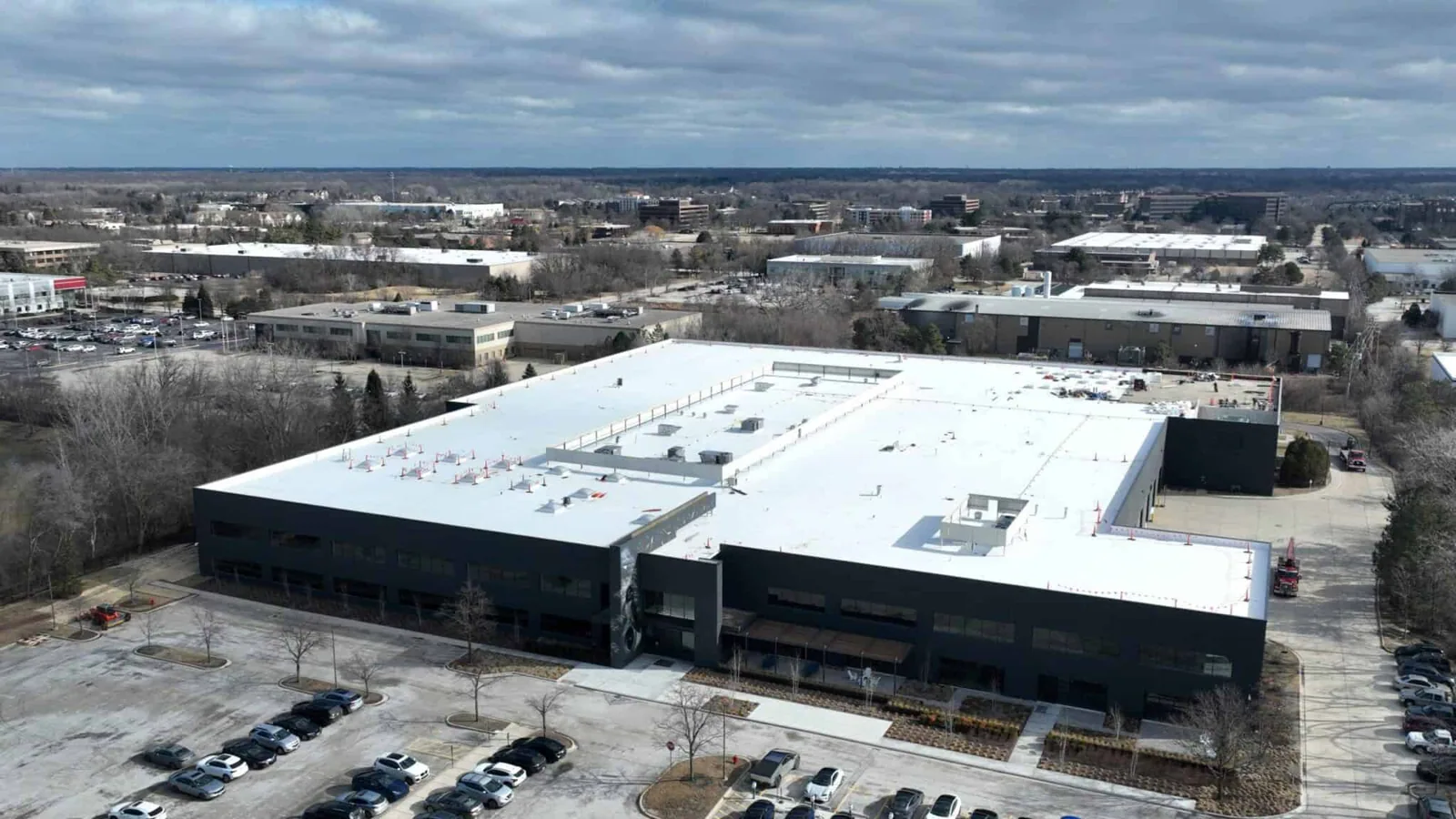
Every job begins with a walk. We split the building into roof zones: field, edge, curbs, drains, and penetrations. Each zone gets its own notes and photos, tied to a roof plan. Where moisture is a question, an infrared moisture survey maps wet insulation, and a drone inspection shows the whole roof before a crew steps on it. Where layers are hidden, a test opening fixes the repair boundary.
The written finding that follows names the cause of each defect, the fix, and the priority. It separates urgent items from maintenance items and from long-range planning items. Owners with several buildings turn those findings into a roof condition report format that repeats from site to site, which makes the next budget conversation simpler.
We install and repair TPO, PVC, EPDM, KEE, modified bitumen, built-up, standing seam and retrofit metal, spray foam, and silicone and acrylic coating systems. A full replacement strips to the deck and rebuilds the assembly. A recover keeps sound insulation and adds a new cover. A repair closes an open seam, a split flashing, or a puncture. A coating restores a worn surface on a roof that tests dry. The choice follows from the layer stack, not from a preference for one product.
We also handle insurance claim documentation after storms: dated photos, marked plans, and notes that separate storm damage from age wear.
We work on occupied buildings and plan around tenants, operations, and schedules. For a general contractor, that means a sequence with dry-in limits, crane picks, and staging routes written before mobilization. For a property manager, it means notice to tenants and hours that protect suites below. For a logistics operator, it means roof phases tied to the loading schedule. Once the roof plans, the building's loading limits, occupancy needs, and the work window are in hand, the sequence can be set before the first walk.
Emergency calls are answered around the clock, holidays included. We secure the leak, define the dry-in limit, and give the owner or GC a clear approval point for permanent scope.
Replacement and recover work wants a run of dry days, so spring storms and summer afternoon thunderstorms shape the schedule. We set the daily open area to what the crew can close in before weather arrives. Coatings need dry, clean surfaces and moderate surface temperatures, which makes early morning starts common in midsummer. Repairs after a storm go in the order of risk: open penetrations first, then lifted edges, then seams and flashing. Planned maintenance visits fall after spring storms and again before winter, so small faults do not ride through another season.
Four items: roof plans, the building's loading limits, occupancy needs, and the access window. With those, the sequence, crane picks, and dry-in limits can be drafted before anyone climbs the ladder.
We cover South Fulton's own corridors, such as South Fulton Parkway, Old National Highway, and Roosevelt Highway, along with the adjacent Fulton Industrial District and nearby cities including Fairburn, East Point, College Park, Forest Park, Riverdale, and Hapeville.
We prepare the roof documentation that supports a claim: dated photos by zone, marked plans, and notes on cause. Adjuster decisions belong to the insurer. Our job is a clear record and a safe dry-in.
Most work does. We close the open area daily, route material away from dock aprons and entrances, and hold noisy phases to agreed hours.
A walk of every roof zone, photos tied to a roof plan, a look at drains and edge metal, and a note on where moisture or concealed layers call for a scan or a test opening. The written finding follows with priorities.
Need a commercial roof repaired, inspected, coated or replaced? Send the address and what you are seeing, and we will set a time to walk the roof.