
- Home
- Roof Coating Restoration
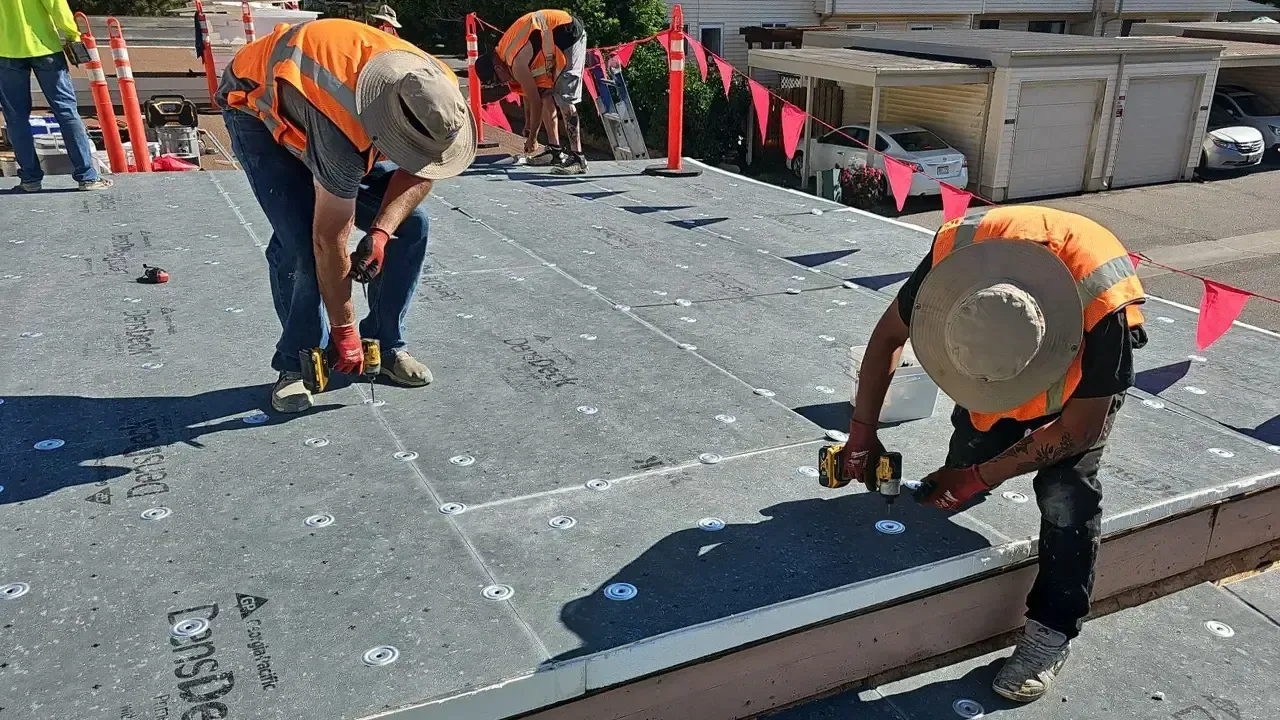
Roof Coating Restoration in South Fulton, GA
Warehouse roofs in the Atlanta metro bake for months. Metal panels and aged single-ply sheets soak up sun, shed granules and lose flexibility. A coating can restore that surface without a tear-off, but only on a roof that is still sound underneath. South Fulton, GA has long, hot, humid summers, so the question is rarely whether a roof is old. It is whether the layer stack below is dry. We answer that first. Then we pick a coating, set the preparation, and time the application to the weather.
Building use: roofs that suit a coating
Coatings fit large, low-slope roofs with sound decks. Think distribution buildings, light manufacturing and flex space, where tear-off would idle operations. Logistics, distribution and advanced manufacturing top the authority's list of target industries. Those owners want roof life without a long shutdown.
Coatings also fit metal roofs with sound panels and failing fasteners or seams. A retail roof on the Roosevelt Highway corridor or a similar site can use a coating to seal and brighten an aging surface. They do not suit roofs with wet insulation, structural damage or a membrane that has lost adhesion across large areas. The first walk sorts the roof zones into those that qualify and those that do not.
Roof mechanism: what a coating does and does not do
A coating is a fluid-applied layer that cures into a continuous film. It seals small cracks, reinforced seams and fastener heads. It reflects sunlight and lowers surface temperature. It adds a wear surface over the old membrane. It does not dry wet insulation. It does not stop a leak that comes from a failed flashing or an open lap unless those details are repaired first.
Chemistry matters. Silicone coatings tolerate standing water and hold up under strong sun, but dirt clings to them. Acrylic coatings clean more easily and cost less, but they need drainage, since ponded water can soften them. A roof with ponding areas leans toward silicone or toward fixing the drain plane first. The choice follows the roof zone, not a catalog.
Inspection findings: the tests that qualify a roof
Qualification is a checklist. First, a moisture screen across the whole roof. A handheld meter works on small roofs. An infrared moisture survey maps a large one. Cores at the highest readings confirm wet insulation. Any wet area is cut out and rebuilt before coating.
Second, an adhesion test. We clean a test patch, apply the coating and check the bond after cure. A poor bond means a different primer or a different plan. Third, a surface check: dirt, chalking, oils, rust on metal, old patches. Each has its own preparation step. Fourth, a seam and flashing review. Open laps, split boots and lifted terminations are repaired and reinforced with fabric.
If the roof has been hit by hail, bruises are marked. A bruised membrane may hold for now, but it is a weak point under a coating. The record notes each one, and the owner decides whether to repair or to monitor.
Scope options: primer, base coat, top coat
A typical scope runs in steps. Power wash and dry. Repair seams, flashings and penetrations. Prime where the surface demands it. Apply a base coat at a measured thickness. Embed reinforcing fabric at seams and details. Apply the top coat, often with a different color or wear additive. Each coat has a minimum cure time, and the scope states it.
The cost drivers are surface area, preparation labor, the number of details, coating thickness and the product chosen. A roof that needs heavy repair before coating can cost more per square foot than a clean one. The scope separates repair items from coating items, so the owner sees what the restoration costs against replacement. The comparison matters: coating makes sense when it costs well under a new roof and the roof is sound.
For roofs near the end of life, a recover or full replacement may be the better value. The record from the moisture screen and cores backs either decision.
Access and sequencing: stack the trades correctly
Coating must come after roof repairs and rooftop work. HVAC service, curb changes and conduit runs go first. Once the coat is down, foot traffic and dropped tools scuff it. Walkway pads mark the service routes, and the routes are drawn on the roof plan before the base coat goes down. Equipment moves are scheduled before the coating, or the coat is touched up after.
Overspray and fumes matter near air intakes. Silicone and acrylic products differ in odor and cure behavior. The plan names the product, covers or shuts intakes near the work and tells tenants when the smell may be noticeable. On a warehouse with dock activity below, the crew stages away from the doors and keeps runoff off trucks and pavement.
Timing: dry days, dew points and storm risk
Coatings need dry surfaces and a cure window with no rain. Georgia humidity slows drying and can leave surface moisture on early mornings, so crews start late and stop early. The region also sees damaging thunderstorm winds in every month, about 19 damaging-wind days a year on average, and a spring peak for hail and tornadoes. A fresh coat should not meet a storm before it cures.
Late spring through early autumn offers the longest workable stretches, though midday heat can flash-cure the surface and trap bubbles. The crew watches surface temperature, not only air temperature. If a front approaches, the work stops at a planned close-in point, with seams sealed and the day's area finished. The heat and UV damage evidence guides how soon the work should begin. Where the sun load is the main concern, a reflective top coat also works as a cool roof upgrade.
An owner with several roofs near the Fulton Industrial District or along South Fulton Parkway can run them on one schedule. One mobilization covers them in order of condition, and the same crew keeps the thickness and detail records consistent from roof to roof. Each roof still gets its own moisture screen and adhesion test, because a neighbor's result says nothing about the next deck.
Send the roof plans and the leak history
Can a leaking roof be coated?
Only after the leak is traced and the cause repaired. Coating over an open seam or wet insulation hides the problem for a season and then fails. We find the source, cut out wet areas, repair details and then coat. If the survey shows wet insulation across most of the roof, replacement is the better path, and we will say so in the scope.
Silicone or acrylic for a flat warehouse roof?
Choose silicone if the roof has any ponding or if the drain plane cannot be improved. Choose acrylic if the roof drains well and the owner values lower cost and easier cleaning. Both need a clean, sound surface. The adhesion test on the actual roof settles any doubt before the full application.
How long does a coating last?
Service life depends on the product, the thickness, the substrate and the exposure. The manufacturer's data sheet sets the figure. What we control is preparation, thickness and detail work, and we record all three. A maintenance visit each year, with spot repairs, helps the coating reach its expected life.
Does a coating change the energy code picture?
A reflective coating can lower roof surface temperature. Georgia's mandatory energy code is the 2015 IECC with Georgia amendments, and any change to insulation or roof assembly is checked against it. A coating alone does not add insulation, so the code check covers any added layers.