
- Home
- Commercial Roof Leak Repair
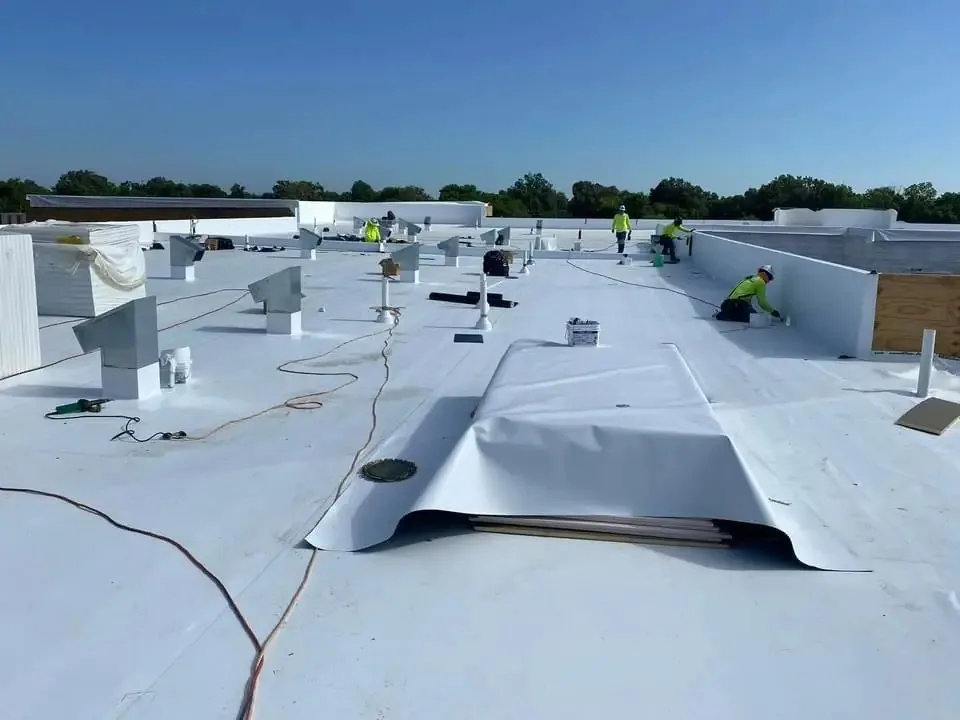
Commercial Roof Leak Repair in South Fulton, GA
A leak over a multi-bay building is a wet boundary problem. Find the edge of the wet zone and the entry point becomes findable. Skip that step and repairs land in the wrong place, again and again. South Fulton, GA brings long humid summers and thunderstorms with damaging wind in every month, so a leak often first shows during a hard rain after a dry spell. We trace the water path across the deck profile, mark the wet boundary, and stop the entry before we talk permanent scope.
Building use: what the leak is wetting below
The same roof leak means different things on different buildings. Over a distribution floor, water reaches racks, pallets, and sprinkler lines. Over offices, it reaches ceilings, wiring, and carpet. Retail along the Camp Creek Parkway corridor adds merchandise and customer traffic to the list. We ask what is below the leak first, because that sets how fast and how quietly the first step must happen.
An office building with suites under a flat membrane also needs ceiling tile access, so we coordinate with the property manager before we open the roof from above. Leaks over occupied suites call for quiet, clean work and a clear route for the crew.
Manufacturing space has its own concern. Water near powered equipment can stop a line, and some processes cannot tolerate damp air. The roof zone above those areas is traced first, and the interior shutoffs are located before anyone steps on the deck.
Roof mechanism: how water travels before it drips
Water that enters a low-slope roof does not fall straight down. It runs along the top of the deck, follows the slope of the steel flutes, moves under insulation boards, and exits at a joint, a light fixture, or a wall. A drip in the middle of a warehouse can come from a flashing thirty feet away.
Wet insulation holds water and releases it slowly, so a leak can continue after rain stops. That is why a patch placed at the stain often fails. The tracing work has to follow the water back through the layer stack to the entry point, and then test that point under controlled wetting.
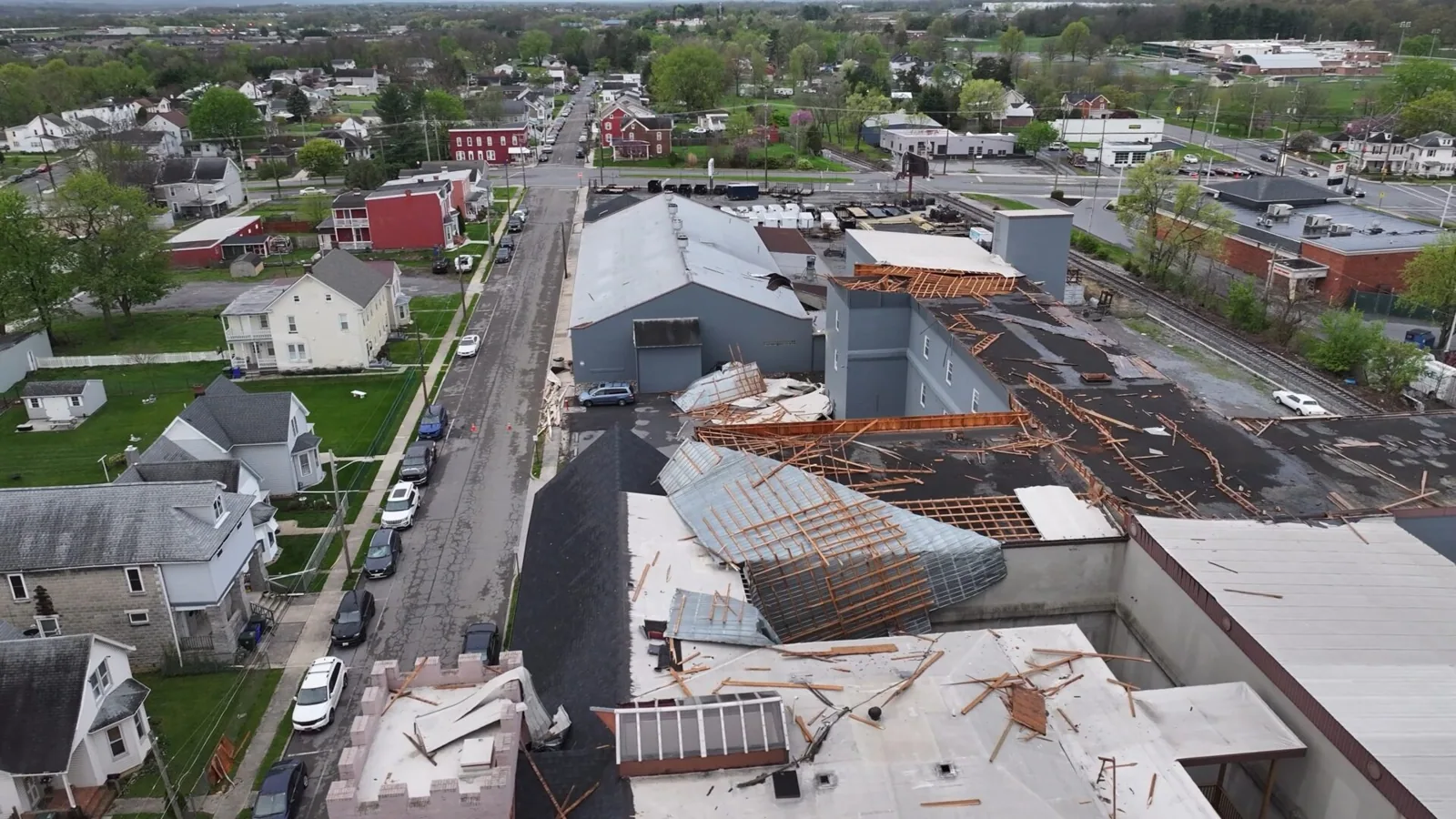
Inspection findings: the tracing sequence
We start from the inside. Interior photos, ceiling tile checks, and the dates of past rains give a direction. On the roof we look first at the high-risk details: drains, curbs, penetrations, seams, and edge metal. If the cause is not obvious, we use targeted wetting by zone, working from the low side up.
For stubborn leaks, an infrared moisture survey maps the wet insulation, and electronic leak detection can find a pinhole in a single-ply membrane. A test opening gives final confirmation. We photograph each step and write down the entry point, the path, and the area affected.
The written finding names the layer where the water travelled, the detail that let it in, and the boundary of wet material. That record helps the GC decide on repair scope, and it supports a claim if a storm is the cause. Without it, the next leak starts the search from zero. Photos of the entry point, labeled by roof zone, let any future crew find the same detail in minutes.
Scope options: stop-gap, targeted repair, or replacement path
The first step is a stop-gap that keeps water out of the building. It may be a temporary patch, a sealed penetration, or a tarp. The second step is a permanent repair at the entry point, such as a rebuilt flashing, a re-welded seam, or a patched puncture. The third step addresses any wet insulation that remains.
If the survey shows that wet insulation spreads across most of the roof, the answer moves toward planned repair on a larger scale or a full replacement. We show the owner how much of the roof is affected, and what each path costs.
Access and sequencing: working around what is underneath
Leak work often happens with water inside the building. We lay protection, move stock where possible, and coordinate with the facility manager before opening any deck area. The staging route keeps ladders and hoists away from truck lanes. Interior shutoffs, such as sprinkler or electrical, are located before the work starts.
Ponding is a frequent companion to leaks. When water stands near a drain, the cause may be a clogged strainer or a low spot in the deck profile. The drains and scuppers that carry water off the roof are part of every trace. A clean drain plane often solves a recurring leak by itself, and a ponding water repair addresses the cause rather than the symptom.
Timing: storm patterns and the next rain
NWS records show damaging thunderstorm wind somewhere in the Peachtree City warning area during every month, about 19 days in a typical year. Wind can lift a flashing in one storm and rain can follow in the next. We aim to dry in any open entry before the next system, and we track forecasts during the repair.
Hail of large size is most frequent in April across the north and central Georgia region, and tornadoes can occur in any month, with most in March through May. After any of those events, a leak tracing visit covers the whole roof, not only the room where water was seen. Summer heat matters as well. Adhesives and sealants cure differently on a hot, humid afternoon, so temporary repairs are chosen for the conditions of the day and noted for replacement with a permanent detail at the next dry window.
Call with the leak location and the building use
How do you find a leak when the stain is nowhere near the entry?
We work the roof and the layer stack together. Interior photos set the search direction, and a drain-to-edge walk identifies the likely details. Controlled wetting then tests each suspect point while someone watches below. When that fails, electronic leak detection or an infrared scan narrows the area. A test opening confirms the path before any permanent repair is priced.
Will the leak return after the first repair?
It can if wet insulation stays in place. Water trapped in the layer stack can reach a new spot after the entry is sealed. So we measure the wet boundary and note whether it has to be cut out. If the insulation is saturated across a wide area, we tell the owner that a permanent fix includes removal, not only a patch.
What does a leak cost to trace on a large warehouse roof?
Cost follows the size of the search area, the access, and the method. Visual tracing from a walk costs little. Electronic leak detection or a full infrared survey costs more but saves repeat visits on a large roof. We price the trace separately from the repair so the property manager can approve the first step quickly.
Should the building owner file an insurance claim for a leak?
Storm-related openings may qualify, while age-related seam failure usually does not. We document the entry point, the cause, and the date, with photos, and give the owner that record. The adjuster and the policy decide coverage. For a roof with long-term wear, the documentation also supports a budget request for a larger repair.
Can drains or scuppers cause leaks that look like membrane failures?
Yes, and they are often missed. A clogged scupper backs water up against a wall flashing, and a cracked drain bowl lets water into the deck. The signs include a stain below the drain line and ponding at the low point. Drains and scuppers get checked on every leak trace.