
- Home
- Commercial Roof Replacement
Commercial Roof Replacement in South Fulton, GA
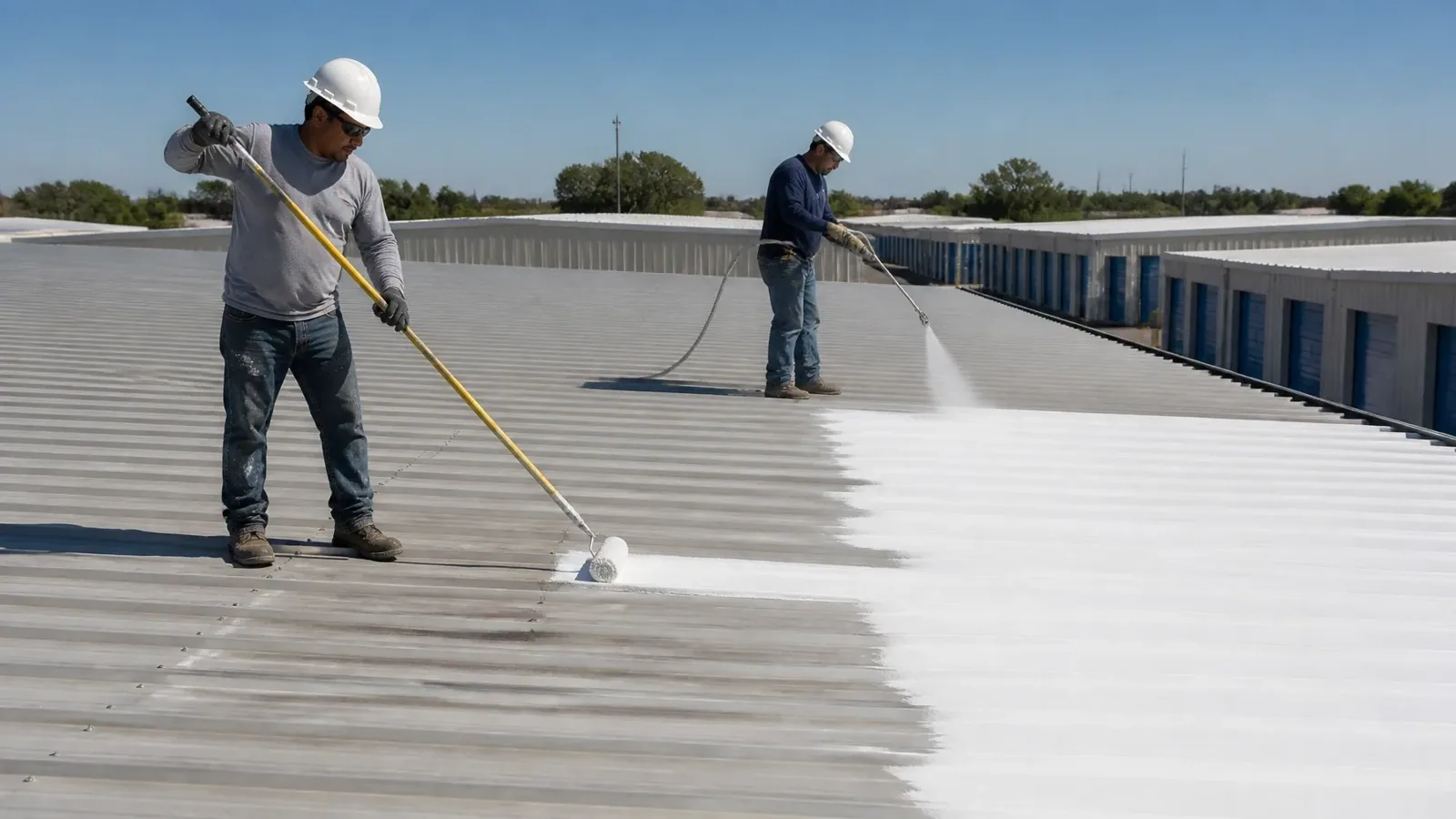
A warehouse roof over loading docks does not pause for a tear-off. Trucks queue, forklifts cross the floor, and product keeps moving under the crew. Full replacement on that kind of building is a sequence problem first and a material problem second. South Fulton, GA records damaging thunderstorm winds in every month, so the open area left at the end of each shift is a decision, not a habit. We set the dry-in limit before the first board lifts. The work then follows the roof zones, from field to edge to curbs, in the order the building can tolerate.
Building use: where replacement beats repair
Replacement earns its cost when a roof has stopped being a repair problem. Distribution buildings are a natural fit for this scope. The development authority names logistics and advanced manufacturing among its target industries and lists flex space among available property, and the Fulton Industrial District sits beside the city. Older low-slope roofs often carry several repairs stacked over one another. Once wet insulation spreads past the patched areas, each new patch buys less time.
An office building presents a different job, whether it stands on Roosevelt Highway, on Old National Highway or elsewhere. The roof areas are usually smaller, rooftop units are more numerous, and tenants sit directly below the work. Those two building uses can share a membrane type and still need very different sequences.
Roof mechanism: how a failed layer stack behaves
Water rarely stays where it enters. It travels along the top of the deck, finds a fastener line or a seam, and wets insulation well beyond the visible stain. Heat adds to the damage: Atlanta counts roughly seven days a year over 95°F, and a dark membrane on a low-slope roof runs hotter than the air around it. That cycle works on seams and flashing all summer.
Humid mornings then leave moisture inside the layer stack that never fully clears. Replacement resets the stack: new insulation, a cover board where the assembly calls for one, and a membrane chosen for the building's exposure. We map the wet boundary first, so tear-off follows the damage rather than a guess.
Inspection findings: what sets the tear-off boundary
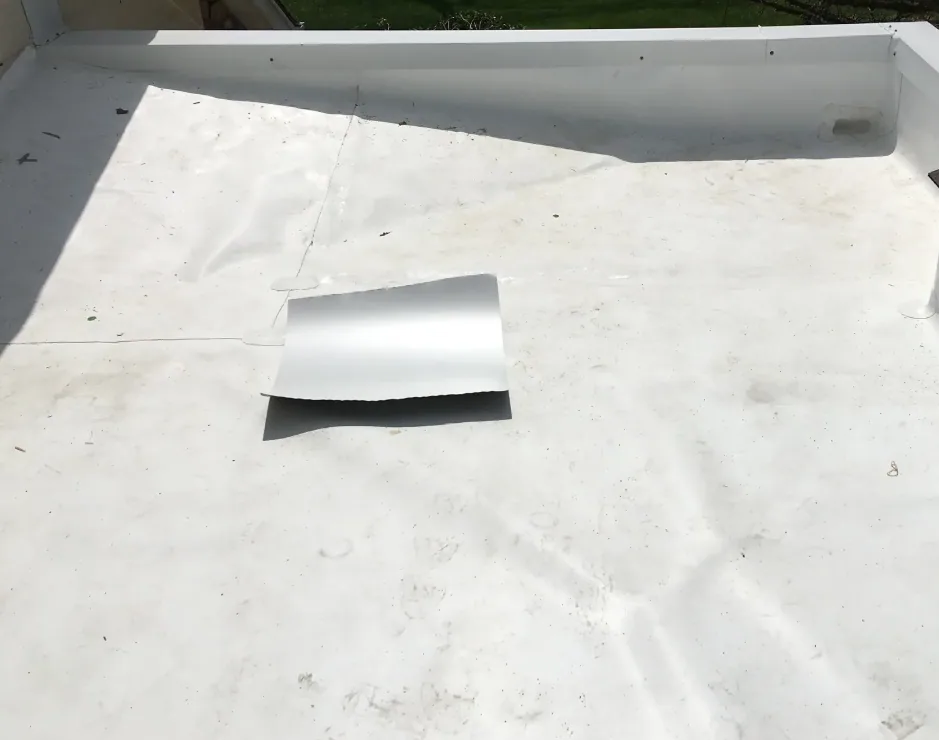
Scope comes from the roof, not from the date on a file. We walk the field and mark soft spots, open seams, blistered laps, and failed flashing at every curb. An infrared moisture survey maps the wet boundary across a large roof quickly. A test opening then confirms what the scan suggests.
If wet insulation covers most of a roof zone, that zone moves from repair toward replacement. If the deck below shows corrosion or rot, we price it as its own line item with a unit rate, so it never hides inside the base number. The GC sees which findings drive the scope and which are optional upgrades.
Edges get the same attention as the field. Perimeter metal, coping, and the first few feet of membrane take the hardest wind pressure at corners, and loose edge metal is often how a failure starts. We check fastener spacing along the edge and note where the existing assembly would not meet current uplift requirements.
Scope options: tear-off, recover, or staged sections
A full tear-off removes everything to the deck. It is the clean answer when the deck needs repair or the stack is saturated. A recover over the existing roof costs less up front, but it only works where the old layers are dry and code allows another layer. A staged replacement splits the building into roof zones and finishes one before opening the next. That suits a plant or a tenant-occupied building that cannot go quiet.
Membrane choice follows the building. TPO and PVC both suit flat roofs with heavy equipment, and PVC holds up better near grease or chemical exhaust. Metal buildings often take a metal roof retrofit instead of a full strip.
Code coordination: the 2024 IBC and the permit
Per South Fulton's permit page, replacement plans are reviewed against the 2024 International codes as Georgia amended them, effective January 1, 2026. Wind uplift ratings, fastener patterns at corners and perimeters, and insulation thickness all land in that review. The 2015 IECC, with Georgia supplements, remains the energy code and sets the insulation target for the new assembly.
We gather the roof plans and any prior permit record before pricing, so the submittal matches what actually goes onto the deck.
Access and sequencing: staging routes and trade handoffs
A reroof needs a place to land material and a path out for debris. On a flex property that joins offices to warehouse bays, we agree on the staging route, hoist location, and working hours with the GC. HVAC and electrical trades disconnect and reset rooftop units, so curb heights and shutoff times are fixed ahead of the tear-off.
Each shift ends with the open area dried in. Spring brings the hail and tornado peak, and April is the peak month for large hail across north and central Georgia. The EF-2 tornado that crossed between Fairburn and Campbellton in March 2018 shows how fast a spring day can turn. When a front is forecast, the crew closes in early and holds the next zone shut.
Debris and torch-free methods matter on occupied sites. Hot work, if any, comes with a fire watch and a clear plan for extinguishers and closing time. Roof access is controlled, so tenants and drivers below are never exposed to falling material. Walkways, loading dock canopies, and entry doors are protected before the first load is lowered.
Send the roof plans and the access window
How do you decide between a recover and a full tear-off on a warehouse roof?
The wet boundary decides it. We cut test openings and run moisture readings across each roof zone. Dry insulation, one existing layer, and a sound deck can support a recover. Saturated insulation, a second membrane already in place, or deck damage pushes the scope to tear-off. The GC receives the findings by zone, so each decision can be made on its own.
What happens to rooftop units when the membrane is replaced near the Fulton Industrial District?
Each unit is disconnected, lifted or tilted, and reset on a new curb flashing. Utility shutoffs are scheduled with the building engineer and the mechanical trade before the tear-off reaches that zone. Where a curb has settled or its flashing has failed, the new curb height is set to carry the membrane at the proper rise. Units are never left standing on an unflashed deck overnight.
How long should a multi-bay replacement window be?
Duration follows roof zones, weather, and the access the building can give. A distribution building with open bays may allow large crews on one zone. An occupied office needs smaller pieces and quieter hours. Spring storm days will pull some shifts. We build the schedule around the dry-in limit for each zone and report progress by zone rather than by percentage.
Who pulls the permit under the 2024 code set?
We prepare the submittal, including the assembly, the wind uplift design, and the insulation values, and coordinate it with the owner or GC of record. The City of South Fulton reviews against the 2024 IBC with Georgia Amendments. Any change at a rooftop unit curb or penetration is shown on the drawings before the work starts, so inspection goes cleanly.
What drives replacement cost beyond roof area?
Cost moves with deck repair, insulation thickness, tapered drainage, the count of penetrations, and how much the access and phasing slow the crew. A building that runs around the clock needs smaller zones and more setup. We list those drivers as separate lines, with deck repair as a unit rate, so an owner can see which choices change the number.