
- Home
- Fairburn
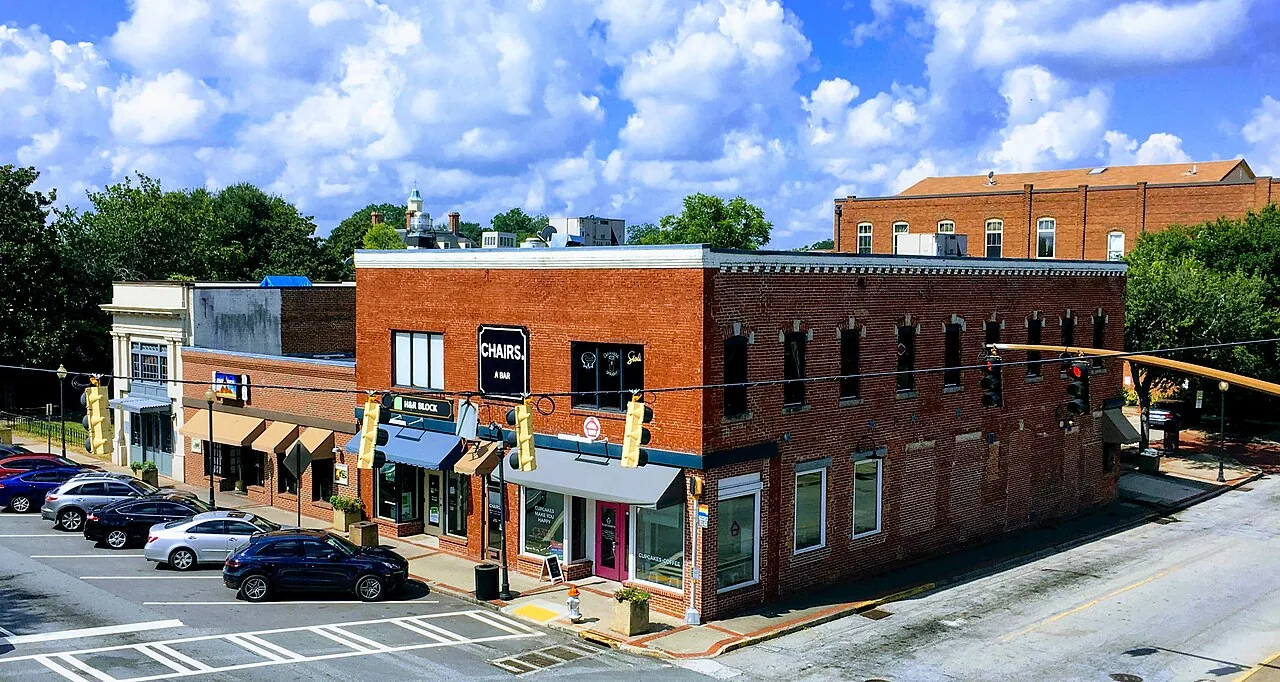
Commercial Roofing in Fairburn, GA
Fairburn has an industrial area and a residential base, and the roofs between them carry weather first. The city describes a thriving industrial area and a substantial residential base supporting local jobs and services. Its development authority focuses on trade, commerce, industry, and employment. For a roofer, the building use leads. A plant or warehouse has a wide, low-slope roof. A shop or office near a state highway has a smaller one. Each sits under the same sky. The March 2018 EF-2 tornado in South Fulton ran between Fairburn and Campbellton.
That storm is why wind and uplift lead the inspection here.
Building use: industrial roofs and the commercial edge
Fairburn's development authority names industry and employment as its focus. Plants and warehouses usually carry wide low-slope roofs with rooftop units, exhaust stacks, and long runs of seam. A shop on a state highway carries fewer units but more parapet and edge. A mixed property joins the two.
We ask each owner what sits below and how it runs. A cooling-sensitive space tolerates no wet board, while dry goods can wait longer for dry-in. Under a plant with exhaust, the sheet must resist heat. Whatever the answer, we give each roof zone a number and a record. The record travels with the building if it changes hands. Each lifted edge carries a location code in the photographs, so a second walk can match them frame for frame. A buyer or lender reading it sees the use, the zones, the findings, and the dates, and does not need to repeat the walk. It also shows which items are open, which are closed, and who closed them. That history is worth more after a storm than before it, because it fixes the roof's condition at a date.
Roof mechanism: uplift at corners and perimeters
Wind lifts a flat roof from the edge. Air speeds up around corners and creates suction. The sheet pulls against its fasteners. If one lets go, the next carries more load. A peel can travel across a field in minutes.
Damaging thunderstorm winds are logged in every month, roughly 19 days in a typical year, and tornadoes appear in any month but mostly March through May. A roof does not need a tornado to fail. A strong straight-line gust at a weak corner is enough. We pull on coping, test fastener lines near the perimeter, and photograph every lifted edge. Corner pressure shows up in the data before it shows up as damage. Fastener spacing matters most there. On many commercial roofs the corner and perimeter zones carry a tighter pattern than the field, and a roof that was repaired without restoring that pattern is weaker than it looks. We compare the existing pattern with the specification and flag any gap, then price the correction as its own line.
Inspection findings: perimeters, seams, and fastener lines
The walk starts at the perimeter. Edge metal, coping, and the first fastener row. Then the corners, where pressure is highest. Then the field: seams, laps, and fastener lines. Then penetrations and curbs.
We record loose metal, lifted laps, billowed membrane, and displaced ballast where present. After a storm, a wind damage repair record shows what moved. After a tornado warning with no direct hit, we still walk the roof, because debris and uplift can leave damage that shows up weeks later as a leak. Where board may be wet, an infrared moisture survey shows where.
Scope options: refasten, re-lay, or replace
Wind damage has three answers. Refasten and reseal what is loose. Re-lay a section that has lifted. Replace a roof that has failed in many places. The choice follows the moisture, the age, and the number of failures.
A refastening scope is quick and cheap, often a day or two for a perimeter run, but it only works if the sheet itself is sound. Pull tests on the membrane near each lifted area show whether it will hold a new fastener, and a failed pull test moves the scope to a section re-lay. We run the tests before ordering materials. A section re-lay needs a dry deck and sound board. A replacement is the answer when the stack is wet or the sheet is brittle. For a large roof, we often split the work: fix the perimeter now and plan a recover or replacement for the field. A storm damage roof repair scope lists these steps with prices so the GC and the owner can choose.
Access and sequencing: highways, docks, and downtown
Fairburn's highway and downtown development authorities focus on the downtown corridor and on state highways 74 and 92. Those routes carry our trucks and set truck turns at the site. We map the haul route, agree on a lift position, and time deliveries around the dock. Where a site sits on a state highway, the entrance may be tight, so deliveries come in smaller loads with a flagger at the gate.
Trades share the roof. Mechanical crews set units. Electricians run conduit. Fire protection crews tie into the structure. Every trade handoff is dated, and the roof closes in before the next trade steps on. The same plan serves sites along the State Route 74 corridor and in the downtown historic district, and for a warehouse roof or a manufacturing plant roof.
Timing: the spring peak and the dry-in limit
NWS climatology puts most tornadoes in March, April, and May, and the peak for large hail in April. Inspect before that window. Fix perimeters in winter. Put the dry-in limit in writing for every open zone, so a front arriving at noon does not catch a roof undone.
After a damaging event, call before anyone walks the roof, because a wet or lifted membrane can give way underfoot and because footprints can change the evidence. At any hour, holidays included, we answer, secure the opening, set the limit, and document the damage before it is disturbed. That record supports an insurance claim, and it separates new damage from older wear. Repair permits should name the edition the Fairburn permit office enforces, starting from the statewide 2024 IBC and Georgia amendments.
Send the roof plans and the dock schedule
Does a tornado have to hit for a roof to need a wind check?
No. A strong straight-line gust can lift an edge or a corner. Fairburn sits in a region where damaging winds occur in every month, so a check after any severe warning is sensible. The record protects the owner in a claim.
Which part of a flat roof fails first in wind?
The perimeter and corners. Air speeds up there and pulls hardest. Loose coping, lifted edge metal, and a weak first fastener row are the usual starting points. We repair those first, even when no water has entered.
Can a large roof be repaired in stages after wind damage?
Yes. We fix the perimeter and any open seams first, then plan the field. The plan states what the temporary state is, how long it can stand, and what the permanent scope will cost.
What helps most with an insurance claim?
A dated photo set from before the event and a matching set from after. The comparison shows what changed. We keep a baseline for each roof we walk, and we document the damage before repairs begin.
What does the GC send to start?
Roof plans and loading limits, how the building is occupied, and the access window. If a leak is active, call at any hour, holidays included, and a safe first step is set before anything permanent.