
- Home
- Commercial Roof Inspection
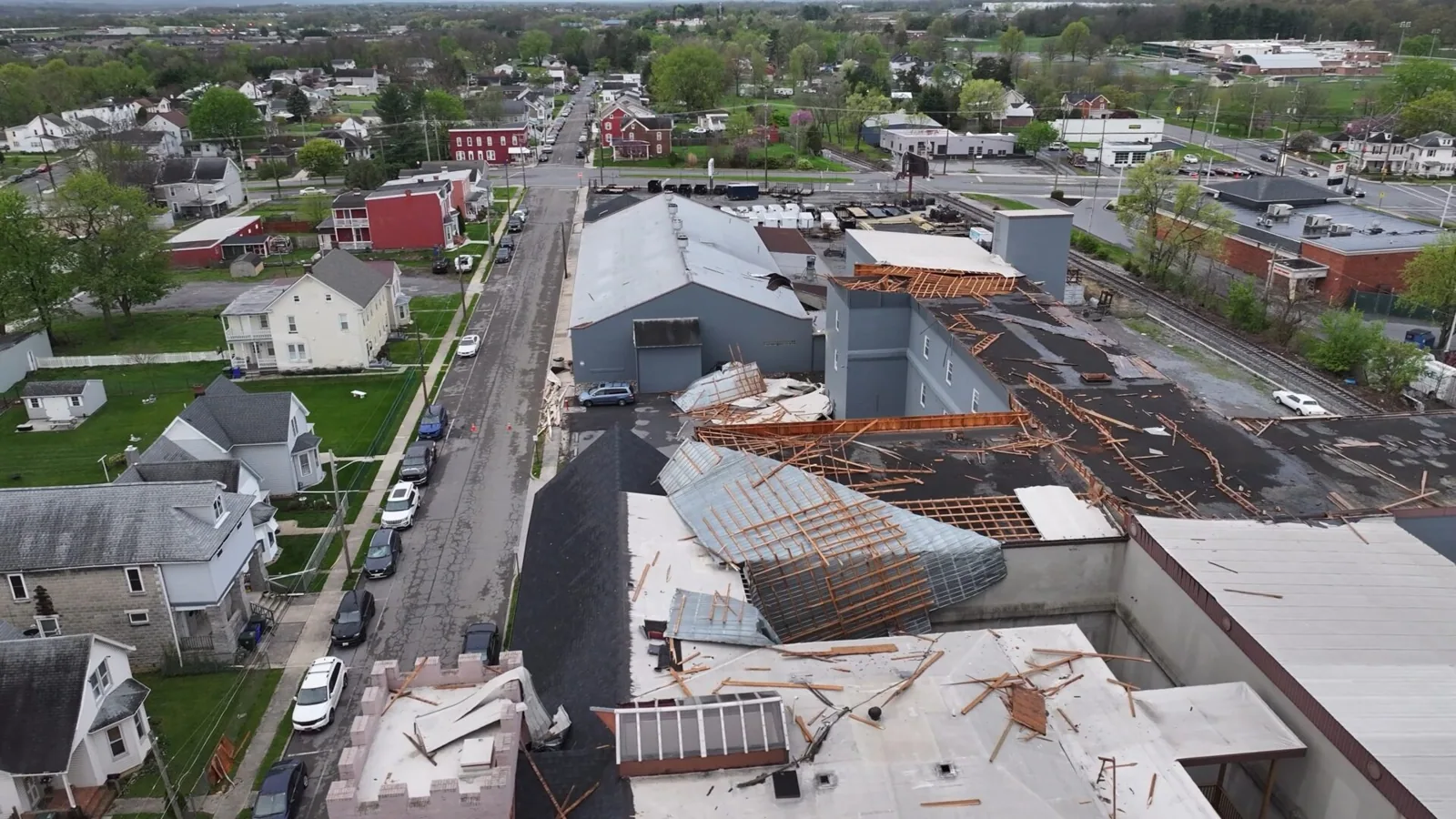
Commercial Roof Inspection in South Fulton, GA
A flex property that joins offices to warehouse bays needs two walks, not one. The office roof carries units and curbs. The bay roof carries long seams and drains. We split the building into roof zones and record the field, edge, curbs, drains, and penetrations separately. South Fulton, GA adds summer heat, humidity, and thunderstorm wind, so the walk also looks for wear that those conditions leave behind. The result is a written finding the GC and owner can act on.
Building use: matching the walk to the property
Each building type calls for a different walk, and South Fulton's real-estate mix runs from industrial parks to flex space to professional office corridors. A distribution roof gets a long-seam and drain focus. A flex industrial roof gets a split between the bay and office sections. A retail roof gets a count of rooftop units and the condition of each curb.
The South Fulton Parkway and Cedar Grove area, one of the city's economic-opportunity focus areas, sits in the southwest part of South Fulton. A place name tells us where the property is. It does not tell us what is on the roof. We tailor the inspection to the building in front of us and record the actual assembly, deck, and insulation as we find them.
Roof mechanism: what the walk reads
A roof surface records its own history. Ponding stains show where the deck deflects. Alligatoring on a coating shows UV breakdown. Rust staining on metal shows fastener failure or a lap that sheds water poorly. Cracked sealant at a pipe shows movement. Dirt trails show the path of water across the field.
Heat plays a clear role. Atlanta sees about seven days a year over 95°F, and long humid summers keep surfaces warm and damp. Those conditions age sealant, soften some membranes, and stress seams. A walk in summer finds heat damage. A walk after a storm finds wind and hail damage. A good schedule uses both.
Drains and edges get special attention. A drain with a crushed strainer or a cracked bowl is a leak waiting for rain. Edge metal that has lifted at a joint is where wind starts to work. We lift and test what can be tested, and we note what needs a closer look from a lift or a drone.
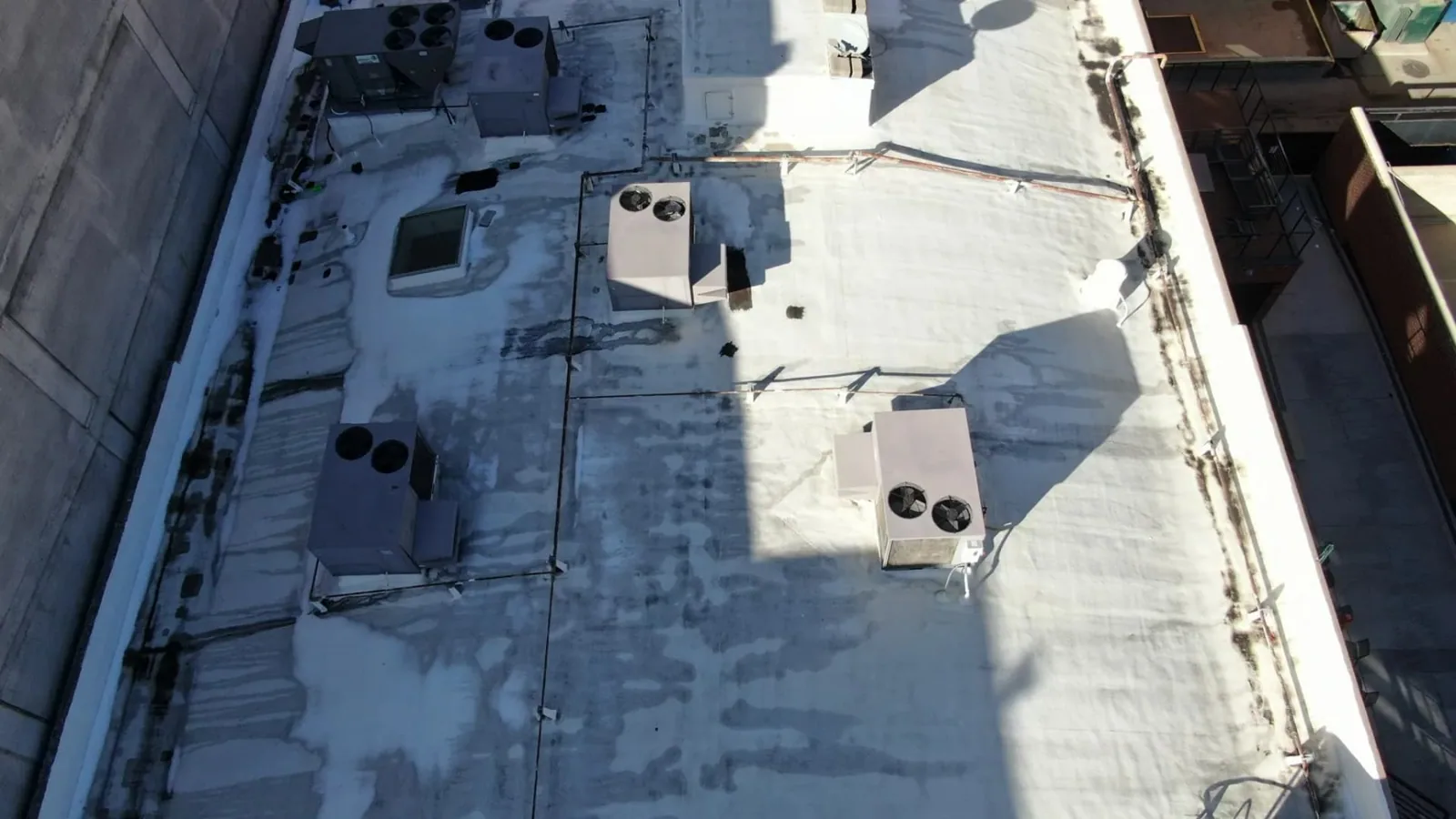
Inspection findings: what goes into the report
Every inspection produces a written report with photos, a roof plan, and a condition rating by zone. Each defect is marked with a location, a cause, a recommended fix, and a priority. The report separates urgent items from maintenance items and long-term planning items.
When the walk raises moisture questions, we recommend an infrared moisture survey. For large or hard-to-reach roofs, a drone inspection adds a roof-wide view before the crew steps on the deck. These tools do not replace the hands-on walk. They tell us where to look hardest.
Ratings are plain. A zone is rated sound, serviceable, worn, or failing, and each rating comes with the reason. A serviceable zone with two open seams reads differently from a worn zone with widespread blistering, and the report says which is which. Photos are numbered to the roof plan so any item can be found again.
Scope options: one visit, a program, or a transaction survey
A single inspection answers a specific question, such as why a roof leaks or whether it can be recovered. A recurring program brings the same crew back at set intervals, usually in spring and after major storms, and builds a history of the roof. A transaction survey supports a purchase or a lender, with a focus on remaining service life and near-term costs.
Owners of multiple buildings can turn the findings into a plan. The data feeds a roof condition report and, over time, a budget for preventive roof maintenance. That turns a stack of separate visits into a calendar the finance team can use. A building that is near the end of its service life gets a replacement window. A building with years left gets a repair and maintenance line.
Access and sequencing: reaching every roof zone
Access shapes the visit. Roof hatches, ladders, and fixed stairs are located before the walk. Fall protection is set up at open edges and skylights. Tenants and security are told when a crew will be on the roof. Sections over sensitive space, such as data rooms or clean areas, are scheduled with the facility manager. Rooftop units are noted by number, with the curb condition, panel fasteners, and condensate lines checked at each one.
We keep foot traffic on walkway pads where they exist and avoid stepping on suspect membrane or insulation. After the walk, a short debrief with the owner or property manager covers urgent items, so no one waits for the final report to learn about an active risk.
Timing: when the visit has the most value
Two windows matter most in this market. The first is late winter, before the spring storm season. NWS reports that tornadoes occur in all months but peak in March, April, and May, and that April is the peak month for large hail in the north and central Georgia region. A walk before that peak finds loose edge metal and open flashing while there is time to fix them.
The second is after a major storm. Damaging wind reaches the Peachtree City warning area on about 19 days in a typical year, so the chance of an event between visits is real. A post-storm walk documents new damage with dates and photos, which supports a claim if the damage is covered.
Tell us the roof zones and the access contact
What should I receive at the end of a commercial roof inspection?
A written report with a roof plan, labeled photos, a defect list by zone, a condition rating, and a recommended action for each item. Urgent repairs are called out. Long-term items come with a rough timeline. The report is written so a GC or a finance lead can use it without a site visit.
Is walking the roof enough, or should we add a moisture survey?
A walk shows surface condition, but it cannot see wet insulation. If the roof is leaking, ponding, or approaching a major decision, a moisture survey is worth adding. It marks the wet boundary and narrows the scope. For a clean, newer roof, a walk and photos may be enough.
How does an inspection support an insurance claim after a storm?
It records the roof's condition on a specific date, with photos of each damaged detail. That record helps separate storm damage from age-related wear. We do not decide coverage, but we give the adjuster and the owner a clear picture of what the storm did and what was already present.
Do you inspect roofs that are under a manufacturer warranty?
Yes. We note the system type, any visible warranty tags, and the condition of areas the warranty covers. If a defect appears to fall under the warranty, we say so in the report so the owner can notify the manufacturer. The manufacturer decides what the warranty covers. Our report stays with what is visible on the roof, and we link the findings to roof zones so a claim can be specific.
What roof access do you need to start?
A contact who can open roof hatches, a safe path to each roof zone, and the hours when we can work. Roof plans help but are not required. For buildings near the Camp Creek industrial-commercial area or along Old National Highway, send the property manager's contact so tenants are warned before we walk.