
- Home
- Roof Recover and Overlay
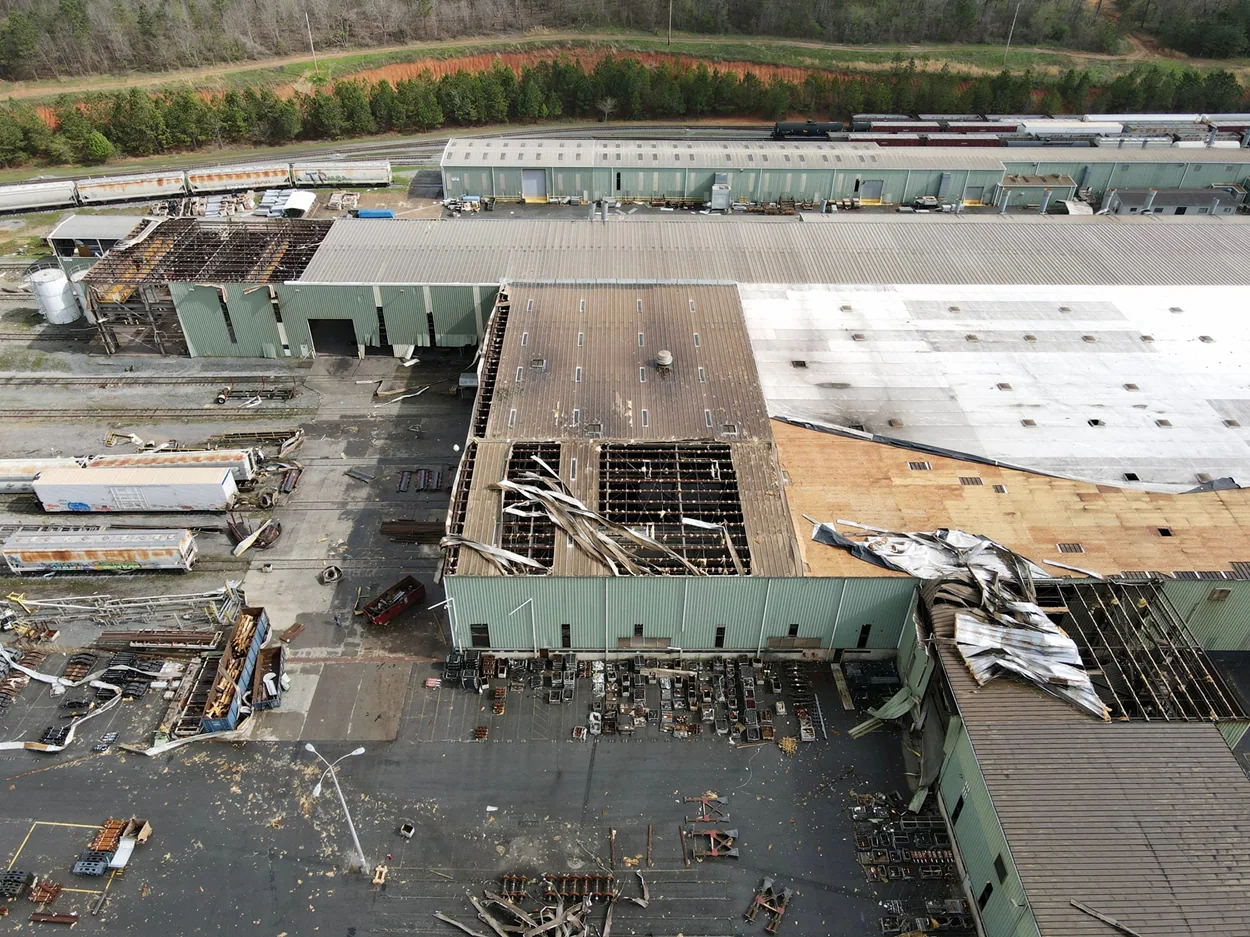
Roof Recover and Overlay in South Fulton, GA
A strip-center roof has a built-in problem: the tenants cannot leave, and the existing membrane still has life in places. A recover keeps that membrane in service as the base and puts a new one over it. Only some roofs qualify. The test is moisture inside the layer stack, not the look of the surface. South Fulton, GA gets damaging wind in every month and hail in spring, so a recover has to be fastened and edged as carefully as a new roof. We sort the qualifying roof zones from the failing ones before any price is written.
Building use: strip retail, flex space, and small plants
Recover work fits buildings where tear-off would cost more in disruption than in material. The Old National Merchants Association counts roughly 500 establishments along the Old National Highway corridor. Where a retail tenant sits directly below the work, dust, noise, and an open deck are real costs. A recover limits all three.
Flex buildings that join offices to warehouse bays also qualify when the bay roofs are dry. The flex industrial roofs that suit a recover usually share one trait: a single existing membrane over insulation that has not taken on water. Anything else points toward a full replacement.
Small plants add a further question: what happens under the roof. Process heat, exhaust, and washdown moisture all rise to the roof and change what a membrane can tolerate. We note those exposures at the walk-through, since they decide membrane type as much as the roof condition does.
Roof mechanism: what a second membrane does to the stack
A recover adds a layer and takes none away. The old membrane stays in place, so any trapped moisture stays too. Wet insulation under a new membrane does not dry. It heats in summer, pushes vapor upward, and blisters laps. That is why the first question is always where the water is, not what the surface looks like.
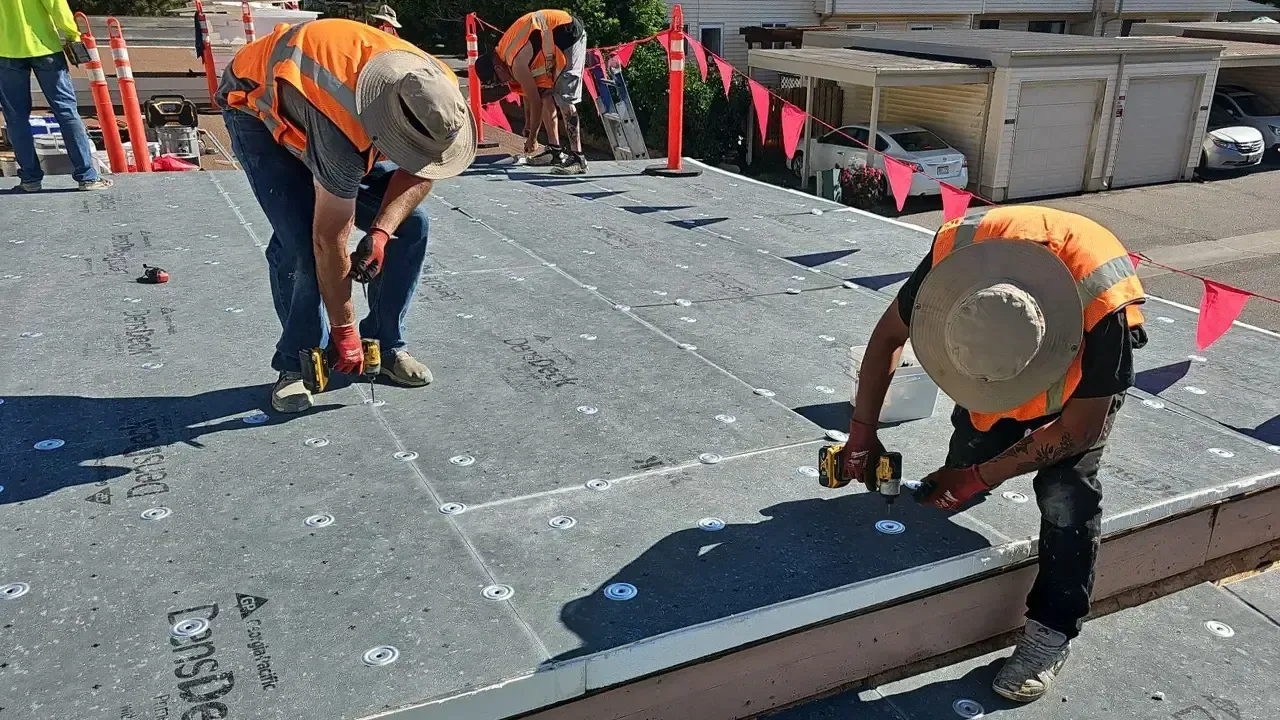
A cover board goes between old and new. It spreads the fastener load, smooths ridges and old seam lines, and gives the new membrane a flat bed. Fasteners or adhesive then tie the assembly to the deck, not just to the old surface. Summer heat is part of the load, since Atlanta logs about seven days a year past 95°F, and a recover that is not fully bonded or fastened will show it in wrinkles and open laps.
Inspection findings: the checks that qualify a roof
We start with a survey. Infrared imaging during a cooling evening shows where insulation holds heat from trapped water. Core cuts confirm it, and each cut doubles as a view of the layer stack. We want to know how many layers are present, whether the deck is steel, concrete, or wood, and whether the fastener line is intact.
Findings are plotted by roof zone, field, edge, and curb. A roof with a few wet spots can be recovered once those spots are cut out and rebuilt. A roof with wet insulation across most of a zone is not a candidate. The commercial roof inspection record becomes the basis for that call, with photos at each opening.
Scope options: single-ply, restoration, or full replacement
On a qualifying roof, a mechanically attached or adhered TPO over a cover board is a common recover path. A metal roof may take a new panel over the old with purlin or sleeper clips. Some roofs do better with a coating and not a second membrane, and that route is covered in roof coating restoration.
When the findings fail, the right scope is full replacement. A recover that goes over wet insulation turns into a tear-off later, with extra weight and extra layers to remove. We lay out both options with the same level of detail, so the owner can compare them.
Code coordination: layer counts, weight, and edge heights
Model building code limits recover work. A roof that already has two layers, or one that holds wet insulation, generally cannot take another. Georgia's current State Minimum Standard Codes include the 2024 International Building Code with Georgia Amendments, and the City of South Fulton reports that it took effect January 1, 2026. We check layer count and dead load against the structure before proposing a recover.
Edge metal, base flashings, and drain sumps all rise when a layer is added. Walls and curbs must still give enough flashing height above the new surface. If they do not, the curb or parapet is raised, and that adds scope. Skylight curbs, pipe supports, and equipment stands all need the same check. We price that early so it does not appear as a surprise on day three.
Timing: weather windows and tenant hours
A recover moves faster than a tear-off because there is less to haul away. The pace still depends on dry decks and mild temperatures, and spring storm days will take shifts. April is the peak month for large hail in north and central Georgia, so we aim to have large zones sealed before then where the schedule allows.
For retail space we work around opening hours and deliveries. The staging route, loading area, and roof access stairs are agreed with the property manager first. Each roof zone is closed in before the crew leaves, with temporary tie-ins at transitions. That rule holds on dry days as well as threatening ones, since afternoon thunderstorms can build quickly in a hot, humid summer.
Bring the roof history and the tenant schedule
Can a roof with a few wet spots still take a recover?
Often yes, once the wet areas are cut out and rebuilt. The test is how much of each roof zone is saturated. We mark every wet spot from the moisture survey, open the roof at each one, and replace the insulation before the cover board goes down. A zone with scattered wet spots can be recovered. A zone where wet insulation runs edge to edge cannot.
Which membrane goes over an old built-up or modified bitumen roof?
A cover board over a smooth, dry surface lets a single-ply such as TPO or PVC bond to the old roof's base. Gravel is removed or covered first. Fastener or adhesive choice depends on the deck and the wind exposure. We match the system to the existing layers, not the other way around, and confirm the pairing before submitting the plan.
What does a recover do to the weight on the structure?
It adds dead load from the cover board, insulation, and membrane. On steel framing the added weight is usually modest, but it still has to be checked against the design loads and the existing layers. Along Roosevelt Highway, one of the city's established business districts, we confirm the deck and framing in the field before committing, and we ask for original drawings whenever the owner has them.
How do drains and flashings change after a recover?
Drain sumps need to be reset so water still leaves the roof plane. Base flashings are pulled up to give proper height above the new surface, and curbs may need extension. We list those items on the scope sheet by zone. A roof that skips this step shows ponding at drains and open flashing laps within a season or two.
When does a recover cost more than replacement?
When the stack needs extensive repair first. Heavy moisture cut-outs, curb raising, edge metal changes, and drain rework can add up. If those items cover most of the roof, a clean tear-off becomes the better price and the better roof. We show both numbers side by side with the same assumptions.