
- Home
- South Fulton Parkway and Cedar Grove
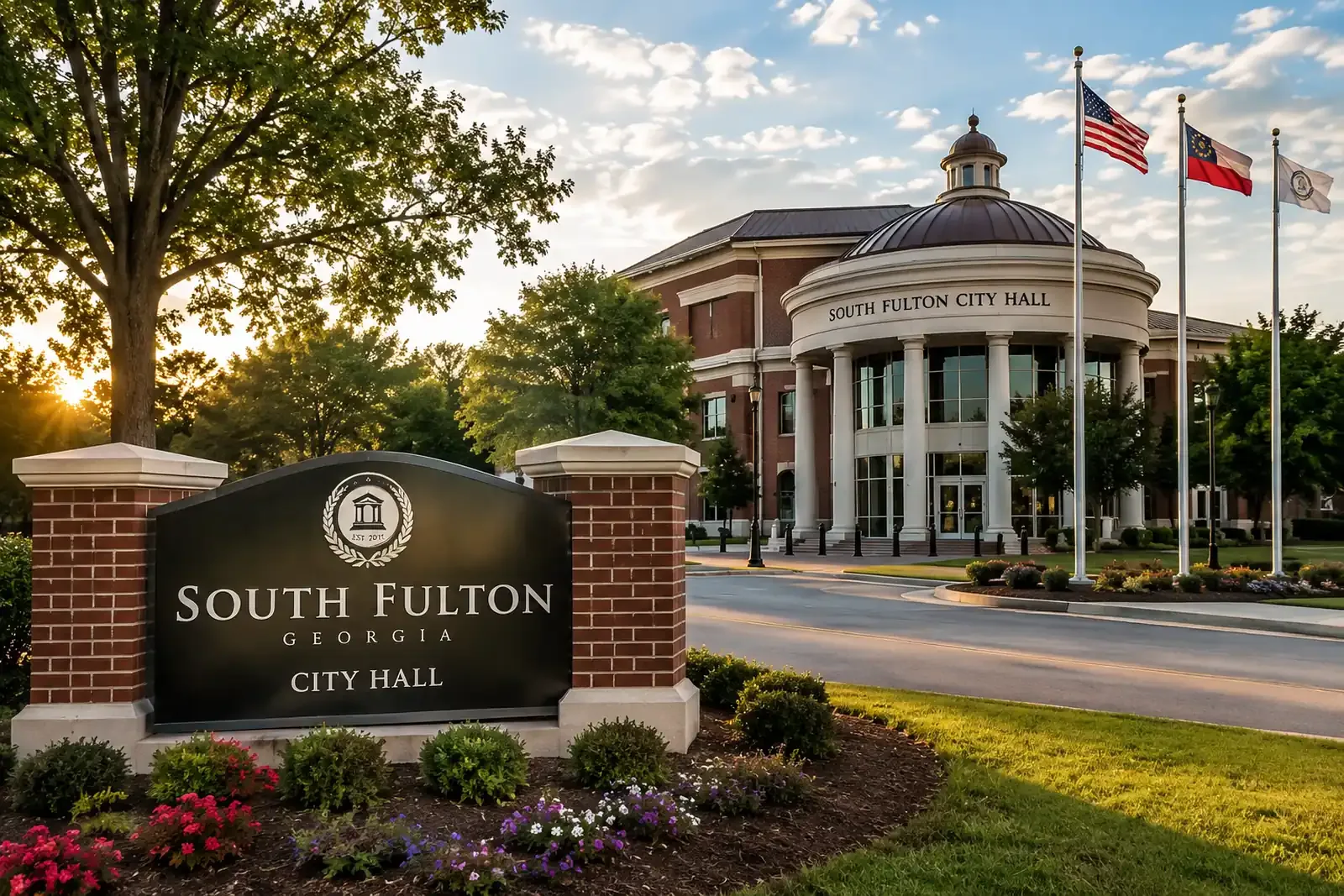
Commercial Roofing in South Fulton Parkway and Cedar Grove, South Fulton, GA
Neighborhood retail, a restaurant pad and a small professional office can share a plan. They do not share a roof. This is the use mix the city's strategic plan describes for the South Fulton Parkway and Cedar Grove focus area in the southwest. The plan names neighborhood-serving retail and restaurants. It allows for possible residential and small professional offices. The Parkway itself is the city's largest commercial corridor. That gives the area a direct commercial spine. We read each roof in this area on its own terms. Use first. Roof zone second. Mechanism third.
Building use: small footprints, many penetrations
A neighborhood retail building often has a low-slope roof with several rooftop units. Each unit sits on a curb. Each curb has four corners. Each corner is a seam that moves. A small roof with six penetrations has more edge than field.
The plan describes a use mix, not a roof, so the layer stack comes from a test opening. Then we choose a repair that fits.
Restaurants add exhaust fans and grease. Small offices add split systems and conduit. Each trade that visits the roof can cut the sheet. A roof access log reduces that risk.
Shared walls need a note. Where one building meets another, flashing at the joint depends on both owners. We photograph it from each side. We mark who maintains which part. A leak there can start on one roof and show on the other.
Roof mechanism: grease, curbs and the wet boundary
Grease travels. A fan throws it onto the sheet within a few feet. It softens some membranes. It clogs scuppers downwind. Rain then carries it to the nearest low point.
The mechanism is slow and visible. Dark staining around a fan marks the path. Soft membrane under a finger marks the damage. We cut out the softened sheet. We replace it with a grease-resistant material. We add a containment tray if none exists.
Moisture follows the same path. Grease-softened laps leak first. Water then enters the insulation and spreads sideways. The wet boundary can be far from the stain. A moisture scan finds it. Our restaurant roofing work starts with that scan.
Drains need a look as well. Grease and leaf litter collect at the bowl. A clogged bowl on a small roof ponds the whole surface. We clear it. We pour water to confirm flow. We note any pond that remains.

Heat and humidity: the dry-in clock
Atlanta sees roughly seven days a year past 95 degrees, with sticky air on top. That heat reaches the sheet first. Damp air slows adhesive cure. Membrane goes soft underfoot. Both change how a crew works.
We start early. We weld and bond in the morning, before the surface runs hot. We close each area before afternoon storms build. Materials stay shaded and covered. Sealant tubes stay cool until use.
Heat also ages the details. Rubber boots crack. Sealant hardens. Metal caps open at joints. A late-summer walk finds them before fall rains. The same spots are photographed each year.
Coolers and condensers add to the load. Their discharge warms the sheet beside them. Discolored rings mark the path. We look for early shrinkage there. We note the date and photograph the ring from the same spot each year.
Wind at corners: where small roofs fail first
The metro Weather Service office logs damaging thunderstorm winds in every month. Corners take the pressure first. On a small roof, every point is near a corner. The edge metal does most of the work.
We test each coping length by hand. We look for open joints and loose cleats. We check fastener spacing at the edge. A heavier cleat and tighter spacing at the corner cost little. A lifted membrane costs a great deal. Wind damage repair starts at the edge and works inward.
Inspection findings: the first walk on a small roof
A small roof takes hours, not days. The walk is complete. Every edge. Every curb. Every drain. Every penetration. We photograph the whole roof zone from one fixed point first. Then we move close.
Common marks on small commercial roofs include cracked pipe boots and open cap joints. Curb flashing splits at corners. A scupper sits a half inch high. Sealant at a termination has dried. Each mark gets a photo, a location and a next test.
We press on suspect areas. We probe laps. We pour water at the drain and watch the flow. A commercial roof inspection ends with a one-page summary. It lists what is sound, what needs repair and what to watch. The longer record sits behind it.
Scope options: what a small roof can take
A small roof with a sound membrane can take a coating. It adds reflectivity and seals minor wear. It needs dry insulation first. A roof coating restoration follows a moisture reading and a seam repair.
Wet zones need section replacement, and the wet boundary sets the limit. Wide saturation needs a full new roof. Price follows area, wet insulation, penetrations, lift access and work hours, and the proposal itemizes each.
For a tenant on a short lease, the owner may choose repair. For an owner holding long term, replacement may win. The record supports either call.
Storm exposure raises the stakes. Hail of large size shows up on about seven days a year in this part of Georgia, most often in April, and tornadoes can form in any month. A dated baseline taken before March lets a later pass show what changed.
Send the plan, the unit list and the tenant hours
What should a GC send for a neighborhood retail roof?
Send the roof plan, rooftop unit list, loading limits and the tenant hours. We recommend adding the lease terms on roof access. With those, we set the staging route and the dry-in limit.
Why does grease damage a membrane?
Some membranes soften on contact with grease. We recommend a grease-resistant sheet near the fan and a containment tray. Cleaning on a set schedule helps.
Is a coating worth it on a small roof?
Yes, when the insulation is dry and the membrane is flexible. Run a moisture scan and cut a core before deciding. A coating over wet insulation hides the problem.
How do you protect a restaurant during roof work?
We time curb work between service periods and cover intakes during adhesive use. We recommend a named contact who can pause the crew.
What does a roof access log add?
It names who entered the roof and when. If a puncture appears later, the log narrows the list. We recommend a clipboard at the hatch.
When is the best time for a baseline inspection?
Before March, ahead of the spring hail and tornado peak. We recommend a full photo pass and moisture scan, so a post-storm pass can show exactly what changed.