
- Home
- Emergency Roof Repair
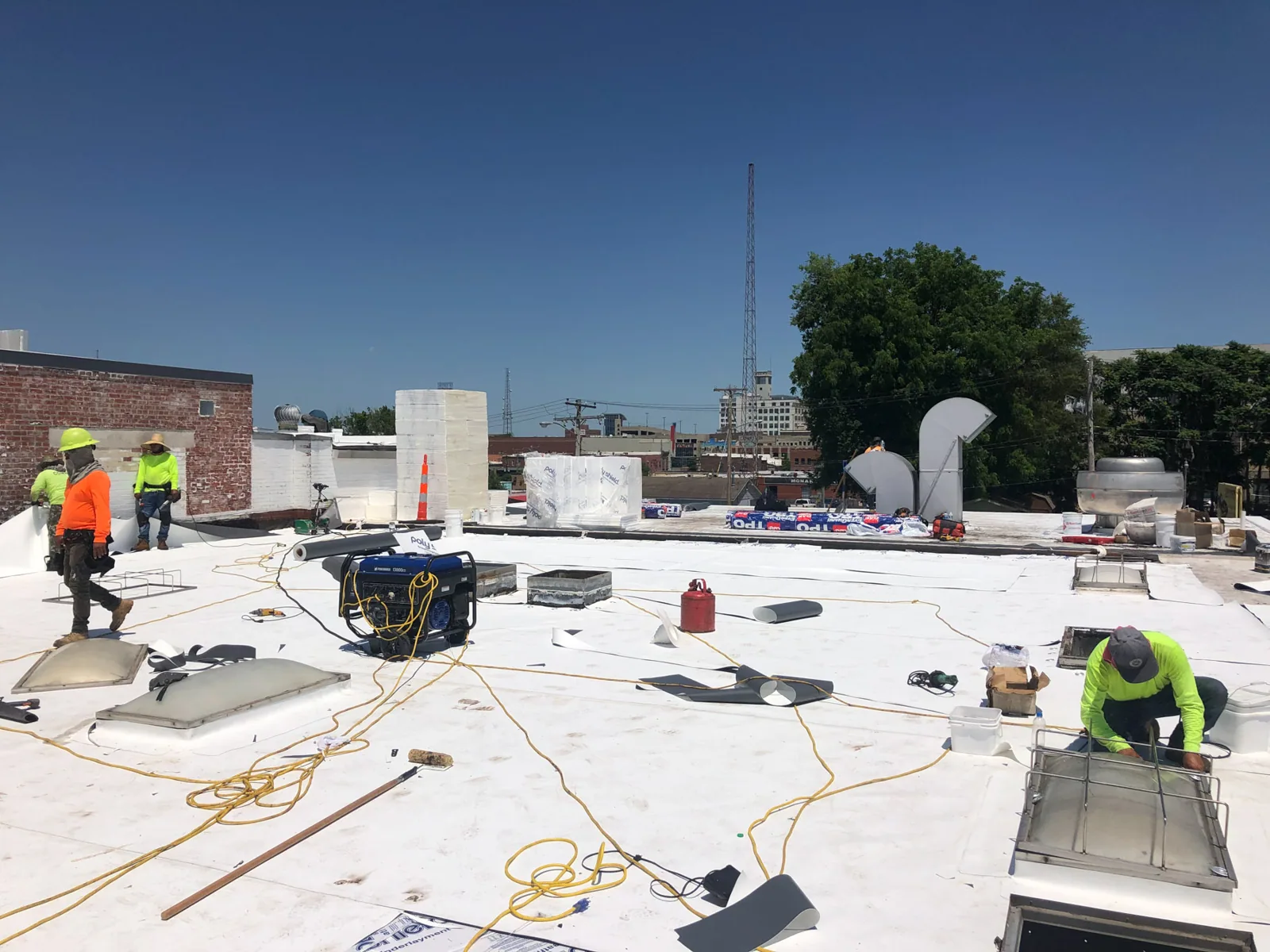
Emergency Roof Repair in South Fulton, GA
A tarp on a flat commercial roof is a wind problem before it is a rain problem. Thunderstorm winds that open a roof tend to return with the same front, and a poorly secured cover becomes the next hazard. South Fulton, GA sees damaging wind in every month, so an emergency call is answered with a plan for holding the cover down, not only for putting it up. Calls come in all night and on holidays. First we close the opening, then we set the dry-in limit and leave the building safe until permanent work can be scoped.
Building use: what has to stay dry
The first question on any emergency call is what sits below the opening. A distribution building may have inventory in racks, sprinklers, and conveyors. A plant may have powered equipment and a running process. An office may have occupied suites and server closets. The order of work, the crew size, and the materials all follow from the answer.
South Fulton Parkway ranks as the largest commercial corridor in the city, and the Fulton Industrial District, next to the city, is a large industrial and business area by its account. An operation on either may hold stock or equipment that cannot move on short notice. The faster we know what is exposed, the sooner we can protect it with a membrane cover and not just a tarp.
Roof zone matters too. Water over a loading dock canopy is a smaller job than water over a production floor. We note the zone, the deck type, and the nearest drain on the first call so the right materials are loaded before the truck leaves.
Roof mechanism: how storm damage opens a roof
Wind lifts a membrane at the corners and perimeter first, where uplift pressure peaks. Once an edge is free, the wind peels the sheet back across the field. Hail bruises and punctures the membrane and cracks the insulation underneath. Tree limbs and loose rooftop items punch holes. Each failure is different, and the emergency fix has to match.
An opened edge needs the metal re-secured and the membrane fastened back to a sound line. A puncture needs a patch that can handle foot traffic and rain. A peeled field needs a large cover fastened to the deck or ballasted with weights that will not slide. We choose the method for the wind that is likely to follow, not only for the weather in the first hour.
Inspection findings: the first walk
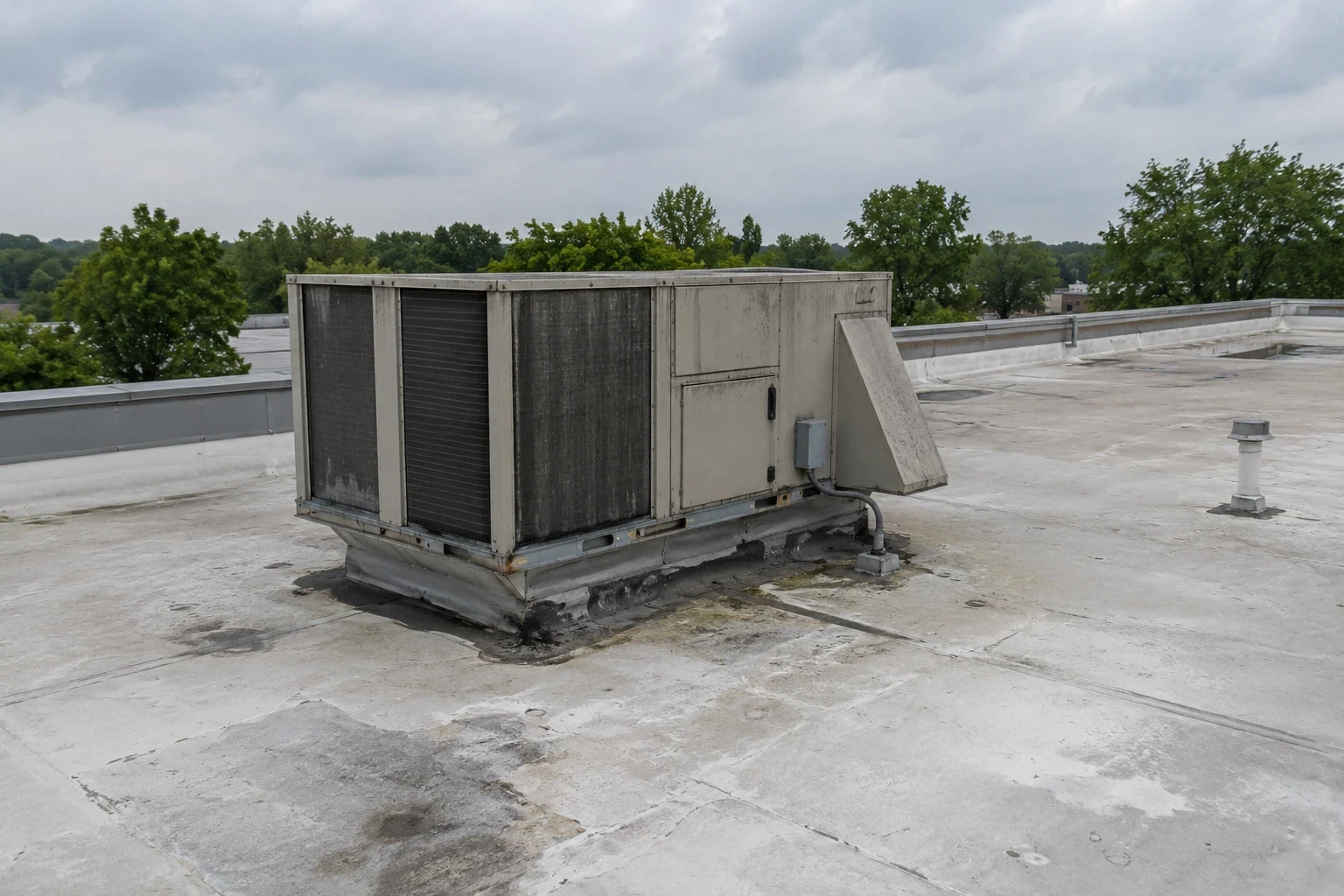
The first walk is short and structured. We look for exposed deck, loose edge metal, missing or lifted membrane, damaged curbs, and standing water. We photograph every opening with a reference for scale. Interior checks follow, with moisture readings at the ceiling line and notes on ongoing drips.
The walk sorts the roof into three groups: areas that must be covered now, areas that can wait for the permanent repair, and areas that need a closer look once the weather clears. That sorting gives the GC a clean record for claim documentation and sets the close-in limit for the temporary work.
Scope options: tarp, temporary membrane, or full dry-in
A tarp works for small openings and short durations. It needs battens, edge fasteners, and a drain path so it does not catch water. A temporary membrane, such as a self-adhered sheet or a spray-applied patch, lasts longer and handles foot traffic. A full dry-in uses a new layer over a limited area and may act as the first stage of permanent repair.
Each choice carries a cost and a lifespan. We tell the owner which choice we recommend and what it will hold against. The permanent plan then follows from the type of damage: storm damage repair for broad impacts, wind damage repair for peeled edges and fields, or a targeted leak repair when the entry point is small.
Access and sequencing: safe work in bad conditions
Safety comes first. We do not step on a roof in lightning, high wind, or when the deck is unsound. A crew lead checks the structure from below when needed, and ladders and fall protection are staged before anyone climbs. Debris is cleared from drains and walkways so water does not collect.
Cover materials are weighed against the wind. Sandbags and ballast blocks hold a membrane only until a gust gets under it, so fasteners into sound deck or battens along a continuous line are preferred. Edges are folded and secured so the wind has no loose corner to grab.
Night and weekend calls bring extra constraints: lighting, building access, and utility shutoffs. We confirm the entry route and the contact at the property before the crew arrives. If power is out, we work with portable lighting and plan the temporary cover so it can be checked in daylight.
Timing: storm season and the next front
The NWS describes spring as the peak for large hail and tornadoes in north and central Georgia, and the season for large hail peaks in April. The Peachtree City warning area logs about 19 damaging-wind days in an average year. A March 2018 EF-2 tornado between Fairburn and Campbellton damaged homes, and a tornado-damaged roof needs the fastest cover. Tornadoes occur in all months across the region, with most in March, April, and May, so the cover plan assumes a second system may follow the first.
After a regional storm, many buildings need help at once. Owners who have a roof plan, an access contact, and a list of rooftop equipment on file get a faster first visit. We work in order of risk: open decks over sensitive space first, minor leaks after.
Call now with what is open and what is below
What does an emergency crew do in the first hour on a flat roof?
Make the building safe, then stop the water. We confirm access, walk the roof for exposed deck and loose metal, and cover the largest opening first. Photos and moisture readings are taken as work proceeds. The owner gets a summary of what was found, what was covered, and what still needs permanent work.
How long will a temporary cover hold?
A tarp is a short-term measure, a matter of days to a few weeks depending on wind and rain. A temporary membrane or a patch can last longer. We state the expected duration when we install it and schedule a recheck. Delaying permanent work extends the risk, so the plan includes a target date.
Can emergency work affect the manufacturer warranty on the existing roof?
It can. Some warranties limit who may repair the system and with what materials. We record every temporary measure and keep it removable so the permanent repair can restore the warranted assembly. Owners with a warranty should share the document so we can match materials to the system.
Who pays for the emergency work, the owner or the insurer?
Coverage depends on the policy and the cause of loss, and the owner usually arranges payment for the emergency visit first. Storm damage can qualify, while long-term deterioration usually does not. We keep timestamped photos, invoices, and a written scope so the adjuster sees what was done and why. Records of temporary protection give the adjuster a clear timeline.
What should a property manager have ready before a storm?
Keep a current roof plan, the location of utility shutoffs, a roof access contact, and the list of rooftop equipment on hand. These cut the first-hour delay. A building with that file ready gets covered sooner than one where the crew has to search for a key or a shutoff.