
- Home
- Manufacturing Plant Roofing
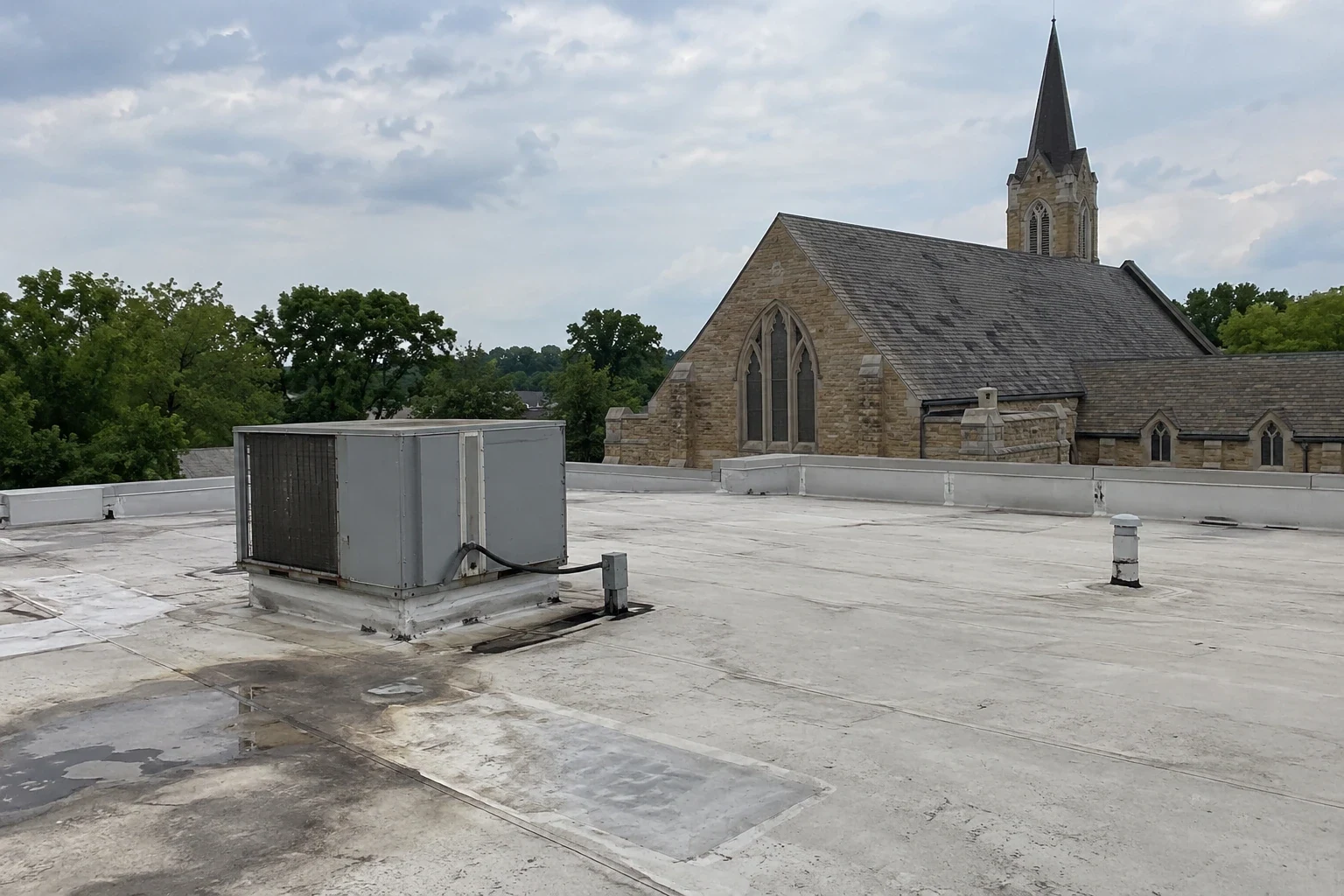
Manufacturing Plant Roofing in South Fulton, GA
A manufacturing plant mixes high bays, process rooms and offices under one roof. The use sets the first question: what rises through the roof, and what must stay dry below it? The roof zone over a paint line, a clean assembly area or a food process room gets its own plan. The mechanism that changes the sequence is process load. Exhaust, vapor and heat act on the roof from inside, as well as weather from outside.
South Fulton's development authority names advanced manufacturing and logistics as existing strengths, including aerospace-component and large-scale food-production operations, and it lists automotive among target industries. Those names frame demand. They do not tell us what is on any plant roof. Each roof is read on site, one zone at a time, and the findings are recorded.
A plant may sit near distribution space in the same park. A distribution center roof next door has a different load pattern, so each building gets its own plan. Shared access roads and shared staging areas are noted in the file so crews do not block a neighbor's trucks.
Roof mechanism: exhaust, vapor and heat from below
Process exhaust leaves a residue on the sheet. Vapor drives into insulation from the warm side. Heat from stacks softens the membrane near them. Each effect leaves a mark we can photograph: staining, softening, wet board. We map every stack and vent, then read the sheet downwind of each.
Condensation is a quiet cause of stains. Warm moist air meets a cold deck and drips from below, in a pattern that follows the structure. It looks like a leak but behaves differently. We compare the interior pattern with the roof plan and the weather before opening anything. A vapor fix may be the repair. An infrared survey sorts one from the other.
Vibration deserves a line. Large fans, compressors and presses shake curbs and supports. Over time, the shaking loosens fasteners and opens flashing at the curb. We check curb bolts, isolators and flashing at each unit and list those that need a trade. Where a unit has moved, the support is corrected before the flashing is rebuilt.
Material fit: exposure sets the sheet
Exposure sets the roof system. Grease and chemical vapor favor a sheet such as PVC or an alloy sheet. Heat from stacks favors a heat-tolerant detail with metal collars. Light exposure may allow a plain single-ply. The scope names the exposure in each zone and the sheet or flashing chosen for it. One roof may carry more than one detail.
The walk also checks flashing at every stack. Boots crack, clamps loosen and sealants age. We pull-test boots, replace worn ones and log each by position. A boot is cheap before a leak and costly after one, and the cost of a wet process room is higher than either.
Walk routes to equipment are marked. A plant has many service visits, and each one is a chance for a puncture. Pads protect the routes and tell trades where to walk. A sign at the access point lists the rules for tools and fasteners. Punctures that do occur are patched, dated and logged by position.
Weather and storm peaks
NOAA's view of Georgia summers is long, hot and humid, and Atlanta's tally is about seven days a year past 95 degrees Fahrenheit. Damaging thunderstorm winds strike the area the NWS watches from Peachtree City all year, about 19 days a year, and large hail strikes north and central Georgia on about seven days annually, mainly in April. Tornadoes can appear in any month, with March, April and May the busiest.
A plant roof carries tall stacks and large units that catch wind. After a strong storm, we check curbs, guy wires, stack bases and edges. Hail dents soft metal and can bruise the membrane. We count marks per test square and photograph them. Regional storm data prompts the check. The dated marks themselves are what a repair or claim rests on.
Insulation in a plant roof may be thick, to meet energy rules or to hold heat. Thicker insulation raises curbs and flashing heights. When a replacement raises the thickness, parapets and curbs may need to rise too. The scope lists those knock-on items so the cost is visible.
Scope options and code
Local faults take repair. A sound roof with dry insulation can take a recover or a coating. Wet board that runs across a zone sends that zone to tear-off. The scope shows each path with cost drivers: area, layers, insulation, penetrations, access and the phases the plant allows.
South Fulton's permit page shows the 2024 IBC, with Georgia amendments, in effect from January 1, 2026, on top of Georgia's State Minimum Standard Codes. For energy, the 2015 IECC as amended in Georgia still applies. Any change to equipment or insulation is reviewed against both, and the scope lists the questions before the date is set.
Cost drivers also include shutdown windows and overtime. A roof zone over a continuous process may only be open during a planned outage, and the schedule bends around it. Material lead times can set the start. The scope lists the lead time and the approval date that holds the slot.
Access and sequencing: clean areas and live lines
A live line sets the rules. Dust, drips and vibration can ruin product or stop a line. We ask for the limits at the first call: which areas must stay sealed, which hours are quiet, which intakes need covers. Work moves by roof zone, with the area over the most sensitive process finished last or done during a planned shutdown.
Sites near the Willingham Industrial Park or the Fulton Industrial District follow the same method. Trades are sequenced: mechanical first, then flashing, then closure. The dry-in limit is set each day. A warehouse roof on the same site gets its own record. When it is finished, the owner receives photographs, the plan with the repair boundary marked, test results and product data.
Interior protection goes up before the roof opens: covers over equipment, drop cloths in wet-sensitive areas and a catch plan for debris. A person from the plant checks it. The photographs of that setup go into the file.
Closeout covers every curb, boot and flashing touched, with photographs before and after. The owner keeps the file and uses it to compare the next season's walk against this one.
Send the roof plans and the access window
How do you protect a clean area during roofing?
Cover intakes, seal penetrations below the work, schedule noisy and dusty steps for shutdowns and finish the roof zone over the area last. The limits go into the schedule before the crew arrives.
Which sheet suits a grease or chemical exposure?
PVC or an alloy sheet is usually the fit, with metal collars where heat is high. Confirm the exposure for each stack, then choose the sheet and flashing for that zone.
Can a plant reroof in phases?
Yes. Each roof zone is finished watertight before the next opens, with a dry-in limit each day. Tie the phases to production calendars.
How do I tell condensation from a leak?
A leak tracks rain and follows the roof's low points. Condensation follows cold surfaces and interior moisture. Map the pattern against the structure and the weather before cutting into the roof.
Does a hail report prove my plant roof is damaged?
No, a report only calls for an inspection. Marks counted per test square, dated and photographed, are what support a repair.