
- Home
- Infrared Moisture Survey
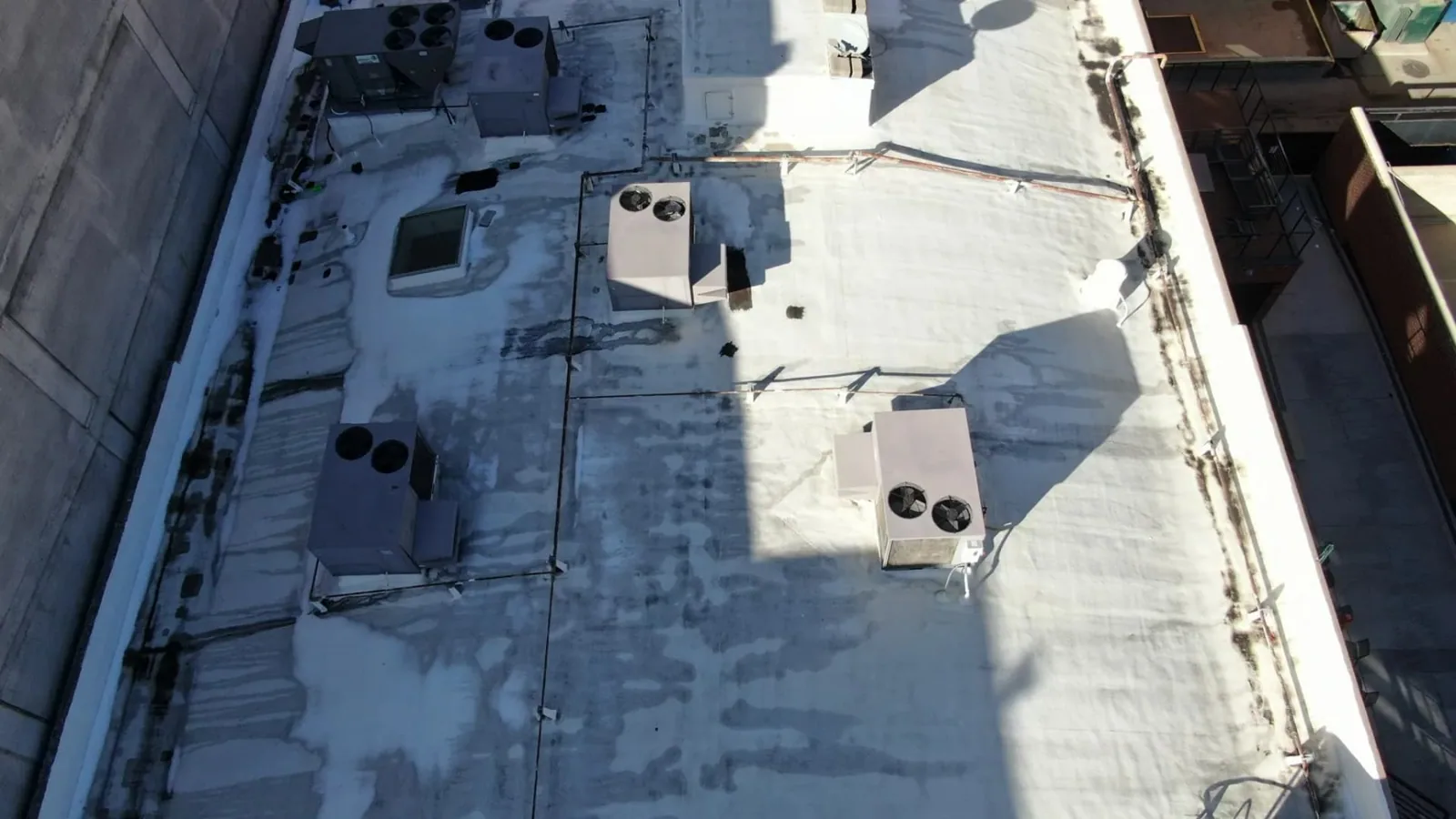
Infrared Moisture Survey in South Fulton, GA
Insulation board holds water like a sponge, and the membrane above it hides the proof. A roof can look dry and still carry a wet layer from one wall to the next. An infrared scan reads the heat that wet board keeps after sunset, and core cuts confirm what the scan suggests. In South Fulton, GA, long humid summers and warm evenings give good scanning conditions, but the same weather feeds moisture into the layer stack. The survey draws the wet boundary so the owner pays to fix what is wet and nothing else.
Building use: where a survey changes the decision
A survey matters most when the roof is large, the leak history is vague, or a big decision is pending. East Point places the Southmeadow Business Park on Welcome All Road near Camp Creek Parkway, and its development has included industrial, government, and distribution uses. A roof in a park like that raises the recover-versus-replace question quickly, and the wet map answers it. The same applies to retail and office roofs along Roosevelt and Old National highways.
A buyer reviewing a property, a lender, or a facility group planning a capital budget can all use the wet map. It turns a guess into a quantity.
Mixed buildings need the survey most. Where office suites and warehouse bays share a roof line, one wing may be newer than the other, and the order can run either way. One scan across both shows which section holds water, so the owner does not replace a dry roof to fix a wet one.
Roof mechanism: why wet board looks different on a scan
Water stores heat. After a warm day, wet insulation stays warmer than dry insulation as the roof cools in the evening. A thermal camera sees the difference as a brighter patch. The effect needs sun during the day, a clear sky, light wind, and a dry roof surface at the time of the scan.
Wet insulation also loses much of its R-value, which raises energy cost and speeds membrane aging. Trapped moisture can corrode a steel deck from above and stress fasteners. The longer it stays, the more it spreads. Finding it early limits the area that must be cut out.
Inspection findings: the scan, the cuts, and the map
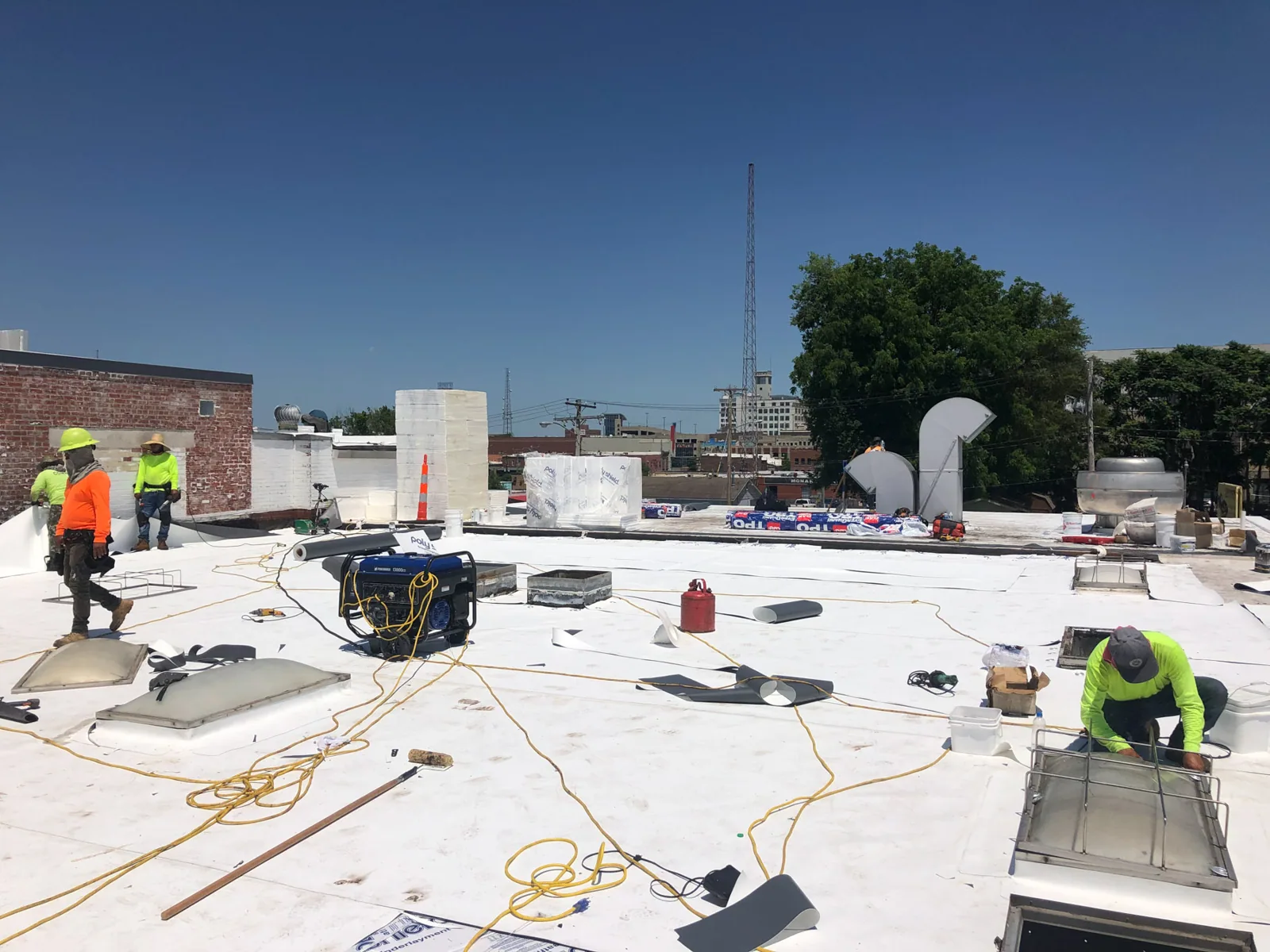
We start with a walk to note the roof layout, drains, and penetrations. The scan follows at the right hour, usually in the evening. We paint the outline of each warm patch on the roof. Then we cut small cores through the membrane and insulation at selected points, inside and outside the outlines, and measure moisture in each layer.
The cuts calibrate the scan. They tell us which patches are truly wet and which are heat sinks, such as thicker insulation or a dense patch. Each cut is sealed the same day. The result is a roof plan with the wet boundary, core locations, photos, and a count of wet zones. This record feeds the commercial roof inspection file.
Scope options: cut-out, recover, or replace
With the wet boundary mapped, three paths open. If wet areas are small, they are cut out and rebuilt as part of repair. If wet areas are scattered but the rest is dry, a recover over the existing roof becomes realistic after the wet insulation is removed. If wet areas cover most of the roof, replacement is the clean answer.
Each path has a cost. The survey lets the owner compare them using real quantities, not estimates. It also helps decide the insulation and cover board specification for the new assembly.
The map also guides phasing. Wet zones are repaired or replaced first, and dry zones wait for the next budget year. A tenant-occupied building can then take the work in pieces, with each piece tied to a measured area. Drains and low spots are checked again after the work, since water that finds a new low point can start the problem over.
Access and sequencing: the evening visit
Scans work best after sunset, so the crew often arrives late in the afternoon and works into the evening. Roof access, lighting, and safety plans account for this. We confirm tenant hours, security contacts, and building lighting before the visit.
Roofs with ballast, gravel, pavers, or a reflective surface scan poorly. Metal roofs and many fully adhered systems give weaker signals. In those cases, we shift to moisture probes or capacitance meters, and we say plainly when a scan will not give a reliable answer for that roof type, so the owner never pays for a scan that cannot answer the question. A drone flight can supply the thermal view on a roof that is too large to scan on foot.
Timing: scan windows and storm effects
About seven days a year in Atlanta pass 95°F, and long humid summers give many warm days for scanning. Rain interrupts the schedule. A scan needs a roof that has been dry for a day or more, so wet spells push the visit. The NWS Peachtree City warning area sees damaging thunderstorm wind in every month, and April is the hail peak across north and central Georgia.
A survey just after a storm can find new openings before water spreads. A survey before a purchase or a budget cycle gives the owner time to plan. Where ponding water is present, wet insulation often sits beneath it, and the scan covers those low spots first. Summer heat also changes the schedule. On the hottest afternoons the roof surface can be too warm to walk safely in the early evening, so we start later and plan breaks for the crew.
Share the roof plan and the evening access
How accurate is an infrared moisture survey on a flat commercial roof?
It is a strong guide, not a final answer. The scan shows where the roof holds heat in a pattern that suggests water. Core cuts then confirm which patches are wet. Combined, the two methods draw a reliable boundary on most single-ply and built-up roofs. Metal and ballasted roofs are harder and may need other tools.
Why take core samples if the scan shows the wet areas?
Because heat patterns have more than one cause. Thicker insulation, a patch, or a rooftop unit below can make a roof look warm without any water. A few cores tell us whether the signal means water. They also give us the layer thickness and deck condition, which matter for the scope.
What does a moisture map cost compared with a leak repair?
The survey costs more than a quick visit but less than a failed repair or an unnecessary replacement. Price follows roof size, access, and the number of cores. We quote it by area. The map often pays for itself by narrowing the cut-out zone or ruling out a recover that would have trapped water.
Can a scan find wet insulation in an occupied building without disturbing tenants?
Most of the work happens on the roof, outside tenant space. Cores are small and sealed the same day. We coordinate with building management about evening access and any tenants below sensitive areas. If interior ceilings need checking, that is arranged separately and kept brief.
When does a survey make sense before buying a building near Old National Highway?
When the roof is a large part of the price and the seller cannot show its history. The map shows how much of the insulation is wet and how much is dry, so a buyer can price the repair or replacement into the deal. It also gives a baseline for future insurance and capital planning.