
- Home
- Due Diligence Roof Surveys

Due Diligence Roof Surveys in South Fulton, GA
A roof survey for a sale has a clock on it. The review window is short, the seller controls access, and the buyer needs numbers before the deadline. In South Fulton, GA, industrial and flex buildings near the Fulton Industrial District and the Camp Creek area can carry roof zones that a walk alone cannot read. We run the survey as a test program: scan, core, probe and report, in an order that fits the window.
Building use: what buyers and lenders ask
The authority's own tally runs past 4,000 acres of developable land, spread across industrial, commercial, flex, office and mixed-use sites. A buyer in that market might be looking at a logistics building, a flex property or a retail center, and each has a different roof question. An industrial buyer asks about remaining life and drainage. A retail buyer asks about leaks and tenant complaints. A lender asks for a reserve figure.
East Point's comprehensive plan supports adaptive reuse of vacant or underused industrial properties, and Willingham Industrial Park sits within that policy. A buyer who is converting use must confirm that the roof will support new loads and new equipment. In College Park, where the city reports more than 200 acres of city-owned land for commercial, retail and industrial site selection, a buyer may be weighing sites and existing roofs in the same search.
Roof mechanism: the risks a survey is built to find
Three risks decide most deals. The first is hidden moisture: wet insulation that has not yet stained a ceiling. The second is a membrane at the end of its life, with shrunken sheet, failed seams and cracked flashings. The third is a structural or drainage fault that will recur, such as a sagging deck or a drain plane that holds water.
Each risk has a cost range and a lead time. Wet insulation changes the scope from repair to replacement. An aged membrane compresses the reserve schedule. A drainage fault changes the design. The survey ties each finding to a roof zone, a cause and a scope, so the buyer can price it into the offer or ask for a credit. Heat and storm history in the region add context. Large hail peaks in April, and a roof with an unrepaired hail event may carry latent damage.
Inspection findings: the survey sequence
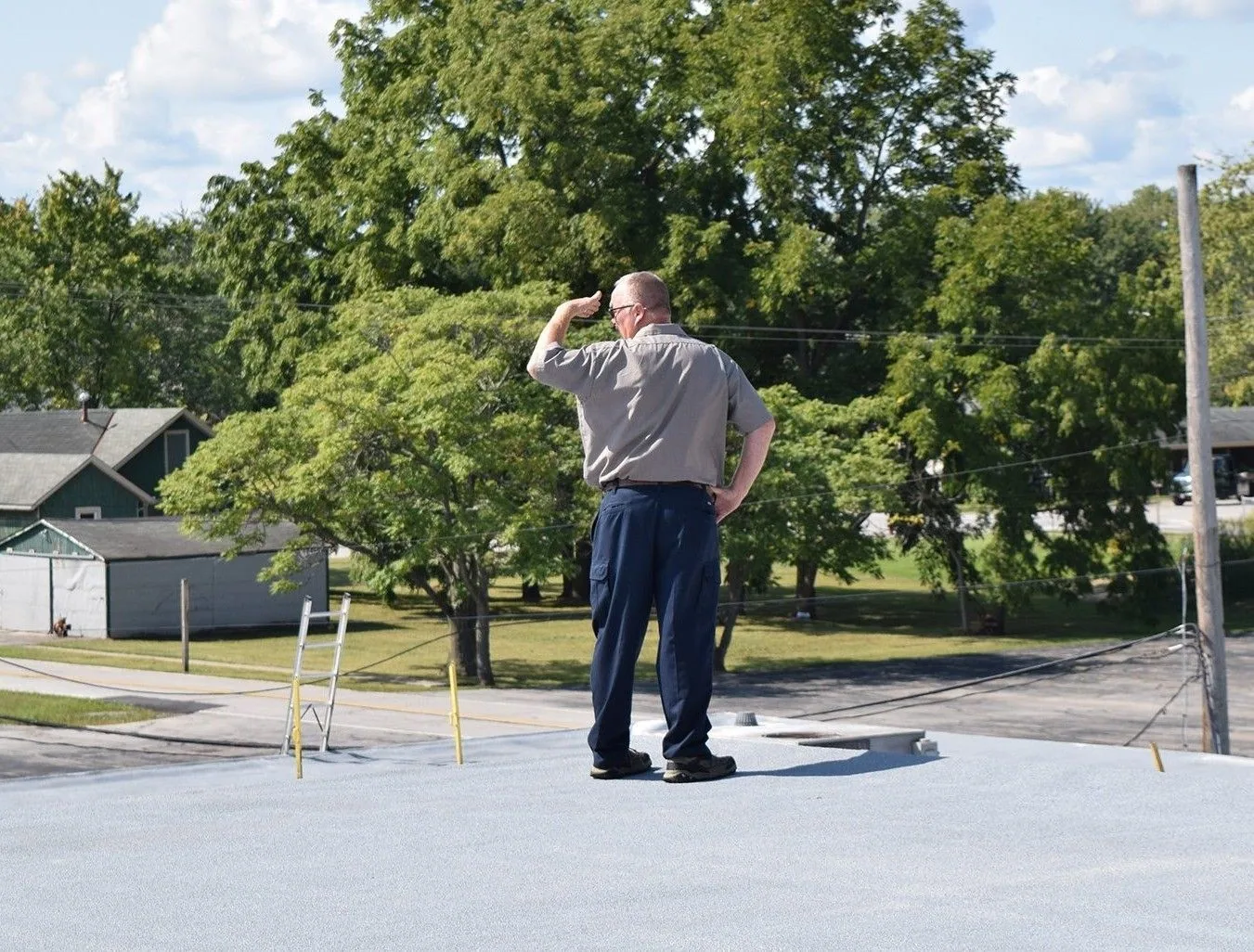
The sequence is fixed so the work fits the window. We review the plans and the seller's records, then walk the roof. A drone pass maps the surface. An infrared scan, run under the right conditions, flags wet zones. Cores and test openings confirm what the scan suggests.
- Roof plan with numbered zones, ages if known, and access points.
- Surface condition by zone, with photographs.
- Moisture map from an infrared survey, with core confirmation.
- Seam, flashing and edge findings, rated by urgency.
- Drain and ponding observations, with the likely cause.
Findings are rated: immediate, near-term, monitor. Immediate items are things the buyer should know before closing. Near-term items go into the reserve. Monitor items stay in the record. The result is a table a lender can read in minutes and a photographic appendix that backs every line.
Scope options: screening, full survey, reserve study
A screening survey uses a walk, a drone pass and a moisture scan to sort the roof into good, questionable and poor. A full survey adds cores, probes and a written report with ranked repairs. A reserve study turns the findings into a multi-year cost schedule that the buyer or lender can use.
The scope depends on the stakes and the window. For a single building, a full survey may fit in a week. For a portfolio, a screening pass across all roofs is followed by full surveys on the roofs that scored poorly. The output feeds capital planning after closing, and the baseline photographs begin the owner's condition record. If a multi-site program follows the purchase, the survey is the first entry in it.
Access and sequencing: working inside the review window
The seller grants access, and tenants may not know a sale is pending. We coordinate with the broker or property manager on the timing and the message. Occupied buildings are surveyed outside operating peaks. Dry weather is needed for infrared work, so we hold a backup day when a storm is forecast.
Cores are patched the same day with matching material, and the patches are documented in the report so the seller can see exactly what was opened. If the survey finds an active leak, we make a temporary repair if the seller approves, and we call the finding in before the written report is complete. The staging route and lift location are set before the day starts.
Code coordination: what the survey notes about the edition
A buyer planning a replacement or a change of use should know the city's current edition: the 2024 IBC with Georgia Amendments, which has applied since the start of 2026. New work gets reviewed against it. The survey flags existing conditions that a permit review could touch, such as parapet height, edge metal, drainage and insulation, so the buyer prices them into the deal.
On energy, the state still requires the 2015 IECC, with Georgia Supplements and Amendments. We note where a future replacement would trigger insulation questions under that code.
Send the deal timeline and the property list
How much of the roof do you test during a sale review?
The scan covers the whole accessible roof. Cores and test openings go where the scan or the walk shows a question, plus a few control points in areas that look sound. The sampling plan is written before the visit and stated in the report, so the buyer knows what was tested and what was inferred.
The seller has a warranty on the roof. Does the survey still matter?
Yes. A warranty has conditions and exclusions, and it may not transfer without notice or a fee. The survey records the roof's present condition and flags items that could affect coverage. The buyer then knows what the paper covers and what it does not.
Can the survey set a reserve number for the lender?
It can supply the findings that a reserve is based on, with ranked repairs and estimated timing. The lender or buyer sets the final figure. Our report states the assumptions behind each estimate, so the number can be checked and adjusted.
What if the seller will not allow cores?
Then the survey relies on the walk, the drone pass and the infrared scan, and the report states that confirmation was not possible. The buyer can ask for a credit, a holdback or a post-closing test period. We write the limits plainly so the decision is informed.
How quickly can a screening report come back?
Roof size and weather set the date, so we give one when the visit is scheduled. Urgent safety or leak findings are called in the same day. For tight windows, a short summary of findings precedes the full report.