
- Home
- Hapeville

Commercial Roofing in Hapeville, GA
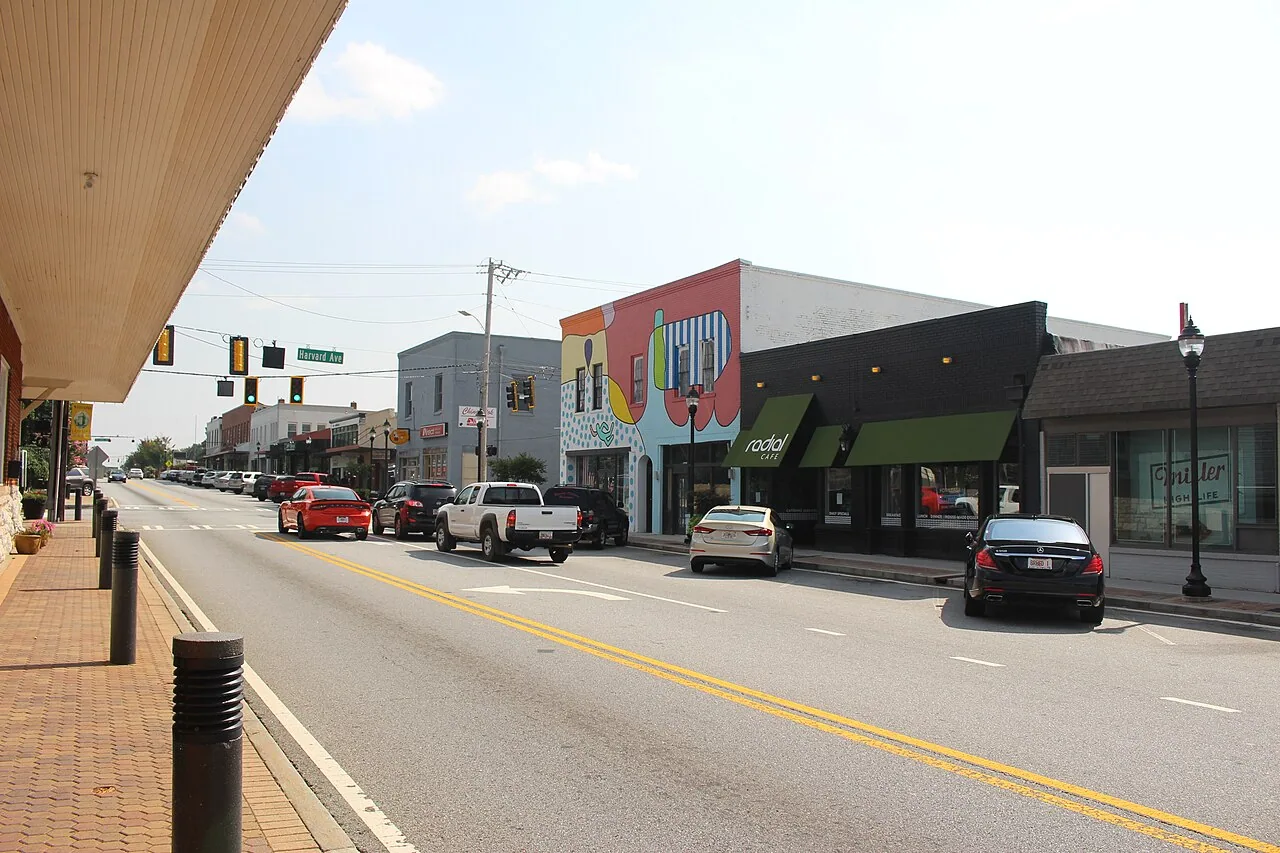
A facade project and a roof project often land on the same block. Hapeville, GA, aims for its commercial corridors and downtown to work as accessible shopping, dining and entertainment areas, and its development authority offers facade-improvement support. Where a storefront gets a new face, the roof above it still needs a look. The mechanism that changes the sequence is the wall line. Where the facade ends and the roof begins, water finds the seam.
We read the building use first, then the roof zone over it. The wall line is the part of the job most easily missed, so the walk goes there next.
Building use: storefronts with new faces
A refreshed facade can hide an old parapet. The paint is new. The coping is not. Cracked caps and open joints sit right behind the sign band. Water enters there and runs down inside the wall.
We look at the cap, the counterflashing and the wall behind them. We press on soft spots. We photograph each joint from a fixed point. If the facade crew is on site, the roof findings reach them before they close the wall. That handoff saves a second opening later.
Awnings and canopies add their own small roofs. Their drains clog first. Their fasteners work loose. We include them in the walk.
Land assembly and redevelopment change who owns a roof. A building may be sold, split or joined. The roof record has to follow the deed. We note shared walls, shared drains and any roof that serves two parcels. That answer decides who approves the repair.
Roof zones: mixed-use growth around activity centers
The city's planning process centers on walkable, mixed-use growth around existing activity centers. Mixed-use buildings stack uses under one roof. Retail sits below. Apartments or offices sit above. The roof covers all of it.
That mix changes the checklist. Rooftop units serve different tenants. Vent stacks run through upper floors. Terrace edges meet roof edges. Each transition is a place water can enter. We tag every zone and log every penetration. Leaks over a residential unit get a different notice plan than leaks over a shop.
Terraces and rooftop amenities are common in this kind of building. They sit on the same membrane as the plant. Pavers and planters add weight and hold water. We lift a few, check the surface beneath and map any wet area. Walkways protect the sheet along service routes. Drains under pavers get their own check, because a clogged one is hard to see.
Heat and humidity: what summer does to a flat roof
Summers here run long and sticky, and NOAA's Atlanta record shows roughly seven days a year past 95 degrees. Dark membranes get hotter than the air. Seams relax. Sealants harden and crack. Flashing shrinks away from walls.
Humidity matters on the job as much as heat. It stretches cure times. It leaves dew on a morning deck. A wet surface cannot take adhesive or coating. We start late enough for the deck to dry and finish tie-ins before afternoon storms build.
Roof surface temperature drives most of the summer damage we see. Seams are the early casualty. Check them at the end of a hot week, not the start. Lifted edges and shrunken wall flashing show up first on the sun-facing slope. We log each one by zone with a photo and a next step.
Storm record: separating a report from a roof
The weather service tallies damaging thunderstorm wind in every month of the year across its Peachtree City warning area, near nineteen days annually. Large hail averages about a week of days a year over the wider warning area, with April ahead of every other month. Tornadoes appear year-round, clustered from March to May.
Those figures cover a region. They do not describe a Hapeville roof. After a storm we compare photos with the last set. Soft metal, lifted edges and displaced flashing go in the record with a location. A clean result goes in too.
Wind lifts edges first. A loose coping cap or a bent drip edge is the usual starting point. Fix it before the next front arrives. A small repair at the edge is cheap. A peeled field sheet is not.
Scope options: repair, recover or replace
Small storefront roofs often suit a contained repair at a failed detail. A worn but dry roof may take a coating restoration. A roof with wet board needs replacement of the wet area.
Test openings confirm the layer stack. A moisture reading sets the wet boundary. The scope sheet prices the job on its drivers: roof area, insulation depth, penetrations, access and phasing. Owners compare the paths against the facade budget and the lease calendar.
Timing matters as much as scope. Order lead times for insulation and membrane run weeks. Facade work has its own calendar. We line the two up on one schedule so the wall and the roof close together. A drawing shows which trade is on the roof each week.
Access and sequencing: tight blocks, shared sidewalks
Downtown blocks leave little room. A lift may need a lane closed. A hoist may need a sidewalk covered. We mark the staging spot and the pedestrian detour on the plan and list who approves each.
Tenants get notice. Noisy work goes early. Fumes stay away from intakes and operable windows. Rain risk stops the day, and the open section is secured and logged. Our restaurant roof and apartment roof plans carry the same steps.
Corner buildings on a busy street need a spotter at the hoist and a clear plan for foot traffic. Deliveries come before opening or after close. Debris leaves through a covered chute, never over the side.
Send the plans and the access window
Should the roof be inspected before a facade project closes the wall?
Yes. The cap, counterflashing and wall behind the sign band are easiest to repair while the wall is open. We give the facade crew written findings before they close up, so the roof fix and the wall finish happen in one pass.
What makes mixed-use roofs harder to plan?
Several tenants sit under one roof, each with different equipment and notice needs. We tag every zone, log every penetration and set a separate notice plan for residential and commercial spaces.
Does humidity affect when roof work can start?
Yes. Morning dew leaves the deck wet, and adhesives and coatings need a dry surface. We start once the deck dries and finish tie-ins before afternoon storms.
How are awnings and canopies handled?
They get the same walk as the main roof. Their drains clog first and their fasteners loosen. We photograph and log each one with a repair note.
What does a roof record add to a facade project file?
Dated photos and a scope sheet showing what was repaired behind the wall line. It documents the condition before and after, so the owner has a clear account of the work.