
- Home
- Riverdale
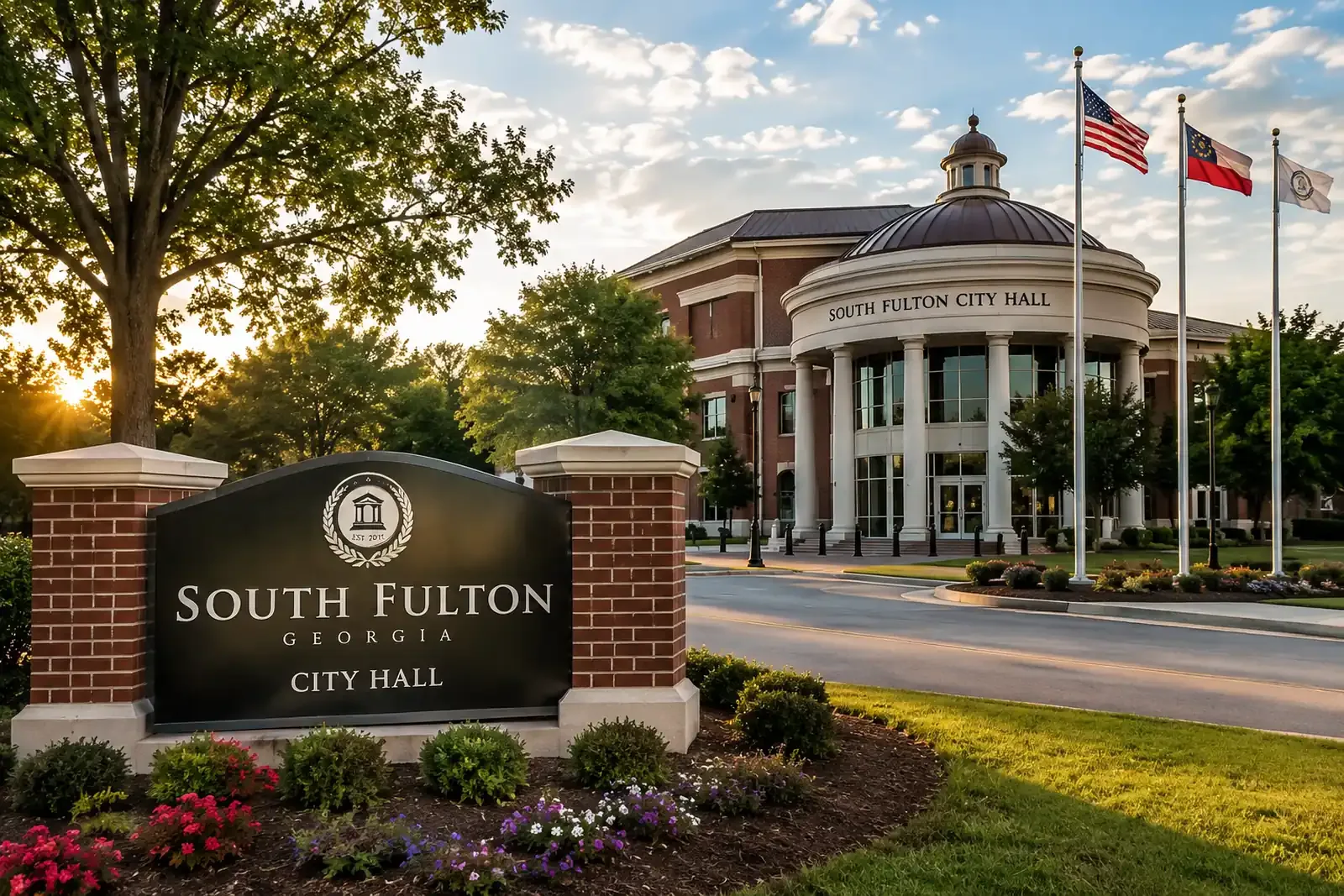
Commercial Roofing in Riverdale, GA
Riverdale's economic office names five kinds of business it wants to support: healthcare, financial services, manufacturing, distribution and retail. Each puts a different load on a roof. A clinic needs quiet and clean air. A distribution building needs open docks. A shop on State Route 85 needs customers to reach the door. The city names SR 85 between Garden Walk Boulevard and SR 139 as its most heavily traveled road segment.
The building use sets the first question. The roof zone above it sets the second.
Building use: SR 85 retail and service buildings
Corridor buildings sit close to traffic. Parking is tight. A lift needs space in a lot that customers use. We mark the spot on the roof plan and name who approves it. Hours of work follow the store, not the crew.
A corridor roof may carry old patches with no work order behind them. We log each one. A patch that lifts at its edge becomes the next leak. The repair boundary reaches sound membrane, not just the visible split.
Signs, antennas and conduit add penetrations. Each needs a boot in good shape. The walk includes a press on each boot, since heat cracks sealant first.
Edge metal on a street-facing building is both a water detail and a visible one. Dented coping and a loose drip edge show from the road. We replace what is damaged and refasten what is loose. The cleanup at the end of each shift covers the lot and the sidewalk, so the shop opens the next morning looking the way it did the day before.
Healthcare and office roofs: protect the rooms first
Where the city supports healthcare and financial services, the rooms below the roof matter first. Exam rooms, records rooms and server closets cannot take a drip. We list them with the manager. The roof zones above them get a dry-in plan and a stop condition before any cut.
Rooftop units serve those rooms. A shutdown is named by unit and by hour. The restart goes in the log. Noise goes where the schedule allows. Fumes stay away from intakes. Our medical office roof plan uses these steps.
Interior leaks in a clinic carry a second cost: ceiling tile, insulation and possible mold. A wet tile is a signal. The cause may be the roof, the ductwork or a pipe. We compare the stain date with the weather, then walk the roof above. A dry roof gets written down as dry, and the search moves on.
Distribution and manufacturing roofs: docks and process exhaust
Large industrial roofs have long drainage paths. A drain plane that holds water for a day after rain is a finding. We measure depth and location. Ponding beside a curb says one thing. Ponding at a drain says another.
Process exhaust leaves residue on the sheet. Some membranes tolerate it. Some do not. We note staining and softening near every discharge. Dock schedules decide when a crew can work a given section. Each phase follows the loading calendar, and a staging route keeps trucks and crew apart.
Fastener lines on a metal deck matter in the wind. A loose line lets the sheet flutter. Flutter wears the seam. We probe the attachment at corners and edges, where pressure is highest. A test opening shows the layer stack: sheet, board, insulation, deck. The wet boundary comes from a survey, not a guess.
Wind, hail and tornado season
In its Peachtree City warning area, the National Weather Service logs damaging storm wind in all twelve months, close to nineteen days a year. Hail averages roughly seven days a year across the wider warning area, and April is the peak. Tornadoes turn up in every month, busiest from March through May. A single EF-2 tornado tracked across South Fulton in March 2018.
That record sets the inspection calendar. We look after each big storm and compare against the last photo set. Corner pressure shows first at the edge metal. Check the fastener line. Check the coping.
Roof ponding after a storm gets measured on the first dry day. Depth, location and time to drain go on the plan. A pond that stays more than a day is a finding. It adds weight and wears the sheet. Tapered insulation or an added drain can fix it during a recover or replacement.
Scope options and corridor improvement
Riverdale offers commercial-property design standards and a corridor improvement grant program for existing commercial properties. Owners planning exterior work may want roof findings on the same timeline. We write the roof scope so it can sit beside a facade or site plan. The scope lists repair, recover and replacement paths with cost drivers: area, insulation depth, penetrations, access and phasing.
Confirm any design-standard question with the city before the order goes in. Parapet height, screening and color can all matter. We photograph what is visible from the street.
A moisture survey drives the choice. Dry board supports a recover or a coating. Wet board has to come out. The survey maps the line. The repair follows it. A roof treated without a map is either over-repaired or patched around hidden water.
Access and sequencing: open doors, short windows
Work in sections. Each section has a limit for how much can be dried in and a point where it must be closed. Rain risk ends the shift. Whatever is open gets secured and entered in the log. Heat slows adhesives and humidity stretches cure times, so heavy tie-ins go in the morning.
Each tenant receives written notice naming the roof area and the noise window. Fire lanes stay clear. A spotter watches the hoist. The general contractor sees the trade handoff points before the schedule is set. Long humid summers, with Atlanta topping 95 degrees on roughly seven days a year, mean crews plan water, shade and shorter shifts on the roof.
Staging stays off customer parking where possible. Material comes in small loads. Debris leaves in a covered chute. The crew sweeps magnets across the lot at the end of the shift to pick up fasteners.
Send the plans and the access window
Can a clinic roof be replaced without closing the clinic?
Usually, in sections. We list the rooms that cannot take a drip, place a dry-in plan over them and agree on a stop condition before any cut. Unit shutdowns are named by unit and hour.
Why do old patches matter on a corridor roof?
Patches lift at their edges and become the next leak. We log each one, test around it and extend the repair boundary to sound membrane.
How do dock schedules shape a roof job?
Trucks and crews cannot share a section. Each phase follows the loading calendar, and the staging route stays clear of truck lanes.
What should an owner confirm before roof work on a design-standard corridor?
Whether parapet height, screening or color are covered by the city's standards. We photograph the visible roof components so the question can be answered from a record.
What does hail season change in the inspection calendar?
It adds a check after any large storm, with April the peak. New photos go beside the last set, and each change is logged by zone.