
- Home
- Flex and Light-Industrial Roofing
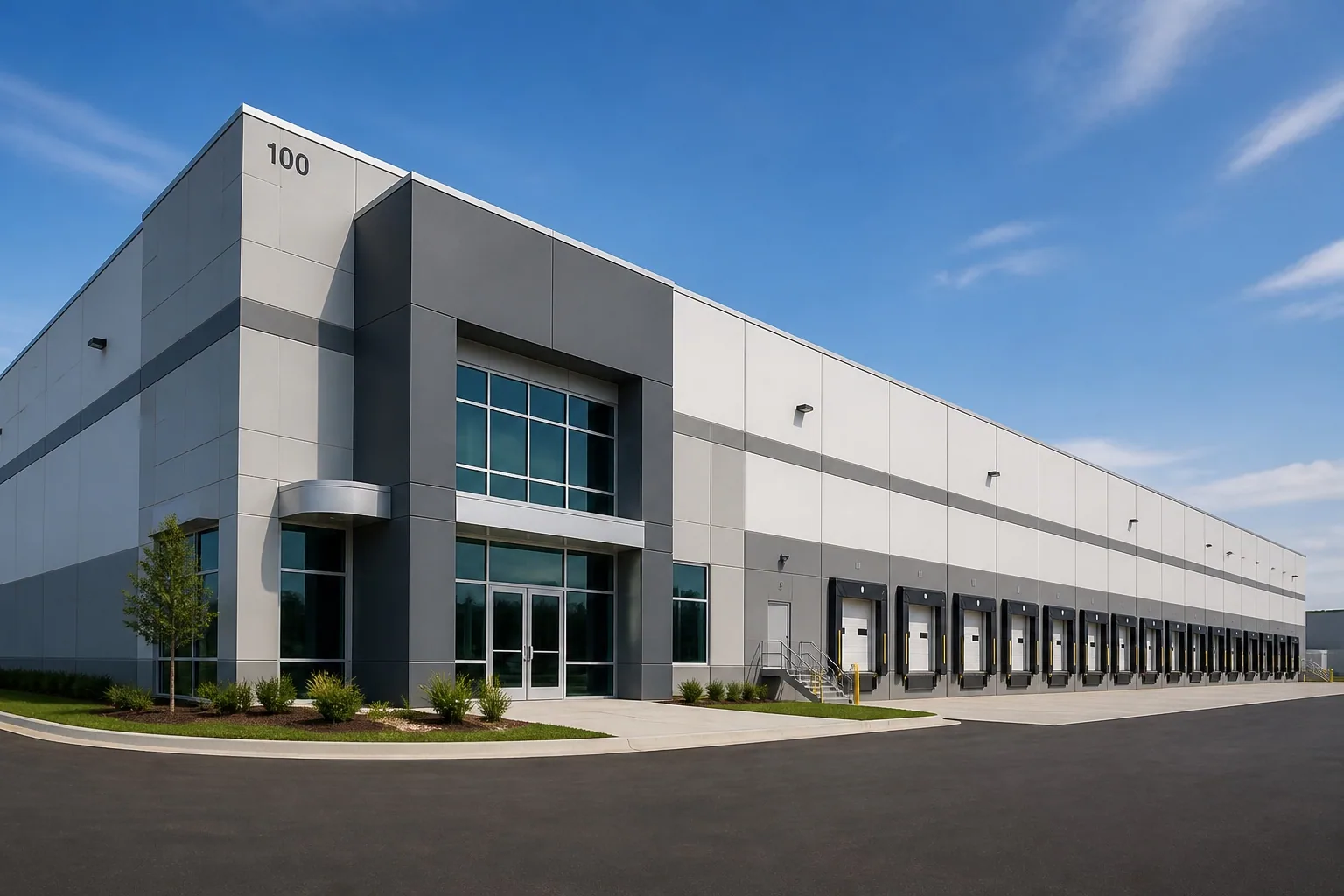
Flex and Light-Industrial Roofing in South Fulton, GA
Flex space puts offices and shop bays under one ownership, and the roof reflects it. The office front may sit lower, with its own rooftop units. The bay behind may sit higher and wider. That changes access, equipment movement and where a crew can stage. Two uses, two roof zones, one landlord. In South Fulton, GA, the roof plan marks the line between them first.
Building use: office fronts, shop bays and dock doors
A flex building is a row of tenant bays. Each bay has an office front, a shop or storage space behind and a dock or grade door at the rear. Tenants run light assembly, distribution, service work or storage. Their needs differ. So do the loads they put on the roof.
Use below sets the priority. A leak over an office reaches computers and records. A leak over a shop floor reaches equipment. A leak over stored goods reaches stock. A leak over a demising wall reaches two tenants at once.
Industrial parks, flex space, mixed-use development and professional office corridors all appear in the South Fulton Development Authority's description of local real estate, and the authority counts more than 4,000 acres open for development. Next door sits the Fulton Industrial District, which South Fulton describes as among the Southeast's largest industrial and business areas. Those facts frame a visit near the Fulton Industrial District. They do not reveal the roof assembly of a given building.
Roof mechanism: shared roofs, wide spans and equipment
Shared roofs are the first mechanism. A flex row usually shares one roof across several tenants. Water runs along the deck and through the insulation and ignores lease lines, so a leak in bay four may enter at bay seven.
Wide spans are the second. Drains are few for the area they serve. A blocked one leaves a pool. Standing water adds weight and finds seams. A ponding repair targets what holds the water: a blocked outlet, a sag in the deck, or slope the roof never had.
Rooftop equipment is the third. Tenants add and swap units, exhaust fans and make-up air. Each change disturbs a curb. Heat is the fourth. Long humid summers bake the surface, and Atlanta tops 95°F on about seven days a year. Seams open at laps. Sealant dries out.
Wind is the fifth. Peachtree City's National Weather Service warning area sees damaging thunderstorm winds in all twelve months, roughly 19 days a year, and a long flex row presents corners and edges to every one of them.
Inspection findings: bay by bay
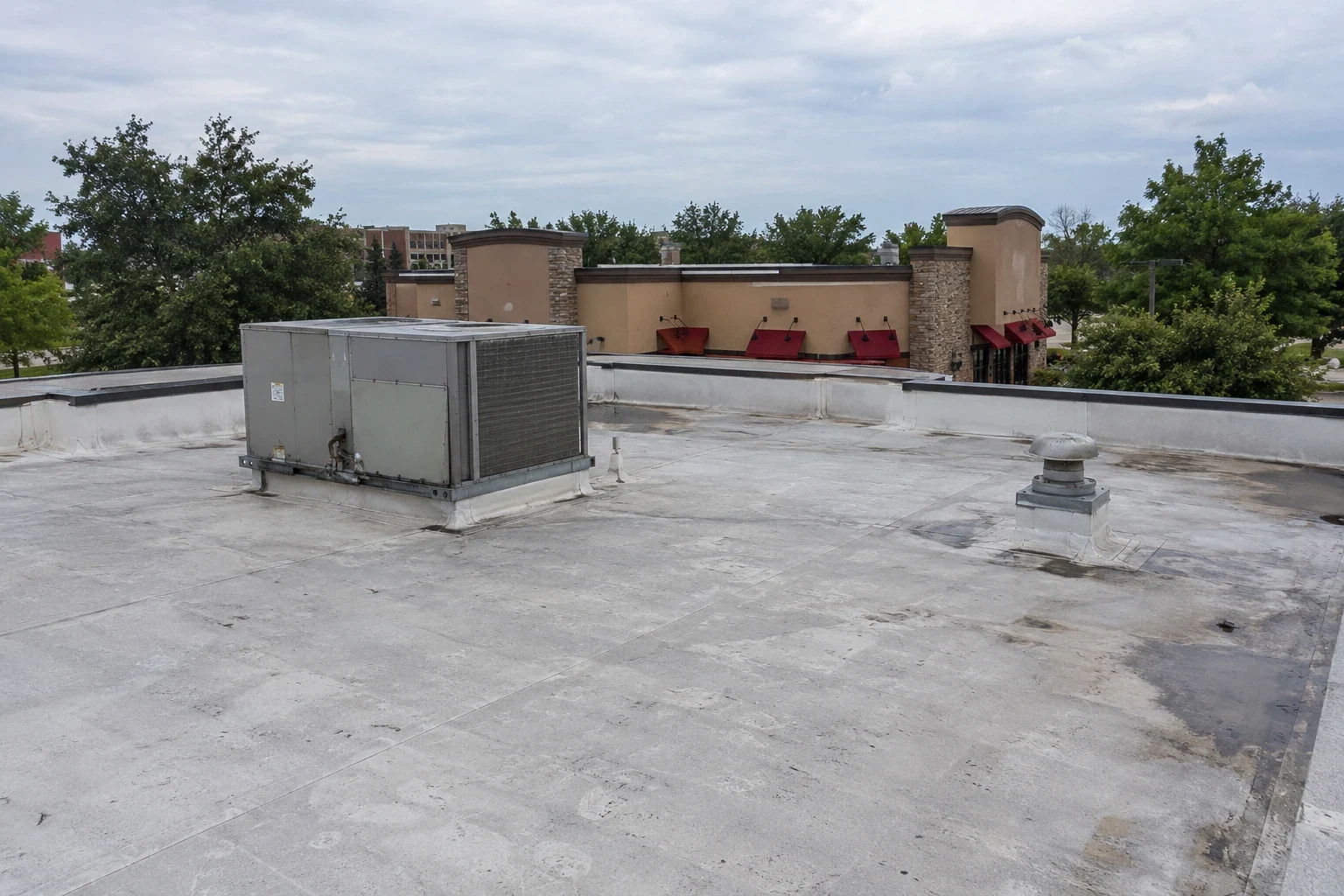
We photograph the whole roof, then each edge, curb, drain and demising wall line. Findings are numbered and tied to tenant bays. A report of water from bay six leads to the right zone.
Typical findings: wall flashing lifted at the parapet, loose coping, cracked pipe boots, open sealant at curbs, standing water by drains, repairs layered over repairs and worn membrane along service paths. We count rooftop units and note which curbs were disturbed. Photographs before and after tenant work show who changed what. Tenant turnover is the moment to check, because a vacated bay is the easiest time to inspect from below as well as above.
A stain that may sit over wet insulation calls for an infrared moisture survey, which maps the wet boundary, and then a test opening to confirm the layers and show whether an earlier recover is present. A recover sitting on an older roof traps heat and masks moisture.
Storm season brings a second walk with the earlier photographs in hand. NWS climatology has hail of large size over north and central Georgia on about seven days yearly, with April the most common month. A hail report is only a prompt to look; photographs and moisture readings make the finding.
Scope options: bay repair, section rebuild, full reroof
A bay repair fixes local defects. A section rebuild takes one defined area down to the deck. A full reroof covers the row. A recover fits where the roof is dry and the deck can carry another layer.
Cost lines: tear-off, insulation, access, lift time, tenant protection, equipment handling and weather hold. Owners see which line moves the price. Phasing by bay is possible when the roof can be divided at a wall. Otherwise phasing is by area, with proper tie-ins.
A preventive maintenance visit twice a year clears drains, reseals penetrations and tightens loose metal. For a landlord, that is the cheapest way to reduce repeat calls. It also gives a dated record to show a lender or buyer, and each visit adds a photo set that makes the next one faster.
Landlords with several buildings can use a multi-site roof program to rank rows and phase the work across budget years.
Access and sequencing: tenants stay in business
Tenants keep working, so the crew builds the schedule around them. Staging sits at the end of the building, clear of dock doors and truck turning areas. Deliveries come outside shipping peaks. Noisy tear-off runs early or late, with tenants warned a week ahead.
Every shift ends with its section dried in; that is the dry-in limit, and a forecast storm closes anything still open. Stock and equipment get interior protection when a tenant asks for it.
The trade handoff has two steps. HVAC contractors disconnect and later reconnect each rooftop unit, and in between we rebuild the curb and set it back. Where tenants have process exhaust, we coordinate the shutdown window.
I-85, I-285 and SR 138 access is among the logistics advantages the development authority cites, which can mean steady truck traffic around flex rows. We plan lifts and haul-off for gaps. An active leak gets a person on the line at any hour, holidays too, then a safe dry-in, then the close-in limit.
Code coordination: permits and tenant improvements
Flex-row reroofs are reviewed against the 2024 IBC family of codes as amended for Georgia, in force in South Fulton since January 1, 2026; for energy, the state's 2015 code still governs. Tenant improvements that add rooftop equipment may need their own permit.
A single-user building with a wider roof runs differently, as in warehouse roofing and distribution center roofing. In a multi-user industrial setting like the Southmeadow Business Park, the record still follows the roof, one bay row at a time.
Send us the roof plan and the tenant list
Who pays when a tenant's rooftop unit damages a shared roof?
The lease decides. The roof record supplies the facts. Photos of the curb and membrane before and after the work show what changed. Armed with them, a landlord can ask the right party for the repair.
How is a leak traced across several bays?
We trace the water from the stain back along the deck and insulation to the roof. Readings mark the wet boundary. The entry is often at a wall flashing, a drain or a penetration rather than over the stain.
Can one bay's roof be replaced without touching the others?
Only where a wall or tie-in line already splits the roof. Many flex rows share one continuous membrane. Then the work is phased by area, with a proper tie-in at each end. The scope shows the tie-in details.
Does a flex building need a different membrane than a warehouse?
Often the same family, such as TPO or modified bitumen. What differs is the detailing around office fronts, rooftop units and demising walls. We choose the system from the deck, the insulation and the drainage, not the building label.
How should a landlord keep records for many buildings?
One packet per building with install date, system, warranty, inspections, repair logs and photographs. We deliver it in a standard format. A new manager can read it and see what was done and when.