
- Home
- Johns Manville Commercial Roofing
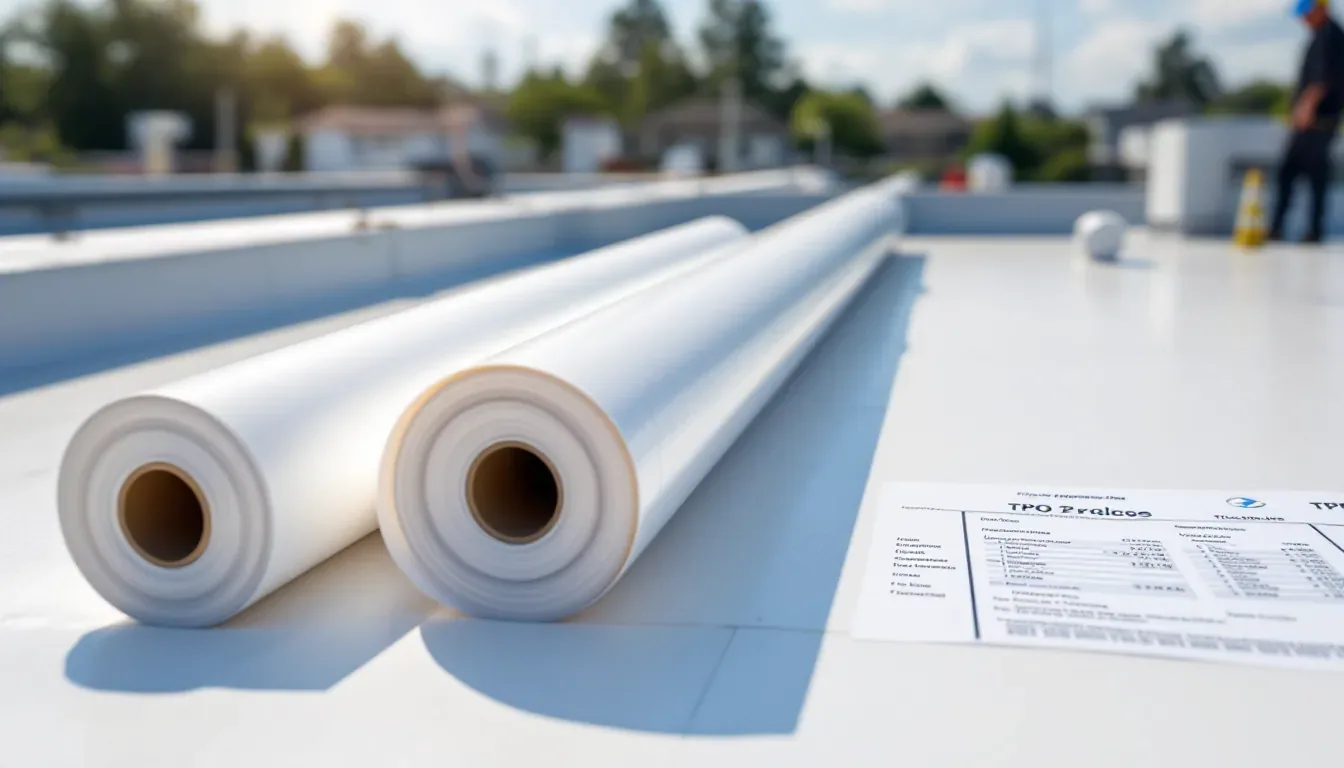
Johns Manville Commercial Roofing in South Fulton, GA
A distribution building may pair a warehouse roof with office transitions. The roof zone controls which Johns Manville assembly fits the work. We identify membrane, deck profile, insulation, attachment, and drainage before pricing. The South Fulton Development Authority lists logistics, distribution, manufacturing, and flex space among local business sectors. Those uses shape access and staging questions. They do not identify any individual building's roof. A test opening settles concealed layers.
Johns Manville commercial roofing includes multiple low-slope system types. A thermoplastic seam is welded. A bituminous roof uses a different sheet, lap, and flashing sequence. We do not carry a repair detail across those systems. We compare the existing layer stack with plans and observed conditions. The TPO roof inspection focuses on welds and transitions, while the field record captures the actual assembly.
System review: identify the membrane first
The roof plan, existing labels, test cuts, and field conditions help identify the system. We record insulation type, cover board, deck, and attachment where visible. If a sheet is covered by coatings or another membrane, a test opening may be needed before repair is specified. The opening also shows whether the substrate is dry and firm. We close it with compatible materials and record the location.
For a thermoplastic system, the field seam must be clean and properly welded. We make a test weld when conditions change, then probe completed laps. For a bituminous assembly, we inspect laps, base flashing, and the condition of the surfaced cap sheet. A Carlisle SynTec roof comparison or GAF assembly review can be considered against the same deck, edge, and drainage needs. We do not assume one manufacturer label resolves a transition.
Perimeter details need their own check. The fastener line, edge metal, coping, and wall termination carry movement differently from the roof field. At curbs and pipes, flashing must connect to both the membrane and the equipment detail. We photograph those points. The scope identifies which laps and transitions will be tested after installation.
Local exposure: wind, heat, and work windows
In NOAA's description, Georgia summers are long, hot, and humid, with Atlanta logging about seven days a year above 95 degrees. That regional signal makes surface temperature and dry-in timing relevant on low-slope roofs. We check seam movement, exposed flashing, and sealant condition before selecting a repair. A hot surface can change how materials are handled. It does not replace a bond or weld test.
Every month shows damaging thunderstorm winds in the National Weather Service record for the Peachtree City warning area. Corners and perimeter metal take that pressure first. After a storm we trace the fastener line, coping joints, and rooftop units. A wind damage inspection records lifted material, open flashing, and the temporary dry-in boundary. The decision then turns on what the roof zone shows.
Old National Highway has about 500 establishments along its corridor, according to the local merchants association. A property there may have loading, customer, or office activity below the work area. We confirm the staging route and interior protection needs with the site contact. The Oakley industrial corridor also calls for a site-specific access check. Corridor context does not reveal a particular roof system.
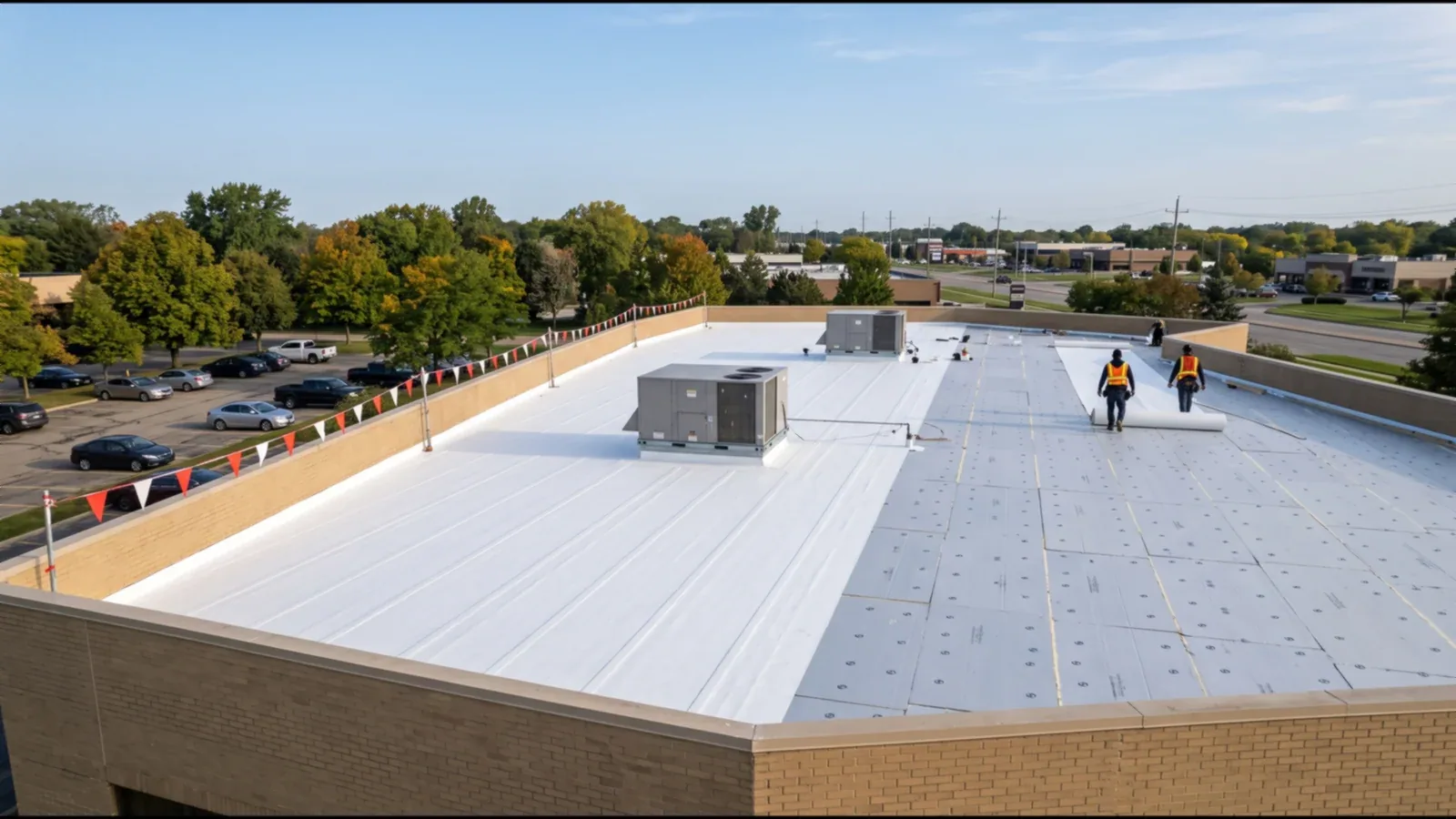
Repair boundary: separate field and flashing
A seam opening can be local, or it can mark movement across a larger roof zone. Before the patch is defined, the surface is cleaned and a representative area tested. A thermoplastic repair needs a compatible weld. A bituminous repair needs the correct sheet and lap sequence. We probe the finished work and photograph its tie-in. If a curb or wall termination is loose, the scope includes that transition rather than hiding it under a field patch.
Moisture changes the repair limit. Wet insulation may need removal to a dry boundary, followed by replacement of the cover board and membrane. If the substrate is firm and dry, the repair can stay smaller. A roof condition report records the zone, test opening, moisture readings, and remaining concealed areas. The commercial repair scope ties each repair to a roof-plan location.
Drainage is inspected separately. A blocked outlet can hold water above the membrane. A low area caused by deck deflection needs a different correction from a clogged drain. We check drains, scuppers, and overflows, then note whether the work affects the planned repair area. Adding material at a low point alone does not establish a drain plane.
Scope choice: maintain, recover, or replace
Maintenance fits a sound assembly with isolated needs. Repair addresses a confirmed seam, flashing, or puncture condition. A recover may work when the existing membrane is attached and the layer stack is dry, stable, and suitable for added material. Replacement becomes more likely when wet insulation is widespread, attachment has failed, or repeated repairs keep moving the boundary. We compare those choices using photographs, test results, and a clear roof-zone map.
Georgia's amended 2024 IBC has governed South Fulton permits since January 1, 2026. The proposed work is matched to the review it triggers. The code edition does not select a membrane by itself. Deck capacity, insulation, attachment, drainage, and transitions still control the assembly. If energy-code or permit questions affect the scope, those details are confirmed before material is ordered.
A recover assessment checks attachment, moisture, and added height at edges and curbs. For a replacement, we set the tear-off limit and dry-in point by zone. We note which equipment, wall, and drain transitions need sequencing. The written comparison explains what is visible, what remains concealed, and what finding would change the selected option.
Occupied work: protect the handoff
Logistics and production schedules can leave little room for an open roof. The general contractor confirms loading limits, overhead clearance, interior sensitivities, and the safe staging route. Work advances only as fast as the crew can close each zone. We set a dry-in limit before tear-off. If weather compresses the shift, the open area is reduced and secured before the crew leaves.
Mechanical and electrical work changes roof details. A unit move may expose an old curb. New conduit can add penetrations. We assign each cut to a trade handoff and confirm who restores the flashing. The roof crew checks the finished tie-in before work proceeds across the next area. A photo log records the close-in point and any temporary protection that remains.
Closeout: keep the roof record usable
The closeout identifies the Johns Manville system installed or repaired, the zones completed, seam tests, and transitions inspected. Test openings are located and closed. A concealed condition that changed the scope is logged with the finding and the new repair boundary. That gives the general contractor a direct comparison with the approved details.
Set the roof zone before choosing a system
How do you confirm which Johns Manville assembly is on my building?
We review plans and visible labels, then compare them with the roof surface, seams, flashing, and test openings. The deck and cover board matter too. If layers are concealed, a small opening can confirm the stack and moisture boundary. That finding sets a repair or replacement detail.
Can a Johns Manville membrane be repaired without replacing the full roof?
It can when the surrounding membrane and substrate remain suitable. We identify the sheet type, prepare a test area, and check the bond or weld. Wet insulation, loose attachment, or failed transitions may expand the scope. The repair limit follows the condition, not the product label.
What should I compare in a recover proposal?
Compare moisture findings, attachment, added height at edges and curbs, drainage, and the condition of the existing layers. A recover needs a stable base. Ask where a test opening was made and how wet material would be handled if discovered during work.
How does South Fulton weather affect roof planning?
Heat and humidity affect surface conditions and the work window. Regional thunderstorm winds make perimeter and corner checks important after a storm. We inspect the actual roof, set a dry-in limit, and use the observed damage to decide whether repair or broader work is needed.
How do you work around active loading and tenants?
We agree on access, staging, interior protection, and receiving hours before opening a roof zone. Each phase has a close-in point. Trade cuts are assigned and checked before the next area proceeds. For an urgent leak, calls are answered around the clock, holidays included.