- Home
- Carlisle SynTec Commercial Roofing
Carlisle SynTec Commercial Roofing in South Fulton, GA
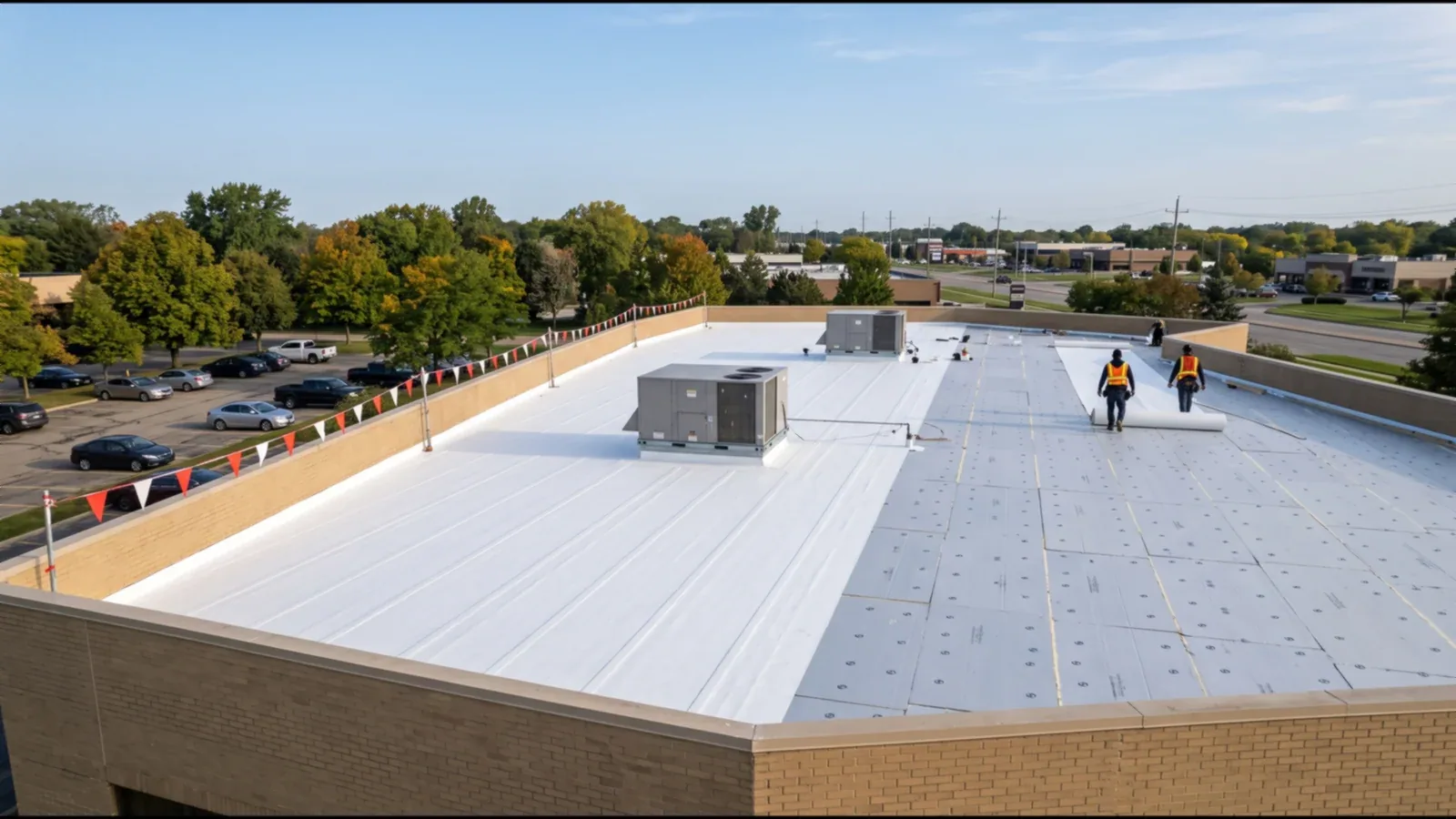
A flex building can join office space to warehouse bays. Office and warehouse transitions create separate roof zones. Carlisle SynTec systems include TPO and EPDM membranes, each with its own seam and flashing method. We identify the deck, insulation, fastener line, and roof use before work is priced. South Fulton lists industrial and flex property among its real-estate offerings. That context helps frame the walk. It does not establish an assembly at any individual building.
On a TPO roof, seams are heat-welded. On EPDM, field seams and flashings use compatible adhesives or tapes. We do not treat those details as interchangeable. A probe, test weld, and surface check help confirm a repair method. If the sheet is brittle or the substrate is wet, a patch may not hold at the intended boundary. The EPDM assembly review and the roof-zone record identify which layer needs work.
System split: TPO welds and EPDM seams
Carlisle SynTec offers more than one membrane assembly. The selected sheet depends on project requirements, existing construction, exposure, and the intended method of attachment. At edges, the termination has to resist movement while carrying the membrane into the wall or coping detail. A TPO roof inspection checks weld quality. An EPDM inspection checks seam, tape, and flashing condition.
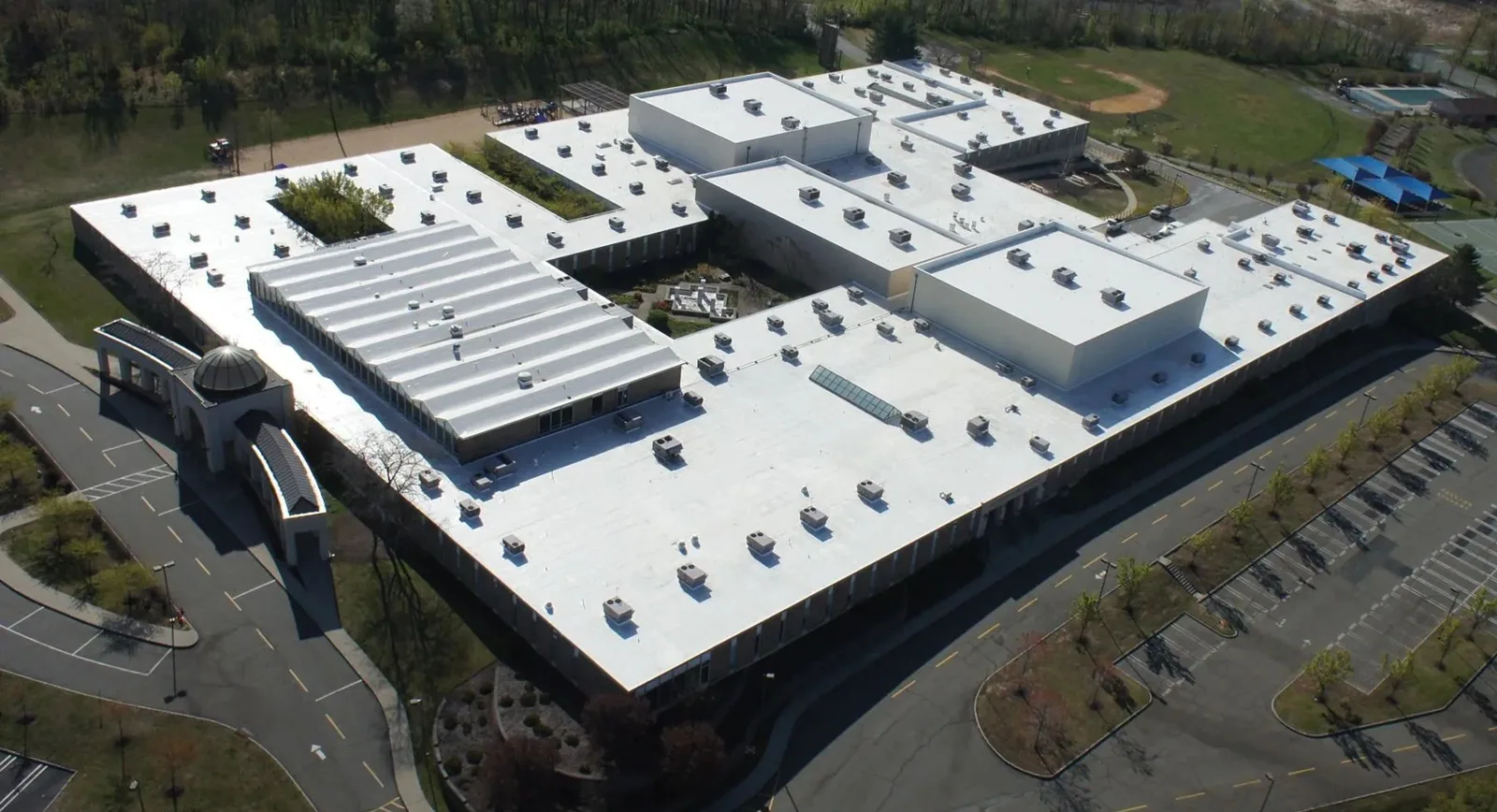
Before a replacement, we map the existing layer stack. Cores and test openings can reveal insulation, cover board, deck profile, and moisture. A recover may be possible over an attached, dry assembly, but added weight and drainage heights still need review. Where board is wet or crushed, we remove the affected material to a sound boundary. The recover assessment helps distinguish a new surface from a tear-off scope. A Carlisle designation does not decide that question alone. A proposal built on GAF commercial systems or Johns Manville commercial roofing faces the same deck and scope criteria.
South Fulton conditions: edge and surface checks
The Old National Merchants Association describes about 500 establishments along Old National Highway. Fairburn's page on the South Fulton Community Improvement District ties its freight-access spending to warehousing and industrial sites along Oakley Industrial Boulevard. These settings include varied commercial uses, not one roof type. We inspect the actual assembly at each property. Heat exposure, rooftop equipment, drainage, and traffic affect different zones. The Oakley industrial corridor may include staging and loading considerations. Those are confirmed with the site team before mobilization.
Damaging thunderstorm winds reach the National Weather Service's Peachtree City warning area in every month of the year. Corner pressure works on perimeter metal and membrane terminations well before the field shows a change. We check fastener lines, corner zones, coping joints, and flashing after a storm. We also check for water below a lifted edge. A wind damage inspection documents the material, position, and repair limit. Regional climatology guides a walk. It does not prove damage at a specific roof.
South Fulton has long, hot, humid summers by NOAA's description. Roof surfaces cycle through heat, and sealants, laps, and exposed flashings can age under that exposure. We compare a suspect area with adjacent material and inspect the substrate before choosing repair or restoration. A soft sheet, open seam, or wet board calls for different work. A Camp Creek industrial-commercial area visit follows the same inspection discipline while accounting for its own access and building operations.
Repair detail: stop at sound material
A seam repair starts with cleaning and preparation. For EPDM, the repair may use compatible seam tape, flashing, or cover material. For TPO, the sheet is prepared and heat-welded. We confirm the material, test the finished bond, and photograph the repair. If the membrane has pulled away from a wall or curb, the termination also needs review. The repair scope names the area and the tie-ins that must be restored.
Water that has reached insulation changes the boundary. We use moisture readings and a test opening when needed. Wet board is removed to dry material. The new layer stack then restores insulation, cover board, and membrane in order. If water remains only at a local seam and the substrate is dry, the scope can stay smaller. A moisture survey can help prioritize openings across a larger roof. The owner sees confirmed findings and conditions that remain concealed.
Scope decision: repair, recover, or replace
Repair fits a local fault when the surrounding sheet and substrate remain serviceable. Recover can work when the existing layer stack is dry, attached, and suitable for added material. Replacement is considered when moisture spreads, attachment fails, or repeated repairs no longer address the condition. We compare those options with photographs and test results. The condition report records the roof zones, moisture boundary, and transition details.
Code coordination matters when the project changes the assembly. The city's permit page puts the 2024 IBC with Georgia Amendments in force since January 1, 2026. When a reroof changes the assembly, the project team and the city settle which review the scope triggers. A code edition does not determine a membrane choice by itself. The deck, insulation, attachment, drainage, and building schedule remain part of the comparison. The replacement scope includes those transitions and close-in points.
Material delivery, lift access, and occupant protection affect timing. We agree on the staging route and work windows before the first section is opened. Each phase has a dry-in limit. If weather interrupts the installation, the open area is secured and the close-in point recorded. The South Fulton service area includes different business corridors, but a project schedule is tied to a building's actual operations.
Work sequence: occupied building and trade handoff
We plan around receiving hours, customer access, production needs, and roof equipment. The general contractor confirms loading limits, clearance, and interior areas needing protection. Work moves by roof zone only when the tie-in can be closed safely at the end of a shift. For an urgent leak, crews can be reached at any hour, including holidays. We secure the opening first. Permanent repair follows after the assembly can be inspected and prepared.
Trade handoffs are written into the sequence. Mechanical crews may shift units. Electricians may add conduit. Each roof cut needs a planned flashing and a close-in time. We inspect the finished penetration before the next phase moves across it. If several tenants share one building, the work-zone map helps staff direct people away from a lift or active roof area. The occupied-building sequence can keep those boundaries visible through a larger reroof.
Closeout: verify the layer stack
The closeout identifies the Carlisle SynTec system used, roof zones completed, seams tested, and transitions inspected. Product data and photographs can be attached to the project record. Test openings are located and closed out. When a concealed condition changes the scope, the record shows what turned up and where the repair boundary moved. The contractor can compare the finished assembly with the approved details. Maintenance staff can return to the same zone without relying on memory.
For a property portfolio, findings remain attached to each building. South Fulton and its established business corridors do not share one roof history. We document each assembly independently. Carlisle SynTec's TPO and EPDM details can both be maintained, but the inspection notes specify the membrane and repair material used at each property.
Send plans, load limits, and the access window
When is Carlisle EPDM a repair candidate?
A repair can fit when the sheet and substrate are sound around the defect. We check seam tape, flashing, attachment, and moisture, then set the patch boundary on dry material.
How does a TPO seam differ from an EPDM seam?
TPO seams are heat-welded. EPDM seams use compatible adhesive or tape details. We identify the installed membrane before preparing a repair, then test and record the completed joint.
Can a Carlisle roof be recovered instead of removed?
Possibly. The existing roof must be dry, attached, and able to accept added weight. We use readings and test openings to confirm the layer stack before recommending a recover.
What belongs in a GC bid package for a Carlisle roof?
Include the roof plans, loading limits, occupancy needs, and the window when the roof can be opened. Add curb and drain details, because those two control staging and close-in points.
What changes the repair boundary after opening?
Wet insulation, a soft deck, or failed attachment can extend the work. We photograph the condition and get direction before moving beyond the approved limit.