
- Home
- Wind Damage Roof Repair
Wind Damage Roof Repair in South Fulton, GA
Edge metal tells the wind story before the membrane does. A bent coping cap or a lifted fascia marks the place where pressure peaked. every month shows damaging thunderstorm winds in the Peachtree City warning area, roughly 19 days a year. A roof can take several pushes before anyone looks up. We start at the perimeter, trace the damage inward, and set a close-in limit before the next front arrives.
Building use: who feels the loss first
The city's development authority names logistics and distribution, advanced manufacturing and automotive among its target industries. Those buildings keep stock and equipment under large roof zones, so one opened corner can reach a pallet aisle or a production bay. Near the Fulton Industrial District, a wind call usually begins with the question of what sits below the opening. A distribution center roof ranks by inventory exposure. A plant roof ranks by process risk.
Retail and office roofs along Old National Highway carry a different load. Tenants are open, customers are walking in, and a wet ceiling tile closes a suite quickly. There the first hour goes to interior exposure, then to the roof opening above it. The Old National Merchants Association counts roughly 500 establishments on that corridor, which is a lot of ceilings under a lot of rooflines.
Roof mechanism: how wind opens a system
Wind does not load a roof evenly. Pressure climbs at corners, then at edges, then across the field. A mechanically attached sheet holds by its fastener line, so once a plate pulls through the membrane or a screw backs out of the deck, the neighboring fasteners carry more. The damage travels in a line from the perimeter inward, and the line is usually visible as a ripple or a fold.
Adhered and ballasted systems fail differently. An adhered sheet peels from the substrate where the bond was weak, and the peel leaves a clean, dusty surface behind it. Ballast scatters and exposes the sheet to the next gust. On a standing seam metal roof, panels walk off their clips, trim bends, and fastened flashing opens. Each type leaves a signature. The signature tells us whether the fix is a re-fasten, a re-lay or a section replacement.
Loose rooftop covers and displaced equipment add a second injury. A hood cover thrown across a field (the same gust that causes membrane punctures) can cut the sheet in three places before it stops. We look for the strike path as well as the lift.
Inspection findings: what the perimeter shows
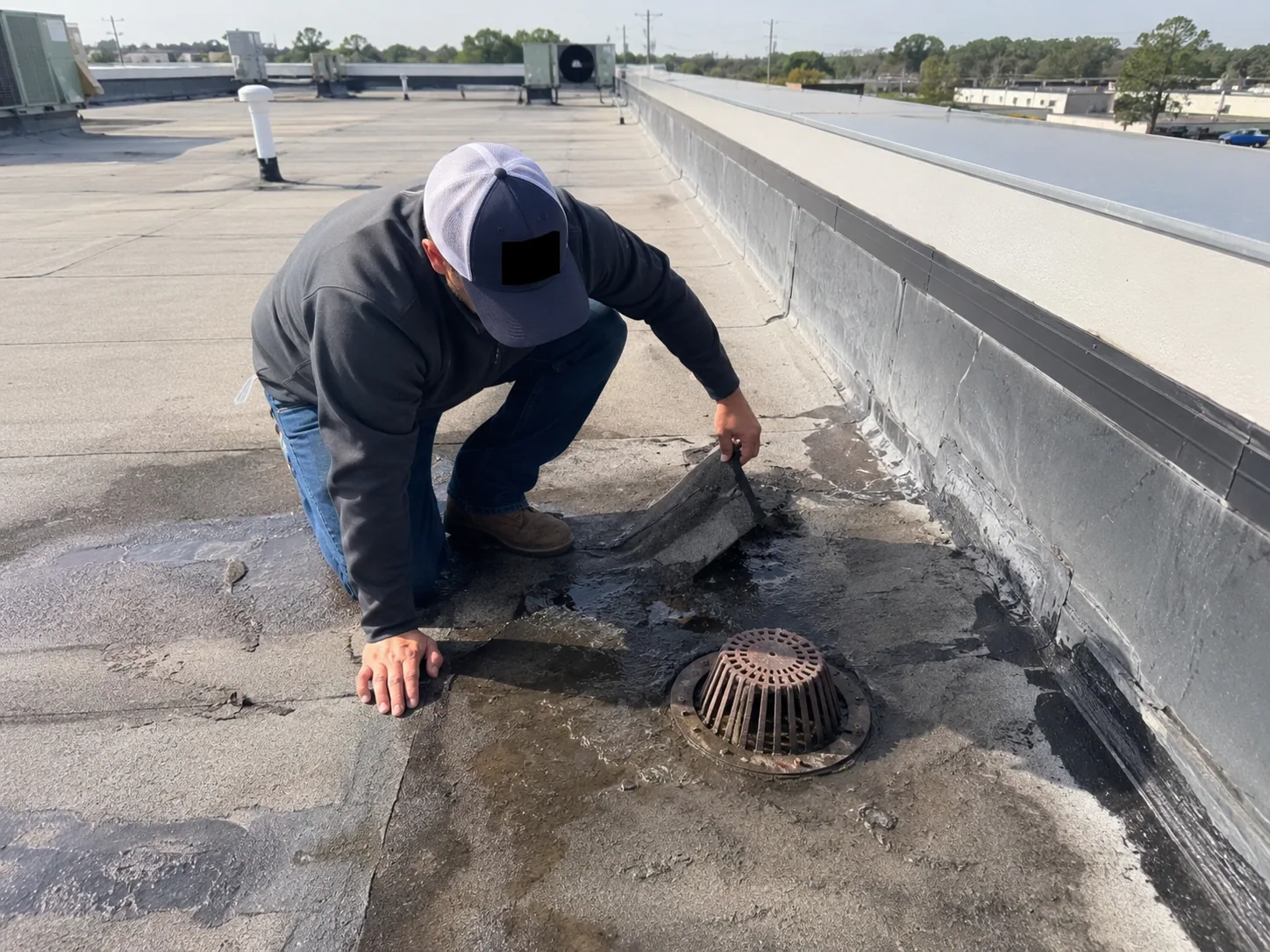
The walk begins at the corners and runs the edge before it enters the field. Corner pressure leaves the earliest evidence, and edge metal is the first part to move. We mark each finding by roof zone so the photographs, the repair list and any adjuster note describe the same spot.
- Coping caps shifted, cleats pulled, or fascia bowed away from the wall.
- Fastener plates with fresh rust rings or visible gaps beneath the sheet.
- Membrane waves running parallel to an edge, which mark a loosened fastener line.
- Flashing peeled at a parapet, a curb or a wall tie-in.
- Debris strikes: cuts, scuffs and dents with a clear direction.
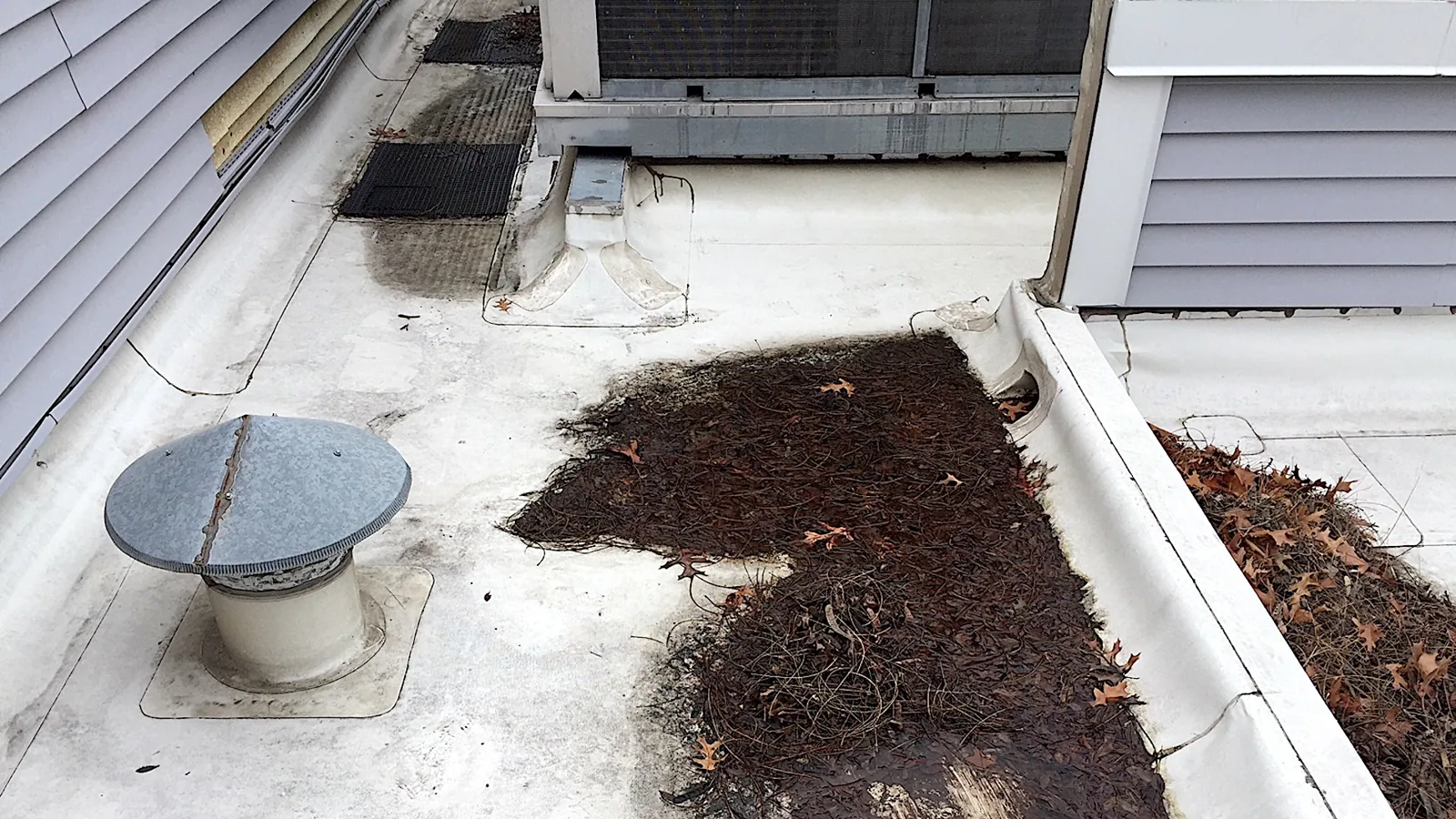
Where a drain plane has filled with debris, we note it. Wind-driven leaves and gravel block scuppers fast, and ponding after the storm can hide as a second problem. A flashing failure found next to a lifted edge is usually one event, and we scope them together.
Scope options: re-fasten, re-lay, replace
A re-fasten applies when the sheet is intact and the deck is sound. We reset plates, add fasteners at the failed line, and rebuild the edge metal. A re-lay applies when a section has peeled but the membrane can be cleaned and reattached. A replacement of the affected zone applies when the sheet is torn, the insulation is wet, or the attachment pattern no longer matches the wind exposure of that zone.
A test opening settles the boundary. We cut a small window where the layer stack is concealed, check the insulation and the deck, and then set the repair line. Wet board comes out. Dry board stays. If the damage is widespread or the roof is near the end of its life, a full replacement may cost less over time than a string of patches. We price the choices side by side so the GC can approve one step at a time.
Code coordination: the 2024 edition
Since January 1, 2026, South Fulton has reviewed permits under the 2024 IBC with Georgia Amendments. Any wind repair that touches edge metal, attachment or deck fastening is read against that edition before material is ordered. We confirm with the building department whether the scope needs a permit and what documentation the inspector will want at close-in.
Insurance work follows a separate track. Dated photographs, roof zone numbers and a written scope support an insurance claim without pushing the roof schedule back. The two records are kept together so the GC does not chase one while the other waits.
Timing: the next gust line
Damaging winds are recorded in every month, so a temporary hold has to survive a storm that may arrive within days. We fasten loose edge metal, weight or re-adhere lifted laps, and cover openings before we leave. The temporary work is logged as a separate line with the date and the weather at install. When permanent material is on a long lead, we recommend a sturdier dry-in rather than a quick tarp.
For leaks in progress, the line is answered around the clock, holidays included. Storm response and emergency roof repair start with a safe access route, then a dry-in limit, then the scope.
Send the storm date and the roof plans
How do I tell whether a wind event damaged the field or only the edges?
Look for ripples that run parallel to the perimeter and for plates standing proud of the sheet. Edge damage usually shows from the roof hatch or a lift. Field damage needs a walk, because a loosened fastener line does not always crack the membrane. We mark both on one roof zone map and test where the layers are hidden.
Can a mechanically attached roof be re-fastened without replacing the sheet?
Often yes, when the membrane is intact, the deck is sound and the insulation is dry. New plates and screws go in at a corrected spacing, and the failed line gets extra attention. If plates pulled through the sheet in several places, the membrane around those holes is cut out and patched or the section is replaced.
What belongs in the file for an adjuster after a gust front?
Dated photographs by roof zone, the storm date, a sketch of the failed edge, and a written scope that separates storm damage from wear. Keep the maintenance history that shows the roof was sound before the event. We assemble that record during the repair so it does not have to be rebuilt later.
Should coping and edge metal be replaced after every high-wind event?
Replace what moved, bent or lost its cleat. Metal that sits flat, with fasteners tight and sealant intact, can stay. Where the original cleat was thin or the face fastened sparsely, an upgrade at the corners costs little compared with a second peel.
A tenant space is leaking after the storm but the roof looks closed. What happens next?
We follow the water. Stains map to roof zones, and the zone gets checked at the nearest edge, curb or seam. A small opening can send water a long way along the deck before it drips. We set a first step, a dry-in limit and an access window with the property manager before permanent scope.