
- Home
- Roof Insulation and Cover Board
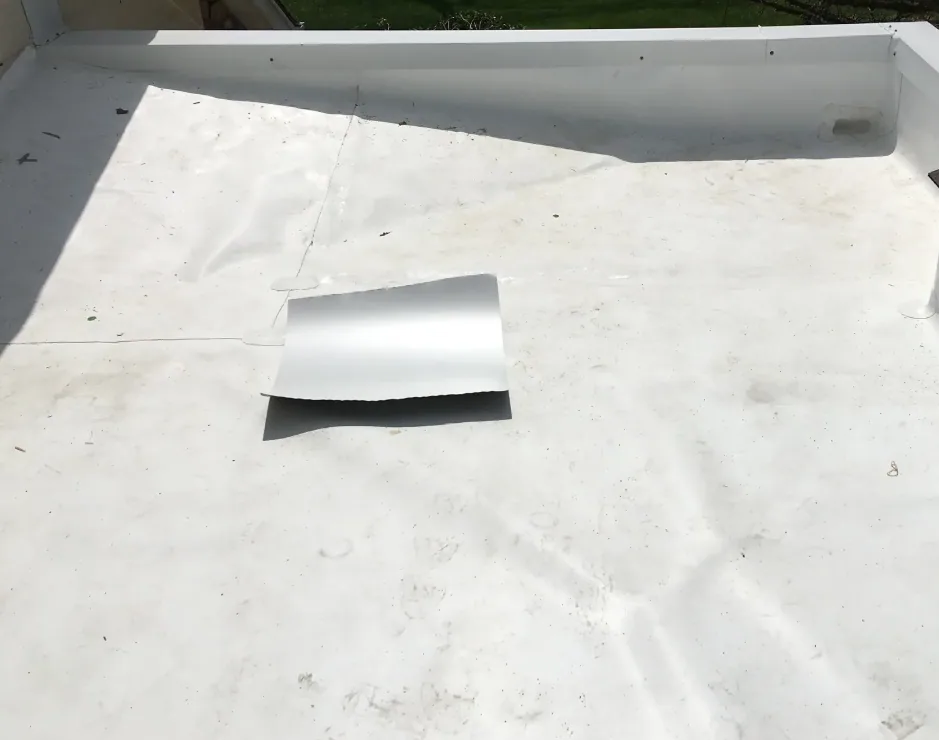
Roof Insulation and Cover Board in South Fulton, GA
The membrane gets the attention. The layers under it do most of the work. Insulation sets the thermal value of the roof and the slope of the drain plane. Cover board sets how well the roof takes hail, foot traffic and the heat of a Georgia summer. In South Fulton, GA, those layers face wide temperature swings, humid air and a hail season that peaks in April. We read the existing layer stack on the first walk, then design the new one to fit the building, the code and the weather.
Board and tapered packages arrive by truck, and the authority's logistics case rests partly on I-85, I-285 and SR 138 connections. Deliveries are scheduled in drops sized to the day's work, so stacks are not left on the roof for days.
Building use: conditioned space under the roof
What sits below the roof decides how much insulation matters. A conditioned office wing needs real thermal value. A cold-dock area or an unheated storage bay needs less. A flex building with an office wing and warehouse bays may need both, with a different assembly over each. Warehouse and flex space both appear on the development authority's list, and both can put more than one use under one roof line.
A building near the Fulton Industrial District with a refrigerated, climate-controlled or humid process zone inside sends moisture up into the roof stack. Insulation choice, vapor control and cover board then matter more, since condensation can wet the deck from below.
Roof mechanism: how the stack works
A low-slope roof assembly stacks in order: deck, vapor control where needed, insulation, cover board, membrane. Each layer has a job. Insulation resists heat flow. Rigid polyisocyanurate boards are common and give high value per inch. Cover board is a dense, rigid panel that protects the insulation, spreads fastener load and gives the membrane a firm bed.
Moisture ruins the stack. Wet insulation loses thermal value, sags under traffic and holds water against the deck. Heat drives that water to vapor, which pushes against the membrane and blisters laps. Long humid summers, with Atlanta topping 95°F on about seven days a year, keep the air heavy. Hail adds impact. Soft insulation under a thin membrane crushes under a large stone, and the fracture often goes unseen until a leak appears.
The same layers matter under any retail or office roof, including those in the Old National and Roosevelt highway districts, where tenants below notice a hot ceiling or a drip first. In both cases the stack, not the surface, explains why a roof leaks, runs hot or sags between supports.
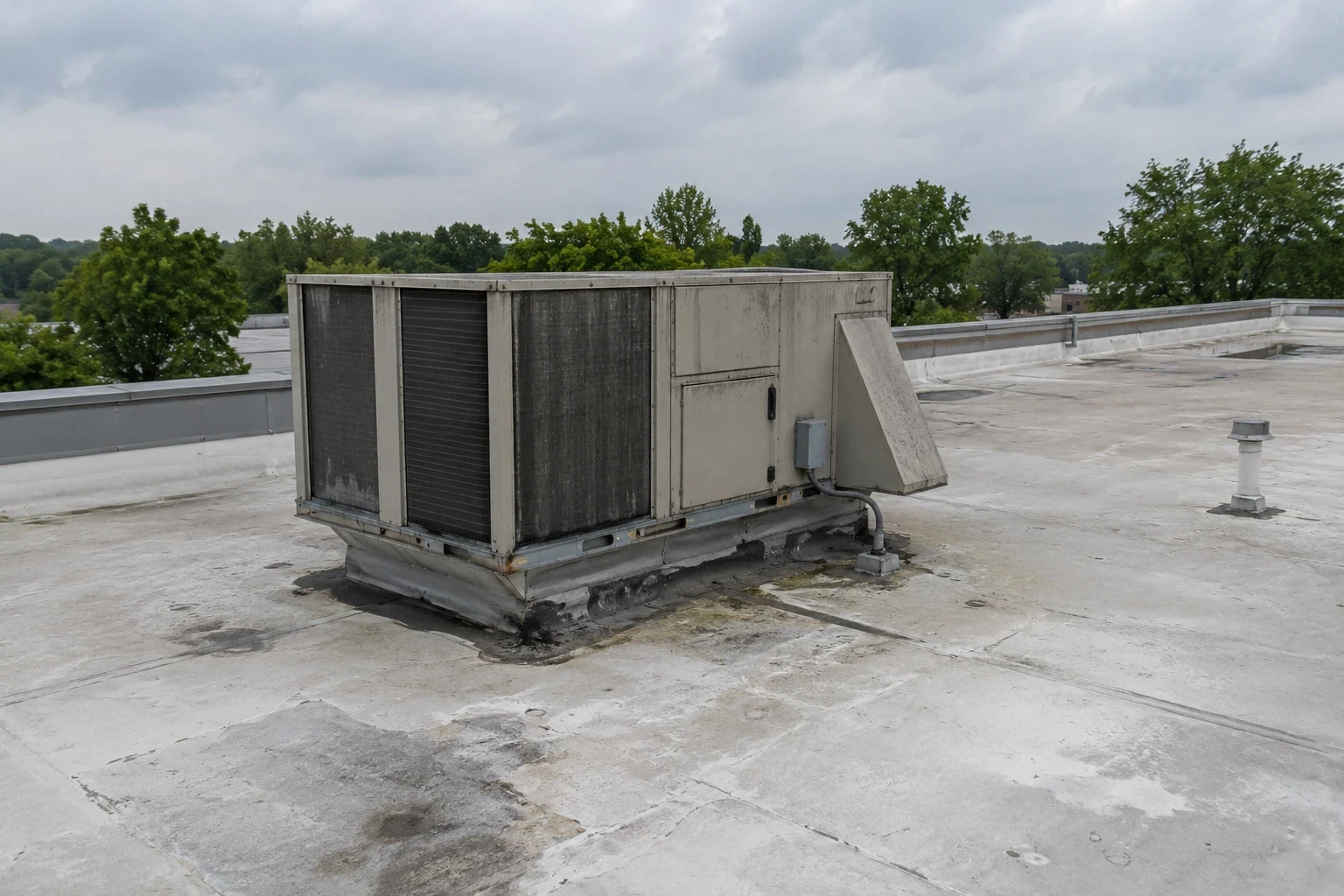
Inspection findings: reading the layers
We read the stack through test openings. A small core shows the deck type, any vapor layer, the insulation type and thickness, and the old membrane and any prior recover. We check the insulation for moisture, crushing and delamination. We note the fastener pattern and whether fasteners have backed out.
An infrared moisture survey across the whole roof maps wet areas, and cores confirm them. This sets the wet boundary: wet board comes out, dry board stays. Thickness readings across the roof show where the thermal value is thin. Slope readings show where water has nowhere to go. The record becomes the base for the design.
Scope options: replace, add, taper, cover
The scope starts with the wet boundary. Wet insulation is replaced. Where a recover is planned over dry board, a cover board goes on first to smooth seams, spread loads and add impact resistance. Where the roof is already thin on insulation, extra layers are added, with fasteners long enough to reach the deck.
Tapered insulation corrects slope. It builds a drain plane over a flat deck, directing water to drains and scuppers and eliminating ponding. A tapered system is a set of shaped boards laid out by drawing. The layout is designed from survey measurements, so the cost depends on area, slope and the number of crickets. The drain and scupper scope and the tapered layout share the same roof plan.
The mandatory state energy code remains the 2015 IECC as supplemented in Georgia. A replacement or a significant reroof may need to meet its insulation requirements, and the scope states the target and the layers that meet it. On the building side, the 2024 IBC with Georgia amendments became effective in South Fulton on January 1, 2026. Both editions are checked before material is ordered.
Access and sequencing: keep the deck dry
Insulation work exposes the deck. The plan opens only what can be closed in the same day. Boards are staged on the roof in covered stacks, away from edges. The crew lays insulation and cover board together, then the membrane follows in the same phase. A forecast of rain means smaller sections or a delayed start.
Load limits matter. A pallet of board or a stack of tapered panels has weight. We ask for the structural limits and stage materials over supports. For an overlay, the added weight of cover board and a new membrane is checked against the structure. Loose gravel, old flashing and debris are removed or covered so they do not telegraph through the new layers.
Timing: before hail season and out of afternoon storms
Large hail is most common in April, and the region sees about seven hail days a year on average. A roof that goes into spring with a good cover board is better placed to take impact. Work scheduled for late winter has the best chance of finishing before that peak. The NWS also counts about 19 damaging-wind days a year across all months, so loose boards and staged stacks need strapping, and staged stacks are covered at the end of each shift.
Summer brings afternoon thunderstorms and humidity. Crews start early and close sections before the afternoon. Adhesives and tapes work within temperature and moisture limits, so the crew checks surface and air conditions before each pour or roll. After a hail event, the hail damage repair check includes a probe of cover board and insulation. On the South Fulton Parkway and elsewhere, the same sequence holds.
Send the roof plans and the loading limits
Is a cover board worth the extra cost?
On most commercial roofs, yes. It protects soft insulation from foot traffic and hail, spreads fastener load and gives the membrane a flat bed. The cost is modest next to the roof, and skipping it often shortens the life of the whole assembly. We price it as a separate line so the owner can see what it buys.
How thick should new insulation be?
As thick as the energy code and the building need, within the limits of walls, curbs and parapets. The scope names the target under the 2015 IECC and its Georgia amendments. Thicker insulation raises flashing heights, so we check them before ordering.
Can wet insulation dry in place?
Rarely. Insulation under a sealed membrane has nowhere to dry, and heat drives the moisture around. The better plan is to find the wet area, cut it out and replace it. If the wet area is large, the roof moves toward replacement, and the survey data supports that decision.
What does tapered insulation add to a project?
A drain plane. It slopes the roof toward drains and removes ponds that a flat deck leaves behind. The price rises with area and slope, but it solves a problem that coatings and membranes cannot. We design the layout from measurements and tie it to the drain plan.