
- Home
- Cascade Road Corridor

Commercial Roofing on the Cascade Road Corridor, South Fulton, GA
Cascade Road carries commercial uses toward its western end and turns residential farther east. Where a shop, a clinic, a restaurant, or a service office sits on a modest footprint, its roof may have only two or three zones and a handful of penetrations. That sounds simple. It is not. On a small roof, one failed flashing wets the whole interior. The city lists a Cascade Road business corridor with an association open to merchants, so owners can compare notes, and a roof file should be ready when they do.
Whatever the building, the walk in South Fulton, GA opens with its use and the roof zone over it. Next comes the failure mechanism that reorders the work, then the inspection point it dictates, then the decision that follows.
Building use: shops, offices, and service bays
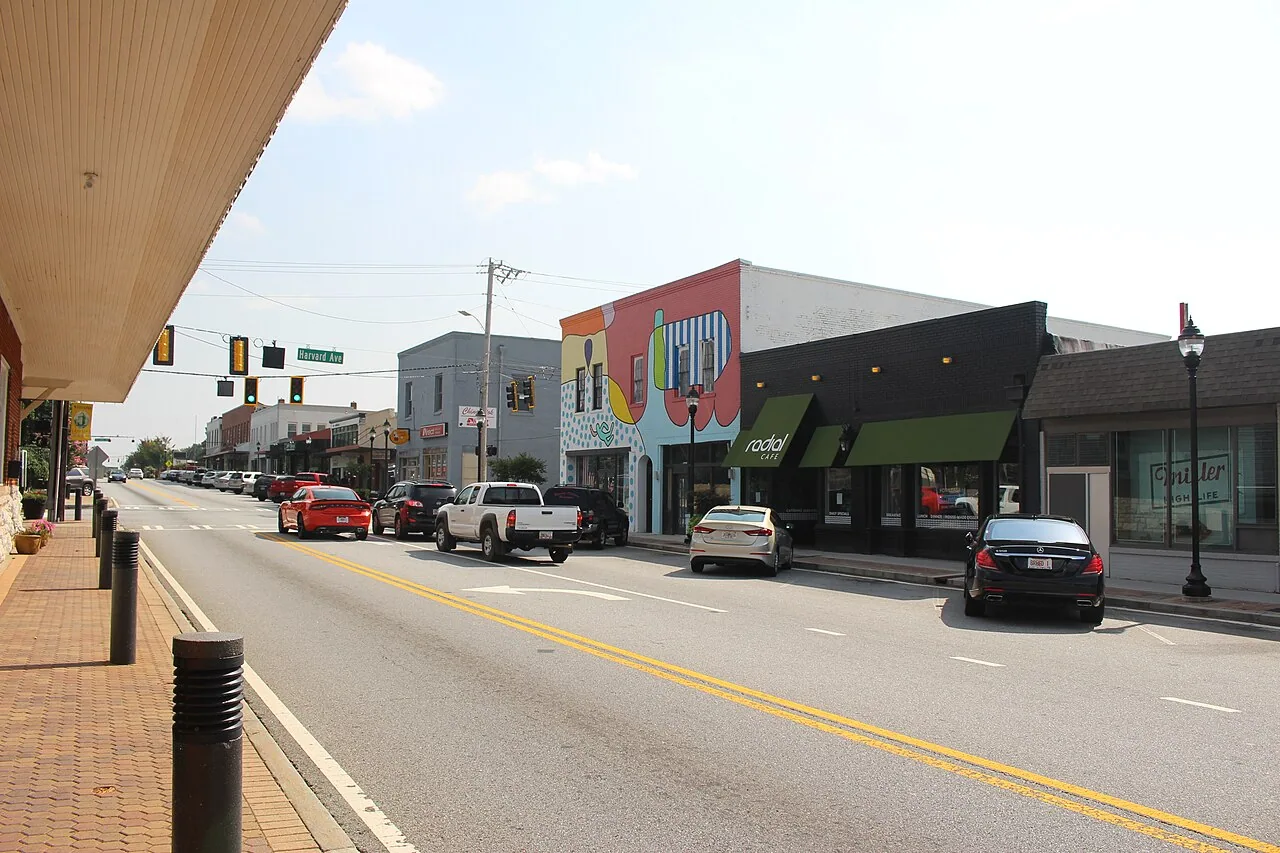
A city transportation memo describes Cascade Road as a four-lane divided minor arterial that runs east and west through its study area. It reports commercial land uses near the western segment and a transition toward residential uses farther east. Building types are not in that memo, so the first question to the owner is what the building holds.
The answer sets the roof priorities. A restaurant has exhaust and grease. A clinic has rooftop units and quiet hours. A parts shop has a few vents and open bays. An office has a conditioned ceiling that shows every stain. Each use changes how long a dry-in can wait and which trades share the roof. A restaurant roof and an office roof can stand side by side and still need different plans. Tenant improvements add another layer. Every new vent, unit, or conduit run leaves a hole, and the hole needs a name on the roof plan. We log each cut by date and trade, so a leak near one can be traced fast.
Roof mechanism: small zones, many joints
A small roof has a high ratio of joints to surface. Parapet walls, curbs, pipe boots, and the edge metal run for a short distance but repeat often. Each joint holds a bead of sealant or a lap of membrane. Sealant ages in sun. Laps open when the sheet shifts.
Heat is the driver in summer. Summers here run long, hot, and humid, and a few days each year, about seven in Atlanta, pass 95 degrees. Dark roofs hold more of that heat. The sheet swells by day and relaxes at night. After a few years, a joint that was tight is a slow leak. We look for the signs before the ceiling shows them: chalking, hairline cracks, and a lifted edge. Humidity adds to the load. Damp mornings keep surfaces wet, and trapped moisture works under a loose edge. Sealant that skins over but never bonds is a common find. So is a fastener that backed out and pushed a bump into the sheet. Each is small. Together they set the pace of the roof's decline.
Inspection findings: what a short walk reveals
A small roof takes a short walk, but not a casual one. We start at the drain, then the lowest edge, then every wall tie-in. Photographs go in a repeatable sequence. We measure ponding, press seams, and test flashing by hand.
The findings fall into three groups. Items that leak now. Items that will leak in a season or two. Items that are sound. The owner sees all three on one page. The page also names who can fix each item and in what order, so a merchant or a small landlord can spend on the leaks first and schedule the rest. If the walk cannot settle a question, the page lists the test and the date it will be done. That keeps a repair from drifting into guesswork and gives the owner something to show a lender or an insurer. A flashing failure repair is often the whole fix for a small building. When two or three failures show up in different spots, we look for wet board with an infrared moisture survey before pricing a patch.
Scope options: patch, section, or whole roof
For a small building, the options are easy to state. Patch the failure. Rebuild one zone. Replace the roof. The choice follows the wet boundary. If water stayed in one zone, rebuild that zone and leave the rest. If water spread across zones, the scope grows.
Cost drivers are plain. How much board is wet. How many curbs and penetrations need flashing. Whether a lift can reach the roof. Whether the building stays open. On a small roof, access can cost more than material. We list each driver in the price, so an owner or a merchant group can see where the money goes. A planned repair costs less than an emergency one.
Access and sequencing: open doors and neighbors
Storefronts stay open. The crew works above customers. We set noise hours, mark a clear entry path, and keep ladders and cords off the sidewalk. Material arrives in small loads. A roof-top lift or a hoist replaces a large crane.
Where a commercial lot adjoins homes, the neighbors matter too. Early starts, dust, and debris draw complaints. We tarp the lot edge, sweep daily, and agree on start times with the owner. The same method serves nearby corridors such as Washington Road and the Old National Highway district. Trade handoffs are simple here, but they still need dates.
Code coordination: permit and energy basics
South Fulton's permit rules moved to the 2024 International Building Code and its related 2024 codes on January 1, 2026, and the energy side holds at the 2015 IECC with state supplements. A reroof or a recover that adds insulation has to meet both.
For a small building, the permit is often a short file. Roof area, layer count, and added weight are the main questions. We prepare the roof description and the product data, and the owner or GC submits it. Warranty paperwork follows the same file. Keeping those papers together saves a week the next time the roof is touched.
Send the roof plans and the hours the shop is open
My building is small. Is a full inspection worth it?
Yes, because a small roof has little margin. One failed flashing wets the interior. A short, structured walk finds it before the ceiling does, and the photo record supports any later repair or claim.
Can the shop stay open during the repair?
Usually. We set noise hours, keep the entry clear, and close each zone before leaving. If the work is above a sensitive space, we move it to a quiet window and tell the owner the date.
How do I know whether to patch or replace?
Look at the moisture. If the insulation is dry and the failure is local, patch. If water has spread across zones or repairs keep failing in new places, plan a larger scope. The scan and a test opening give the answer.
Does the merchants association change anything on the roof?
No, but it can help owners share lift costs and schedule work together. We can price several nearby roofs on one mobilization when owners agree on dates.
What if hail hits before the repair is done?
Call. We answer around the clock, holidays included, and set a dry-in limit. After the event, we photograph the roof again so damage can be separated from earlier wear.