
- Home
- Silicone Roof Coatings
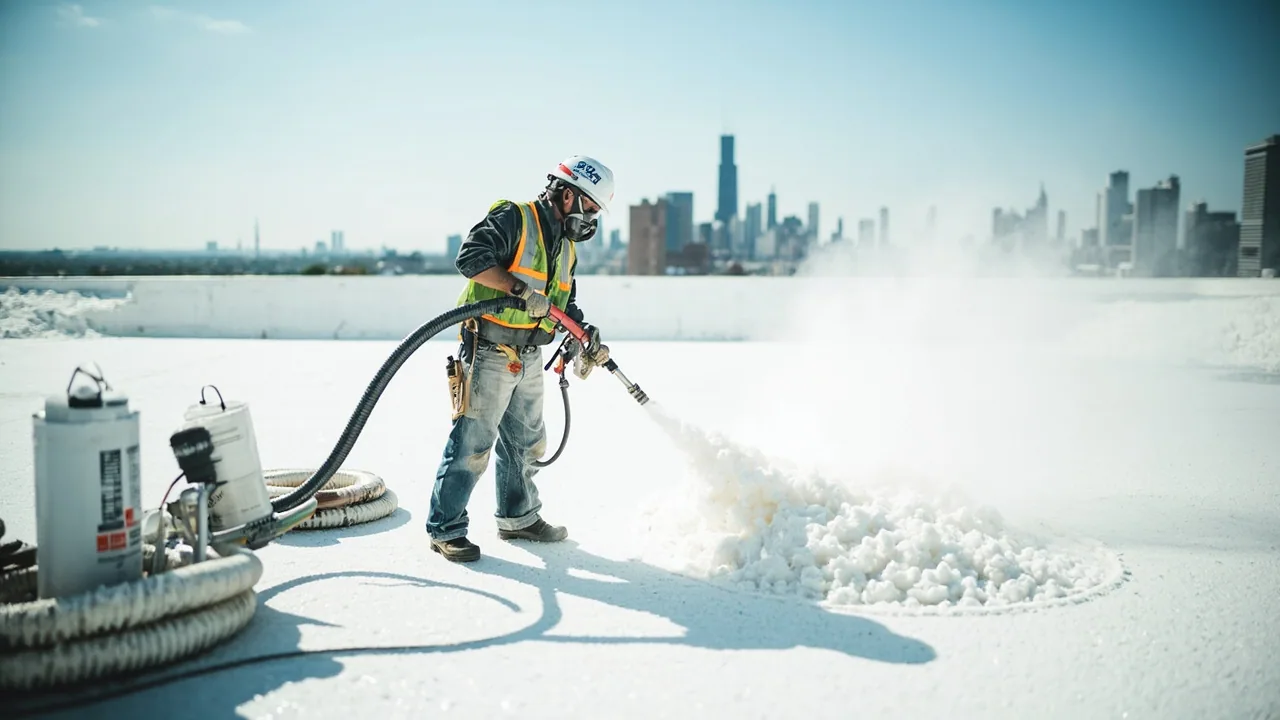
Silicone Roof Coatings in South Fulton, GA
A silicone coating is a liquid-applied layer that cures into a flexible, waterproof skin. It goes on over metal, single-ply, modified bitumen and foam when the roof beneath is sound and dry. Use decides traffic and equipment loads, and the roof zone decides drainage. What changes the sequence is adhesion: a coating only works if it bonds, and bonding depends on prep. Our first walk is a prep walk.
Silicone resists ultraviolet light and standing water better than many coatings. It stays flexible through heat cycles. It also attracts dirt, it is slippery when wet, and it is hard to recoat with anything but more silicone. Choosing it is a long-term decision. We record the substrate, the moisture, the seams and the penetrations before the order is placed.
The South Fulton Development Authority names logistics and distribution, advanced manufacturing and business services among its target industries and lists flex space and industrial parks as available property. A coating suits a sound, dry, low-slope roof of any size, and each building gets its own walk and its own adhesion test.
Roof mechanism: substrate, moisture and bond
A coating seals the surface it touches. It cannot dry wet insulation below. Moisture trapped under a coating blisters it or finds a way out through a pinhole. Before any coating goes on, an infrared moisture survey maps the roof and cores confirm what the scan shows. Wet areas are cut out and replaced.
Bond is tested, not assumed. We clean a small patch, apply the coating and run an adhesion pull after cure. Surfaces that fail get a primer or a different system. The test result goes in the file. NOAA's picture of Georgia is long, hot, humid summers, with Atlanta above 95 degrees about seven days a year, so surface temperature at application is checked too.
Substrate type changes the recipe. Metal needs rust treatment and often a primer. Single-ply sheets need cleaning and sometimes a special primer to hold the coating. Foam needs a clean, dry surface. A spray foam roof is one common substrate for a silicone recoat. The scope names the primer and the substrate for each roof zone.
Inspection findings: seams, laps and penetrations
Coatings do not bridge open seams or failed flashings. Every opening is repaired first. We probe seams, mark gaps and re-weld or re-tape. Flashings are rebuilt with reinforcing fabric and coating. Penetrations are sealed with the same system. Rust on metal is cleaned and treated. Each step is logged, and each marked zone is photographed before and after the reinforcing pass.
The walk also checks the drain plane. Silicone tolerates ponding better than most coatings, but it does not cure ponding. A drain or scupper problem stays a problem under the coat. Low spots are noted, and slope or drain work is added to the scope when ponds persist. The record shows depth and duration for each.
Walkway and equipment zones are marked. Heavy traffic wears coatings faster than the field. We add reinforced or textured areas along service routes and mark them on the plan. Rooftop units are lifted or blocked so the coating can run under the curb edge where it is practical. Otherwise it is cut in carefully and the cut line is photographed.
Weather and storm peaks
Silicone cures with humidity, which helps in the Southeast, but rain during early cure can ruin a coat. NWS climatology lists damaging thunderstorm winds in every month, near 19 days a year in the Peachtree City warning area, and large hail on roughly seven days a year across north and central Georgia, peaking in April. Tornadoes occur in all months, with most in March, April and May.
Application windows are short between storms. We start early after a dry night and watch radar. A dry-in limit is set each day. Hail can dent a coated surface and break the film at impact points, so the roof is walked after a major storm and breaks are patched.
Dew and humidity affect the start time. A roof wet with dew must dry before application. Cure is quickest on warm, humid mornings. Surface temperature is read with a probe, and the dew point is checked so the coating does not trap moisture. Each reading goes into the application log.
Scope options: thickness, coats and recoat intervals
Coverage rate sets the film thickness, and thickness sets the life. We state the rate in the scope and measure wet film during application. A base coat and a top coat are usual, with reinforcing at seams and flashings. A restoration coating program sets an inspection interval and a clean-and-recoat plan.
Under the city's permit page the 2024 IBC and its sibling 2024 codes, amended for Georgia, apply from January 1, 2026. Energy rules still come from the 2015 IECC with Georgia supplements. A reflective finish can help energy performance, and the scope states how that is credited. If the roof is wet or the substrate is failing, the better path is a different coating or a recover.
Cost follows area, coverage rate, prep, repairs and access. More film thickness costs more and lasts longer. Repairs before coating are separate lines. The scope compares coating against recover and replacement on equal terms, so the owner sees the cost per year of expected life.
Access and sequencing: prep, overspray and slip
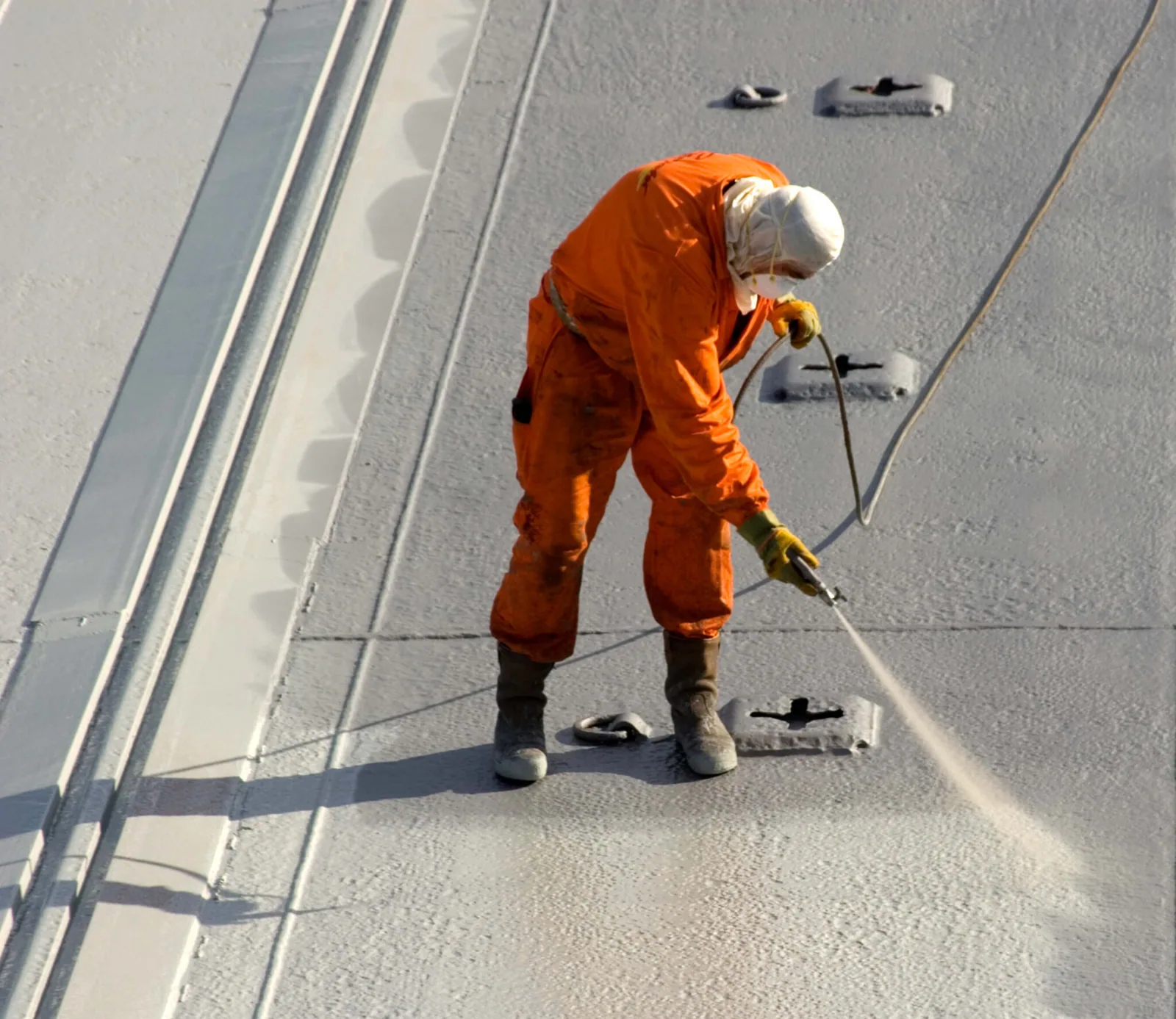
Prep is most of the work. The roof is cleaned, low-pressure washed and dried. Wash water is kept out of drains that discharge to a storm system. Overspray is a risk, so we cover cars, glass and neighbors. Silicone is slippery, so we mark walk routes and add traction pads. A wet silicone surface is a fall hazard.
Overspray reaches cars and glass fast, so on an occupied site, such as a shopping node in the Sandtown Crossing area, the staging plan covers parking next to the building. Afterward the owner holds photographs, a plan of the coated areas, adhesion results, thickness readings and product data.
A general contractor on a mixed project can ask us to coordinate the coat with other trades. Mechanical work is finished first. Roof penetrations are flashed before coating. We hold the coat until the last trade is off the roof, so no boot prints or drips mar the finish.
Closeout records the batch numbers, the wet-film readings, the weather at each pass and the date of the next inspection. A recoat clock starts on the day the final coat cures.
Send the roof plans and the access window
When is silicone the right coating?
On a sound roof with dry insulation where ponding is a concern, since silicone tolerates standing water well. We recommend a moisture survey and an adhesion test before you choose it.
Can I recoat silicone with something else?
Rarely. Most coatings do not bond to cured silicone. Plan to maintain it with silicone, and note the system type in the roof file.
Does a coating fix leaks?
Only after the leaks are traced and repaired. Seams, flashings and punctures are fixed first, then the coating goes over. Trace each stain before you coat.
Why does silicone get dirty?
Its surface stays slightly tacky and holds dust. Cleaning on a schedule keeps reflectivity up. Record the cleaning dates in the maintenance file.
How long does a coating job take?
Prep takes the longest, and weather sets the pace. A small roof can be done in days. A large one needs a staged plan and a dry window for each section.