
- Home
- Southmeadow Business Park
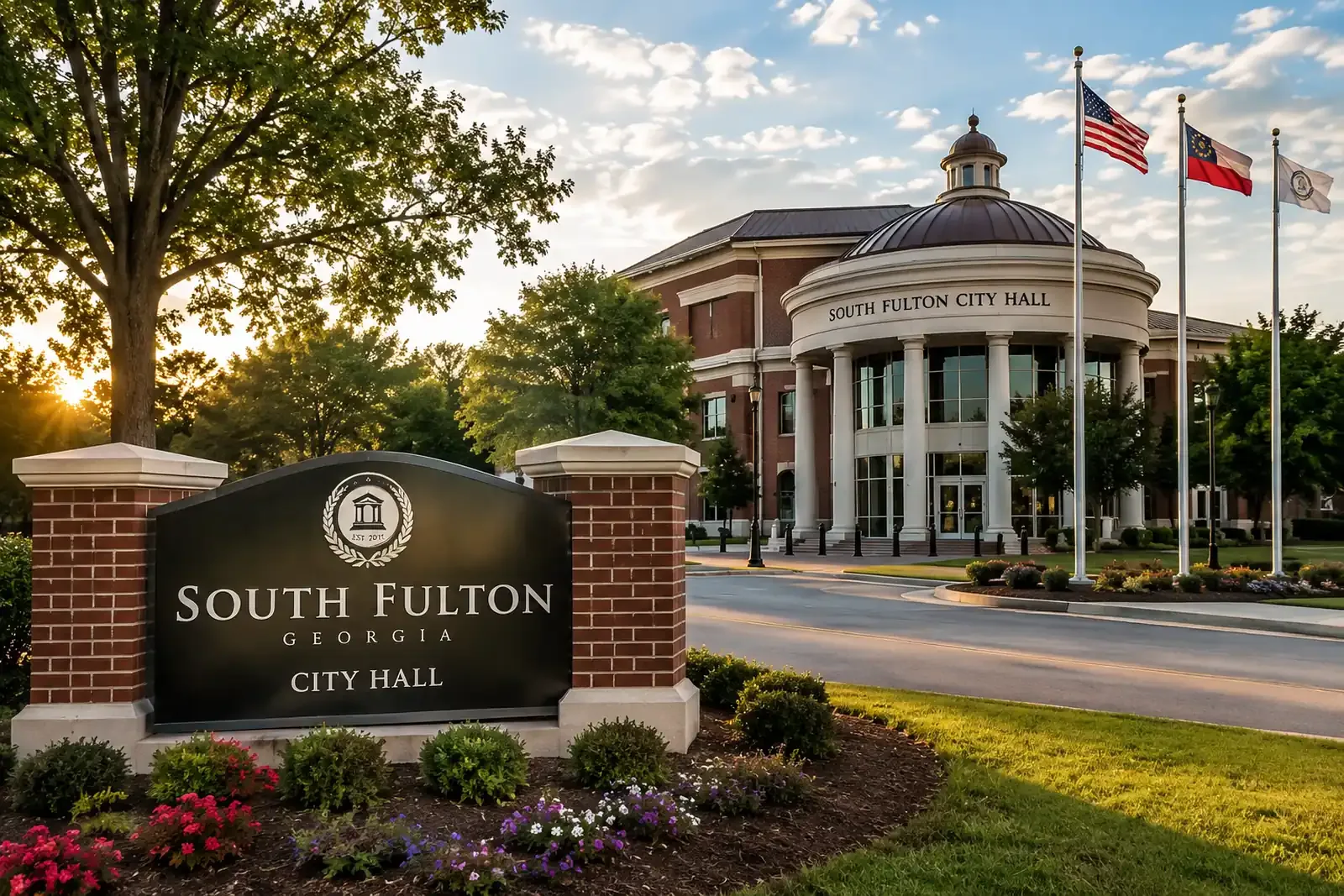
Commercial Roofing in Southmeadow Business Park, South Fulton, GA
A business park with 150 acres still to build mixes finished roofs with roofs yet to come. The park sits on Welcome All Road near Camp Creek Parkway, per East Point. The developer describes it as a multi-user industrial development and reports 150 acres remaining for future projects. The city says that acreage can take large users, and that existing development has included industrial, government, and distribution uses. For a roofer serving South Fulton, GA and its neighbors, the first question is about age: how old is this roof, and where is its paper?
Young roofs have records and claim clocks. The walk opens with the use and the roof zone, then the closeout file is requested.
Building use: industrial, government, and distribution
The park's mix of uses sets three different roof jobs. An industrial user has process heat, exhaust, and heavy equipment. A government user has access rules, records, and an inspection routine. A distribution user has docks, trucks, and a schedule that does not stop. We record the use before the walk, since it tells us which zones need the closest look.
A large user may occupy one roof, and smaller users may share one. A distribution center roof carries long runs of seam and a few big drains. A government building roof carries records requirements and security rules. We keep one format for both, with use-specific fields. The fields differ in small ways. A distribution sheet lists dock doors and truck courts. A government sheet lists badge rules and the person who signs for the building. An industrial sheet lists exhaust sources and the process zones beneath the roof. All three share the same header: zone number, date, photographer, and weather on the day.
Roof mechanism: early defects and the warranty clock
New roofs fail in a few predictable ways. A missed fastener at a lap. A skipped bead of sealant at a corner. Debris left in a drain. A curb flashed in a hurry. These do not leak on day one. They leak after the first hard storm, the first freeze, or the first hot spell.
The first year is when those defects show. Construction leaves another mark. Foot traffic from other trades wears paths in the membrane. A dropped tool leaves a puncture. A cut-off scrap blocks a drain. Mechanical contractors set units after the roof is down, and their curbs, if added late, break a sheet that was tight. The first walk looks for every one of these. Georgia summers run long, hot and humid, and damaging thunderstorm winds occur in every month in the region. A roof with a small defect meets both within twelve months. A first-year walk catches problems while the installer's terms still apply. After that, the owner pays for the same repair.
Inspection findings: new-build checks
A new-build walk compares the roof with its paper. We ask for the specification, the submittals, the installer's closeout file, and the structural loads. Then we read the surface. Is the membrane the one on the submittal? Are fastener lines where the drawings place them? Do edges and corners carry the heavier pattern the design calls for?
Findings go on a zone sheet. Drain bowls get checked for debris. Seams get probed. Curbs get hand-tested. Differences between paper and roof get a photograph and a date. The GC can send that sheet to the installer. It names the location, shows the defect, and gives the date. A claim built on that sheet is concrete and hard to dispute. A claim built on a phone call is neither. The same sheet protects the GC if a dispute arises about who damaged the roof and when. A roof warranty management file keeps the papers, the visit dates, and the corrections together so a later claim has a full trail.
Scope options: correct, document, or defer
On a young roof, most findings are small. The options are simple. Correct the item now, under the installer's terms if they apply. Document it and watch it. Or defer it with a date. The sheet states which applies to each item and why.
A few findings are larger: a wide area of missing fasteners, a flashing that was never tied in, a drain set above the surrounding sheet. Those need a stated scope and a price. Where insulation has taken on water during construction, an infrared moisture survey maps it, and a repair boundary is drawn. Buyers and lenders use the same file in a due-diligence roof survey.
Access and sequencing: large pads and active tenants
A park with open acreage has room for staging, which helps. It also has active neighbors. Trucks cross the site. New construction continues. We map the haul route and the lift position, and we agree with the GC on which pads are active.
Where a user is already operating, roof work follows its schedule. We check the dock, the yard, and the gate. We set barricades under the work. We close each section in before the shift ends. At a distribution site, that may mean a short stop before the last truck leaves, with a hot-air weld finished and a temporary cover over any open edge. At a government site, it may mean a signed handoff to the building contact. In both cases the roof is tight when the crew leaves. The park sits near Camp Creek Parkway and within the East Point area, so material routes follow those roads. A GC working across the area can compare notes with the general contractor record we keep for each site.
Timing: hail months and turnover dates
Hail is a spring risk here, peaking in April. Tornadoes occur in all months, most often in March through May. Turnover dates that land in that window raise the stakes.
Schedule the first-year walk for the end of the first spring or the end of the first full year, whichever comes first. After any hail event, walk again. A dated baseline from the first visit makes the comparison simple, and it supports a claim if one is needed. Georgia's current energy code is the 2015 International Energy Conservation Code with state supplements, and the statewide building code is the 2024 IBC. East Point's permit office confirms the edition it enforces, and the file should name it.
Send the closeout file and the roof plans
Why walk a roof that was just installed?
Early defects surface in the first storms and the first hot weeks. A walk in the first year catches them while the installer's terms apply. The dated sheet also becomes the baseline for every later visit.
What paper should the owner hand over?
The specification, submittals, closeout file, warranty, and structural loads. With those, we can compare the roof with its design and flag differences. Without them, the first walk becomes the baseline.
How do you handle a roof where a government user has access rules?
We ask for the rules at the start: badging, escort, hours, and tool checks. The schedule includes them. The record format stays the same, so the user's file looks like any other.
Can a large user's roof be repaired while operations continue?
Usually, by zone. We work away from sensitive areas, close each section in before the shift ends, and keep trucks and forklifts clear of the work. The GC gets the sequence in writing.
What should the GC send us?
Send the closeout file first, then roof plans, the loading limits, who occupies the building and when the roof can be reached. An active leak is answered around the clock, holidays included.