
- Home
- Hail Damage Roof Repair
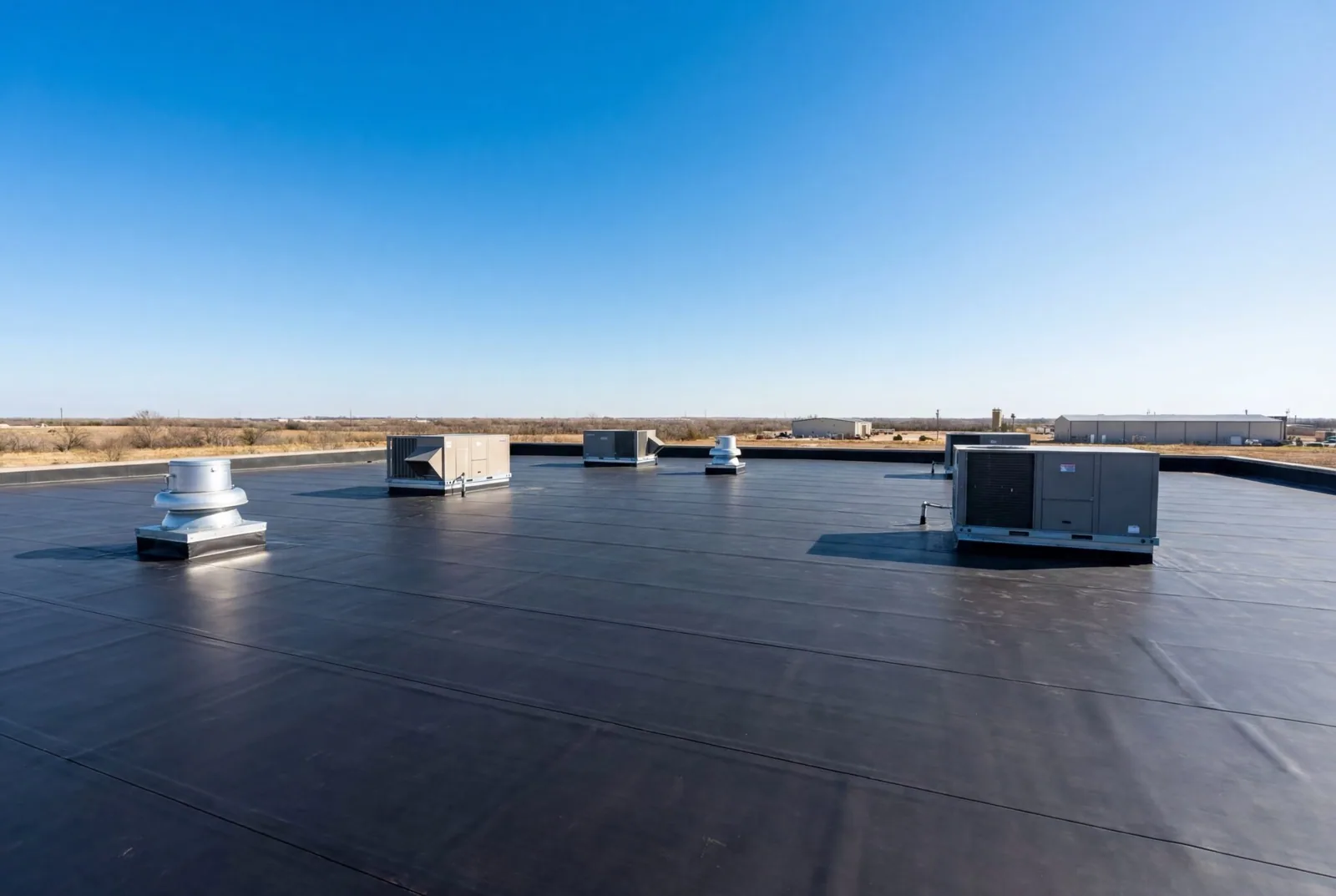
Hail Damage Roof Repair in South Fulton, GA
Hail leaves marks that a stained ceiling does not report. A bruise in a membrane, a cracked coating or a dent in a metal panel may be dry for months. The National Weather Service logs large hail roughly seven days each year across its north and central Georgia warning area, and April is the peak month. For a roof in South Fulton, GA, that gives a spring window when the survey matters most. We test for what the stones did, then separate it from what age did.
Building use: whose roof takes the stones
Hail does not choose its target by use, but the cost of a miss differs by building. A multi-tenant retail strip along the Fairburn State Route 74 corridor, where the city lists restaurants, hotels, apartments and planned retail suites, has many tenants under a few roofs. A hotel roof shelters sleeping rooms. A restaurant roof shelters kitchens and dining space.
In East Point, the city reports about 1.2 million square feet of retail space across the wider Camp Creek Shopping District, a multi-property mix of shopping and hospitality development. A hail event that crosses a district like that can touch many owners at once. An owner with a baseline report and dated photographs can show what changed.
Roof mechanism: how hail injures each system
Hail transfers energy at a point. On a single-ply membrane, a stone can bruise the sheet, fracture the scrim underneath or crush the insulation, while the top surface looks nearly unchanged. On a modified bitumen or built-up roof, impact strips granules, exposes the asphalt to ultraviolet light and cracks the surface. Spray foam can fracture and lose its coating. Coated roofs craze and flake where the stone hit.
Metal roofs dent. Cosmetic denting may not affect water-shedding, but a dent that cracks a coating or opens a seam does. On a standing seam metal roof, hail can push ribs out of line and loosen sealed laps. Skylights and plastic domes crack. Rooftop unit fins bend, and vent hoods dent.
Heat plays a second role. Summer sun ages membranes and coatings, so a roof that already carries surface wear takes a bruise more easily. That is why a survey has to read both layers: the hail mark and the wear around it.
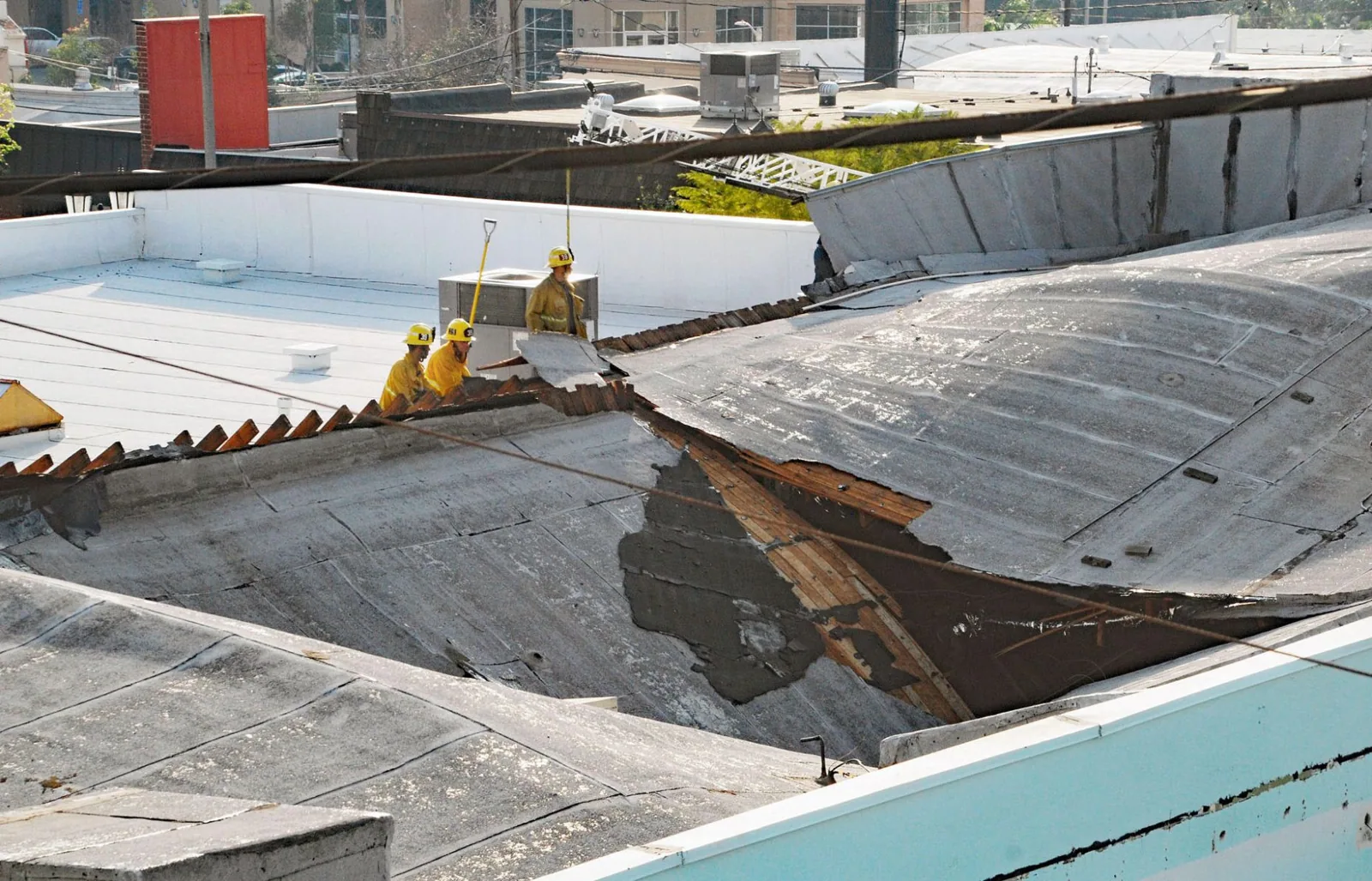
Inspection findings: testing for the bruise
We begin with a drone pass to catch metal denting, displaced equipment and obvious breaks. Then we walk the roof in a test pattern, using a calibrated grid so every zone gets the same attention. Hail marks are counted in a test square, photographed, and chalked for scale and location.
- Soft spots when pressed, which suggest crushed insulation under a bruise.
- Cracked or pitted coating, and granule loss at impact points.
- Dents on metal panels, trim, vents and rooftop unit housings.
- Shattered skylight domes and cracked plastic accessories.
- Collateral damage on soft metals, such as copper and aluminum flashing.
A drone roof inspection shortens the first look on a large roof, and an infrared scan after the first rain shows which bruises are wet. Both records go into the file with the date, the storm and the weather, so every finding can be matched to a specific event.
Scope options: spot repair, restore, replace
A spot repair patches or replaces individual bruised areas when the count is low and the rest of the roof is sound. A restoration adds coating over a roof whose surface is damaged but whose layers are dry and whole, usually after local repairs. A silicone coating can seal minor cracking, but it does not restore crushed insulation. A replacement applies when bruises are widespread, the insulation is wet, or the roof was already near the end of its service life.
The decision depends on test squares, moisture readings and the age of the roof. We state the numbers we found, not an estimate by sight, and price the choices together so the owner can see the point where repeated spot repair costs more than a new roof.
Metal and coated roofs follow the same logic. We count dents that crack a coating, check laps and clips near the worst impacts, and recoat only where the substrate is sound. Accessories that hail destroyed, such as skylight domes and vent covers, are replaced in the same visit so the roof does not go back into service with a known opening.
Access and sequencing: surveys before repairs
The survey comes first, even when a leak is the reason for the call. Repairs made before documentation can erase evidence that the claim needs. We photograph, test and mark the roof, then repair in an order that stops active leaks first.
Roof access on occupied buildings runs around tenant hours. A hotel or restaurant needs quiet windows. Retail needs delivery times protected. For a repair tied to an insurance claim, we bring the adjuster to the roof when possible, walk the test squares together and agree on the evidence. That avoids a second visit and a second argument about what was seen.
Timing: after April and before the claim window closes
Hail peaks in April in this region. A survey within days of the event gives the cleanest evidence, because the marks are fresh and the weather record is easy to match. Waiting lets summer heat age the bruise and blur its date.
Many policies set a window for filing a storm claim, and the terms differ, so the owner should read theirs early. A bruised roof that was never repaired may leak at the next heavy rain and add water damage to the loss. When hail comes with strong wind, the review overlaps with wind damage and with the broader storm damage triage. A spring front that also carries a tornado warning adds a structural check to the list.
Send the storm date and the last roof report
Should we wait for a leak before calling about hail?
Do not wait. A bruise can crush insulation and fracture a membrane scrim long before water appears. Survey within days of a large hail event, and add a moisture scan if bruising shows. Documentation made early is easier to tie to the storm date than documentation made after a summer of heat.
Is a dented metal roof covered by a claim if it still sheds water?
Coverage turns on the policy. Many policies treat cosmetic dents differently from functional damage, and some exclude cosmetic damage altogether. We document each dent, test the coating and seams for cracks, and separate functional damage from cosmetic marks in the report.
What is a test square, and why does it matter?
It is a measured area where hail marks are counted. The count in sample areas across the roof shows the severity, which in turn drives the repair or replacement choice. The same method applied to each zone makes the evidence comparable and keeps a dispute short.
How do we tell hail bruising from ordinary blistering?
Hail marks are random, circular and often show the point of impact, while blisters rise in clusters and follow heat or trapped moisture. A test cut shows the layer below. A fractured scrim or crushed insulation points to hail; a delaminated ply points to blistering.
Our roof is already near the end of its life. Does hail still count?
Hail damage on an aged roof is still damage, but the claim looks at the value of what was lost. Our report states the pre-storm condition from maintenance records and photographs. If the storm pushed the roof over the line, the evidence says so.