
- Home
- Rooftop Equipment Curbs and Supports
Rooftop Equipment Curbs and Supports in South Fulton, GA
A rooftop unit weighs more than the roof around it was designed to notice. It sits on a curb or a rail, it connects to ducts and lines, and a service crew visits it every season. Each of those facts changes how a roof behaves. In South Fulton, GA, units also fight heat for months and wind in every month of the year. We look at curbs and supports as part of the roof, not as the mechanical contractor's concern. A bad curb flashing leaks. A loose support tears a membrane. A moved unit leaves a hole behind.
Building use: who puts what on the roof
Offices and retail buildings carry heating and cooling units. Flex space often has small units over the office wing and exhaust or make-up air over the bays. Manufacturing roofs carry process exhaust and dust collection. Industrial parks, flex space and professional office corridors all appear on the development authority's list, and each carries its own equipment load.
Equipment turns over. A tenant changes, a unit fails, a code or lease demands an upgrade, and a new unit arrives. On the Old National Highway corridor, where the merchants association counts roughly 500 establishments, any tenant change can bring a unit swap. Every swap is a chance to damage the roof or to leave a poor curb behind. A roof file that tracks each unit, curb and line helps the next trade.
Roof mechanism: load, movement and flashing
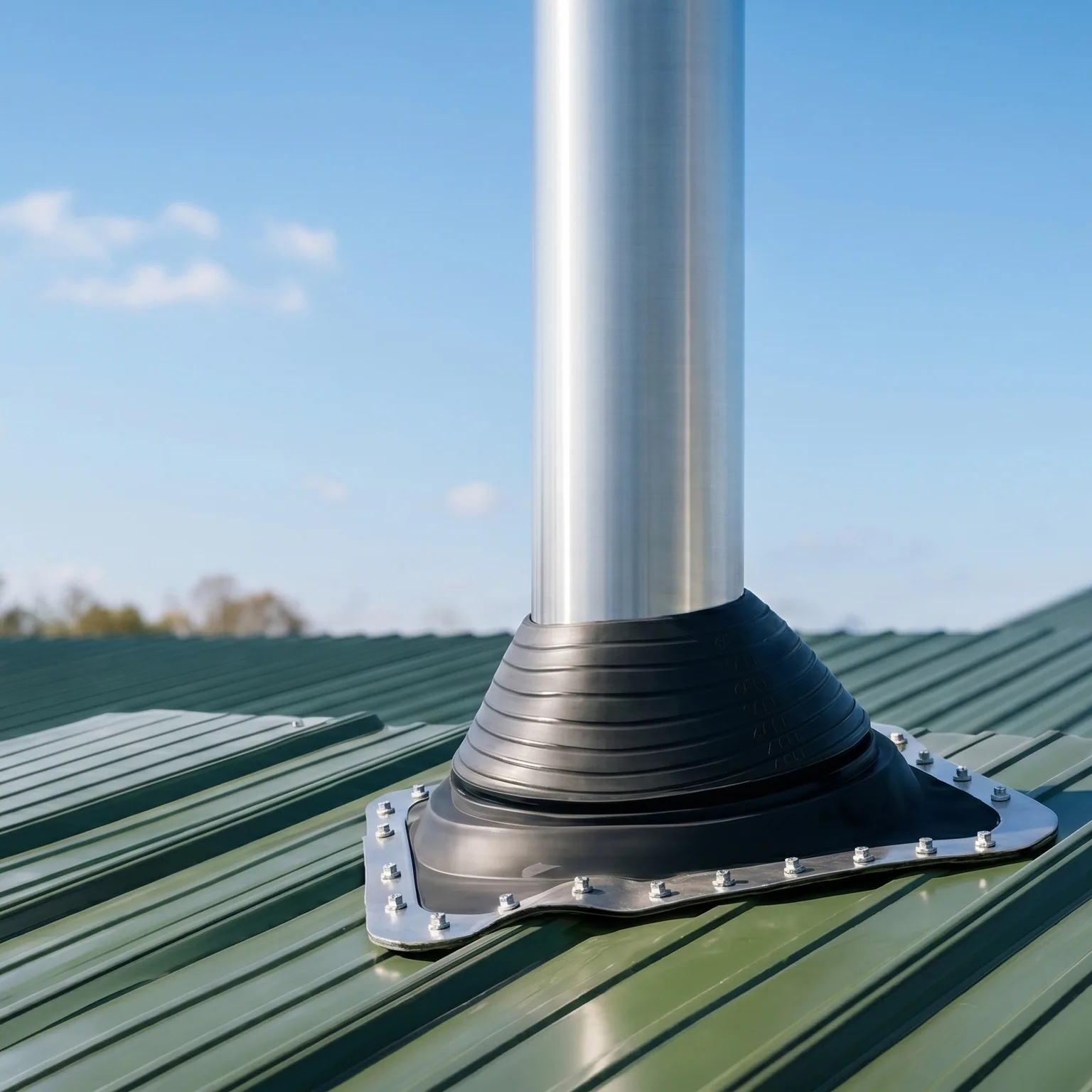
A curb is a raised frame that carries the unit and lifts the flashing line above standing water. Its flashing is the weak point: membrane turns up the curb side, a counterflashing or cap covers the top of the membrane, and corners must be formed or welded. Sealant is a backup, not the main seal.
Units move. They vibrate, they shift in wind, and they expand and contract with heat. A support that was tight at install can crush the membrane below it, or lift and let water in. Heat never lets up. Atlanta sees roughly seven days a year beyond 95°F, and a unit's exhaust warms the membrane around it. Dark roofs in the sun can run far hotter than the air. Heat ages sealants and rubber boots fast.
Wind is a second load. Damaging winds are on the NWS record for every month, at roughly 19 days a year. A unit that is not strapped or bolted to its curb can slide or tip. Pipe supports can shift and tear the membrane. Condensate lines that drip onto the roof stain and stress the same spot, day after day.
Inspection findings: the unit-by-unit walk
We number every unit, curb and support on the roof plan. For each one we check the curb flashing for lifted edges, cracked corners and failed sealant. We check the counterflashing for gaps and rust. We check the support feet for crushed membrane and missing pads. We check the unit for straps, bolts and clearances. We look at condensate lines, electrical conduit and refrigerant lines for supports and slope.
Walk paths come next. Technicians who reach units repeat the same route, and the membrane there shows scuffs, punctures and loose seams. We mark the route and recommend walkway pads. We also check clearances: a curb set too low leaves flashing close to standing water, and a unit set too close to a parapet leaves no room for service or flashing repair. Abandoned curbs and openings from removed units get attention too. A capped opening with sealant alone is a leak waiting for a rain.
Scope options: rebuild, raise, relocate
A weak flashing can be rebuilt in place: strip the old, clean the curb, install new membrane flashing and a new cap. A curb that is too low can be raised, though that requires lifting the unit. A unit that sits in a poor location, such as in a low spot or too close to an edge, can be relocated with a new curb and a patched opening.
Support options include rails, pedestals and isolation pads that spread load and protect the membrane. A pipe cluster may call for a roof-top support system with adjustable feet that avoid direct penetration. Units that need a new curb during replacement should have it built before the membrane, so the flashing is part of the roof and not an afterthought. Pipes, vents and skylight curbs beside the units get the same flashing review.
When a roof is being replaced, the replacement sequence includes lifting each unit, replacing the curb flashing, setting the unit back and testing. The mechanical contractor, the roofer and the GC need a clear trade handoff.
Access and sequencing: the trade handoff
Equipment work crosses trades. The mechanical contractor disconnects power and lines, a crane or lift moves the unit, the roofer works the curb, and the unit goes back with new connections. If one trade is late, the building sits without air or the roof sits open.
We write the handoff into the plan. It names who disconnects, who lifts, who flashes, who reconnects and who tests. It sets the close-in point for each unit: the stage when the roof is watertight even if the unit is not yet back. For tenants, the plan notes the window when air handling is down. For a unit that cannot go offline, the roof work waits or a temporary support carries the unit while the curb is rebuilt. Crane access, load paths and overhead lines are checked in advance.
Timing: before summer load, after the spring storms
Equipment work often follows the cooling season. Replacing a unit in a hot week is a hardship, so owners plan swaps in spring or fall. The roof calendar should match. A curb inspection in late winter finds failing flashing ahead of storm season, which peaks in spring with hail and tornadoes, most often from March through May.
New curbs and supports are detailed to the 2024 IBC and its sibling 2024 codes, with Georgia Amendments, which the city made effective on January 1, 2026. Owners on the Roosevelt Highway and in the Fulton Industrial District can fold curb checks into a maintenance program, which logs each unit's flashing and support condition with the date.
Send the equipment list and the roof plan
Who is responsible when a new unit damages the roof?
The contract decides, but the practical answer is to prevent it. We record the roof condition before equipment work, protect the traffic route with pads or board, and inspect after. If damage occurs, the photographs show what changed. Having the roofer present for the curb work avoids most disputes.
Can a curb be reflashed without lifting the unit?
Sometimes, if the unit is small and the flashing damage is limited to one side. Most proper reflashing needs the unit lifted so membrane can run up all sides and the counterflashing can be installed. We confirm on site. A shortcut that leaves sealant as the only seal tends to leak again within a season or two.
What should happen to the opening when a unit is removed?
The opening should be decked over, insulated and covered with membrane lapped onto the surrounding roof. A cap with sealant alone is not a repair. We cut out the old curb where needed, rebuild the deck and install the membrane, and log the location so the opening is not mistaken for a live penetration later.
Do walkway pads help?
They do, on any route that service crews use often. The pad takes the foot wear that would otherwise scuff the membrane. They cost little compared with a membrane repair and are easy to move or replace. We mark routes on the plan and recommend pads from the access point to each unit.