
- Home
- Skylight and Penetration Flashing

Skylight and Penetration Flashing in South Fulton, GA
Every hole in a roof is a flashing detail. Pipes, vents, conduit, skylights, smoke hatches and equipment curbs all cut the membrane, and each cut needs a seal that outlasts the sheet around it. Most commercial leaks start at one of these details, not in the open field. In South Fulton, GA, heat, humidity and spring hail attack them together. We count the penetrations on the first walk, rate each one, and repair the weak ones before water finds them. Where a skylight is involved, we add fall safety to the plan.
Building use: daylight, vents and utilities
Warehouses and distribution buildings often use skylights or roof hatches for light and smoke venting. Flex space with an office wing adds plumbing vents and kitchen exhaust. Manufacturing roofs carry process vents and exhaust stacks. Retail roofs carry signage supports and rooftop cabling.
A roof on an industrial, flex or office building can hold dozens of penetrations, and the Camp Creek industrial-commercial area extends into South Fulton. Each penetration was added at some point, often by a trade that does not roof. That history is why the detail inventory matters.
Roof mechanism: where the seal gives out
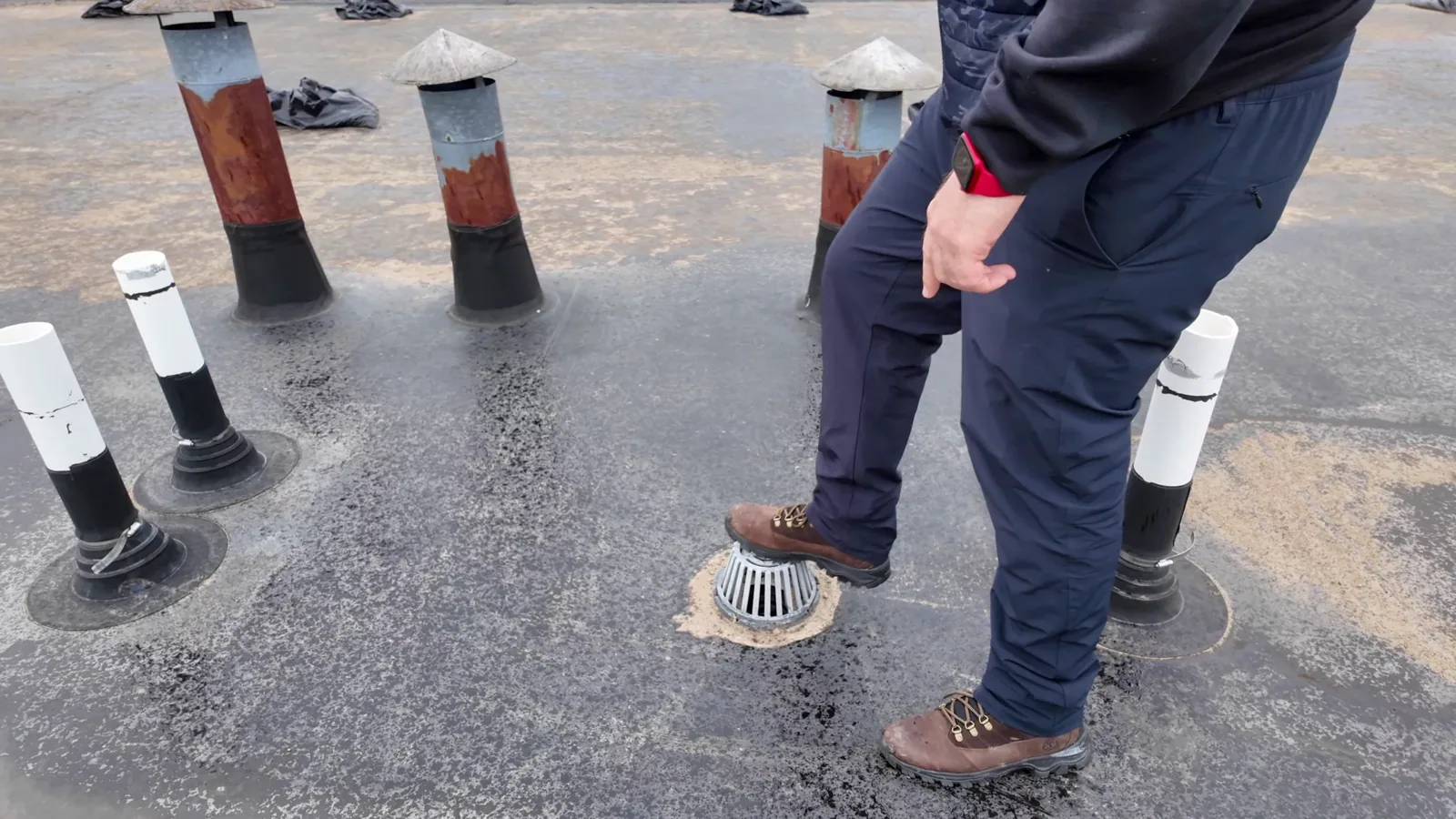
Flashing fails at the joints between materials. A pipe boot is rubber or a molded plastic collar. Over years of sun, it cracks at the top, where the pipe moves in heat. Sealant dries and splits. A skylight curb moves with the structure, and the flashing at its corners pulls. A plastic dome yellows, crazes and cracks under ultraviolet light. Metal frames rust at the base.
Hail breaks domes and dents frames, and April is the worst month for large hail in the NWS north and central Georgia area. A cracked dome leaks on the next rain, and broken pieces fall into the space below. Heat adds expansion: a dark roof beside a metal curb runs hotter than the air, and Atlanta alone passes 95°F on roughly seven days a year. Wind can lift loose caps, and damaging thunderstorm winds are on the regional record for every month.
Inspection findings: the penetration inventory
The inventory lists every penetration by type and location, with a photograph and a condition rating. Pipe boots get a squeeze test for brittleness. Sealant gets a pick test. Curb flashing gets a check at corners, base laps and counterflashing. Skylights get a look at the dome or glazing, the frame, the gasket and the curb.
Fall hazard is part of the finding. An unguarded skylight or an old plastic dome that will not bear weight is a safety risk to anyone on the roof. We mark each one on the roof plan, install guards or covers when needed and tell the owner whether the glazing meets fall-load needs. The inventory also flags abandoned penetrations: openings left from removed equipment that are capped with sealant alone. Those get a real repair, not a plug.
A moisture check near each suspect penetration shows whether leaks have already wetted the insulation. An infrared moisture survey across the roof can map wet areas from penetrations at once.
Scope options: reseal, rebuild, replace
A cracked boot gets a new boot, lapped under the membrane and sealed. A dried sealant joint gets cleaned out and replaced, or better, covered by a membrane-based flashing. A failing curb flashing gets stripped back to sound material and rebuilt with new membrane and a counterflashing. A multi-pipe cluster can get a pitch pan or a prefabricated enclosure, though modern practice favors membrane flashing for better durability.
Skylights offer three paths. Repair the curb and reseal the existing unit. Replace the dome or glazing while keeping the frame. Or remove the skylight and roof over the opening, which cuts a leak path and a fall hazard for good. Daylight needs differ by tenant, so the scope lists each option and what it changes. Each option gets a price line, so the tenant who values the daylight can see what keeping it costs. Where equipment sits on curbs, the equipment curb and support work ties in at the same details.
A repeating failure at the same detail can point to a bigger issue. Poor roof slope near the curb, a missing cricket, or movement in the deck all show up as repeat leaks. The flashing failure repair option includes correcting the cause, not just the seal.
Access and sequencing: safe approach, then repair
Skylight work needs a plan before a boot is touched. Guard rails or covers go up. Tie-off points are confirmed. The crew works from the surface of the roof, not the glazing. Material is staged away from openings. On an occupied building, ceilings below get protection against falling debris and old sealant.
Flashing repairs are small and quick, so they fit between larger projects and rarely need a full shutdown of the space below. We often bundle them into a maintenance visit or a repair scope. Where many penetrations need work, a single phase handles them in a day or two, ahead of any coating or recover that would cover them.
Timing: dry surfaces and a seal that cures
Sealants and flashing membranes need clean, dry surfaces. Early-morning dew in humid weather can stop work until the surface dries. Flashing resins and sealants also have cure times, so the crew checks the forecast. Damaging winds and thunderstorms reach the region in every month, so a repair finished at the close-in point must hold until the next shower.
The spring storm peak sets the planning calendar for the year: tornadoes are most common from March through May, and hail peaks in April. Penetration repairs belong in the late-winter visit. After any hail event, a quick walk of all skylights and domes finds fresh breaks. Any change to a skylight opening or curb height is checked against the 2024 IBC with Georgia Amendments, effective in South Fulton since January 1, 2026. On a retail roof along Roosevelt Highway, the penetration walk is the first stop when a ceiling stain appears.
Send the roof plan and the leak locations
Is it better to repair a skylight or remove it?
Remove it if the space does not need the daylight. Roofing over the opening eliminates a leak path and a fall hazard, and it costs less over the long term. Keep and repair it where the light matters. In that case replace the dome or glazing and rebuild the curb flashing at the same time, so one visit fixes both.
Can sealant alone fix a leaking penetration?
Sealant can buy time on a minor crack, but it does not last on a hot roof. It dries and splits within a few seasons. A membrane-based flashing or a new boot lasts much longer. We use sealant as a detail or a temporary measure and recommend a real flashing for anything that has leaked twice.
What should we do after a hail storm?
Walk the roof for broken domes, dented frames and cracked boots, even if nothing leaks yet. Hail often breaks plastic domes cleanly. Photograph each break with the date. We recommend a full penetration check within days of a large hail event, because a cracked dome will leak on the next rain.
Why do the same details keep leaking?
Usually because the cause was never fixed. Poor slope, a missing cricket, deck movement or a wrong material pairing will defeat a new seal. We trace repeat leaks to the root, and the scope names the fix, which can be a tapered saddle, a new curb height or a different flashing system.