
- Home
- Fire Damage Roof Repair
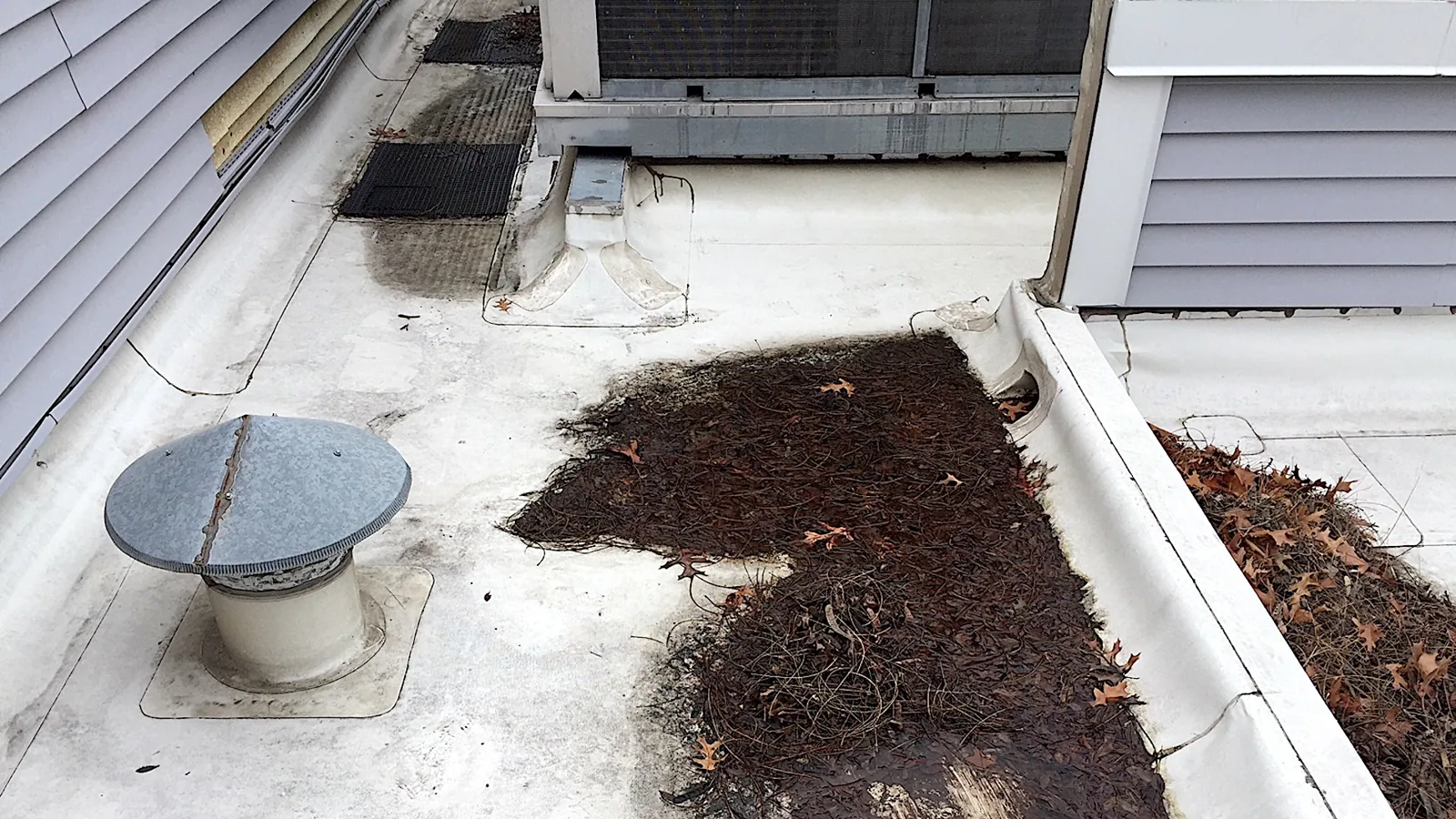
Fire Damage Roof Repair in South Fulton, GA
Fire damage to a roof has two layers, and the second is the one that gets missed. The first is the burn: charred membrane, blistered coating, scorched deck. The second is everything the fire department used to stop it. A great deal of water soaks the insulation, run down the layer stack and sit above finished ceilings. In South Fulton, GA, the first call after a fire is a dry-in call, and the scope follows the wet boundary.
Building use: where fire reaches the roof
Fires reach roofs from several directions. A rooftop unit fails and ignites the curb. A kitchen exhaust duct carries flame upward. A process line ignites below and heat rises through a ceiling. Welding or torch work near a roof sparks insulation. The South Fulton Development Authority describes large-scale food-production operations among its manufacturing strengths, and food production brings exhaust, heat and equipment that can add fire paths through a roof.
Near the Fulton Industrial District and the Camp Creek industrial-commercial area, the first question is what the building does and whether it can keep operating. A plant that cannot run with a damaged roof needs a temporary cover fast. A multi-tenant building may keep some bays open while others wait for permanent work.
Roof mechanism: heat, smoke and water
Heat softens and burns membranes and insulation. Foam insulation melts or chars. Some insulation products release smoke and residue even without direct flame. Metal decks lose strength when they reach high temperatures, and thin steel can warp. Smoke deposits soot on surfaces and, in some roof assemblies, sends residue into the plenum space.
Fire-fighting water then adds weight to the roof. Wet insulation holds water for months. The weight can stress a deck that was weakened by heat. Wet fiberboard or foam loses its R-value, softens and sends moisture to the membrane above it. A spray polyurethane foam roof reacts differently from a board-insulated system, and each requires its own assessment of char depth and adhesion.
The repair boundary is never the visible burn. A fire that charred one corner can soak a long run of insulation beyond it, and the only way to know is to open the layer stack and read it.
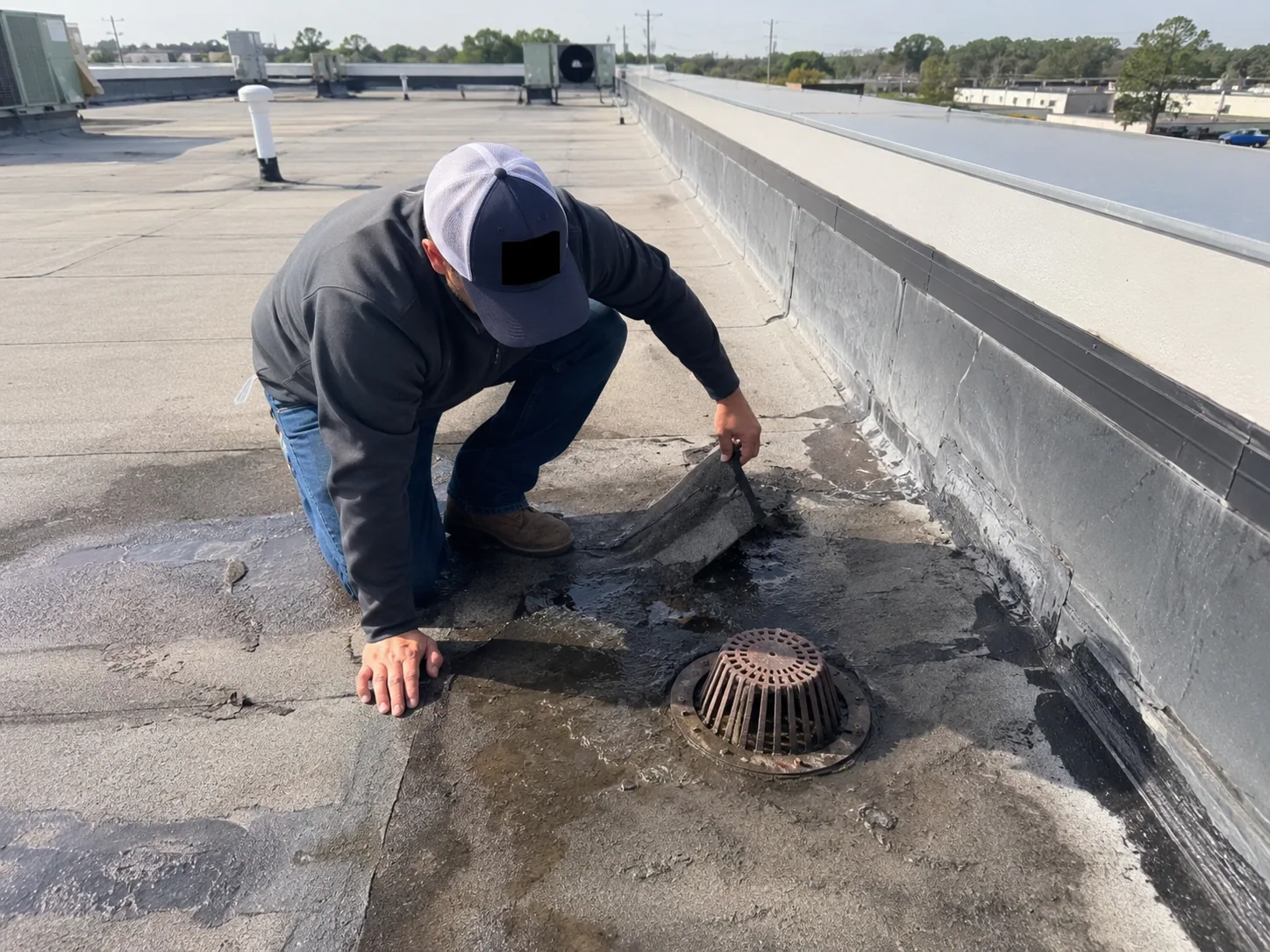
Inspection findings: a roof after the fire department leaves
Safety comes first. A fire-weakened deck can fail under a person, so no one walks the roof until a competent person has cleared it, usually with input from a structural engineer. From a lift or by drone, we map the visible burn, melted membrane, collapsed sections and open penetrations. Then the walk begins, and every step is deliberate.
- Char depth in deck and insulation, measured at test openings.
- Heat distortion on metal deck flutes and structural supports.
- Water saturation in insulation and under walkway pads.
- Damaged curbs, penetrations and flashing near the origin.
- Soot and residue on membrane that will affect new adhesives.
An infrared moisture survey run after the area is declared safe shows where the firefighting water traveled. We combine it with the fire investigator's origin notes, when available, so that the repair boundary and the cause boundary are not confused.
Scope options: dry-in, cut-out, rebuild
The first scope is a dry-in: a temporary cover over the open area so the interior stops taking water. Then the cut-out removes the burned and soaked layers down to sound deck. The structural engineer clears or repairs the deck. The rebuild installs new insulation, a cover board and membrane, tied into the existing roof at a defined close-in point.
If the fire involved a large part of the roof or the deck lost strength across a wide area, a full replacement may be the sound answer. Partial rebuilds leave seams between old and new membranes, and the old material may not be compatible with the new. We price the partial and the full scope side by side so the owner and the adjuster see the choice. An insurance claim record is built as the scope develops.
Access and sequencing: a scene with many owners
A fire scene has several parties at once: the fire investigator, the adjuster, the owner's contractor, the utility and sometimes the building department. Access to the roof may be restricted until the investigation releases the scene. We ask for the release date, the staging route and the lift locations, and we keep photographs that show the roof as found before anything is removed.
Debris leaves in an order that protects evidence. Burned membrane and insulation are bagged, tagged by roof zone and removed only when the investigator and the adjuster agree. Trades that work below, such as electricians and sprinkler contractors, share the same hoist, so a trade handoff schedule keeps the lift from becoming the bottleneck.
Code coordination: permits after a fire
South Fulton enforces the 2024 International Building Code, with Georgia Amendments, from the first day of 2026. A rebuild after a fire commonly involves the building department, the fire marshal and the structural engineer, and the sequence of approvals sets the schedule. We confirm what the permit needs before material is ordered.
Insulation and cover board choices are checked against the code in effect and the manufacturer's assembly instructions. The deck repair and the membrane work are documented as separate records so the inspector can close each item without reopening the roof.
Send the fire date and the roof plans
Who clears a fire-damaged roof for foot traffic?
A competent person on the site, usually with a structural engineer's input, clears it. We do not put a crew on a roof until that clearance is given. A drone and a lift let us start documenting the burn and the openings from outside the danger zone.
Is the water damage from the fire department part of a fire claim?
Insurers commonly treat suppression water as part of the loss. Policies differ, so the owner's carrier decides. We separate burn damage, water damage and pre-existing conditions in the scope with dated photographs, which gives the adjuster a clear map of each.
Can foam insulation be kept if only the surface burned?
Sometimes, if the char is shallow and the foam is still bonded to the deck. We test density and adhesion at several points before deciding. Foam that smells of smoke, crumbles or has pulled from the deck is removed to sound material.
Our plant has to keep running. How is the roof closed in?
We build the dry-in in zones, starting over the most sensitive equipment. A temporary cover over the burned area goes up first, and permanent work proceeds in phases tied to production windows. The GC and plant manager approve each phase before it starts.
How soon should wet insulation come out after a fire?
As soon as the area is safe and the scope allows. Wet board holds water for months, adds weight to a stressed deck and invites mold in the humid months. Removal can precede the permanent scope if the dry-in is secure.