
- Home
- Membrane Puncture Repair
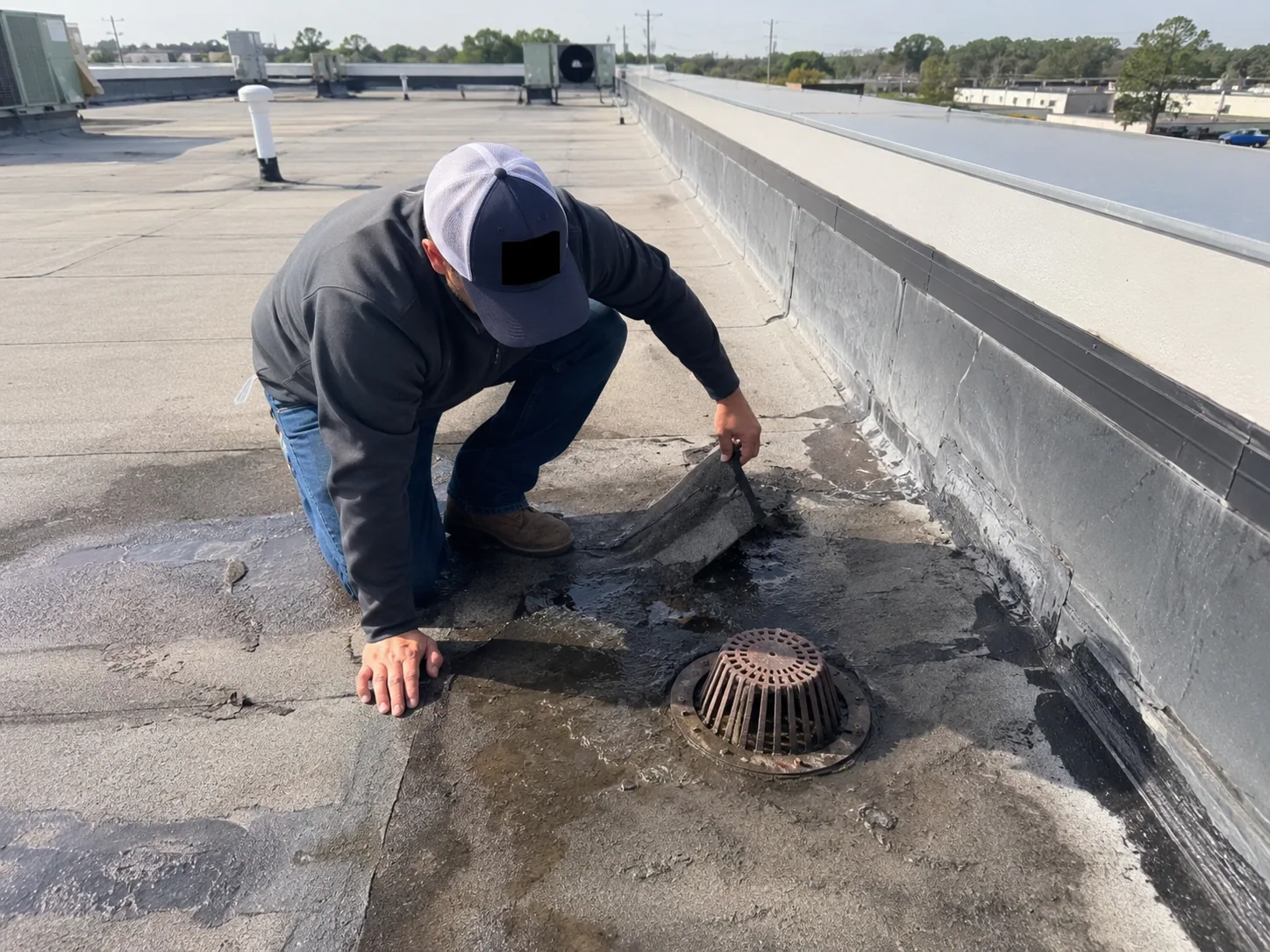
Membrane Puncture Repair in South Fulton, GA
Most punctures begin with a service call. A technician crosses the roof to a rooftop unit, drops a tool, drags a hose or kneels on a loose fastener. The membrane gives no sign for weeks. In South Fulton, GA, the same roof then takes a damaging thunderstorm wind, and a debris strike adds to the list. We trace every puncture to the trade or the event that caused it, because the cause decides how the repair is protected.
Building use: roofs that carry traffic
Roofs with the most punctures are the roofs with the most visitors. Flex and industrial buildings carry rooftop units, exhaust fans, conduit runs and satellite dishes. Each one brings a technician. The East Point city page describes the stock in Willingham Industrial Park as a mix of automotive repair, warehousing, manufacturing and recycling uses, and any of those uses can put equipment, venting and service visits on the roof.
In Forest Park, the city counts upward of 2,000 businesses, spread over construction, transportation, healthcare, warehousing and support services. A roof over any of those can carry a service path that nobody mapped. Construction trades that work next to a roof leave fasteners and offcuts behind. We note which service paths are real and which crossings are accidental, then set the protection plan around them. A route that crosses the sheet twice a month earns a pad line. A crossing that happened once during a unit swap earns a patch and a note to the GC.
Roof mechanism: how a sheet gets cut
A membrane resists water, not point loads. A sharp edge, a heavy boot or a dropped tool concentrates force on a few square inches. Reinforced single-ply sheets carry a scrim that gives strength, but a puncture that reaches the scrim opens a wick path. Water then travels along the reinforcement and into the insulation, away from the visible hole.
Soft insulation under the sheet makes things worse. A foot sinks into the board, the sheet stretches and thins, and the next step splits it. Hot summer surfaces soften thermoplastic sheets and make them easier to scuff, while a cold morning makes them brittle. An EPDM roof shows punctures as clean cuts or tears that grow at corners, and a patch needs rounded corners to keep the tear from running.
Hail and flying debris add random punctures. They tend to appear in a scattered pattern with consistent size, not along a path. A traffic path forms a line.
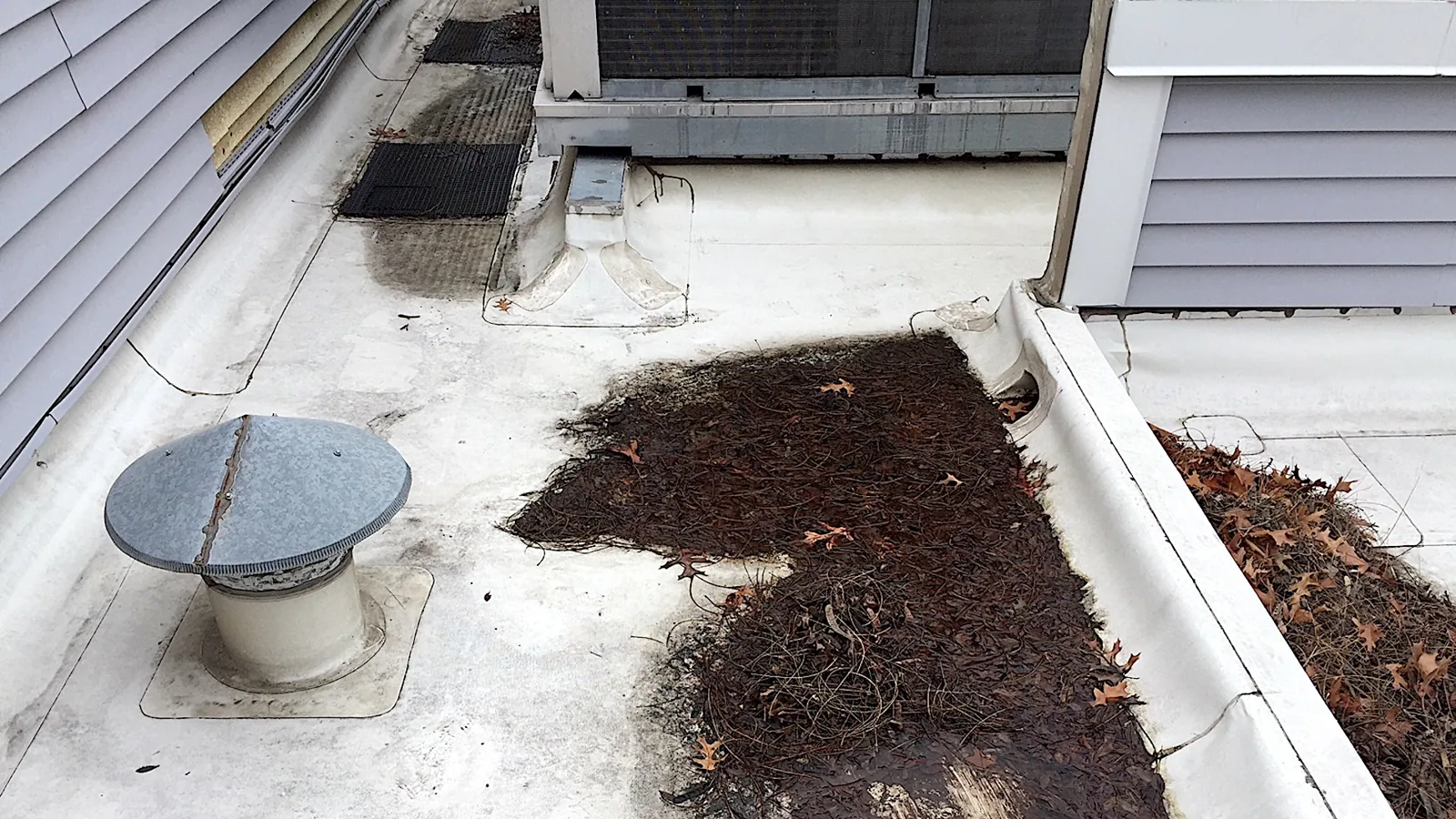
Inspection findings: reading the traffic path
We walk the access route from the roof hatch or ladder to each piece of equipment. The path shows wear: scuffs, dirt lines and stained membrane. Every damage point is photographed with a scale marker and numbered on the roof plan. Then we cross-check the number against interior stains and moisture scan results.
- Cuts and tears near rooftop unit access panels.
- Scuffs and thin spots along the main walking route.
- Fasteners, screws and metal shavings left on the sheet.
- Punctures near curbs where a technician stood while working.
- Dents or craters scattered across the field, which point to storm debris or hail.
Where the sheet is cut and the board beneath it is soft, we open a test window to see how far the water has spread. A small puncture can still sit over a large wet area, and the repair boundary follows the wet boundary, not the hole.
Scope options: patch, replace board, add pads
A patch handles a clean puncture in a sound sheet. We cut a rounded piece of matching membrane, clean the substrate, and weld or bond the patch with overlap on every side. Where insulation is wet or crushed, we replace the board before the patch goes on, because a patch over a soft substrate fails at the first step.
Walkway pads protect the path that caused the damage. A line of pads from the access point to each unit gives technicians a defined route and spreads the load. Where the traffic is frequent, a preventive maintenance program checks the pads, clears debris and repairs small cuts before they grow. Where the sheet is thin along the whole route, a section replacement resets the path with fresh membrane.
Access and sequencing: protecting service trades
Puncture repair is a coordination job. Mechanical contractors, electricians and low-voltage vendors all use the roof. We ask the GC or property manager for a list of scheduled visits, then place pads and rails before the next service window. If a unit swap or a duct run is coming, the roof work waits until after it, so the new patch is not the first thing a boot meets.
The equipment curbs and supports that hold those units need a look in the same visit. A curb with a missing counterflashing or a support that rests on the membrane is a puncture waiting to happen. Debris control matters too: magnets sweep fasteners, and a hatch gets a tool-check sign-out so nothing stays on the sheet. At the end of each visit the crew walks the route a final time, magnet in hand, and photographs the cleared sheet before leaving.
Timing: how quickly a small hole becomes a large one
A small puncture can sit through dry weather and then leak on the first heavy rain. The region records damaging thunderstorm winds in every month, and a punctured roof loses more insulation each storm. Delay also invites wet board that must later be cut out. A short repair now avoids a larger board replacement later.
After a storm, a puncture survey runs alongside the check for wind damage and the review for hail damage, so impacts from airborne debris are logged with the date and the weather. Those dated photographs support the owner's claim record if the event was an insured loss.
Send the service list and the roof plan
What is the best way to find a puncture that has not leaked yet?
Walk the service path and look for cuts, scuffs and fasteners lying on the sheet, then run an infrared or capacitance scan across the area. A hole in a reinforced sheet may be small but wick water for yards. Moisture scanning finds the wet area even when the surface looks sound.
Should walkway pads go on every roof with rooftop equipment?
They belong wherever traffic is regular, such as the route to a unit that needs filter changes. Pads protect the sheet from scuffing and give the technician a clear route. They are less useful on a roof that is visited once a year, where a marked path may be enough.
Can a puncture patch be installed over wet insulation?
No patch holds on a wet substrate for long. The insulation under the sheet stays wet, the sheet cannot bond to it, and the patch lifts. We cut a test window, remove wet board and dry the area before the patch goes on.
Our tenant's HVAC vendor damaged the sheet. Who documents it?
The record should be made before anyone argues about fault. We photograph the damage, note its location, record the date and keep the information with the scope. The owner or property manager then handles recovery with the responsible party.
How do punctures from hail differ from those caused by foot traffic?
Hail leaves scattered, similar-sized marks across a wide area and often damages the upwind side first. Foot traffic leaves a line from the access point to the equipment. The pattern tells us which repair method and which claim path apply.