
- Home
- Flashing Failure Repair
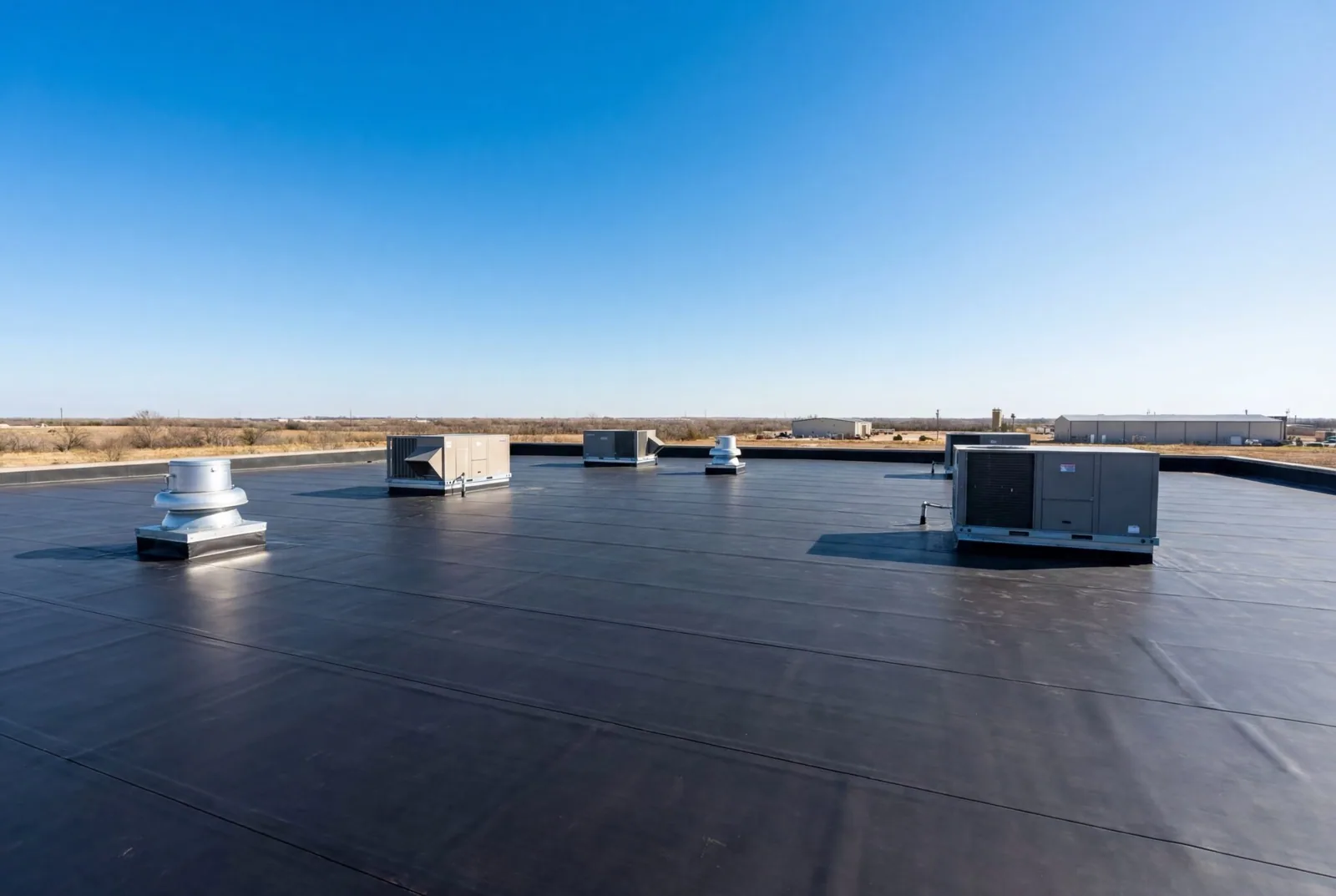
Flashing Failure Repair in South Fulton, GA
Flashing is where a roof meets everything that is not roof. Parapet walls, curbs, pipes, units and drains all create a joint, and every joint moves. In South Fulton, GA, long hot summers heat the metal and membrane hard in the afternoon, then let them contract overnight. Add storms that load the same details with wind and water, and the close-in points are the first parts to give. We repair the joint and the reason it moved.
Building use: where the joints concentrate
A warehouse with a clean field and a few drains has few flashings. A flex building with offices, dock doors, rooftop units and a mechanical yard has dozens. The development authority's menu of sites includes industrial parks, flex space and professional office corridors, and flex roofs carry the most transitions. Each time a roof steps from one use to another, a wall tie-in appears.
Commercial buildings along Roosevelt Highway and the Red Oak corridor add signs, vents and canopy connections. In Fairburn, the historic commercial district around West Broad Street is a listed district, so work on walls and parapets there starts with a look at what the owner and the city allow before a joint is changed.
Roof mechanism: why a flashing opens
Flashing fails in four ways. The sealant dries and splits. The membrane pulls away from the wall because the termination bar lost its grip. The metal expands and wrinkles. Or the substrate behind the joint moves. Most failures start with movement, and sealant only hides it for a season. A joint that shows a crack at the same place every year needs a different detail, not another bead.
Base flashing on a low-slope roof usually rises at least several inches above the water line and ends under a counterflashing or a termination. When wind or settling lifts that termination, water runs behind it. Parapet caps that fail let water down the back of the wall, where it may travel to the deck edge. Pipe boots crack from sun exposure, and the crack is visible only when someone looks closely.
On a modified bitumen roof, torch-applied base sheets and cap sheets overlap at the wall, and a pulled lap shows up as a dark seam line. Single-ply flashings are welded or adhered and fail at the weld, the corner or the termination bar.
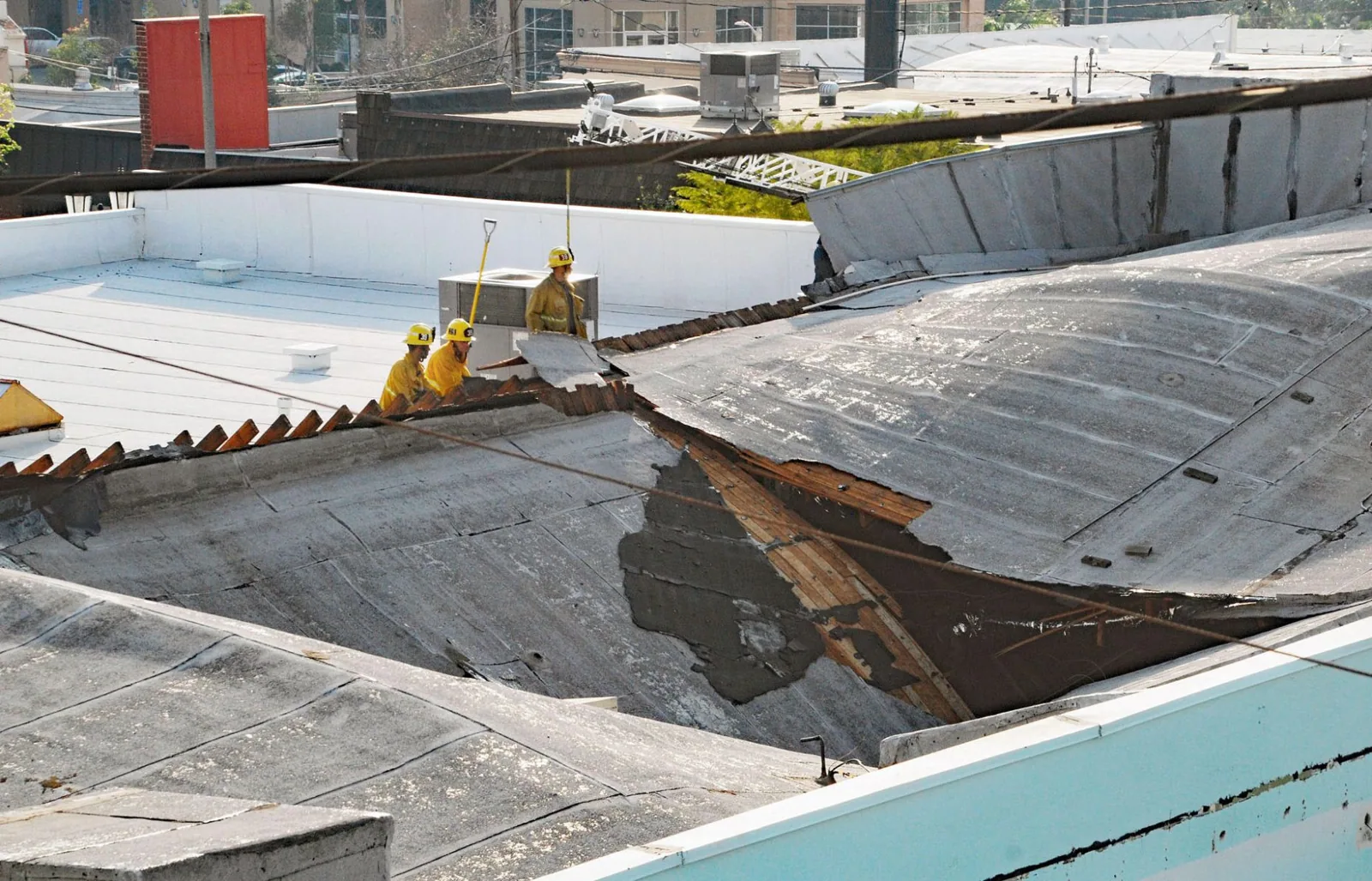
Inspection findings: what a failed joint looks like
We start at the walls and work toward the field. Every flashing gets pressed with a gloved hand, because a loose edge sometimes looks fine until it moves. Photographs are tagged by roof zone with the adjacent detail named, so a repair list can be priced from the images.
- Sealant cracked, shrunk or lifted along termination bars.
- Counterflashing bent away from the wall or missing fasteners.
- Corners with open laps, wrinkles or pinholes at inside and outside folds.
- Pipe boots split at the collar and curbs with failed corner patches.
- Flashing that is intact but sitting on wet insulation, a sign water has already entered.
Where an unflashed or poorly flashed penetration shows a stain below, we test the joint with water before we claim the cause. A hose test on a single detail often settles whether the leak is the joint or the field seam beside it.
Scope options: reseal, rebuild, redesign
A reseal is appropriate when the flashing is intact and only the sealant has aged. We clean the joint, prime if the system calls for it, and restore the sealant or a liquid-applied resin. A rebuild replaces the flashing material, the termination and the fasteners, and tests the substrate. It is the right choice when the joint has opened more than once.
A redesign changes the geometry: raising a curb, adding a cant strip, replacing a thin counterflashing with a heavier one, or adding a coping over a parapet that never had one. That scope involves the GC and sometimes the architect. Where the damage is at the roof edge, edge metal and coping sit in the same price section, so the flashing and the cap are set once rather than opened twice. That saves a second mobilization and keeps the wall from sitting exposed between trades.
Access and sequencing: tying into walls and trades
Flashing repair often crosses trades. A mechanical contractor moves a unit. A mason repairs a parapet. A sign vendor reroutes a conduit. We list the handoffs in the scope and propose a sequence so the roof is not closed before a wall repair is finished. If the joint is open now and the wall work is weeks away, a temporary close-in holds the water out until the permanent detail goes in.
On an occupied building, work near entries needs a clear staging route and a way to control debris. Hot work near combustible material needs a fire watch. We plan equipment and material loading around the delivery schedule when the roof sits above a dock or a loading lane. Hoisting happens before the dock opens for the day, and the tools come down before trucks return.
Timing: before the next storm and the next heat cycle
A failed flashing often leaks only in wind-driven rain, which is why owners miss it in dry weather. Every month has seen damaging thunderstorm winds in this region, so the joint is tested often. A repair done in the dry months gives the sealant and the adhesive a clean cure, and the joint goes into summer heat with fresh material.
If the flashing failed after a gust front, check the perimeter for a lifted edge too, because the gust that opened the joint often moved a wind-damaged edge as well. A flashing that fails beside a split seam is one repair with two parts, and we scope it that way. When a leak is active, leak repair begins with the joint and works outward.
Send the detail photos and the wall plan
Why does a flashing leak only during wind-driven rain?
Rain pushed sideways reaches gaps that straight rainfall never touches, such as the top of a counterflashing or a cracked collar on the leeward side of a wall. The same gap stays dry in a vertical rain. A hose test, applied one detail at a time from the bottom up, finds the entry point.
Is a bead of sealant a legitimate repair for a split flashing joint?
Sealant is a legitimate repair when the joint is stable and the failure is only the sealant. Where the joint keeps moving, a bead splits again. We examine why it moved, then choose between a reseal and a rebuilt detail.
Do parapet walls need new flashing when the roof is replaced?
Usually the base flashing is replaced with the membrane so the wall and field are one system. Counterflashing and coping are reviewed individually. If they are sound and fastened, they can often be reset. If the wall behind is wet or crumbling, masonry repair comes before any new roof flashing.
What does a roofing contractor need from the GC before flashing work near a wall repair?
The wall repair schedule, the material being used and the sequence between trades. We need to know whether the mason or the sign vendor will cut into our flashing later. The roof close-in point is set after the wall work, or a temporary seal is planned until then.
Can flashing be repaired in cold or damp weather?
Georgia winters are usually mild, so cold weather rarely stops the work. Damp weather does. Surfaces must be dry and clean for adhesives and sealants, so we plan around forecasts and use temporary protection for the interim.