
- Home
- Roofing for Retail and Restaurant Chains
Roofing for Retail and Restaurant Chains in South Fulton, GA
A chain runs on sameness. The same store, the same hours, the same standard. Roofs undo it. Each building has its own deck, its own landlord and its own leak history. In South Fulton, GA the first job for a retail or restaurant brand is to put every roof on one scale, so the facilities lead can sort stores by risk instead of by who called last.
The mechanism that changes the sequence is the lease. Some stores own the roof. Some share it. Some pay a landlord who owns it. The record shows which, and it shows who is on the hook for each finding.
Local retail: districts, centers and corridors
Retail here spreads across several districts. Old National Highway carries about 500 establishments, by the merchants' association's count. South Fulton Parkway is the city's largest commercial corridor. Sandtown Crossing is an active shopping center with a new retail opening announced in 2025. The city's strategic plan also describes neighborhood retail and restaurants at Cedar Grove and a possible mixed-use Town Center near Camp Creek Parkway.
Just over the line, East Point places more than a million square feet of retail and commercial space at Camp Creek Marketplace and reports about 1.2 million square feet across the wider shopping district. Fairburn's SR 74 corridor lists restaurants, hotels and apartments. These facts map where stores cluster. They do not describe any one roof.
One spec: a roof scale for every store
Build one scale and use it everywhere. Each store gets a zone map, a detail count, a moisture reading and a ranked condition. The same photographs from the same positions. The same terms for the same defects. A regional manager can then sort fifty stores in an afternoon.
The scale also protects the chain from mismatched fixes. A pad site with its own roof and a strip bay with a shared roof need different repairs. The record says which is which, and it lists the lease party for each finding. Capital planning gets a clean list: repair now, restore next year, replace in three. A multi-site roof program runs on that scale.
Remodels are the other trigger. A store refresh often moves rooftop units, adds exhaust or changes the façade. Each change cuts the roof or loads the wall flashing. The facilities lead should send roof plans to the design team before the remodel is drawn, so the new penetrations land where the roof can take them. We review remodel drawings against the roof record and flag conflicts before permit.
Restaurant roofs: grease, fans and containment
Kitchen exhaust throws fat and oil onto the roof. Some sheets soften and swell. Others tolerate it. Walk every fan. Photograph the stain pattern. Check the containment pan under the discharge. A missing or full pan is a finding with a location.
Where grease is steady, choose a grease-tolerant system and write cleaning into the maintenance plan. Hood cleaners walk the same route on every visit, and their boots wear a line into the sheet. A protected walk path goes down where they step. A PVC roof is the usual answer where fats and oils reach the sheet, and the file records the cleaning method.
Drains deserve a note beside the fans. Grease washed off a hood or a roof can coat a drain bowl and slow it. A drain that has run greasy for years holds a layer that no one sees from above. The pass checks the bowls nearest the fans first and records whether they run free.
Retail roofs: units, signs and parapets
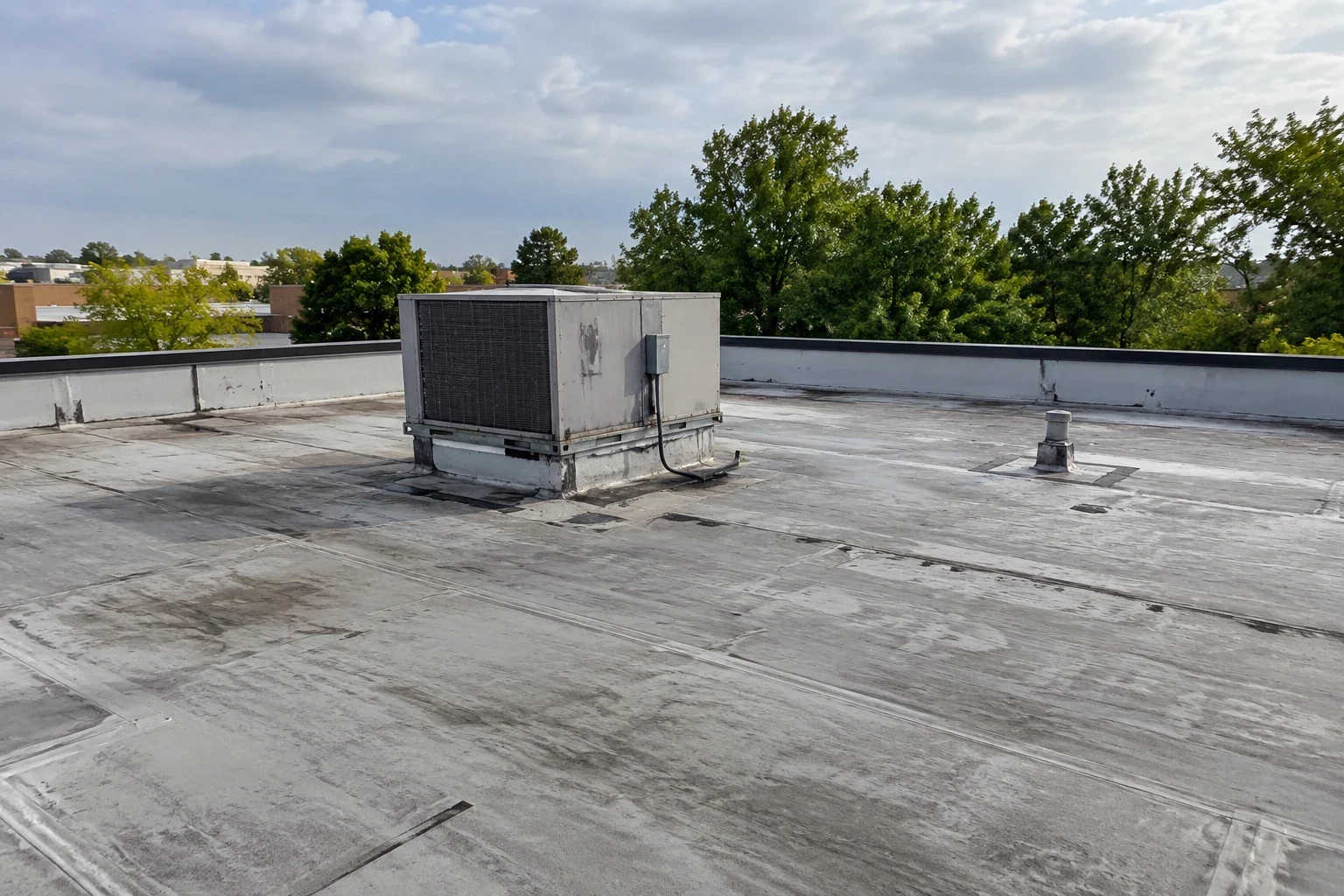
Retail roofs collect equipment and signs. Packaged HVAC units. Exhaust fans. Sign supports bolted through parapets. Conduit run for lighting. Each is a penetration. Each can leak.
Number them on the plan, photograph each curb and flashing and log the sealant. Drains and scuppers get cleared and tested on every visit. Parapet caps and coping joints are checked, since open joints let water run behind wall flashing. The skylight and penetration flashing pass covers each store the same way.
Sign supports and awning brackets add penetrations that never appear on the original drawing. Each cuts or loads the wall flashing. Each gets a photograph and a sealant note. These are the details that fail slowly and show up as a stain inside a storefront.
Work window: store hours, deliveries and holiday freezes
Customers shop all day. Deliveries arrive on a clock. The holiday season freezes heavy work. The access log lists each store's hours, delivery windows and blackout dates. Heavy work lands in the quiet months. Short repairs fit between rushes.
Staging stays off customer parking, drive-through lanes and fire lanes. Walkways below the work are fenced. Canopies are covered. A spotter watches the entry. Intakes are covered before adhesive or heat work, and kitchens get extra care, since falling grit above prep areas is a health-code issue. An occupied building reroofing plan lists these rules store by store.
Cost drivers are plain: the number of stores in a phase, roof area, penetration count, tear-off depth and the hours each store allows. Each is priced on its own line. The chain sees how a holiday freeze or a late-night restriction changes the number.
Weather: the chain's storm response
Georgia's spring storm season hits stores on a regional schedule. April is the peak month for hail. Tornadoes cluster from March through May. Strong wind turns up in every month. An EF-2 crossed South Fulton in March 2018.
A chain needs a storm routine. After a report, walk the stores in order of risk. Photograph each roof zone from the same positions as before. Note new bruises, lifted edges and shifted coping. Because every photograph is dated, new damage stands apart from old wear, and the brand holds a clean file for its insurer. Summer adds heat that shortens the safe roofing day.
Heat matters on a retail roof too. Dark membranes and rooftop units run hot through the long humid summer, and sealants dry and crack faster. The safe working day shortens, so crews start early and finish before midday heat. The schedule shows the shorter hours, and stores are told when noise will fall.
Send the store list and the lease roof terms
How can a chain compare roofs across stores?
By using one scale: zone map, detail count, moisture reading and ranked condition, with photographs from the same positions. We recommend starting with the stores that report leaks, then walking the rest.
Who pays for a roof problem caused by a restaurant fan?
The lease answers that. Our record separates findings by cause, grease from equipment, age or weather, and lists the lease party for each.
Can stores stay open during roof work?
Usually. Heavy work moves to quiet months and short repairs fit between rushes, with fenced walkways and covered intakes.
What should a chain do after a hail report?
Walk stores in order of risk and repeat the same photographs as the last record. New findings are dated. The brand then has evidence, not a forecast.
What does the chain keep?
A packet per store, a one-page summary and a ranked list across all stores.