
- Home
- Sika Sarnafil Commercial Roofing
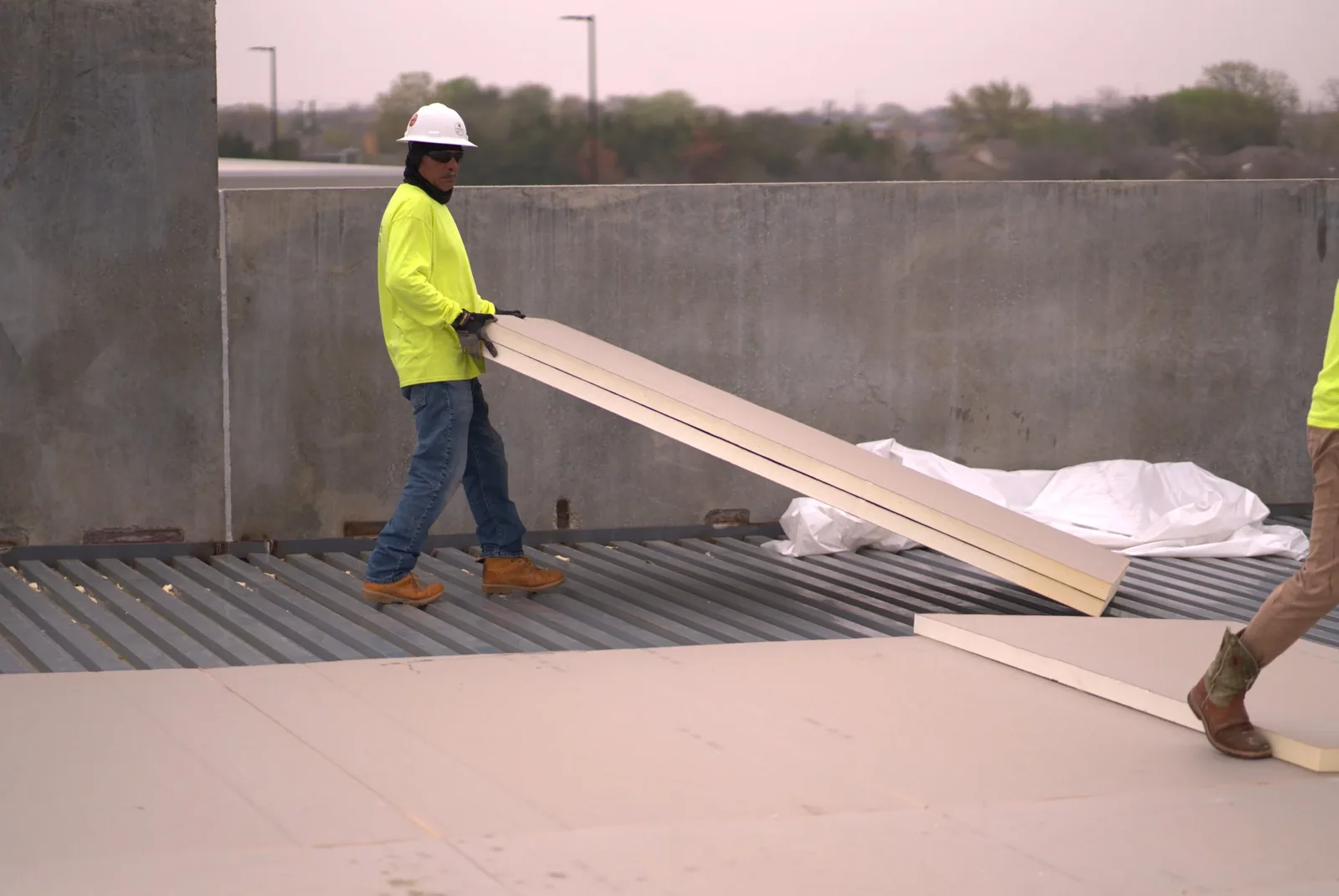
Sika Sarnafil Commercial Roofing in South Fulton, GA
A food-production or distribution building can place equipment above a large roof field. The Sika Sarnafil system needs a detail at each curb, drain, and perimeter transition. We identify the membrane, deck, insulation, and attachment before repair work is priced. The South Fulton Development Authority identifies logistics, distribution, and advanced manufacturing among local industry strengths. Those uses help set access questions. They do not confirm the roofing assembly at any property.
Sika Sarnafil is associated with PVC commercial roofing systems. A welded seam needs clean sheet, stable temperature, and a consistent pass. We inspect a test weld before production when conditions change. The roof record tracks the field, corners, and flashings separately. A Carlisle SynTec comparison or Versico membrane review can use the same deck and edge criteria.
PVC seam check: confirm the weld
A PVC sheet can be mechanically attached or adhered, depending on the approved assembly. We check fastener rows, cover board, and the roof deck where visible. At a seam, cleaning and test-weld results matter more than the label on a roll. We probe the cooled weld and mark any skips or fish-mouths. If a sheet has become brittle or contaminated, we expand the test area before choosing a repair detail.
Penetrations carry a different load from field laps. Pipe boots, curbs, and equipment rails need compatible flashing that turns up and terminates correctly. The edge is checked for securement and a continuous path into the wall or coping. A PVC roof inspection maps these points by zone. That plan helps the installer and general contractor agree where a tie-in starts and ends.
Existing repairs can include a different membrane or coating. We do not weld across an unknown surface. A small test area identifies whether material can be removed and a sound sheet exposed. Where layers are concealed, a test opening records cover board, insulation, and deck profile. The opening closes with compatible materials. A roof condition report keeps that location and result attached to the building record.
South Fulton conditions: heat and perimeter wind
Long, humid heat defines Georgia summers, while winters are usually mild and brief. Atlanta sees an annual regional average near seven days above 95 degrees. Heat exposure makes surface handling and seam preparation relevant during installation. We record the conditions for the test weld, then verify the finished lap after cooling. The weather description does not replace a bond check at the roof.
Damaging thunderstorm winds affect the Peachtree City warning area year-round, with a spring-and-summer peak. Wind can stress corner zones, edge metal, and rooftop equipment before a field change is visible. After a storm, the edge fasteners, coping joints, and returns of the flashing get a close look. The wind damage roof check documents lifted edges and the temporary protection limit. The repair line follows observed damage.
The city assigns its largest commercial-corridor role to South Fulton Parkway. The city also notes that portions of Camp Creek's industrial-commercial area lie within its boundaries. Delivery access and lift setup can affect where crews stage. We confirm those points with the site team before membrane rolls arrive. A South Fulton service area visit starts with the building's actual use and access route.
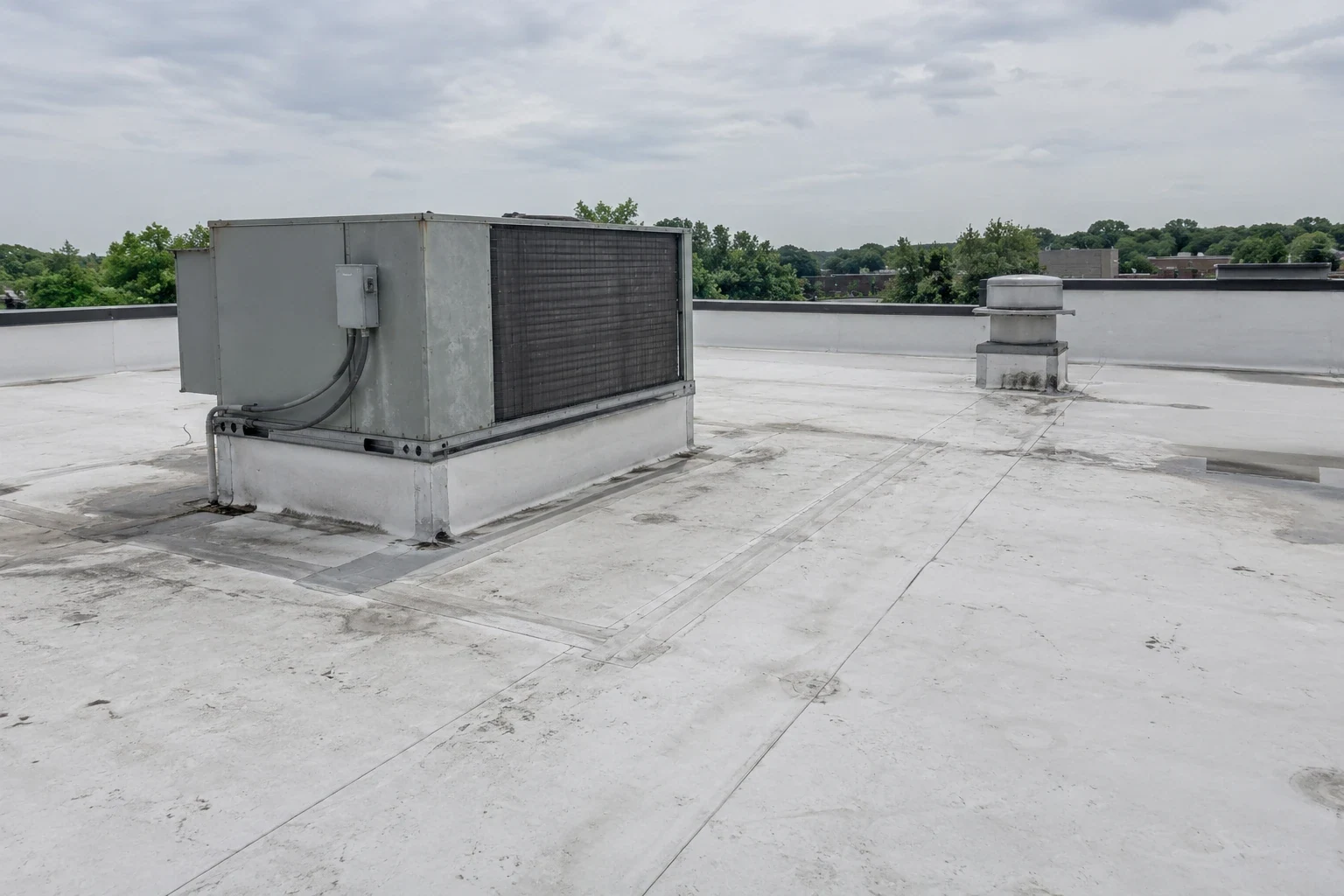
Repair limit: carry the weld to sound sheet
A small split at a seam can extend beyond its visible opening. We clean the surface, test the material, and decide whether a cover strip can bond to sound sheet. For a PVC weld, both surfaces must be prepared and compatible. We verify the completed seam with a probe and photograph the tie-in. If the sheet is brittle or the edge has moved, the patch may need to reach farther into the roof zone.
Moisture sets another boundary. A surface scan can guide test openings, but the cut confirms the layers. Wet insulation is removed to dry material and replaced with a compatible stack. If the board is dry and the attachment holds, the scope can stay local. The commercial repair scope lists the location, repair material, and tie-ins. Concealed conditions are recorded before the boundary changes.
Drainage needs its own inspection. A blocked outlet and an uneven deck do not call for the same work. We clear debris when appropriate, check the bowl and overflow, then review the surrounding slope. If water sits because insulation has settled or the deck is uneven, a seam patch will not correct the drain plane. The proposed scope identifies whether drainage correction belongs with the membrane repair.
Scope comparison: retain, recover, or replace
Repair is appropriate when the membrane field and surrounding layers remain sound. A recover may fit an attached, dry system with room at curbs, parapets, and drains. Replacement is considered when moisture is widespread, attachment has loosened, or repeated repair limits continue to move. We compare photographs, test welds, moisture findings, and roof-zone locations. The recover assessment checks attachment and added height before that option advances.
Permits in South Fulton fall under the Georgia-amended 2024 IBC as of January 1, 2026. We line up the proposed assembly and any permit questions with the project team. The code does not decide whether PVC is appropriate. Deck, insulation, attachment, edge height, drainage, and building use remain part of the selection.
Replacement scope sets tear-off limits and daily dry-in points. It identifies curbs, drains, walls, and equipment that need a separate trade handoff. The general contractor can see what is included and where an opened zone will close. If test openings reveal wet board, the approval point for added removal is agreed before work begins. This ties field conditions to a defined decision.
Occupied roof: coordinate equipment and access
A logistics operation may need a clear receiving lane while the roof is open. We set staging, lift access, and work windows with the general contractor. The sequence identifies areas needing protection below and zones where equipment movement is planned. Tear-off stays within the daily close-in limit. If weather shortens the shift, the open area shrinks and temporary protection is verified.
Mechanical crews can change the curb. Electricians may add conduit. We assign flashing responsibility at each handoff and inspect the finished penetration before the next zone advances. A photo record shows the membrane tie-in, completed weld, and any temporary protection remaining.
Emergency response does not pause for nights or holidays. When a leak is active, we first set a safe access path and control water entry. The affected roof zone is identified before permanent repair is selected. An occupied-building reroof plan can align the work with loading, tenant routes, and interior operations.
Closeout: record welds and transitions
The closeout identifies the Sika Sarnafil system, completed roof zones, test-weld checks, and transitions inspected. Photos show the edge, curb, drain, and field details. We record each test opening and close it after inspection. If a concealed layer changed the scope, the record notes the finding and revised repair boundary. The general contractor can compare those details with the approved assembly.
Set the PVC repair boundary
How do you inspect a Sika Sarnafil PVC roof?
The first check identifies the sheet and attachment. Then we check field welds, corners, curbs, drains, and edge terminations. A test weld helps confirm preparation and heat settings when conditions change. We probe completed seams and record deficiencies by roof zone.
Can you weld a repair over an older patch?
Only after confirming the surface and sheet are compatible and sound. We remove loose or contaminated material, test the exposed membrane, and weld to a stable boundary. If the sheet is brittle or another coating covers it, the repair method may need to change.
When is a recover possible?
A recover needs stable attachment, dry insulation, and enough clearance at edges and penetrations. We review the layer stack, moisture, and drainage before selecting it. A test opening can reveal a condition that changes the scope.
What does a South Fulton wind inspection include?
We check corners, perimeter metal, fasteners, rooftop equipment, and flashing for movement. The crew documents observed openings and sets temporary protection where needed. Repair follows the actual damage and the moisture boundary.
Can roof work continue while the building operates?
Yes, with a defined staging route, access window, interior protection, and daily close-in point. We coordinate equipment and electrical penetrations with the trades. Emergency calls are answered around the clock, holidays included.