
- Home
- Versico Commercial Roofing
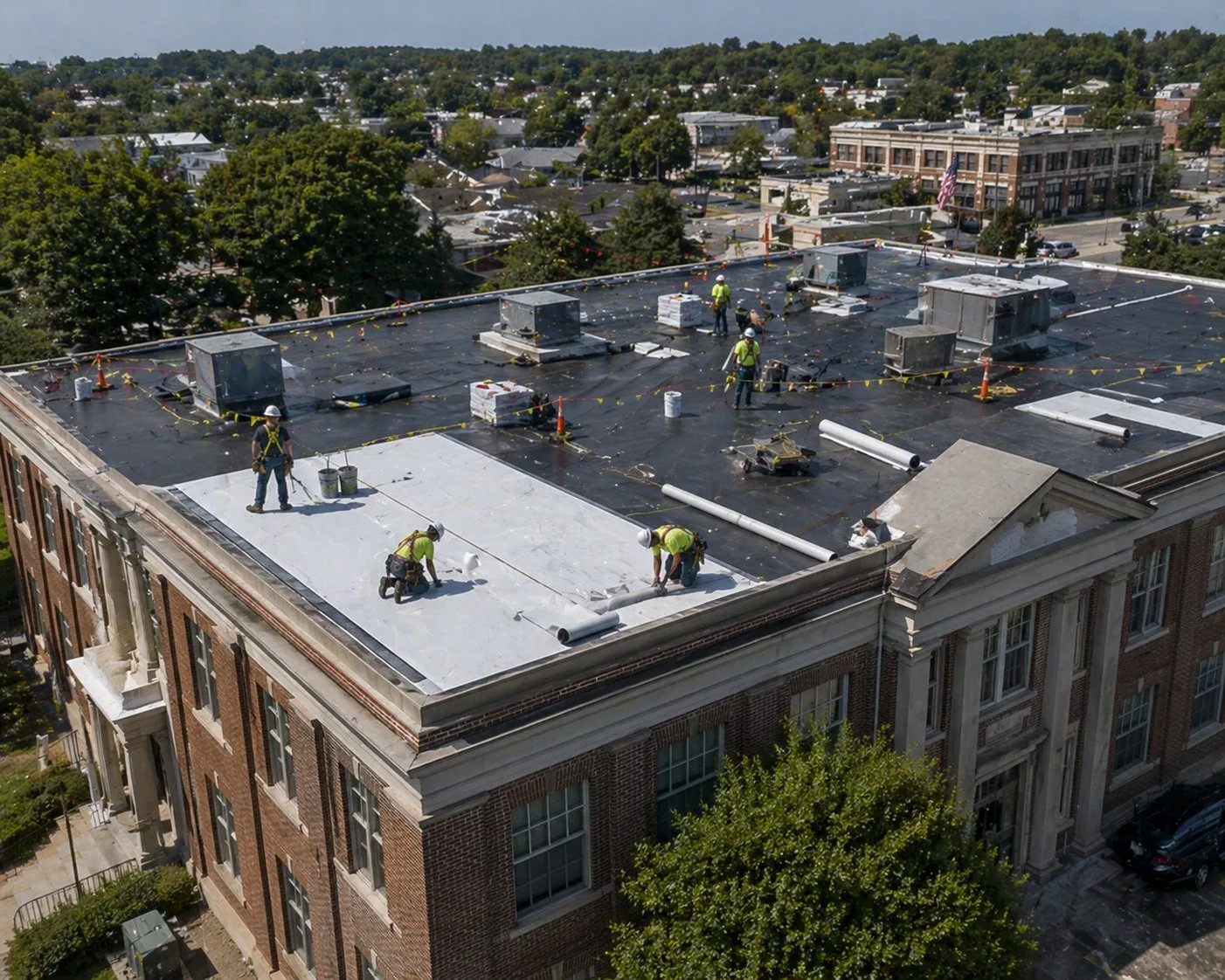
Versico Commercial Roofing in South Fulton, GA
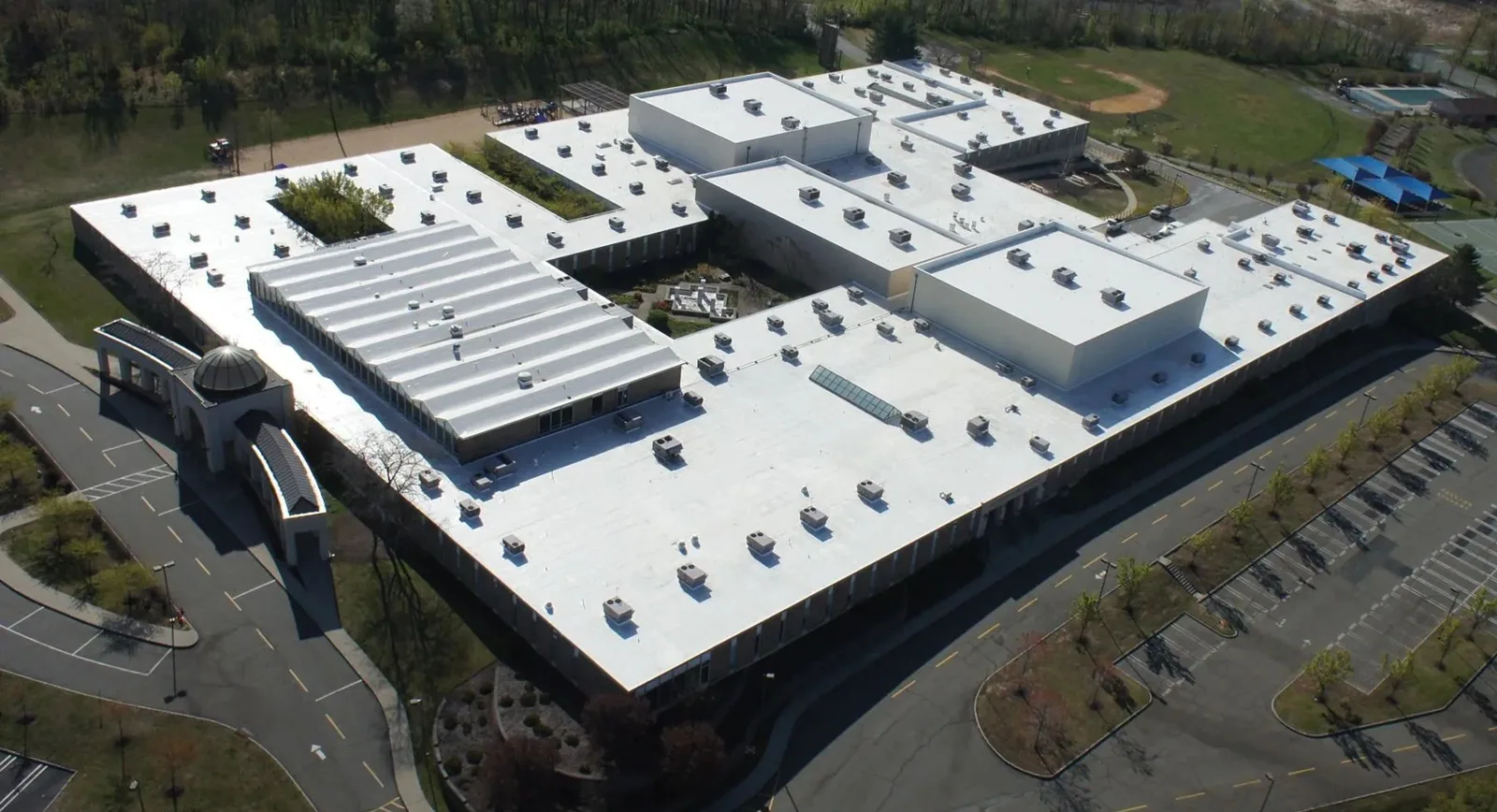
A flex property can connect a finished office area to a warehouse bay. The roof zone changes at the transition. Versico commercial systems include single-ply membrane options, so we identify the installed sheet and attachment before setting a repair detail. South Fulton lists flex space, industrial parks, and office corridors among its property offerings. That building mix helps frame access and staging. It does not identify any one roof assembly.
Seams and flashings control how a single-ply roof handles movement. A thermoplastic weld needs clean, prepared sheet. An EPDM lap uses a different seam and flashing method. We inspect the material before selecting a compatible repair. The Sika Sarnafil inspection and Carlisle SynTec assembly review compare those same roof-zone points without carrying one detail across different membranes.
System check: read the layer stack
We begin with roof plans, product markings, and visible seams. Past repairs may leave more than one material on the surface. A test opening can expose the cover board, insulation, and deck profile when the stack is concealed. We record its position, inspect moisture, and close the opening with compatible layers. That result can change a recover decision or move the repair boundary.
Attachment needs its own check. We inspect the fastener line, bond, or ballast arrangement where visible. At the edge, coping and metal securement carry different forces than the field. At curbs and pipes, flashing must connect the membrane with the equipment detail. A TPO seam check addresses welds, while the Diligence Notes track the perimeter and penetrations separately.
Before production, we prepare a test area and verify the selected seam method. A cooled weld is probed. A taped or adhered seam is checked for a stable bond and correct overlap. The crew marks deficiencies on the roof plan, then corrects them before covering the detail. A roof condition record keeps photos, locations, and test results with the building.
South Fulton exposure: wind and heat
Georgia summers are long, hot, and humid by NOAA's account, and Atlanta sees roughly seven days a year above 95 degrees. Heat can affect surface conditions and the timing of membrane work. We confirm the weld or bond under the conditions present that day. The regional temperature signal helps plan; a field test confirms the seam.
Damaging thunderstorm winds hit the Peachtree City warning area in every month, peaking in spring and summer. A perimeter can lift at the corner before the field changes. After a storm we go over fasteners, coping joints, flashings, and rooftop units. A wind damage inspection records what moved and where temporary protection stops. Repair scope follows the observed opening and moisture path.
South Fulton Parkway is the city's largest commercial corridor. The city also places portions of the Camp Creek industrial-commercial area within its boundaries. Loading and distribution can affect lift setup and delivery timing. We confirm the receiving route and work window with the site contact before material is staged. The broad business district is context, not a substitute for a property walk.
Repair method: reach a sound bond
A seam opening may appear small while the bond has released farther along the lap. The surface is cleaned and a representative area tested before the patch limit is fixed. Thermoplastic sheet needs a compatible weld; EPDM requires its own prepared seam or flashing detail. We probe the finished tie-in and photograph the boundary. If the sheet is brittle, the repair extends to material that can hold a sound bond.
Moisture can move the boundary underneath an intact surface. We use readings and a test opening to confirm the wet limit. Wet insulation comes out to dry material, and cover board and membrane go back in order. A dry, stable substrate lets the repair stay local; the commercial repair scope names zone, material, and tie-in points.
Drainage is inspected separately. A blocked outlet may be cleared; an uneven deck requires a different correction. We check drains, scuppers, overflows, and the surrounding slope before treating a low area. Adding membrane at the low point will not change the drain plane. The scope notes whether water is held by debris, insulation settlement, or the deck itself.
Decision point: repair, recover, or replace
Repair fits a localized fault when surrounding material and substrate remain serviceable. A recover may work over dry, stable layers with secure attachment and enough height at edges and curbs. Replacement is considered when wet board spreads, fasteners have loosened, or repairs keep exposing a larger limit. We compare test results, photographs, moisture findings, and the roof-zone map. A recover assessment checks those conditions before the owner approves a new layer.
Since January 1, 2026, South Fulton has used the 2024 IBC and related international editions with Georgia Amendments. The project team confirms applicable review for the proposed assembly. The edition does not choose a membrane by itself. Deck, insulation, attachment, drain plane, and building operations remain part of the decision.
For replacement, we define tear-off limits and close-in points by zone. The scope identifies curbs, drains, wall edges, and equipment that need a trade handoff. If opening the roof reveals wet insulation beyond the expected limit, the team has a stated review point before more material is removed. This connects concealed conditions with an approval decision.
Work sequence: protect receiving and occupancy
A distribution tenant may need a clear loading lane during roof work. We coordinate receiving hours, lift access, interior protection, and staging with the general contractor. The roof opens only within the daily dry-in limit. If weather shortens the work window, the area is reduced and secured before the crew leaves. The close-in point is logged for the next shift.
Mechanical crews may move units. Electricians can add conduit. Each cut gets an assigned flashing detail and a close-in time. We inspect the completed penetration before another roof zone crosses it. Photos record the transition and any temporary protection. Staff then have a clear boundary around lifts and active work.
Crews accept emergency calls nights, weekends, and holidays. For an active leak, we set a safe path, stop water at the opening, and mark the affected zone. Permanent repair follows once the membrane and substrate are checked. An occupied-building reroof sequence works around receiving hours, tenant routes, and interior operations.
Closeout: retain membrane and test details
The closeout lists the Versico system installed or repaired, the zones completed, the seam checks, and the transitions inspected. Photos identify the field, edge, curb, and drain details. We mark and close each test opening after inspection. Concealed conditions that changed the scope are recorded with the finding and the new boundary, so the general contractor can compare the work with the approved assembly.
South Fulton Parkway, Old National, and Roosevelt frame different business corridors. Each building has its own roof history and access needs. We keep the membrane type, repair materials, and inspection points with each property. The next maintenance visit can return to the same corners and penetrations, then compare current conditions with the last closeout.
Identify the sheet before setting the repair
Which Versico system is on my roof?
We check drawings, visible product marks, seams, and prior repairs. If layers are concealed, a test opening can identify the membrane, insulation, and deck. We record the result before choosing a repair material or recover detail.
Can a Versico seam be repaired without replacing the full roof?
Yes, when adjacent sheet and substrate are sound. We prepare a test area, confirm the membrane type, and verify the repair bond or weld. Moisture, brittle sheet, or loose edge securement may move the boundary farther.
What should a recover inspection include?
It should address attachment, moisture, the deck, added height at curbs and edges, and drainage. A dry, stable layer stack may support a recover. A test opening can reveal conditions that change the proposed assembly.
How do you inspect after a South Fulton storm?
After damaging winds, we check corners, perimeter fasteners, coping, rooftop equipment, and flashings for movement. The crew traces any water path and documents the temporary dry-in limit. Observed damage sets the repair scope.
Can work continue while tenants receive deliveries?
We set access and staging around receiving hours, protect interior areas, and close each roof zone before the shift ends. Trade penetrations are assigned and checked. Call handling remains available after hours and through holidays.