
- Home
- Soprema Commercial Roofing
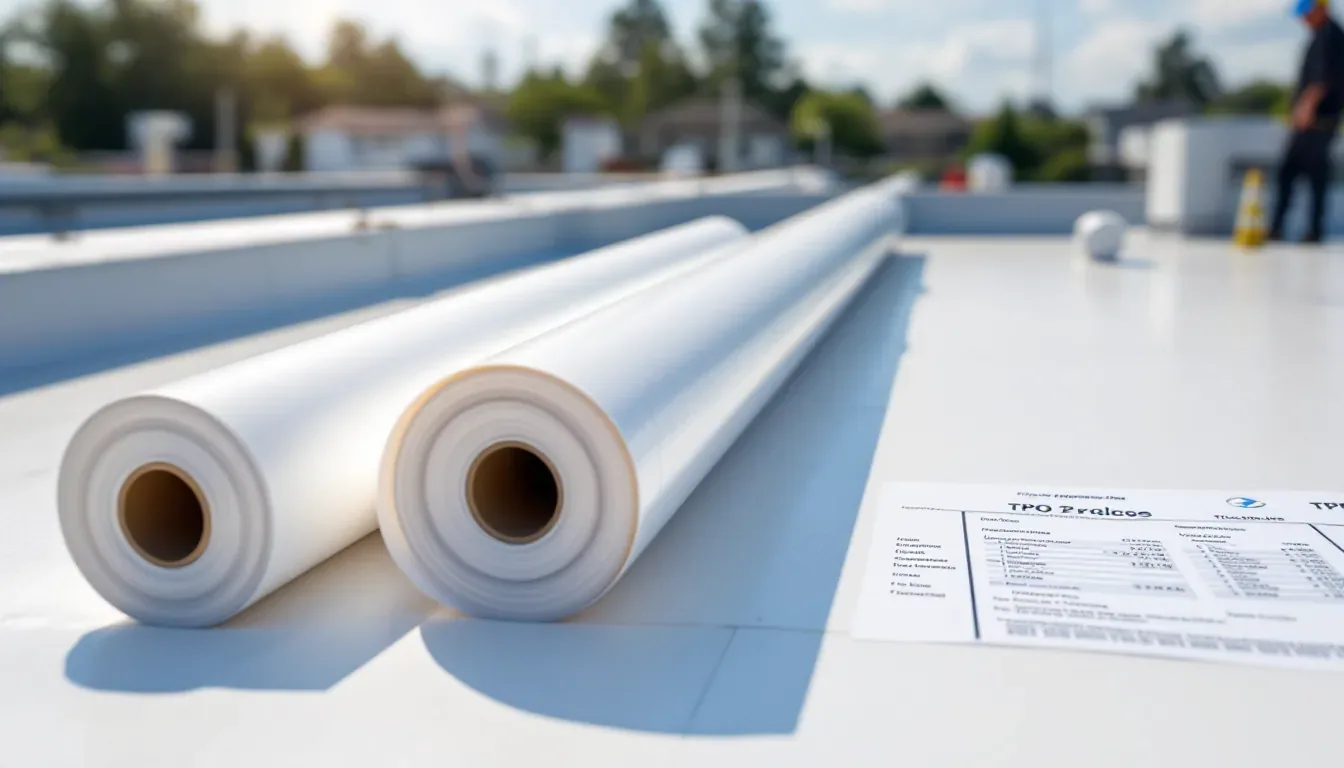
Soprema Commercial Roofing in South Fulton, GA
A warehouse roof can combine field membrane, edge metal, and multiple rooftop penetrations. Soprema system selection starts with those zones. We identify the sheet or bituminous assembly, deck profile, insulation, and existing attachment before setting repair limits. The South Fulton Development Authority markets industrial parks, flex space, and mixed-use property. That context helps frame staging and access. It does not identify the roof above any specific business.
Soprema's commercial portfolio includes low-slope membrane and bituminous system types. The seam, flashing, and installation method depend on the selected assembly. A welded PVC lap does not use the same repair method as a surfaced bituminous roof. We check the installed material before work is priced. The modified-bitumen assembly review and Duro-Last membrane comparison and Carlisle SynTec inspection start from the same roof-zone record.
Assembly review: identify layers and transitions
We compare roof plans and product markings with the field. Earlier repairs may have introduced another sheet or coating. A test opening can confirm the cover board, insulation, and deck where the layer stack is concealed. We note the location and moisture condition, then close the opening with compatible materials. The finding may support a local repair, a recover, or a wider removal limit.
For a thermoplastic sheet, the seam is prepared and welded. For modified bitumen, lap condition and the surfaced cap sheet need a different inspection. We check fastener lines, bond, and perimeter metal separately from field seams. At a curb or wall, flashing must terminate into a stable detail. The PVC roof check tracks welds and penetrations by zone rather than assuming every transition is alike.
Where the roof changes height, the field sheet meets a wall, curb, or expansion detail. We photograph the connection and mark any movement or open lap. Edge metal and coping need their own securement check. The condition report lists those points so the general contractor can compare them with the proposed detail.
Local exposure: hail, wind, and corridor access
The National Weather Service reports large hail in north and central Georgia about seven days per year on average, with April as the peak month. Hail can mark a cap sheet, dent metal, or damage rooftop equipment. We inspect the membrane and flashings at the affected roof zone, then compare marks with test openings when needed. A surface dent alone does not define the repair boundary.
Damaging thunderstorm winds affect the Peachtree City warning area in every month. Perimeter metal, corners, and rooftop equipment need inspection after a strong event. We check fasteners and flashing returns, then trace any interior water path. The hail damage inspection records the material and the observed limit. Storm history focuses the walk; the building condition sets the scope.
Roosevelt and Old National are established business districts. A commercial roof there may sit above active deliveries, customer areas, or office space. We confirm staging and access with the property contact before opening a zone. The Roosevelt Highway and Red Oak corridor gives the visit a geographic frame, not an assumption about deck or membrane.
Repair limit: use a compatible detail
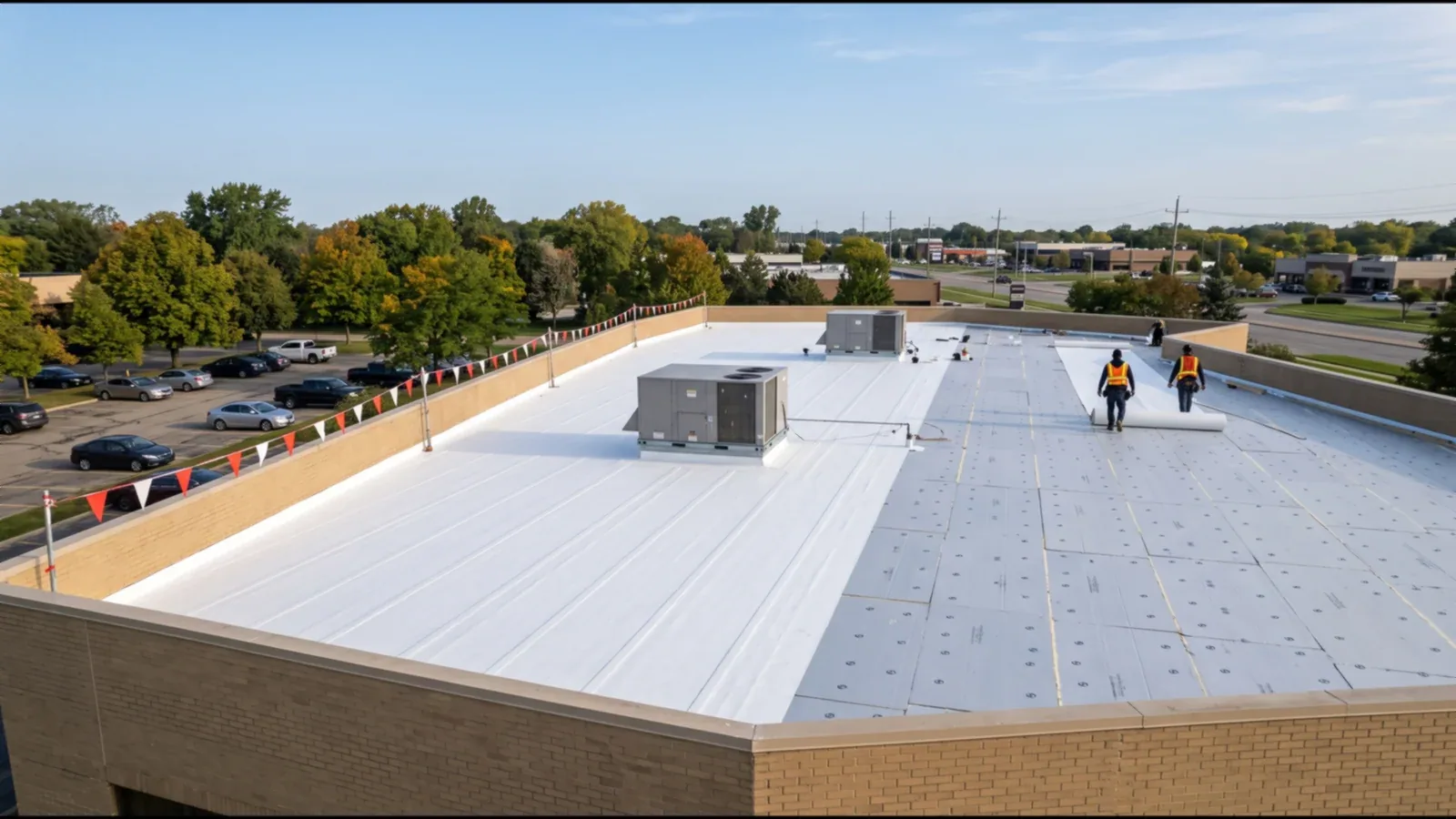
A split, puncture, or open lap needs a repair that matches the installed sheet. We clean and prepare a test area, then verify the bond or weld before expanding the work. For a bituminous surface, the repair must tie into sound material and restore the lap. We photograph the completed tie-in and show its location on the roof plan. If the membrane has aged or separated, the patch may need to reach farther.
Moisture can sit below a surface that looks intact. We use readings and test openings to find the wet boundary. Wet insulation comes out to dry material, then cover board and membrane go back in order. If the substrate remains dry and firmly attached, the scope may stay local. The commercial repair scope identifies the material, roof zone, and transition points.
Drains, scuppers, and overflows are checked separately. A blocked outlet differs from a low deck or settled insulation. We inspect the drain bowl and surrounding plane before adding material to a ponding area. If slope correction is needed, the proposal states it as a separate decision. A membrane patch cannot reset the deck profile.
Scope choice: preserve or renew the assembly
Repair fits an isolated fault where adjacent sheet and substrate remain serviceable. A recover may work when the assembly is dry, attached, and able to carry added material. Replacement is considered when wet insulation extends across zones, attachment has loosened, or prior repairs keep revealing new boundaries. We compare photographs, test openings, and moisture findings before choosing. The recover assessment reviews attachment, added height, and drainage first.
South Fulton moved to the 2024 IBC with Georgia Amendments on January 1, 2026. The project team and the city decide which review the work triggers. Code timing does not select a Soprema assembly by itself. Deck, insulation, edge height, drain plane, and building schedule remain part of that decision.
A replacement plan marks tear-off zones and daily dry-in limits. It also identifies where equipment, wall details, and drains need separate handoffs. If opening a roof reveals more wet board than expected, the approval point for added removal is agreed before material is lifted. That keeps a concealed condition tied to a clear scope decision.
Work window: set each close-in point
For a production or distribution building, roof access can affect the operating floor. We confirm loading limits, lift location, staging route, and interior protection with the general contractor. Each work area has a daily close-in point. If weather shortens the shift, the crew reduces the opening and secures the roof before leaving. The next shift starts from a recorded boundary.
Mechanical and electrical work can add or move penetrations. Each cut needs a planned flashing detail, responsible trade, and inspection point. We check the completed tie-in before the next roof zone advances. Photos note the detail and any temporary protection.
Urgent leaks can be reported at any hour, even on holidays. For an active leak, we set up safe access, hold water out of the interior, and name the affected zone. Permanent repair comes after the membrane and substrate are inspected. Work on an occupied facility can be phased around receiving and tenant routes.
Closeout: keep the system record by zone
The closeout identifies the Soprema system used, completed areas, seams or laps tested, and transitions inspected. We attach photographs and mark test openings. When the layer stack changes the plan, the record carries the finding and the new boundary. That lets the general contractor compare the installed detail with the approved scope. Maintenance staff can return to the same roof zone later.
South Fulton includes business corridors, industrial areas, and flex properties. Each roof has its own drainage path and access needs. We retain the membrane type, repair materials, and perimeter observations with the building record.
Compare the assembly with the roof condition
How do you identify which Soprema system is installed?
We compare drawings and labels with the field membrane, laps, flashings, and test openings. Prior repairs can change the visible surface. A test cut confirms concealed insulation and deck details before repair or recover work is selected.
Can Soprema roofing be repaired by roof zone?
Yes, if the material and surrounding substrate can carry a compatible repair. We prepare and test a sample area, then inspect the seam or lap and tie-in. Moisture or loose attachment may move the limit beyond the visible opening.
What should a storm inspection include?
Check edge metal, corners, roof penetrations, and the membrane at the reported area. We document hail marks or wind movement and trace any moisture path. The observed condition sets the repair detail, not a regional storm report.
When does replacement make more sense than repair?
Replacement becomes a stronger option when moisture spreads across the layer stack, attachment fails, or repeated repairs keep extending. We compare openings, readings, and transition conditions before recommending removal or another repair.
How is roof work sequenced at an operating property?
The general contractor sets loading limits, access, and work windows. We phase the roof by zone, protect interior areas, and close each opening before the shift ends. Response for an active leak is available overnight and on holidays.