
- Home
- Church Roofing
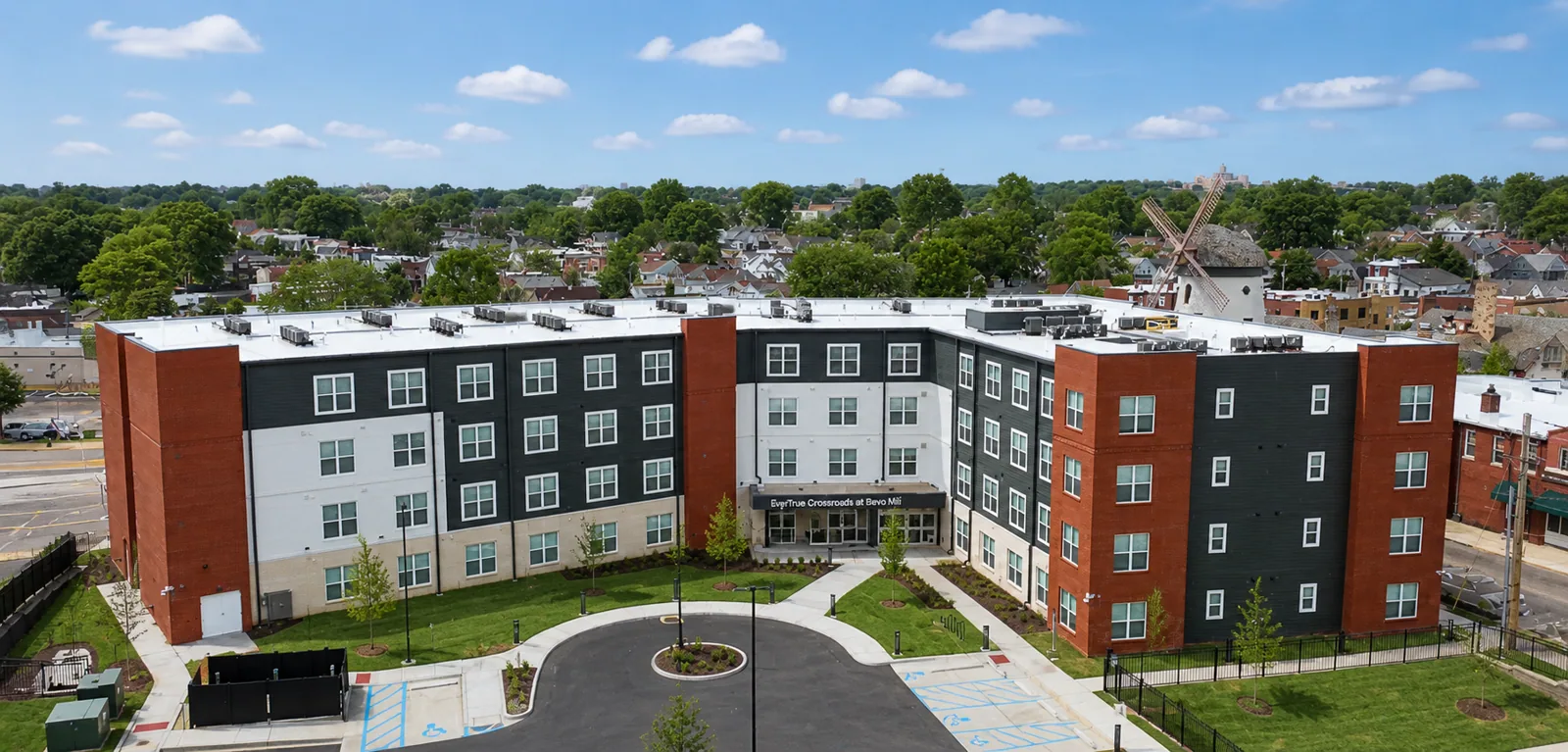
Church Roofing in South Fulton, GA
The sanctuary roof is the tall one. Behind and beside it sit the fellowship hall, the classroom wing and the office, each lower and each with its own roof. A leak in one tells a trustee little about the others. A church campus in South Fulton, GA is commonly several buildings under several roofs, so the roof plan starts with a list: each roof, its height, what sits beneath it and who holds the keys to the access hatch.
Building use: sanctuary, hall, classrooms and offices
Each building asks something different of its roof. The sanctuary holds a tall volume, a steep or complex roof and often a steeple or cross that pierces the surface. The fellowship hall has a wide span and a kitchen. Classrooms hold children. The office holds records.
The room below sets the priority. Water over the sanctuary can reach the organ, sound equipment, carpet and pews. Water over a nursery closes a room. Water over the kitchen reaches cooking lines and the hood.
A congregation may decide roof spending through a trustee board, so the record has to be clear enough for a vote and plain enough for members who never climb a ladder. Findings are written in plain terms with photographs, cost ranges and consequences.
Neighborhoods across the city carry different building mixes. Historic Campbellton Crossroads is planned as a mixed-use village with shops, housing and recreation, and the Red Oak Historic District is a designated Main Street area targeted for revitalization. A campus in either place starts from the same inventory.
Roof mechanism: height, slope and junctions
Tall roofs meet wind first. A sanctuary rises above everything around it, and ridge, hip and edge metal take the load. Wind damage can follow any month on the Peachtree City office's calendar, at about 19 days a year. A loose cap is a leak waiting for the next rain.
Junctions are the second mechanism. A steep roof meets a wall. A tower meets a lower roof. A steeple base meets the deck. Flashing at each must hold under movement, and those details cost far more to rebuild than to inspect, so they are inspected often.
Heat is third. Georgia summers are long, hot and humid, and In Atlanta, roughly one week a year tops 95°F. Sealant dries and metal moves. A low-slope fellowship hall roof has a fourth problem in ponding, since clogged drains hold water against seams.
A flashing repair done properly is mechanical. Sealant alone does not last.
Inspection findings: safe access and a plain report
On a tall roof the first problem is access. We use a lift or a secured ladder route with fall protection, and a steep slope is walked slowly. A drone pass helps with the high sections, and the roof visit confirms what it shows.
Common findings: loose ridge or hip metal, lifted wall flashing, cracked boots, open sealant at the steeple base, clogged gutters, ponding on low sections and abandoned penetrations from equipment long gone. Old patches are noted, along with whether they hold.
Where a ceiling stain suggests wet insulation under a low-slope roof, an infrared moisture survey maps the wet boundary. On steep roofs we trace water along the deck from the stain. Each finding is written in plain words beside a photograph.
In March 2018 an EF-2 tornado tracked across South Fulton, passing between Fairburn and Campbellton. April is the hail month in north and central Georgia. After any storm the roof is walked again and set beside the earlier photographs.
Scope options: repair now, plan the rest
A church tends to hold a modest budget and a long list, so scope is sorted into tiers. Tier one is repair that stops active water. Tier two is work that prevents the next failure, such as flashing and drain fixes. Tier three is replacement, with a dated target.
Each tier carries a cost range and a consequence, which lets board members see what each option buys and what waiting risks. A recover can suit a dry, sound low-slope hall roof. A steep roof may need a strip and replace. The deck decides.
Phasing across years is normal. The worst roof goes first, and a capital plan gives the board a multi-year schedule and a reserve target, so fundraising can chase a specific number.
Price lines: tear-off, deck repair, underlayment or insulation, flashing, access, lift time and weather hold. Decking is a real unknown on older steep roofs, which is why a unit price for replacing it goes into the proposal.
Access and sequencing: worship, events and weather
Worship and events set the calendar. Loud work stays clear of service hours, and tear-off runs on weekdays. Funerals and weddings join the blackout list as they come up, which is why the calendar is requested at the first visit.
Every section opened in a shift is closed in the same shift. A forecast storm keeps the roof sealed. Pews, organ and sound gear get covers when the sanctuary roof is open, and staging sits clear of the entrance and the parking lot.
The trade handoff is brief. A steeple or cross may need a specialist to remove and reset the piece while we rebuild the base. If lightning protection is present, its own trade checks it.
Holiday weekends included, a leaking sanctuary gets a crew response. Dry-in comes first, the close-in limit second, permanent pricing third, and the trustees receive a written update.
Code coordination: permits and review
Permits issued by South Fulton follow the 2024 model codes plus Georgia amendments from the first of January 2026, while Georgia keeps energy compliance on the 2015 IECC and its supplements. A full replacement is designed to both. A building inside a historic district may face review of visible changes, so the city is asked before material is chosen.
Other community buildings follow similar logic. Classroom wings follow the break-window logic of school roofing, and a hall that fills for large gatherings shares the occupancy planning of government building roofing.
Send the campus roof plan and the event calendar
How does a board choose between repairing and replacing the sanctuary roof?
Look at the moisture map, the number of leak calls and the age of the layers. Dry decking with a few local failures favors repair. Wet decking, repeated leaks and spent material favor replacement. We price both so the vote rests on numbers.
Can work stay clear of Sunday services?
Yes. Loud tear-off runs on weekdays and the crew is off the roof before the weekend. Open sections close each day. If weather forces work into a weekend, the roof is sealed and work resumes Monday. The calendar goes into the scope.
What does a steeple repair involve?
The base flashing, the fasteners and the roof around them are inspected. A specialist may remove or secure the piece. We rebuild the flashing so water cannot enter at the base. Lightning protection, where present, goes to its own trade.
How is a phased replacement set up for a small budget?
The worst roof goes first. Each phase is a separate job with its own price and dry-in. Later phases get a maintenance plan and a target year, which lets a congregation raise money against a defined figure.
Does wind damage show right away?
Sometimes only as a loose cap or a lifted edge, with water entry coming on the next rain. After a storm we walk the roof and compare it with earlier photographs. Findings are marked and fixed before the next rain.