
- Home
- Ponding Water Roof Repair
Ponding Water Roof Repair in South Fulton, GA
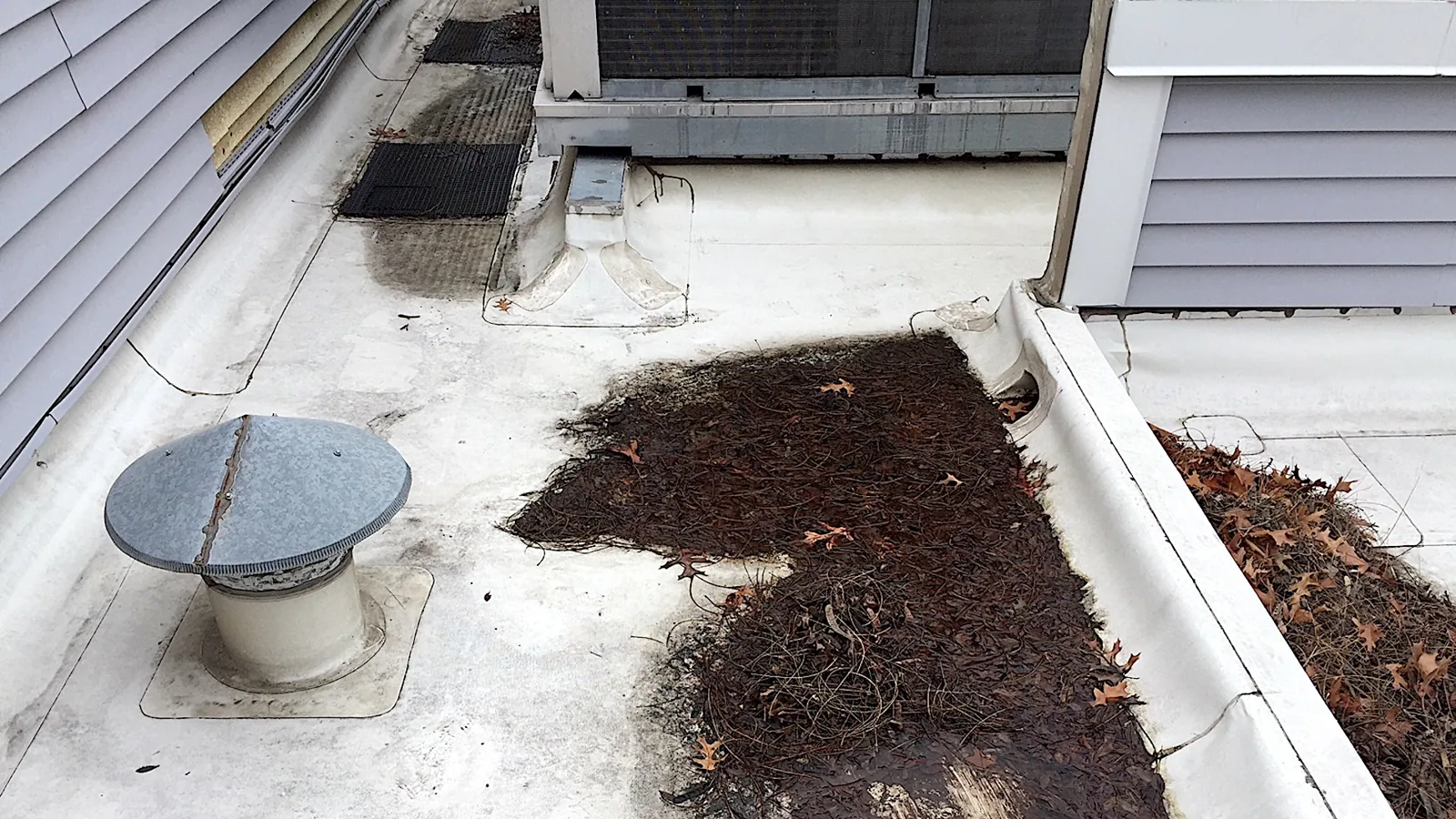
Water that stays on a low-slope roof after the sky clears is a drainage finding. It is also a load. In South Fulton, GA, summers are long, hot and humid, and damaging thunderstorm winds are recorded in every month. A roof that holds a shallow pool through one storm may hold a deeper one through the next. The pool softens the membrane, feeds algae and puts weight on a deck that was never meant to carry it. We map the drain plane first and decide the repair second.
Building use: where standing water costs the most
Large industrial roofs spread water across a wide area, and the low spot may sit far from any drain. In business parks such as Southmeadow Business Park, described by its developer as a multi-user industrial development, one tenant's roof zone may drain across the line to a neighbor's scupper. That makes ownership of the repair a question as well as a technical one. We mark the low zone on a plan and show the property manager which drain serves it.
Office and mixed-use roofs hold less area but more equipment. Curbs, pipe supports and units create dams that trap water behind them. At the Camp Creek Business Center, which the city describes as a multi-property park with both industrial and office space, a pool behind a curb can sit directly above finished interior space. The water finds the seam, the seam finds the ceiling, and the tenant calls.
Roof mechanism: slope, deflection and the drain plane
A flat roof is designed with a small slope toward drains, set by tapered insulation or a sloped structure. Ponding appears when that slope is lost. Insulation compresses under foot traffic. A deck deflects between supports. A drain sits proud of the surface. A sump was never cut deep enough. Each cause leaves a different footprint, and the footprint tells us where to cut.
The pool is more than a surface problem. Water adds weight, and a pool a few inches deep carries real load across the span. Water also lets dirt settle, which feeds biological growth, and growth holds moisture against the sheet. Heat expands the sheet in the afternoon and cools it at night. Seams under a pool see that cycle with water on top of them.
Different membranes tolerate standing water differently, so the system matters. A TPO roof with welded seams is a sound base for repairs if the pool is shallow and the seams are sound. We check manufacturer language on ponding before we promise anything about warranty coverage.
Inspection findings: the evidence after the rain
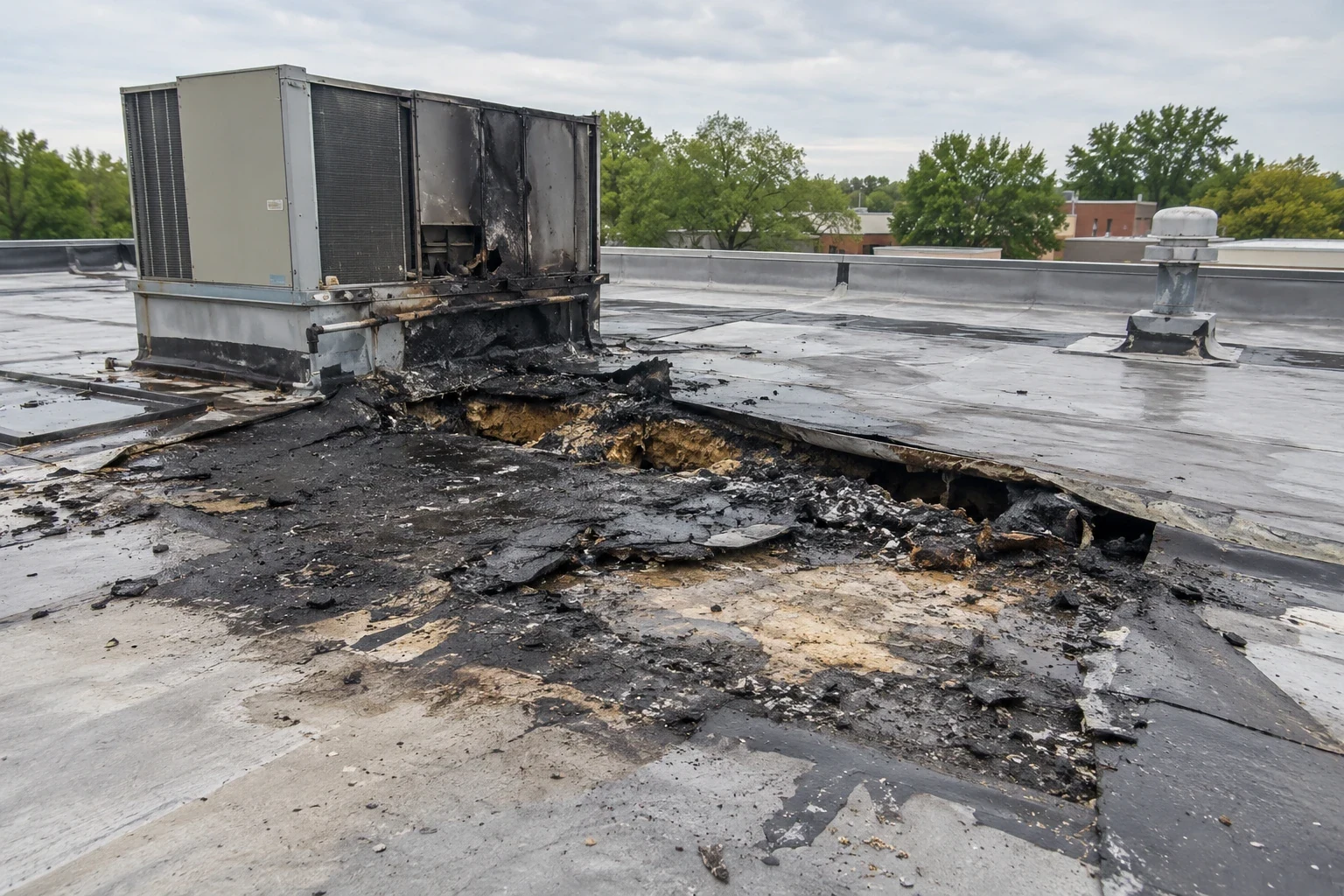
We walk the roof within a day or two after a rain, while the stain lines are still fresh. Dirt rings, algae patches and stained membrane mark the shape of the pool better than a level does. Then we measure depth with a straightedge and take photographs at the same points on each visit.
- Dirt ring perimeters that show the high-water line.
- Drains with debris, sump gaps or a collar sitting above the surface.
- Soft spots underfoot that suggest wet or crushed insulation.
- Seams and flashings submerged by the pool or fouled by sediment.
- Roof penetrations and curbs that dam a drain plane.
When the deck or insulation is suspect, an infrared moisture survey shows where water has entered the layer stack. We confirm with a test opening before any cut that sets a boundary.
Scope options: drain, taper, or restructure
The lightest fix is drainage maintenance: clear the drains, level the collars, and add a sump or a cricket where water gathers. That works when the pool is shallow and the membrane is sound. The next option is a local taper, adding tapered insulation over the low zone, then a new membrane section. It reshapes the drain plane without touching the rest of the roof.
A third option adds drains. Where the deck cannot be sloped, a new drain or a scupper through the parapet gives the water an exit. Plumbing and structural review go with it. A drain and scupper change sometimes reveals that the original layout never matched the roof area. If the deck has failed or the insulation is wet across a large area, the answer is a recover or replacement, priced so the owner can compare it with the repeated patch.
Access and sequencing: work on a wet roof
Ponding repairs depend on a dry window. Adhesives and welds do not work on a wet surface, and wet insulation cannot be covered. We drain, vacuum or squeegee the pool, then wait for the sheet to dry before welding or bonding. In humid weather that wait can stretch, so crews stage material at a protected location and plan for an early start.
Where drain work touches interior plumbing, a trade handoff with the plumber or mechanical contractor is part of the schedule. For an occupied building, we place work over vacant space first and keep a staging route clear of tenant entries. A new taper or sump often changes the roof elevation at a door threshold or curb, so the GC sees the finished height before material is ordered.
Timing: the storm that deepens the pool
Pools do not wait. The National Weather Service counts damaging thunderstorm winds in every month in this region, and storms that load a roof with water often also loosen debris that clogs the drains. A pool that was shallow in June may reach a seam by August. Heat fatigue and ultraviolet exposure speed the membrane's aging in a ponded zone, so the earlier repair tends to be the smaller one.
When a stain appears on a ceiling, the roof zone above it should be checked soon after the next rain, and a failed seam or a failed flashing found under the pool should be repaired with the drain fix, not after it.
Send the plan and the rain date
How long can water sit on a flat roof before it is treated as ponding?
Standing water that is still present two days after rain is a recognized warning sign. A few hours of shallow water after a heavy storm is common on a roof with minor deflection. We look at depth, area and how often the pool returns, then at the seams and the deck underneath it.
Will adding a drain stop ponding on a roof with a sagging deck?
A new drain gives the water an exit at the low point, which is often the quickest fix. If the deck continues to deflect, tapered insulation or a structural repair may be needed as well. Structural review sits with an engineer, and we coordinate our scope with theirs.
Does ponding void a manufacturer warranty?
Many manufacturers limit coverage where water stays on the surface for an extended period. Terms differ by system and by document. We read the roof's warranty language before the repair is priced, and the scope notes whether the proposed fix brings the roof inside those terms.
Our property manager sees algae on the sheet. Is that a roofing problem or a cleaning job?
Both. Algae is a sign that moisture stays on the surface, and the cause is drainage. Cleaning removes the growth, but if the pool returns, so does the algae. We treat the surface and fix the drain plane in the same visit so the cleaning lasts.
Can a roof coating fix a ponding area on an older low-slope roof?
A coating can protect a sound surface, but it does not move water. Some coatings handle standing water better than others, and any coating still needs a dry, prepared substrate. We use coating on ponded zones only after the drainage fix, and we test the substrate before we commit to the system.