
- Home
- Hospital and Healthcare Campus Roofing
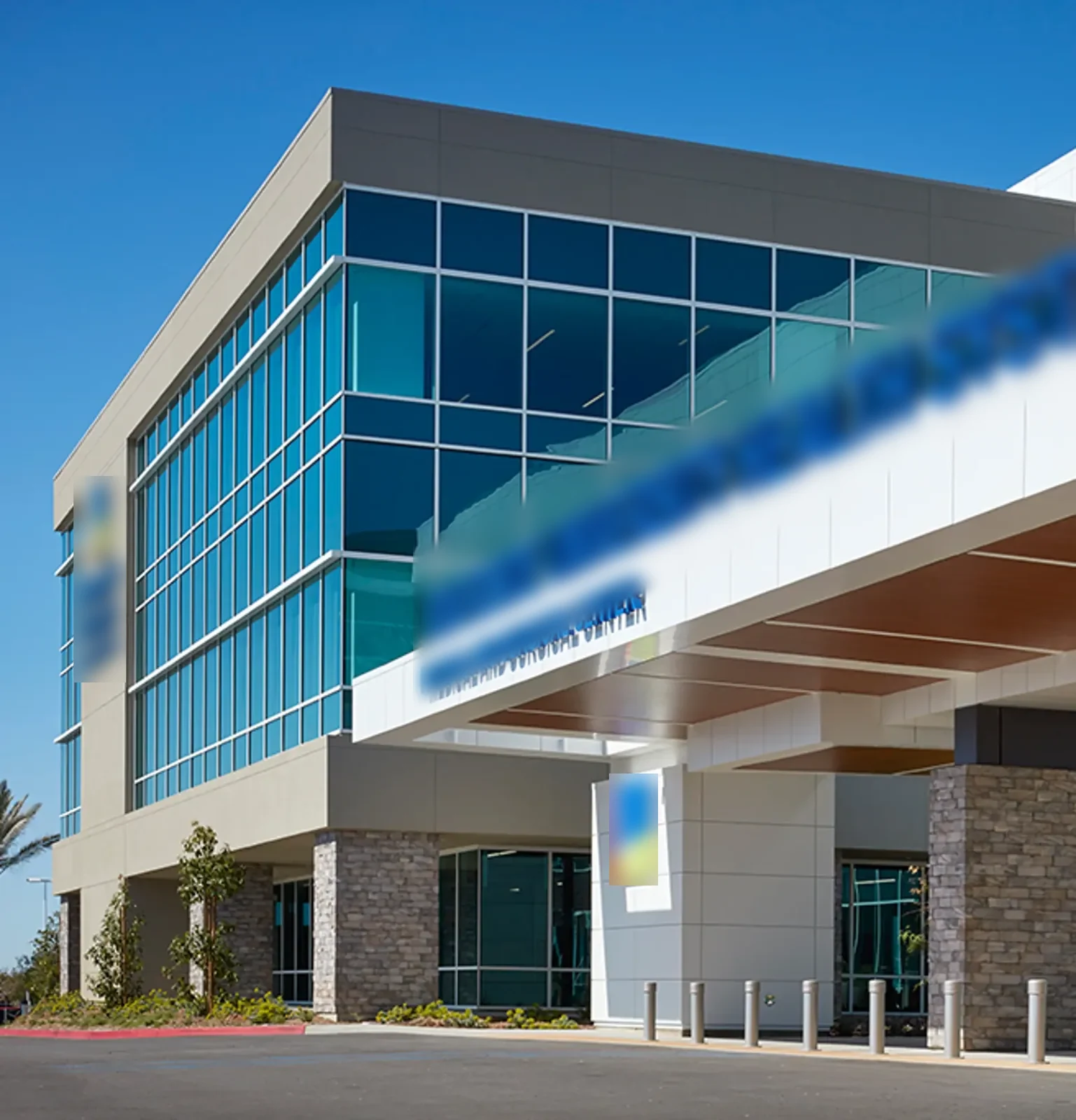
Hospital and Healthcare Campus Roofing in South Fulton, GA
A hospital campus is a set of buildings, not one roof. The use sets the first question: which building houses what, and which of it can never lose service? Surgery, intensive care and central sterile departments set the toughest rules for the roof overhead. The mechanism that changes the sequence is continuity. The campus runs all day and all night, and a roof job has to fit around patients, staff and emergency traffic.
For scale, the VA describes its Atlanta medical center in Decatur, about 22 miles east-northeast of South Fulton, as a multi-building campus with inpatient and emergency care, surgery, laboratories, imaging and clinics. It shows how a healthcare campus is arranged, one set of buildings with different uses. Each campus is read building by building.
A hospital roof also meets the same trades as a data center roof: mechanical, electrical and controls. Critical systems on the roof, such as generators and exhaust, must stay on. We plan around them, map them on the roof plan and keep a clear path for service.
Roof mechanism: a campus ranked by building and zone
We list every building and every roof level. Each gets a use tag and a continuity rating: critical, important or general. A roof over an operating room is critical. A roof over a lobby is general. Inspection frequency, repair order and temporary protection follow the ratings. A small defect over a critical zone is repaired before a larger one elsewhere.
Roof levels vary. A tower may have a main roof, a mechanical penthouse and lower podium roofs. Each has its own membrane, age and drainage. We rate them apart. The record shows photographs by building, level and zone, each with a date. Commercial roof inspection on a campus is planned as a program, not as a one-time visit.
Older and newer wings often sit side by side with very different roofs. A joint between two wings moves, and its flashing takes the load. We photograph each joint and measure the gap. A joint that has widened since the last visit goes on the repair list with its position and its measurement.
Mechanical penthouses, generators and exhaust
Hospitals carry heavy rooftop systems: air handlers, exhaust, generators, cooling towers and medical gas vents. Each sits on a curb or a pad. Vibration loosens fasteners and opens flashing. Exhaust leaves residue on the membrane. We probe flashing at each item, record staining and softening and list those that need service from a trade.
Medical gas and fuel lines are left to licensed contractors. We flash around them after release. Walk pads cover service routes. A curb and support check goes with every walk, since a moved curb opens its flashing and often leaks into a ceiling below. Photographs of each curb are repeated from the same position every visit.
Helipads, where present, and rooftop gardens carry their own rules and loads. Any rooftop use beyond mechanical equipment is noted on the plan with its structure and drainage. We do not alter such areas without the owner's engineer and the facility's approval.
Skylights and light wells over corridors and lobbies get their own check. Domes crack, gaskets age and frames open at the corners. A skylight flashing repair is logged with a photograph and a position.
Weather and storm peaks
Humidity and long hot summers define Georgia in NOAA's account; Atlanta passes 95 degrees about seven days a year. The NWS counts damaging thunderstorm winds in the Peachtree City warning area throughout the year, roughly 19 days of them, and large hail across the northern and central part of the state on about seven days annually, most often in April. NWS counts tornadoes in all months, with March, April and May on top.
A campus needs a storm plan. Before the spring peak, we walk each critical roof and clear drains. After a strong storm, we walk edges, copings, units and skylights, count marks per test square and run an infrared survey over critical zones. The regional record only triggers the visit, and dated marks on the roof carry any claim.
Hot, humid summers push cooling systems hard, and condensation can form on cold ducts and drip into ceilings. A drip below a duct is not always a roof leak. We compare the pattern with the duct route and the weather before opening a roof section, and a mechanical fix may be the right repair.
Scope options and approvals
Small faults get repaired. If the board below is dry and the roof is sound, a coating or a recover. Wet insulation across a whole zone is cause to tear that zone off. The scope shows each path with cost drivers, including after-hours labor, temporary protection and the phasing that continuity requires.
Since January 1, 2026, a hospital project in South Fulton is permitted under the 2024 IBC with Georgia amendments. The energy side stays with the 2015 IECC and Georgia amendments. Healthcare facilities add their own review steps, including infection control and fire safety, and the scope lists them early so the schedule has room.
Cost drivers include after-hours labor, temporary roofs, infection-control barriers and monitoring. Each is a line in the scope. Wet insulation and deck repair are priced per unit, with the final cost set by the measured area. The scope states the lead time for materials so the owner can hold a slot.
Access and sequencing: infection control and emergency routes
Infection control comes first. Dust and debris are contained, intakes are covered or shut down, and work areas are separated from patient routes. Ambulance lanes and entrances stay clear. Lifts and material staging use routes the hospital approves. Noisy steps move away from surgery and sleep areas. A dry-in limit and a close-in point attach to every phase, so no roof stands open overnight.
Sites near South Fulton Town Center and other business areas use the same method. A medical office roof carries a lighter version of the plan. After the job, the owner receives photographs by building and zone, test results and product data, with the access log and the infection-control notes attached.
The decision file holds the ratings, the plans, the notices sent and the hours worked. Facilities, infection control and the insurer can each read it without help.
A yearly campus walk after the spring storm peak, and a drain-clearing visit before it, keep small items small. Each building's file shows what changed since the last visit, and the next visit date is set before the crew leaves.
Send the roof plans and the access window
How is roof work done on a campus that never closes?
By phase, building and zone, with infection control, intake covers and emergency routes set first. A written plan approved by facilities and infection control comes before any lift arrives.
Which roofs are repaired first?
Those over critical zones such as surgery, intensive care and sterile processing, then important zones, then general ones. The ranking sits on the plan with the reasons.
Can a leak be stopped without disturbing patients?
Often. A temporary dry-in from the roof side, interior protection and leak sensors limit disruption. The permanent repair is scheduled for a quiet window.
What do storms change on a campus?
They add a check cycle: drains before the peak, edges and units after. Photographs from before the storm make the change easy to show.
Does a hail report prove roof damage?
No. A report only justifies an inspection. Marks and openings counted per test square, dated and photographed, support a repair or a claim.