
- Home
- Senior Living Roofing
Senior Living Roofing in South Fulton, GA
Cooling cannot stop. In a senior living community, a roof job that interrupts air conditioning in a South Fulton, GA summer is a health matter. Heat and humidity define a Georgia summer, and Atlanta tops 95°F on roughly seven days annually. So the roof plan begins with the equipment on the roof, the residents under it and the limits on how long any unit can be off. The membrane comes after.
Building use: residents, care areas and shared rooms
A senior living community has several kinds of space under its roofs. Apartments or suites. Common dining and activity rooms. Care wings with staff stations. A kitchen. Mechanical rooms. Each asks something different of the roof above.
Residents live there full time. They do not leave during repairs. A leak over a bedroom means a move. A leak over a dining room closes it. A leak over a medication room or electrical room reaches systems that must stay running.
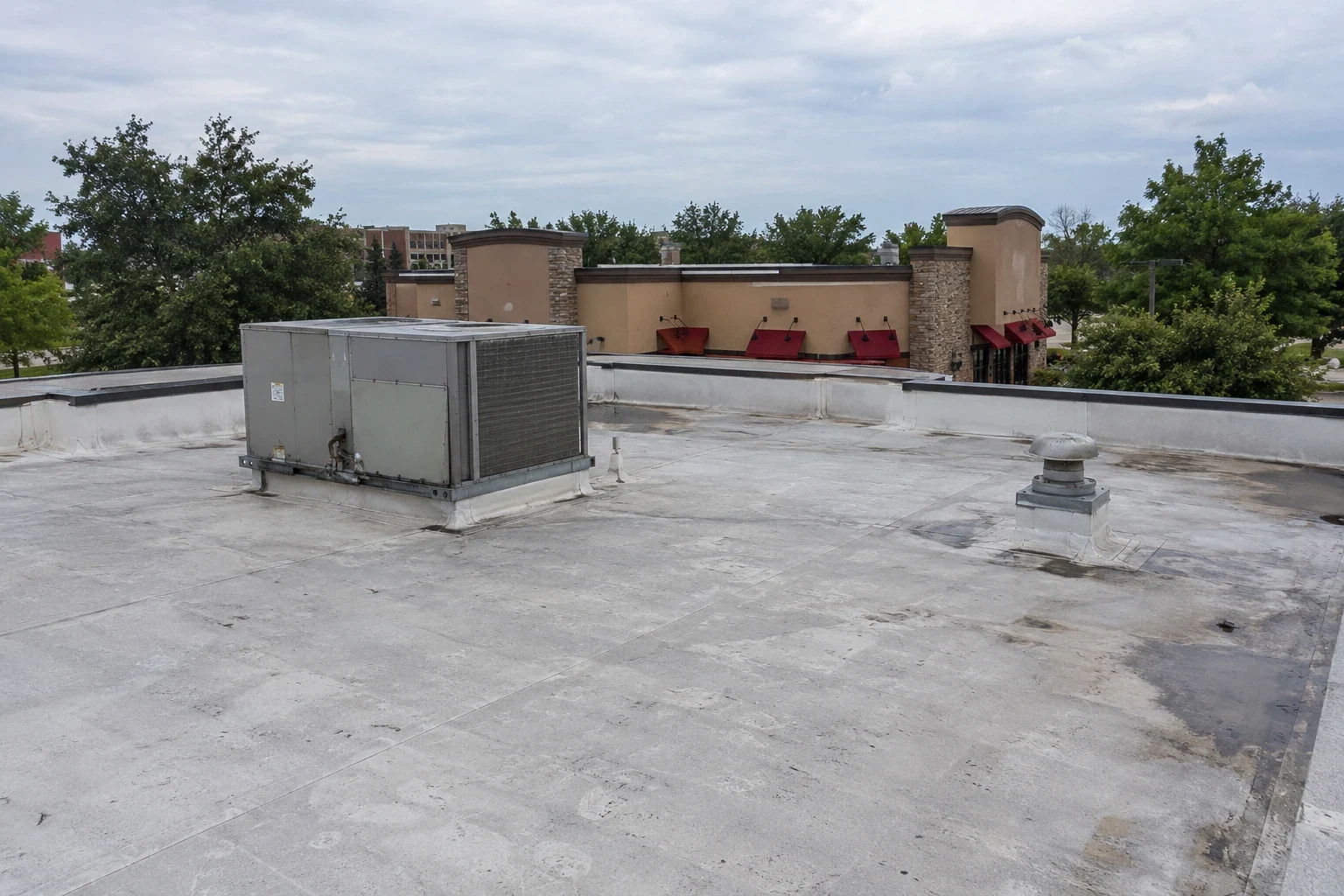
The roof often carries a large amount of mechanical equipment. Rooftop units, exhaust fans, kitchen vents and makeup air pass through the deck. Each is a flashing detail and a place where cooling depends on the roof being sound.
We tag every roof zone with what is below. That list sets the repair order. The city describes a population of nearly 115,000 across more than 90 square miles, and the South Fulton market includes a wide mix of building types. Roosevelt and Old National highways are its established business districts. A community on any of those roads is still read from the rooms down.
Roof mechanism: moisture, mold and heat load
Moisture is the main mechanism. In a humid climate, a small leak that wets insulation can feed mold in a ceiling cavity. Residents may notice a smell before the roof shows a stain. So the inspection looks for moisture, not just for holes.
Heat is the second. Dark membranes run hotter than the air. Seams expand every afternoon and contract overnight. Sealant dries out. Flashing pulls back. NOAA describes a regional pattern of hot summers, which is a reason to inspect, not proof of damage on a particular roof.
Wind is the third. Damaging thunderstorm winds show up in every month of the weather service record for Peachtree City's warning area, about 19 days a year. Edges and corners take it first. Loose coping is a leak waiting for rain.
Rooftop units are the fourth. Each service visit disturbs a curb. A curb and support check on every pass catches the disturbed flashing before it leaks.
Inspection findings: moisture first, then membrane
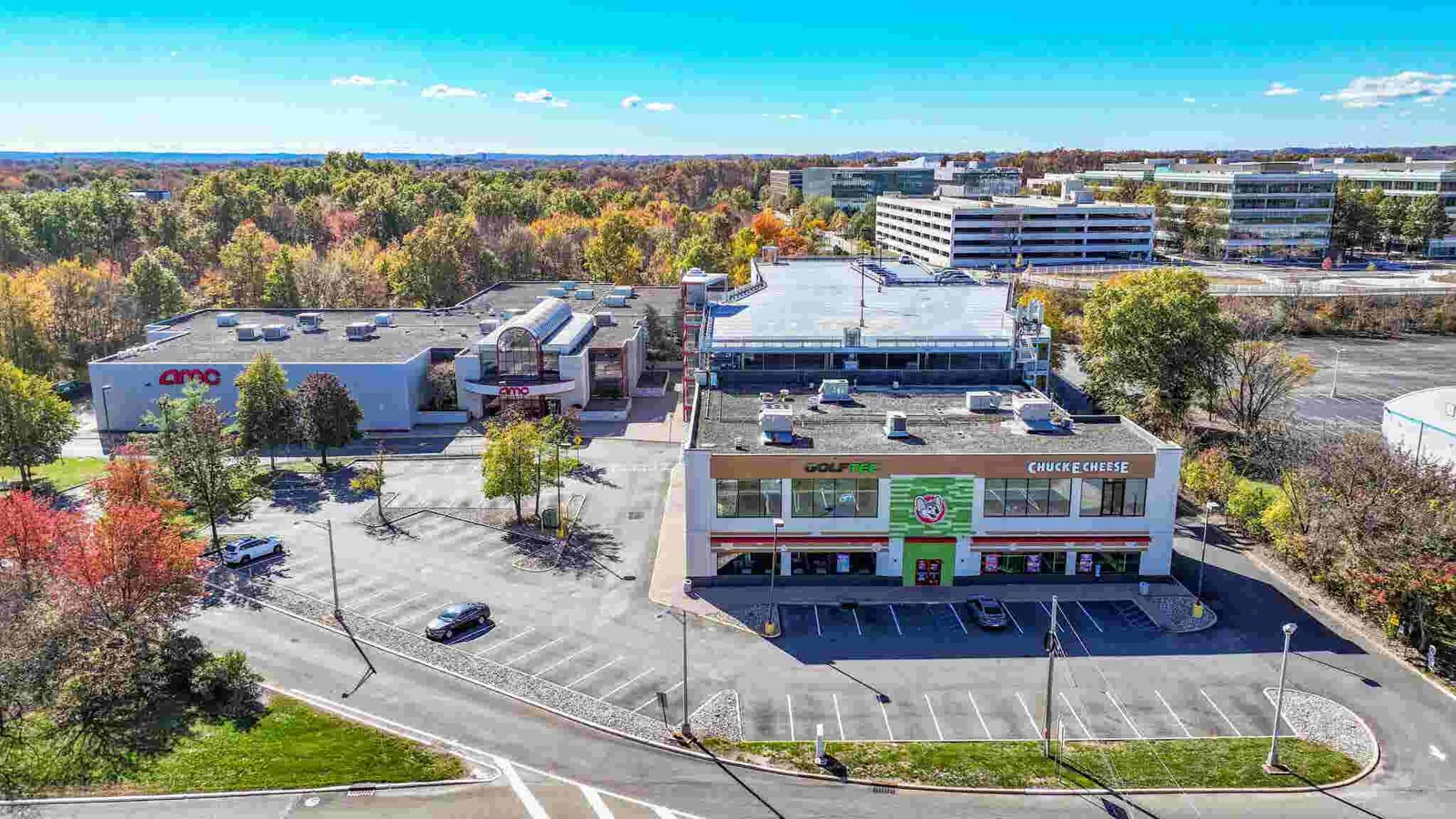
We walk the whole roof zone, then each edge, curb, drain and penetration. Findings are numbered and tied to the rooms below.
Common findings: cracked vent boots, open sealant at curbs, wall flashing lifted from parapets, ponding near drains, and wear along the path to rooftop units. We note old patches and whether they hold.
An infrared moisture survey finds the wet boundary without opening the roof. It matters here, because wet insulation above a care area is a health risk long before it is a visible stain. A test opening confirms the layers.
After a storm the roof is walked again and checked against earlier photographs. In NWS climatology large hail occurs in north and central Georgia about seven days annually, April being highest. A hail report only prompts the look; photographs and moisture readings supply the finding.
Scope options: repair, restore, recover, replace
Repair fixes local defects on a dry roof. A coating restoration extends a sound, dry membrane. A recover adds a new membrane over a dry roof the deck can carry. Replacement is the path for a roof whose insulation is wet across the field or whose layers are spent.
Each path has a different effect on residents. A coating restoration avoids tear-off noise and dust. Replacement brings both. We state the effect on residents next to the cost.
Cost lines: tear-off, insulation, access, resident protection, equipment handling and weather hold. Cooling work adds its own line, since temporary cooling may be needed when units are lifted. We price it, so the owner is not surprised.
A capital plan sets the order across buildings. Roofs over care areas go first. The plan also supports lender and regulator requests for a documented roof schedule.
Access and sequencing: cooling limits and quiet hours
The first constraint is cooling. A unit cannot come off the roof until the plan for that wing is agreed. We lift one unit at a time, rebuild the curb and reset it, usually within a single day. Temporary cooling is arranged where the day runs long. HVAC contractors disconnect and reconnect, and the timing is written down.
The second constraint is rest. Noisy work stays out of nap and sleeping hours. Tear-off runs in the mid-morning to mid-afternoon window. Residents and families get written notice a week ahead.
Each shift ends with the open section dried in, which is the dry-in limit, and nothing stays open into a forecast storm. Walkways and entrances are fenced. Staging sits away from the main door and any vehicle drop-off.
Active leaks reach a person at any hour, holidays included, and care areas are protected before anything permanent is priced. Staff get a written update at each step, so the care team always knows which wing is open and which is sealed.
Code coordination: permits, licensing and energy
Care-community reroofs follow the 2024 International Building Code and related editions with Georgia Amendments, used in South Fulton since January 1, 2026, and Georgia's 2015 energy code. Licensing bodies for care facilities may add their own requirements. The operator tells us which apply, and they go into the scope.
Sleeping-occupancy limits resemble those in apartment roofing, and infection and moisture control resemble hospital roofing. Operators with many sites can use one report format, as health systems do in healthcare roof programs.
Send us the roof plans and the cooling schedule
How long can a rooftop unit be off during replacement?
As short as the work allows, and never longer than the operator's cooling limit. We lift, rebuild the curb and reset within a day where possible. If a longer outage is needed, temporary cooling goes in first. The plan states the hours and the backup.
Why survey for moisture when the ceiling looks fine?
Wet insulation can sit unseen for weeks, and in a humid climate it feeds mold. A moisture map shows it before a stain appears. For a community with residents in the rooms below, finding it early protects health and keeps repair cost lower.
Can residents stay in their rooms during a reroof?
Often yes, with sections opened one at a time and dried in daily. Noise and dust are the concerns. Where the roof work is directly over bedrooms with fragile residents, the operator may choose to relocate a few. The plan lists each wing, the dates and the choices.
Is a coating restoration a good fit for a senior living roof?
When the membrane is sound and the insulation dry. It avoids tear-off and shortens the disruption. A moisture survey and cores decide whether the roof qualifies. If wet insulation is present, the coating would hide it, and the report says replacement is needed.
What records does a regulator or lender ask for?
Usually the roof age, system, warranty, last inspection and repair history. We keep these in one packet per building with dated photographs. The packet can be handed over on request, and it updates after every visit.