
- Home
- Old National Commons
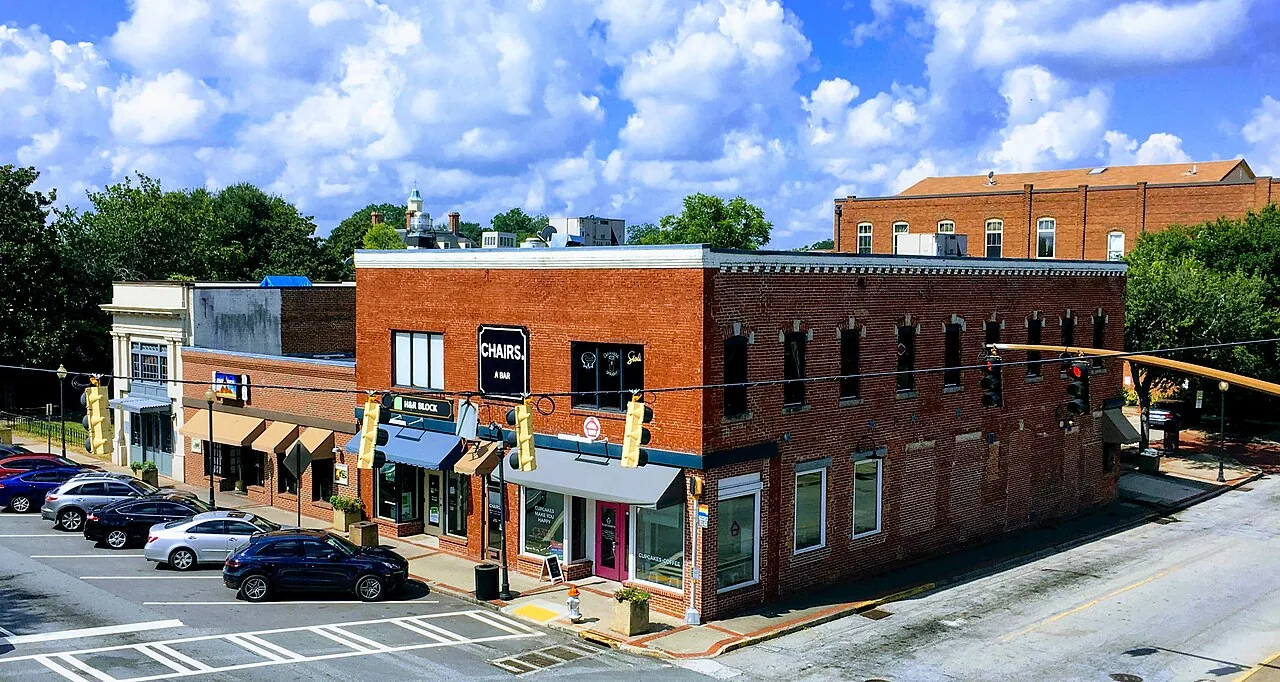
Commercial Roofing in Old National Commons, South Fulton, GA
Rehab work starts on the roof. South Fulton's economic-development plan lists Old National Commons among three focus areas along Old National Highway, within the Old National Main Street area. The plan describes existing commercial space, vacant land for infill and apartment properties needing rehabilitation in the broader district. It recommends market assessment and long-term rehabilitation and redevelopment. Rehab of occupied buildings is a roofing problem first. Water that gets in while the interior is gutted ruins the budget. We start with the use below each roof zone and the mechanism that changes the sequence.
The Old National Merchants Association puts the highway corridor at roughly 500 establishments, and Commons is one of three focus nodes on it. Each node gets its own roofs and its own record.
Building use: apartments, shops and infill
Apartments put sleeping space under the roof. Shops put stock there. Infill adds new roofs beside old ones. Each asks something different.
The plan says some apartment properties in the broader district need rehabilitation. It does not say which roofs. We do not assume. We read each roof on its own terms. A test opening reveals the layers. A moisture scan reveals the wet ones.
Multi-building apartment sites share a pattern. Many roofs of one type. Many penetrations per roof. Many tenants under each. A repair record per building keeps the story straight.
Balconies and walkways tie into roofs. Where a walkway meets a wall, flashing carries both loads. Where a breezeway roof meets the main roof, a valley forms. Water from two roofs lands in one place. We check those joints first on any apartment building.
Stairwell roofs and mechanical rooms need attention too. Hatches sag. Curbs crack. Vent stacks lose their boots. Each is small. Together they cause most unit leaks.
Roof mechanism: the wet boundary in occupied units
Water in an occupied unit shows as a stain, a sag or a smell. The stain is not the entry. Water travels along the deck and the framing before it drops. The entry can be twenty feet away.
We trace upslope. We check flashings at walls, vent pipes and unit curbs. We probe the deck where access allows. A moisture scan from above maps wet insulation. The scan sets the wet boundary.
Repair follows the boundary. Dry the layers. Replace the wet ones. Rebuild the failed detail. Restore the membrane. Skip the dry step and the leak returns next season.
Timing helps the search. We scan on a dry afternoon after sun has warmed the roof. Wet insulation holds heat longer than dry. The image shows it as a pattern. We note the sky, the temperature and the time beside each scan.
A core cut confirms the reading at a few points. The hole is sealed the same day. Photos show the layers with a scale. The cores tell us the thickness, the type and the moisture of each layer.
Drains deserve a pour test. Water poured at a bowl should leave without backing up. A slow drain is a finding. We clear it, retest and note any pond that stays.
Rehab sequencing: tenants, units and weather
A rehab runs while people live there. We work in sections. Each section is closed in each day. Units below an open section are protected first. Residents get notice of noise windows and access.
We recommend roof work before interior finishes. New drywall under a failing roof gets wet. The roof closes the envelope. Interior trades then work under a dry deck.
Weather limits the schedule. Atlanta logs about seven days a year past 95 degrees, and summers run long and damp. Afternoon storms build fast. We start early and set the close-in point before the first storm cell arrives.
Resident safety shapes access. Ladders and lifts stay outside walkways. Debris chutes run away from doors. Material is hoisted when no one is below. Open edges carry guardrails. Skylights and openings carry covers.
Scope options: repair, recover or replace by building
Scope splits by building. One known leak with dry insulation around it points to repair. A sound base with a tired surface points to a recover. Wet zones or a damaged deck point to replacement. Price follows area, layer count, wet insulation, penetrations, access and hours.
An apartment roofing program across several buildings can phase by wear. Worst roofs first. Next worst the following year. Sound roofs stay on maintenance. A roof capital plan ties each building to a year and a budget range.
The city plan recommends long-term rehabilitation. A roof plan that matches that horizon avoids repeat spending.
Energy rules enter at replacement. The state still uses the 2015 IECC with Georgia amendments, and the city's permit page shows the 2024 IBC taking effect on the first day of 2026. The scope names both. The GC confirms the editions with the permit office before pricing.
Storm timing and the baseline
Damaging thunderstorm winds can come in any month, and April brings the most large hail. Tornadoes have been recorded year-round, with most in spring. One building may dodge a given season.
A dated baseline still earns its keep. A full photo pass before March gives a later pass something to compare. New dents, lifted edges and displaced equipment stand out. A hail damage review pairs surface samples with a moisture reading beneath each mark.
After a storm the order is fixed. Dry-in first. Photos second. Repair third. We seal openings, list temporary materials and set a date to replace them. A tarp left through a Georgia summer fails.
Existing commercial space: tenant hours and curbs
Commercial space on the corridor stays open. Customers park near the work. We agree on staging first. We close only the stalls we need. We post a path past the work.
Rooftop units and exhaust fans add curbs. Each curb is a leak point. We check flashing at every corner. We raise lines off the sheet. Commercial roof repair at curbs is a small cost against a wet stockroom.
Heat adds wear at those curbs. Rubber boots crack. Sealants harden. A late-summer walk finds them before fall storms. The same spots are photographed each year, so the trend is visible.
Send the roof plans, unit counts and the access method
What should an owner send before a rehab roof scope?
Send roof plans, unit counts, repair history and the access method. We recommend adding tenant notice rules. With those, we set sections and the close-in point.
Why do roof work before interior finishes?
A failing roof wets new finishes. We recommend closing the envelope first.
How do you find the entry point for a unit leak?
We trace upslope from the stain, check flashings and scan for wet insulation. We recommend photographing the stain with a date before we arrive.
How should a multi-building owner phase roofs?
By wear and risk. We recommend worst roofs first and a capital plan that names a year for each building.
What belongs in an infill roof baseline?
Dated photos of the whole roof, a moisture scan and a penetration map. We recommend finishing it before tenants move in.