
- Home
- Edge Metal, Coping and Gutters
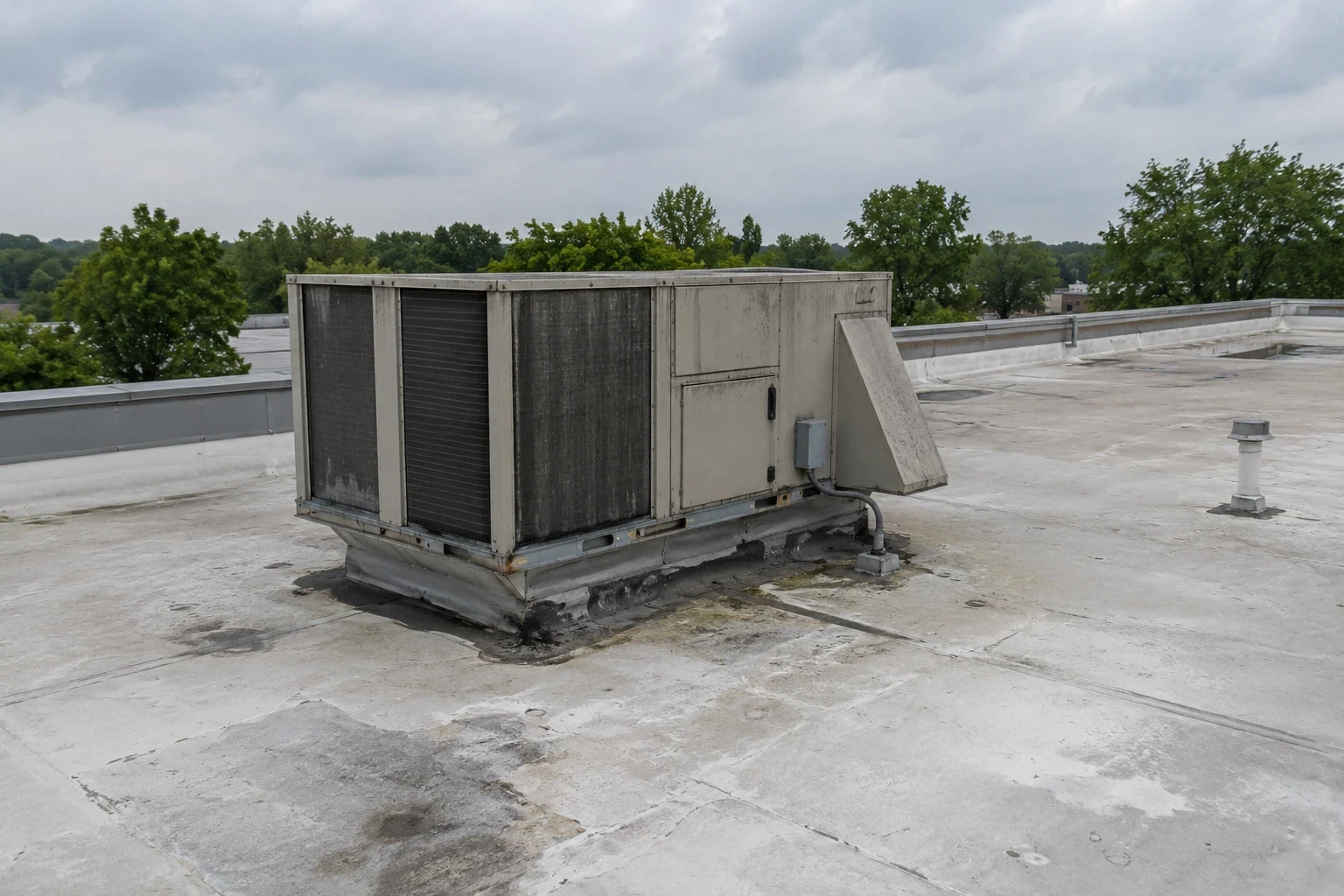
Edge Metal, Coping and Gutters in South Fulton, GA
The edge is the first part of a roof the wind finds. Corners see the highest pressure, then the perimeter, then the field. A drip edge that has loosened, a coping cap with open joints or a gutter pulled from its hangers gives wind a way under the membrane. South Fulton, GA has damaging thunderstorm winds in every month, with a spring and summer peak. So edge metal is not trim. It is the roof's restraint. We check the edge first on every roof and fix it before anything cosmetic.
Building use: parapets, eaves and open edges
Different buildings finish their edges differently. A warehouse with a low parapet uses coping or a metal cap. A strip center along Old National Highway may use a gravel stop or a drip edge with a fascia. A flex building may combine both, with gutters on the office wing. Each type has its own failure points.
Edge metal also carries the building's look. On a retail roof or an office that fronts a busy road such as South Fulton Parkway, the edge is visible from the street. Bent, stained or missing pieces send the wrong message and flag a roof problem. Industrial owners care about function: a clean edge, sealed joints, a gutter that does not overflow onto a loading apron. Either way the edge walk produces the same record, a length-by-length list of what holds and what moves.
Roof mechanism: corner pressure and the peel
Wind flows over a building and speeds up at the edges. That creates suction at corners and along the perimeter. A membrane held by weak edge metal can peel back like tape, starting at one corner and running along the fastener line. Once a section opens, the rest of the roof loses its hold.
The weak points are known. Face-fastened metal depends on screws that can back out. Cleats that are too short or too few let the metal slip free. Joints without sealant or backing plates open under load. Heat adds movement: long runs of metal expand in the Georgia sun and contract overnight, which works fasteners loose over time. Dark metal outruns the air temperature, and Atlanta sees about seven days a year past 95°F.
Moisture adds corrosion. Humid summers and dissimilar metals in contact, such as steel fasteners in aluminum trim, speed rust and pitting. A fastener that fails in the metal's thin edge is hard to see until a piece lifts.
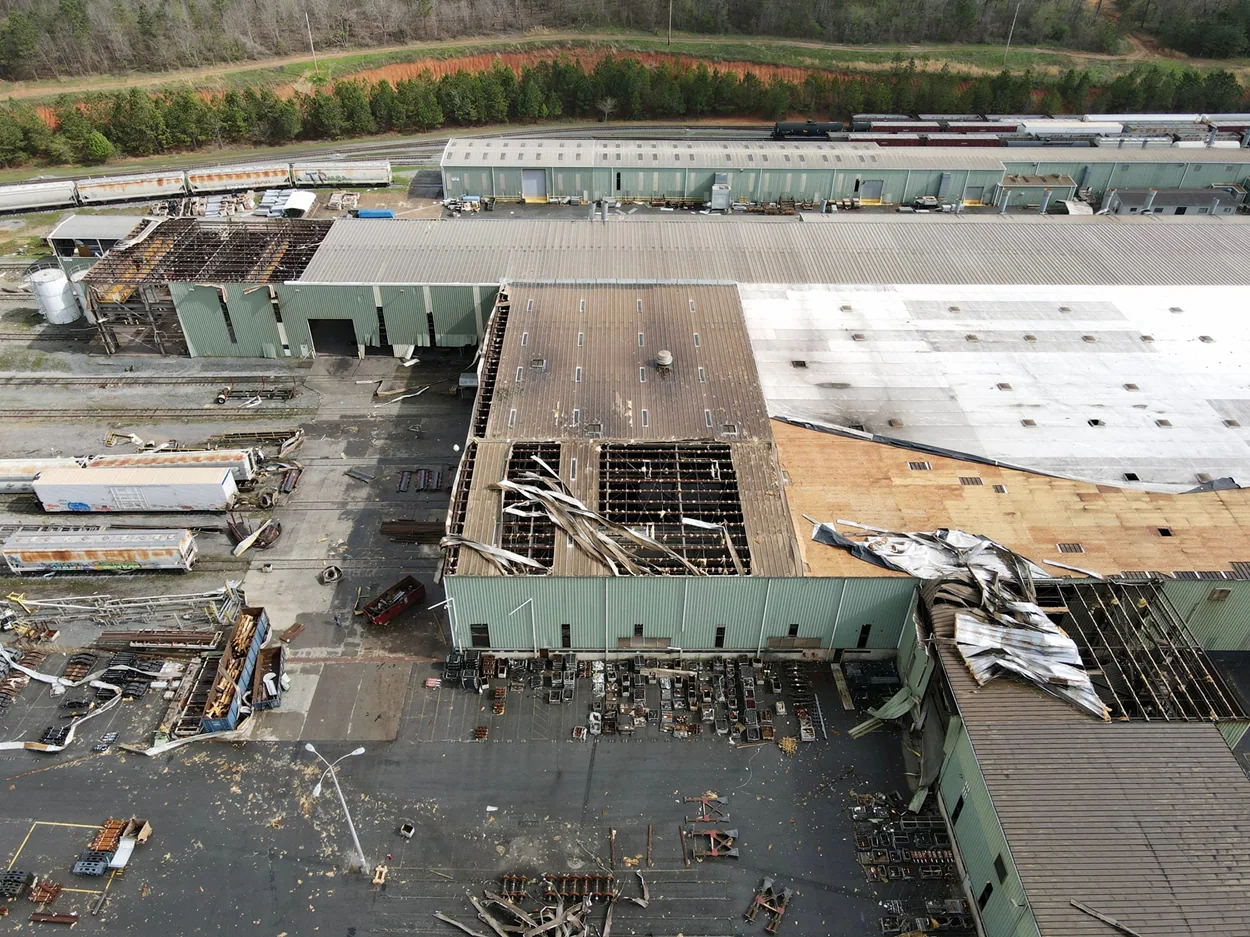
Inspection findings: the edge walk
The edge walk covers every linear foot. We press and pull each piece by hand to feel looseness. We look for gaps at joints, open laps, missing sealant, bent flanges and rust at fasteners. We check the membrane termination under the metal, since a lifted edge sheet shows up first there.
We photograph each defect with a position marker on the roof plan and log the length affected. Gutters get a separate check: hangers, slope, seams, end caps and downspout connections. We run water to see whether they drain and whether any joint weeps. Where a gutter feeds a leader that ties into a scupper or interior drain, the drain and scupper path is checked as one system, since a gutter that drains well into a blocked leader still floods. A downspout that dumps against a wall or onto a drive is noted. The flashing failure repair list picks up any cracked wall flashing or reglet we find at the same time.
Scope options: re-secure, replace, upgrade
Minor looseness gets re-secured with the right fasteners and sealed joints. Damaged pieces get replaced in matching profile and finish. A failed run gets replaced as a system, with new cleats, new splice plates and a new termination bar, tied to the membrane.
The upgrade path matters after a storm or a reroof. Edge systems are tested to a recognized standard for pull-off and wind resistance, and the design should match the roof's exposure. Heavier gauge, continuous cleats and closer fastener spacing at corners raise resistance. Georgia's current building code is the 2024 IBC with state amendments, which South Fulton's permit page lists as effective January 1, 2026, so a replacement edge is detailed to that edition.
For roofs under replacement, the edge is part of the system and ships with its own submittals. For roofs under repair, edge work is often the highest-value item in the scope, since it protects everything behind it.
Access and sequencing: work from the edge inward
Edge work needs fall protection and sometimes a lift. We plan the staging route and a drop zone so material does not fall on walks or vehicles. Gutters on tall walls may need a boom or scaffold. The crew coordinates with tenants for any entrance closure near the work.
On a roof with an active leak at the edge, the first step is temporary: a taped or sealed cap, a re-fastened run, a battened tarp over the corner. The permanent work follows with new metal ordered to match. Lead time for formed metal can run days to weeks, so the temporary measure has to survive the next front.
Timing: before the wind months
In the NWS record, damaging wind turns up in every month, roughly 19 days in an average year, with the peak in spring and summer. Tornadoes cluster from March through May. Edge repairs belong at the front of that stretch. A late-winter edge walk finds what the previous season loosened and fixes it before the next.
After a wind event, a fast edge check limits further damage. A lifted corner gets secured the same day. The wind damage repair record notes which pieces failed and in which direction, which tells the next crew where the pressure is highest. The log also feeds the next design: a corner that failed once gets a heavier cleat and tighter fastener spacing when the metal is replaced. Gutters need a check in autumn and after major storms, since leaves and debris load them. Owners with several buildings near the Fulton Industrial District can run one edge program across all of them.
Send the roof plan and the edge photos
Is edge metal worth replacing before the membrane?
Often yes. A new membrane held by a loose edge can peel in the first big storm, so the edge should be sound before any new sheet goes on. If the membrane is still good, replacing only the edge can protect it for years. The inspection decides, and the scope shows the edge as its own line so the owner can see what it protects.
What matters more, the metal or the fasteners?
Both, but fasteners and cleats fail first. Good metal with weak attachment lifts in the first strong gust. We specify fastener type, spacing and cleat length for the exposure, with tighter spacing at corners. Joint backing and sealant matter next, since an open joint lets water behind the edge.
Are gutters necessary on a flat commercial roof?
Not always. Many flat roofs drain to interior drains or scuppers. Gutters fit buildings with sloped eaves, canopies or places where water must be kept off walks and entrances. If gutters exist, they need working hangers, slope and clear downspouts. We recommend them where scupper discharge would hit a walkway or a door.
How do we handle a repair that needs matching color?
We sample the existing finish, order matching or closest stock and tell the owner the difference up front. Some finishes fade, so a perfect match is not always possible. If the building's look matters, replacing a full run avoids a patchwork effect, and we price both options.