
- Home
- Storm Damage Roof Repair
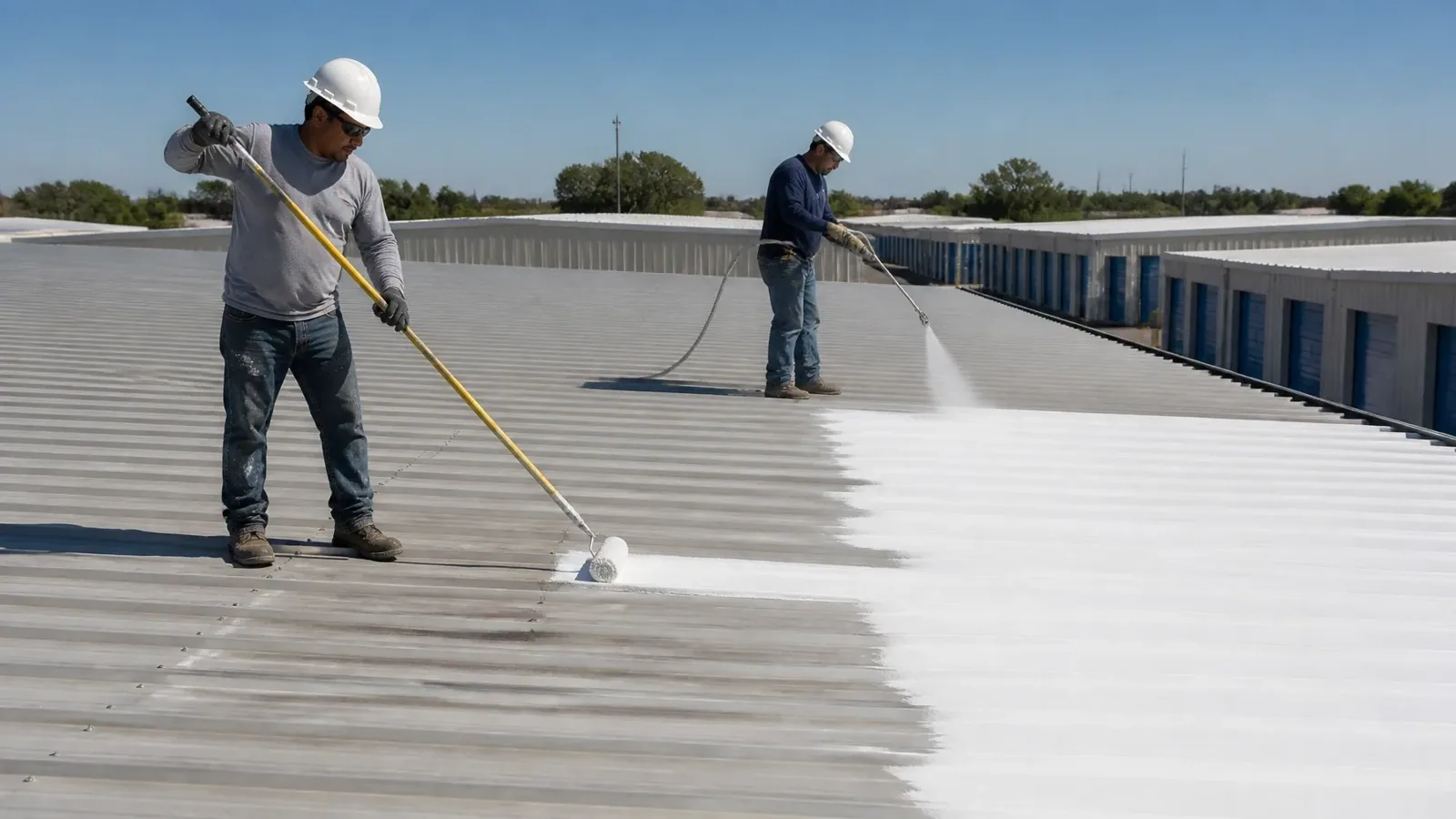
Storm Damage Roof Repair in South Fulton, GA
After a storm, a large flat roof looks fine from the lot. The damage sits at the corners, the edges and under the surface. In South Fulton, GA, that matters because damaging winds from thunderstorms touch the region in all twelve months. Large hail peaks in April. Tornadoes cluster in March, April and May. A storm response here starts with triage. We find the roof zones that are open to water, secure them, and then document the rest. Permanent scope follows once the evidence is in hand.
Building use: what a storm exposes
The development authority names logistics, distribution and advanced manufacturing among South Fulton's target industries. A roof over those uses covers stock, equipment and people. A breach over a pallet aisle costs more than the roof repair. A breach over a production line stops the line. Triage therefore starts with what sits below each roof zone.
A strip center on Old National Highway or an office building on the South Fulton Parkway would face a different problem, since tenants are visible and customers are close. Water in a ceiling there leads to closed doors fast. We rank calls by interior exposure first, then by roof damage.
Roof mechanism: wind, hail and debris
Wind lifts a roof from the corners and edges first, where pressure is highest. Once an edge opens, the membrane peels back along its fastener line. Fasteners pull out of the deck. Seams split. Flashing tears away from walls. On a metal roof, panels lift and trim bends. Wind also moves debris, and a flying branch or loose rooftop cover can puncture a sheet.
Hail works differently. Large stones bruise a membrane, crack coatings and dent metal. Bruises may not leak at first. They fracture the reinforcing scrim or crush insulation below, and the leak shows weeks later. Large hail shows on the NWS record for about seven days a year across the north and central Georgia warning area. A hail event deserves a survey even when no stain appears.
Tornado damage runs from lifted sections to total deck loss. An EF-2 tornado crossed between Fairburn and Campbellton in March 2018 and damaged homes. That event is a reminder of the March-to-May peak.
Inspection findings: the post-storm walk
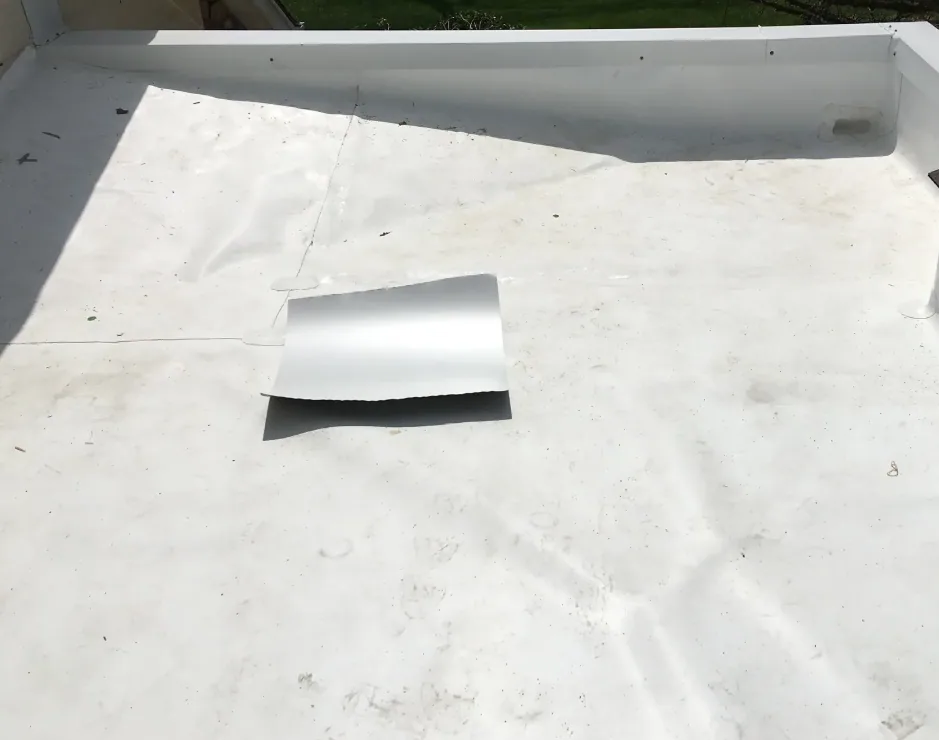
The walk follows a fixed order. Edges and corners first, since uplift starts there. Then the field, looking for lifted laps, punctures and displaced ballast. Then penetrations, curbs and rooftop units, which can shift in wind. Then drains, which fill with debris. Last, the interior, to match stains to roof zones. Where the first call came in as an emergency roof repair, the temporary work is checked and logged at the same time.
For hail, we test for bruising by pressing the surface and by probing suspect spots. A moisture survey follows if bruises are present or if the roof is older. We photograph every finding with a marker for location and scale. We log the date, the time and the weather. Those records help the repair and any insurance claim that follows.
A drone survey speeds the first look on a large roof. It shows displaced membrane, ponding and debris before anyone walks the surface. The walk then confirms what the images flag. Drone and walk findings share one set of roof zone numbers, so a photograph from the air and a photograph from the surface point at the same place. That shared map keeps the repair crew, the adjuster and the GC working from the same page.
Scope options: temporary, targeted, full
Three levels cover most storm scopes. A temporary dry-in secures openings with tarps or membrane strips until permanent work can start. A targeted repair replaces damaged laps, flashings, panels or insulation within a marked boundary. A full replacement applies when damage is widespread or the roof was near the end of life already.
The test opening decides the boundary. We cut into suspect areas to see whether insulation is wet and whether the deck is sound. Wet board comes out. Dry board stays. The scope lists what each level costs, with the evidence behind each, so the GC can approve a step at a time. A wind-damaged roof gets its edges re-fastened first. A hail-struck roof adds bruise testing. A building hit by a tornado starts with a structural check before any membrane is priced.
Access and sequencing: safe work after a storm
Wet metal, loose edge flashing and debris make roofs dangerous. The crew checks the access route first. Fall protection goes up at open edges. Lifts are placed on firm, clear ground away from downed lines. If conditions do not allow roof work, the first step moves inside: tarps over stock, drip containment and shut-off advice for exposed electrical gear.
Phones are staffed through nights and holidays. The first visit closes the opening and sets a close-in limit, meaning the point where the crew stops for the day and the roof is sealed against the next rain. The GC receives a short note with photographs, the boundary of the temporary work and the next step. A second note follows after the next weather event, so the dry-in's performance is on record before permanent work is priced.
Timing: the next front and the claim clock
Storm season does not leave long gaps. The region averages about 19 damaging-wind days a year, and fronts arrive in spring and summer. A temporary dry-in has to survive the next one. Edges get fastened, not weighted. Tarps are battened at the perimeter. The crew checks the forecast before each close-in.
Permanent repair follows the evidence. Heat is part of the picture too, since Atlanta clears 95°F on roughly seven days a year and summer sun softens adhesives and shortens working windows. Owners with a claim in play should keep the dated photographs, the temporary repair record and the permanent scope in one file. Permit rules apply to larger repairs. South Fulton's permit page says the 2024 IBC with Georgia Amendments took effect January 1, 2026, and the scope cites that edition. For buildings near Historic Campbellton Crossroads and Fairburn, the same sequence applies.
Send the storm date and the roof plans
Should a roof be inspected after hail if there are no leaks?
Yes. Hail can bruise a membrane and crush insulation without producing a stain for weeks. We recommend a survey within days of a large hail event, with a moisture scan if bruising appears. Early documentation also protects the claim position. Waiting for a leak often means the damage has spread and the evidence is harder to date.
What does a temporary repair cost compared with a permanent one?
Temporary work costs a fraction of permanent work, but it only holds for a short time. It buys the schedule needed for testing, approvals and material. We price it as its own line, so the GC can see what the hold costs. If permanent work will wait weeks, we recommend a sturdier dry-in with mechanically fastened edges.
Who decides whether the roof is repaired or replaced?
The evidence, with the owner's approval. If wet insulation, torn laps or deck damage cover most of a roof zone, replacement costs less than chasing repairs. If damage is localized, a targeted repair is the better value. The scope shows both options with test results, so the choice rests on measured conditions.
Can storm repair be done while the building stays open?
Usually yes. We protect interiors, stage away from entrances and plan noisy work for quiet hours. For high-risk areas such as sensitive equipment or stock, protection comes first and the roof work follows. The work plan names who is affected and when.