
- Home
- Heat and UV Roof Damage Repair
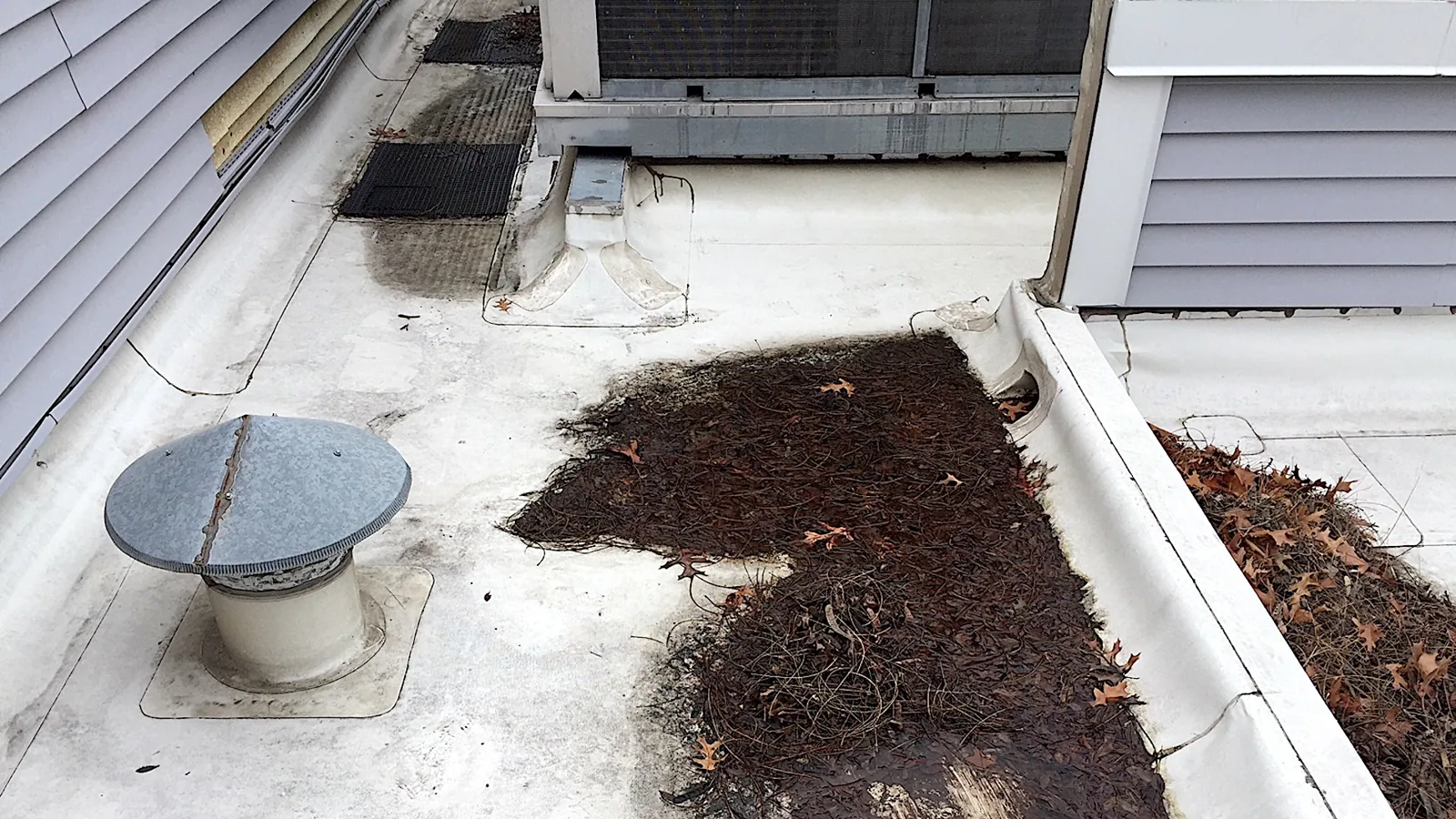
Heat and UV Roof Damage Repair in South Fulton, GA
Sunlight damages a roof slowly, which is why it gets missed. Georgia's summers run long, hot and humid, NOAA notes, and Atlanta passes 95 degrees on about seven days in a year. A low-slope surface in South Fulton, GA runs hotter than the air above it. Over seasons the membrane loses plasticizer, chalks, shrinks and cracks at the details. We read the surface the way a mechanic reads a belt: for wear that predicts the failure.
Building use: roofs that cook
Roofs over conditioned space take the most thermal work, and the roof surface sets part of the cooling load. The development authority also lists office corridors alongside industrial parks and flex space. The Camp Creek Business Center in East Point, where an East Point figure of 2.9 million square feet covers the industrial and office space already built, raises the same question for each building: what does the roof surface add to the cooling load?
A roof with a worn surface and failed seams gives up more of its reflective value each year. Retail and office tenants feel it as ceiling temperature and comfort complaints. The city's largest commercial corridor is South Fulton Parkway, and its roofs take the same summer sun as the rest of the market. The surface decides how much of that heat reaches the layers below, and a restored surface keeps insulation and adhesives cooler through the afternoon peak.
Roof mechanism: how heat and ultraviolet light age a surface
Ultraviolet light breaks down the polymers in membranes and coatings. Heat accelerates the process and drives out plasticizers that keep thermoplastic sheets flexible. A sheet that has lost flexibility shrinks and pulls at seams, flashings and fasteners. The surface chalks, then crazes, then cracks. Bituminous roofs lose granules and oxidize, and the asphalt hardens and splits. Coatings thin from the top and expose the layer below.
Heat also works through expansion. A membrane may move many times a day. At night it cools and contracts, and humid mornings leave moisture on the surface. The cycle fatigues every fastener and every weld. On an acrylic-coated roof, heat and water together can lift the coating if the bond to the substrate was thin. Each system ages in its own way, so the repair starts with identifying which kind of wear is present.
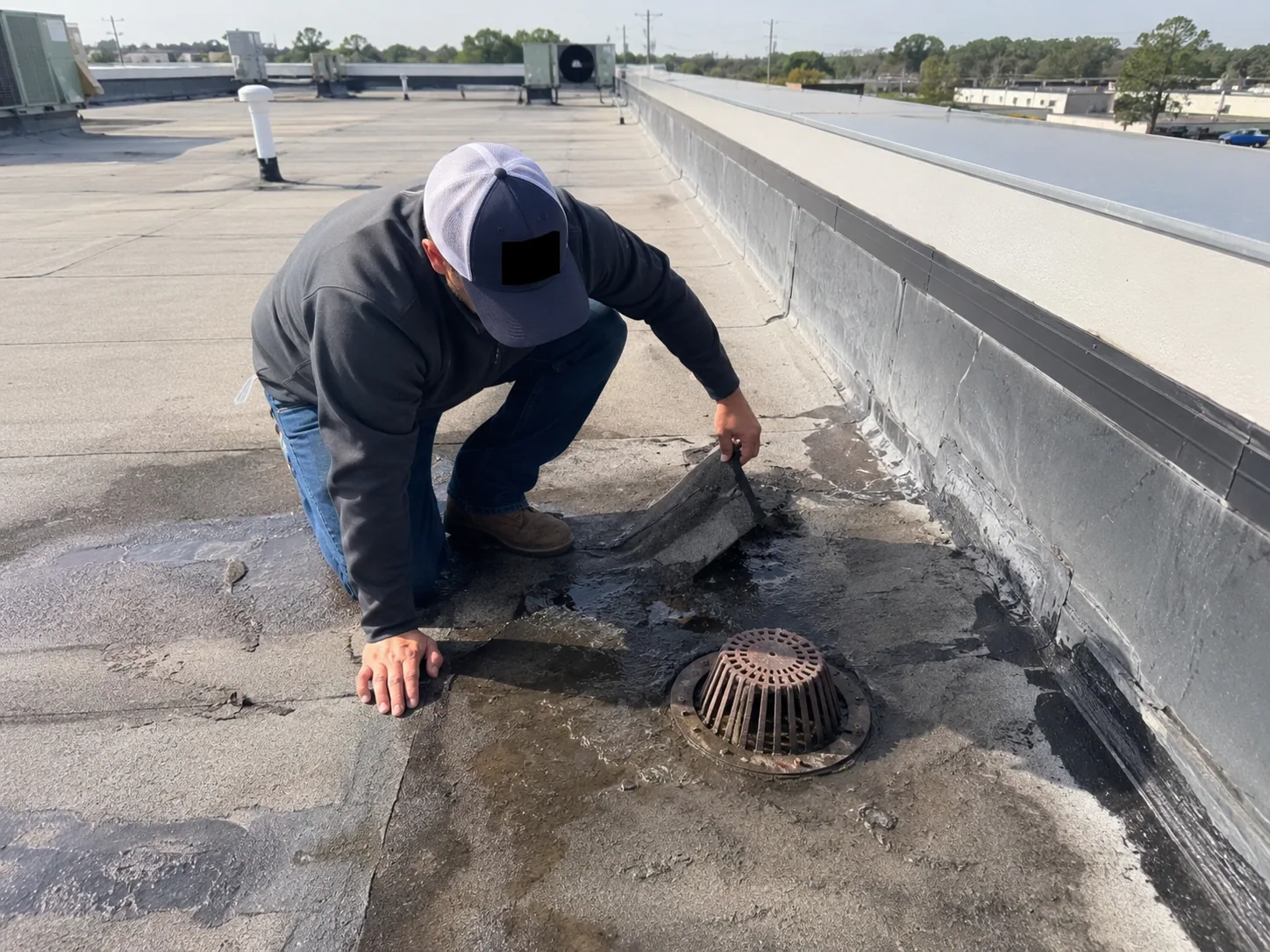
Inspection findings: reading the surface
We check the roof in daylight, with the sun at an angle that shows surface texture. We touch the membrane, feel for chalking and look at the color change. We measure how far flashings have pulled away from walls and how much the sheet has shrunk. Then we cross-check with moisture readings, because a worn surface often hides a wet layer below.
- Chalking, crazing and color fade across the field.
- Shrinkage that pulls flashing and seams under tension.
- Blisters on bituminous roofs and bubbles under coatings.
- Granule loss exposing asphalt, usually near drains.
- Hardened sealant at penetrations, edges and curbs.
Photographs are tagged by roof zone and compared to earlier visits when we have them. Trends matter, and a dated record lets the owner plan a budget before the surface fails. A surface that has faded a little each year tells a different story from one that failed last month.
Scope options: patch, coat, recover, replace
Local repairs handle the weakest details: resealed penetrations, patched cracks, fresh sealant at edges. A coating restores a sound but weathered surface, adds a reflective layer and extends service life when the substrate is dry and the seams are sound. A roof coating restoration needs a clean, prepared surface and a moisture check before any liquid goes down.
A recover lays a fresh membrane over the existing one if the layers below are dry and the deck can carry the load. A replacement is the answer when the insulation is wet, the membrane has shrunk past repair, or the cost of repeated patches exceeds the price of a new system. A cool roof membrane or coating reduces surface temperature and can be selected at any of those stages.
Access and sequencing: working around the heat
Heat shapes the work day. Crews start early and finish before the hottest hours, since fresh adhesives and coatings behave differently when the surface is above comfortable working temperature. Water breaks, shade and shift planning protect the crew. Material is stored out of the sun until it is needed.
Coatings need a dry window of several hours, and humid mornings can delay the start. For occupied buildings, solvent-based products are scheduled with the HVAC intake locations in mind, and the staging route keeps material away from air handlers. Tenants receive notice of any odor-producing work, and the trade handoff to the mechanical contractor covers shutdown of fresh-air intakes if needed.
Code coordination: energy and reflectivity
Georgia's energy code is still the 2015 IECC as amended for the state, per the Department of Community Affairs list. A replacement or recover that changes insulation or the roof surface is checked against that code and against the 2024 building code edition the City of South Fulton applies. A coating alone usually adds no insulation value, so we confirm early whether the chosen scope triggers an insulation requirement.
The answer changes the price and the layer stack, so the GC hears it before bid day, not after.
Send the roof age and the last inspection report
How can we tell chalking from normal dirt on a white roof?
Rub a gloved hand across the surface. Dirt smears and wipes away; chalk leaves a fine powder that continues to come off. Chalking is the polymer breaking down, so we mark its extent by roof zone and track how fast it spreads between visits.
Will a reflective coating stop shrinkage in an aging membrane?
A coating can slow further UV damage but cannot reverse shrinkage that has already pulled the sheet. If the membrane is stretched tight at the walls, we recommend repairing the flashings or recovering the roof before coating.
Our roof is dark and the building runs hot. Does a cool roof help?
A reflective surface lowers roof temperature, and that can reduce the load on cooling equipment. The result depends on insulation, ventilation and how the building is used. We compare the options during the scope and note which are suited to the existing layers.
Is blistering a heat problem or a moisture problem?
Blisters usually involve both: trapped moisture or air under a layer expands in the heat and lifts the surface. We cut one open to see whether the layer below is wet. If it is, the blister points to a larger wet area.
When should coating be applied in Georgia's climate?
Spring and fall offer the most reliable windows, because the surface is dry and moderate in temperature. Summer work is possible with early starts and a close eye on afternoon storms. We schedule around the forecast rather than the calendar.