
- Home
- Holcim Elevate Commercial Roofing
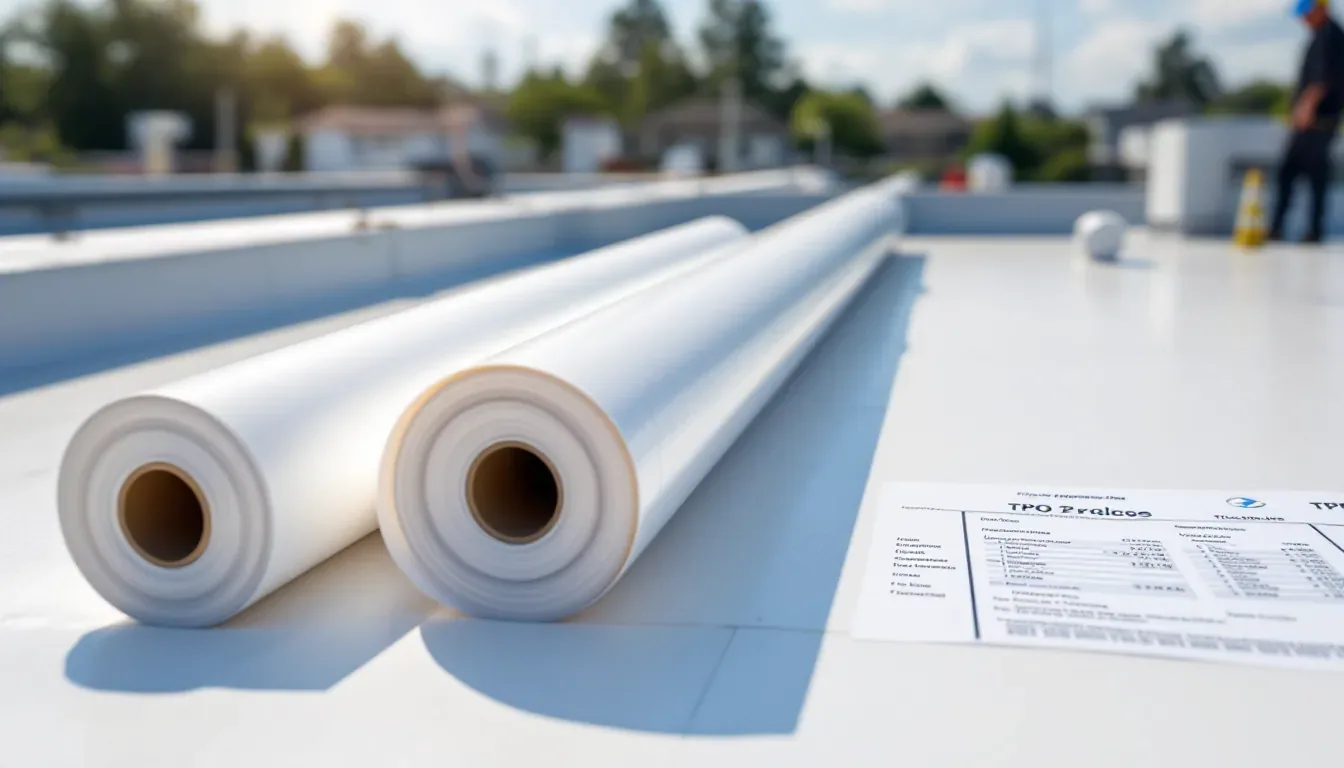
Holcim Elevate Commercial Roofing in South Fulton, GA
A flex facility can place offices beside warehouse bays. The roof transition sets the Holcim Elevate inspection path. We confirm the existing membrane, deck profile, insulation, and fastener line before selecting a repair or replacement detail. Local real estate on offer from the South Fulton Development Authority runs from industrial parks to flex space and professional office corridors. Those uses shape access and staging, and the drawings still have to be read for the roof itself.
Holcim Elevate systems include commercial single-ply options, with separate details for field seams, edges, and penetrations. We identify the installed sheet before applying a repair material. A heat-welded seam and an adhered flashing detail need different preparation. Our notes follow the roof zone from field to curb and wall. The GAF system review and Johns Manville roof comparison use the same deck and perimeter questions.
Membrane check: identify seams and attachment
We start with product markings, drawings, and visible details. The plan may not match later repairs. A test opening can show insulation, cover board, and deck when the layer stack is concealed. We record its location, inspect moisture, and close it with compatible materials. Added height at parapets, curbs, and drains must also fit the existing edge detail.
On a thermoplastic membrane, a weld needs clean material, controlled heat, and consistent pressure. An adhered sheet needs full contact without trapped moisture or voids. We inspect the bond and the perimeter termination separately. A TPO roof inspection checks field seams, curb flashings, and edge securement as different points.
Wind movement often appears first at the perimeter. We check fastener rows, metal cleats, coping joints, and flashing returns. At rooftop units, conduit, and pipe penetrations, the membrane must turn into a stable flashing detail. We photograph the tie-in and identify any work owned by another trade. A commercial repair scope names each roof zone rather than grouping unrelated details under one line.
South Fulton exposure: corners, heat, and drainage
Heat sits on Georgia roofs for a long season, and NOAA counts about seven days a year above 95 degrees in Atlanta. That regional signal makes surface temperature and work timing relevant. We inspect sealants, exposed edges, and membrane transitions for changes that affect the repair. A temperature reading does not substitute for a seam test or substrate check.
In every month, damaging thunderstorm winds are recorded for the Peachtree City warning area of the weather service. A storm inspection checks corner zones, edge metal, and rooftop equipment for movement. We look for a lifted termination and trace the wet boundary inside. The wind damage inspection records the condition and temporary dry-in limit. A regional wind report does not establish damage at a building.
The Parkway is the city's biggest commercial corridor, with part of the Camp Creek industrial-commercial district inside the boundary. Where warehousing and distribution run below the roof, loading access limits the work. We confirm lift locations, delivery windows, and receiving routes before material arrives. The Camp Creek business area is broad context; each property still needs its own roof and access review.
Repair method: prepare the actual sheet
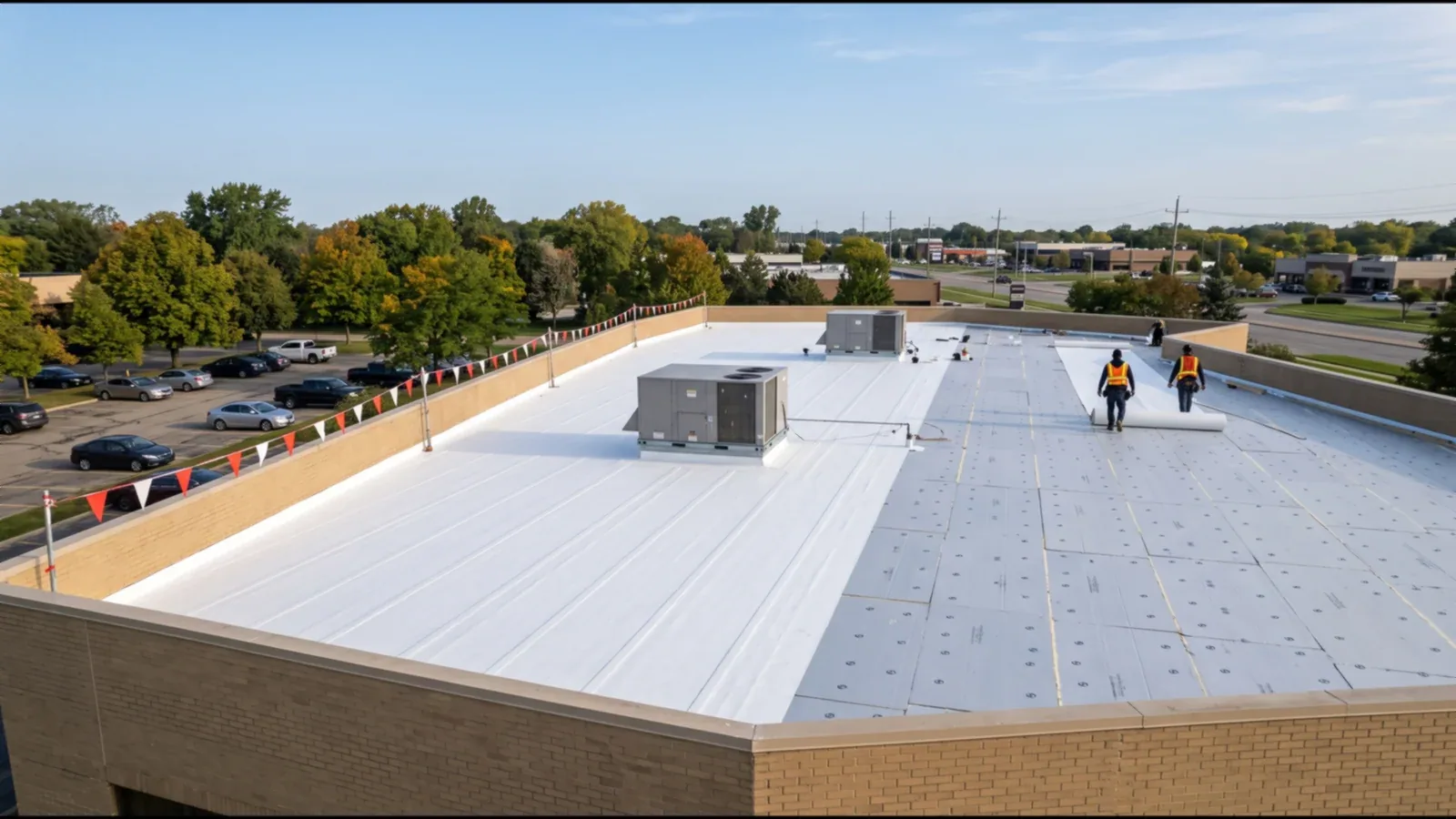
A repair starts with the installed membrane, not the manufacturer's name. We clean and prepare the area, then test the selected patch or weld. If the sheet has aged, contamination or surface treatment may affect adhesion. We extend the repair to material that can carry a sound bond. Curbs and walls require compatible flashing and a secure termination. We probe the finished lap and photograph its tie-in.
Moisture can move the boundary beyond what the surface shows. We use readings and a test opening to confirm whether insulation is wet. Wet board is removed to a dry limit. The new assembly restores insulation, cover board, and membrane in order. When the substrate remains dry and firm, the repair may stay local. A roof condition report records readings, openings, and areas not yet exposed.
Drainage is a separate decision. A blocked outlet may hold water above the sheet; a low deck area needs another correction. We check drains, scuppers, and overflows before adding material to a ponding location. The drain plane and surrounding insulation should direct water toward the outlet. If the slope or deck is the cause, the scope states what needs adjustment instead of concealing it with a patch.
Scope choice: repair, recover, or replace
Repair is useful when the fault is localized and adjacent material remains serviceable. Recover may fit an attached, dry assembly with enough height at edges and penetrations. Replacement becomes more likely when wet insulation is widespread, fasteners have loosened, or repeated repairs keep moving the limit. We compare those choices with photos, test results, and a roof-zone map. A recover assessment addresses attachment, moisture, and added height before material is ordered.
South Fulton placed the 2024 IBC and companion Georgia-amended international editions into effect on January 1, 2026. The proposed assembly is coordinated with the project team and applicable review. A code edition does not select membrane, insulation, or attachment by itself. Deck condition, edge height, drainage, and the building schedule remain part of the scope.
For replacement, we define the tear-off area, dry-in limit, and daily close-in point. The comparison identifies what is visible and what remains concealed. It also names findings that could change the scope after opening. Urgent leak calls can be made any time, including holiday hours.
Occupied work: set a dry-in limit
We confirm occupancy, loading limits, interior sensitivities, and staging before opening a roof zone. A logistics bay may need a delivery lane left clear. An office transition may require protection below the work. The general contractor sets trade windows and clearance. Each opened area has a close-in point. If weather compresses the shift, the crew reduces the exposed area and secures it before leaving.
Mechanical work can create a new curb or abandon an old one. Electrical work may add conduit. Each penetration needs a planned roof detail and an assigned trade handoff. We inspect completed flashing before the next phase crosses it. A photo log records the zone finished and any temporary protection that remains. This keeps the dry-in boundary visible between shifts.
Emergency response is available at any hour, including holidays. We first make the area safe, control water entry, and record the affected zone. Permanent work follows after the membrane and substrate can be inspected. The occupied-building work sequence plans around receiving hours, tenant routes, and what is happening below.
Closeout: retain the assembly record
The closeout names the system installed, zones completed, seams tested, and edge transitions inspected. We attach photographs and available product data to the roof record. Test openings are identified and closed. If concealed conditions changed the limit, the record shows what was found and where the boundary moved. The general contractor can compare the finished work with approved details.
Confirm the membrane before setting the scope
How do you confirm a Holcim Elevate membrane before repair?
We compare visible markings and drawings with the membrane, seams, flashings, and test openings. Repairs can leave more than one sheet type on a roof. We record the material and prepare a test area before selecting a compatible patch or weld.
Can you repair only one roof zone?
Yes, when the surrounding sheet and substrate can carry a sound repair. We inspect the seam, edge, penetration, and moisture boundary, then set the limit. If wet insulation or loose attachment continues beyond the visible fault, the scope expands to dry material.
What makes a recover acceptable?
The existing assembly needs stable attachment and a dry, sound layer stack. Added height at curbs and edges, drainage, and deck capacity also matter. A test opening and moisture review help show whether the proposed layer can be installed safely.
How do storms affect the inspection?
We check corner pressure zones, perimeter metal, and rooftop equipment after damaging winds. The crew documents actual movement or openings and traces any interior moisture. The weather history helps focus the walk, while observed conditions set the repair detail.
How do you keep an occupied roof dry during work?
We set a daily dry-in limit and sequence tear-off around access and trade windows. Each zone is closed or temporarily protected before the shift ends. For active leaks, calls are answered around the clock, holidays included, so the first safe response can be arranged.