
- Home
- Hotel Roofing
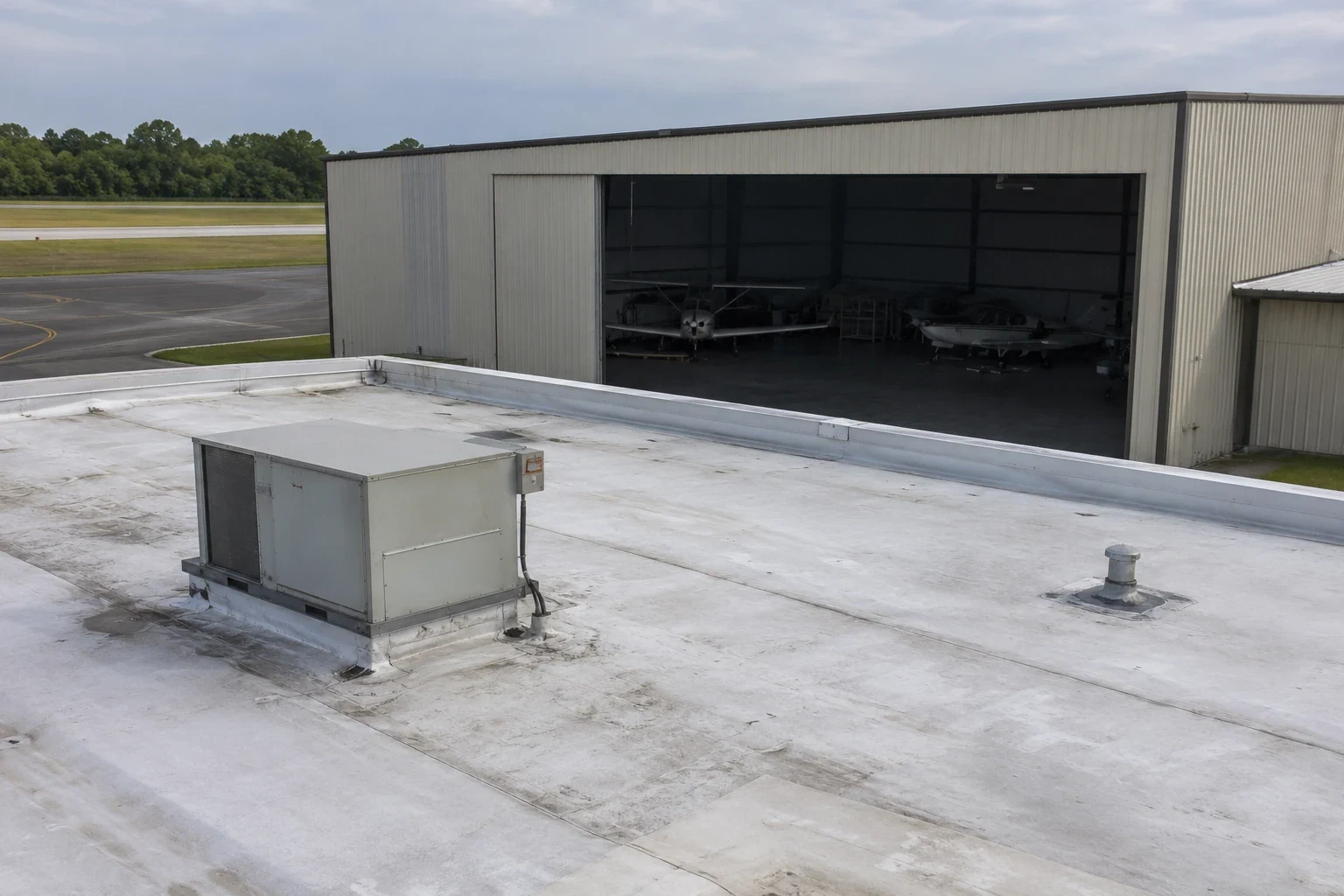
Hotel Roofing in South Fulton, GA
Count the rooms under the leak. That number drives a hotel roof decision more than the size of the hole. Each blocked room is a night of lost revenue and a guest to move. In South Fulton, GA, humid summers make wet ceilings worse. Mold starts quickly in a closed, damp room. So a hotel roof plan names the rooms under every roof zone before any repair is priced.
Building use: wings, towers and amenity roofs
A hotel has several roofs. The guest wing may have a long low-slope roof. A tower or stair penthouse adds a higher roof. A lobby, ballroom or restaurant has a separate roof with its own span. A pool or fitness area adds more. Each sits over a different use.
The city places South Fulton about 15 to 20 minutes by drive from Atlanta and Hartsfield-Jackson airport, and describes South Fulton Parkway as its largest commercial corridor. Roosevelt and Old National highways hold the city's older business districts, and Camp Creek businesses reach into South Fulton. A hotel on any of those streets is still read from the room count down, not from the address.
We tag roof zones by what is below them: rooms, corridors, ballroom, kitchen, laundry, pool. A leak over a kitchen reaches cooking lines. A leak over a ballroom reaches an event. A leak over rooms reaches guests. The tag sets the priority.
Hotel groups with several properties benefit from one format. The hospitality group view ranks roofs by rooms at risk.
Roof mechanism: penetrations, levels and exhaust
Hotels carry a lot of penetrations. Guest-room units, bathroom exhaust, kitchen fans, laundry vents and plumbing stacks all pass through the roof. Each is a flashing detail. A pipe boot cracks in sun. A curb flashing pulls away. A bath exhaust cap rusts through.
Roof levels are the second mechanism. Where a tower wall meets a lower roof, water runs down the wall onto the membrane below. Wall flashing and counterflashing must hold. Kitchen and laundry exhaust adds a third: grease and humid air attack some membranes and can drive moisture into the assembly.
Heat drives the rest. Georgia summers run long, hot and humid, with Atlanta passing 95°F on about seven days in a year. Seams open and sealant dries. Thunderstorm winds that damage property appear in the Peachtree City warning area every month, per the National Weather Service, and edges and corners feel them first. A flashing repair done properly resists both.
Inspection findings: what we find above the rooms
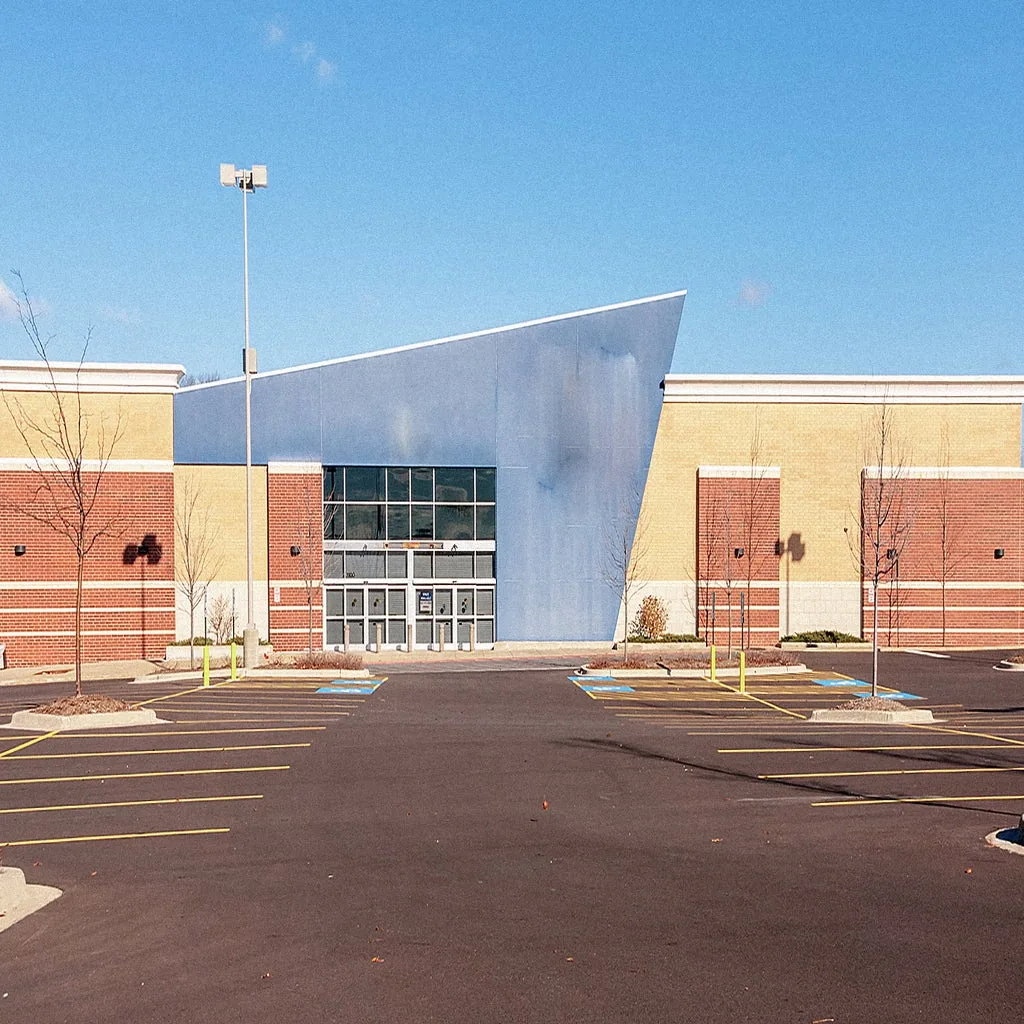
We photograph each roof level, then edges, curbs, drains and penetrations. Each finding is numbered on the plan and tied to the rooms below.
Common hotel findings: failed pipe boots, open wall flashing at tower junctions, cracked sealant at rooftop unit curbs, ponding near drains, and abandoned penetrations from old equipment. We check the roof hatch and the route staff use. Wear along that path is often the first sign of trouble.
Where a ceiling stain or soft spot suggests moisture, an infrared moisture survey maps the wet boundary. A test opening confirms the layers. The wet boundary tells us how many rooms the damage could reach, and the repair boundary follows it.
Once a storm has passed, the walk is repeated against the earlier photographs. Climatology from the weather service counts large hail on about seven days a year in north and central Georgia, with April highest. A hail report only justifies the visit; the roof itself supplies the finding.
Scope options: wing repair, section rebuild, full reroof
A wing repair fixes local defects over a group of rooms. A section rebuild replaces one roof area down to the deck. A full reroof covers every level. The choice follows the moisture map and the age of the layers.
Cost lines include tear-off, insulation, access, lift time, equipment handling, interior protection and weather hold. The room-night effect is also stated. A cheaper plan that blocks more rooms may cost more in lost revenue than a dearer plan that blocks fewer. The owner sees both.
A coating restoration suits a sound, dry membrane with surface wear. It costs less than replacement and avoids tear-off noise over guests. It does not suit wet insulation.
Phasing is the norm. The worst wing goes first. A capital plan sets the order for the rest.
Access and sequencing: guests, events and check-in
Hotels keep guests in the building. Noisy work stays out of sleeping hours. Tear-off over rooms runs in the mid-morning to mid-afternoon window when many rooms are empty. The front desk blocks the rooms below the open section. Check-out and check-in times shape the day.
A section opened in a shift is dried in before the shift ends, which sets the dry-in limit, and a forecast storm closes any section still open. Staging stays clear of the entrance and the porte-cochere. Fencing protects walkways.
Events set fixed dates. A wedding or conference cannot move. We ask for the calendar at the first visit and treat those dates as blackout days.
Equipment handoffs follow a set order. HVAC contractors disconnect units. We lift and rebuild the curb. They reconnect. Guest-room cooling is down for as short a window as the work allows. A leak in progress at a hotel is answered at any hour, holidays too, and the first step is a safe dry-in.
Code coordination: permits and energy
Permitting for a hotel reroof follows the 2024 International Building Code with Georgia Amendments, in force in South Fulton from January 1, 2026, with energy details drawn from Georgia's 2015 code. Brand standards may add requirements. We read them first.
A hotel kitchen raises the grease questions seen in restaurant roofing, and guest floors carry sleeping-occupancy limits much like apartment roofing. A wing near South Fulton Parkway follows the same specification as any other wing, and the closeout packet lists each room block released back to service.
Send us the roof plan, room map and event calendar
How do you protect guests during a hotel reroof?
By sequencing. We open one section at a time, block the rooms below, and dry in before the shift ends. Noisy work runs in the middle of the day. The front desk gets the schedule a week ahead. The plan shows the room-nights affected under each option.
What should happen when a ceiling starts to drip in a guest room?
Move the guest, block the room, and call us. We place a dry-in over the roof opening and protect the interior. A moisture reading above the ceiling decides when the room can return. A painted ceiling does not prove the roof is dry.
Can a hotel roof be coated instead of replaced?
If the membrane is sound and the insulation dry. A moisture survey and cores decide. A coating adds service life at lower cost and avoids tear-off noise. Where the insulation is wet, coating hides the problem. The report states which zones qualify.
Why do tower junctions leak so often?
Water runs down the tower wall onto the lower roof and meets the flashing there. If the counterflashing has lifted or the sealant has failed, water enters behind it. We check the wall termination and the membrane at every junction and rebuild it mechanically, not with sealant alone.
How do events and holidays affect the schedule?
They set blackout dates. We ask for the event calendar at the first visit and place roof work in the gaps. If a busy period falls mid-project, open sections are sealed and work resumes after. The plan names those pauses.