
- Home
- Washington Road Corridor
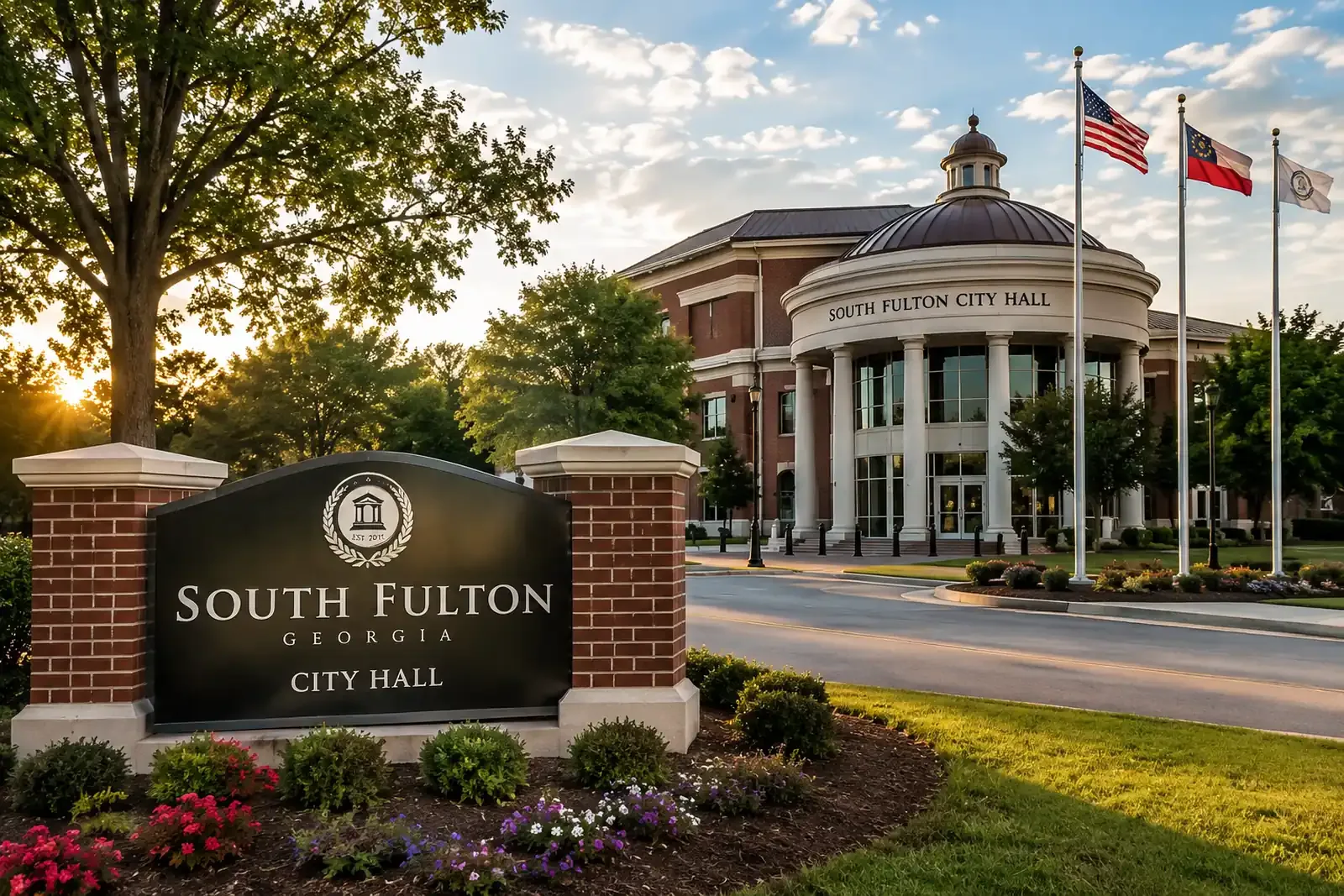
Commercial Roofing on the Washington Road Corridor, South Fulton, GA
Edges decide a roof over a sidewalk. A parapet cap, a gutter, or a downspout above a walkway has two jobs: shed water and hold still in wind. South Fulton and the Atlanta Regional Commission studied Washington Road between Roosevelt Highway and North Commerce Drive. The city says the study documented existing conditions and included a walkability audit with recommended corridor improvements. For a roofer in South Fulton, GA, that points to one habit. Check what the roof edge drops onto before anything else.
The general contractor needs the edge map first. It shows which roof zones shed toward a public walk, which toward a lot, and which toward a neighbor. Scope and staging follow from that map.
Building use: street-facing roofs and the walk below
The study summary does not list building types along the corridor, so the first question to each owner is what sits below the roof and what sits below the roof edge. A shop with a front canopy drops water and debris onto customers. A back-lot warehouse drops it onto trucks. An office with a small parapet drops it onto a staff walk.
That answer sets the priority. Edge metal, coping, and gutters on a street face come first. Field seams on a back roof can wait a season. An edge metal, coping, and gutter scope handles the first group. A wind or leak repair handles the second. Both go on the same roof plan. The plan also shows the trade handoffs: who sets the new cap, who seals the joint, and who inspects the run before the lift leaves. A street-side edge touches signage, lighting, and awnings, and those trades need dates too. When a sign installer drills through coping, the hole belongs on the roof record the same day.
Roof mechanism: wind lifts at the perimeter
Wind does not press evenly on a flat roof. It pulls hardest at corners and edges. The membrane lifts there first. Then the edge metal peels, and the sheet follows. Damaging thunderstorm winds reach this part of Georgia in every month, on roughly 19 days of an average year, with a spring-and-summer peak.
A loose edge is a repair, even when no water has entered. It will move in the next gust. We pull on coping by hand, probe sealant at joints, and photograph the gap between metal and wall. Fastener lines along the edge matter as much as the cap. If the perimeter fasteners are spaced wide, corner pressure finds them. A wind damage repair starts at the perimeter for this reason.
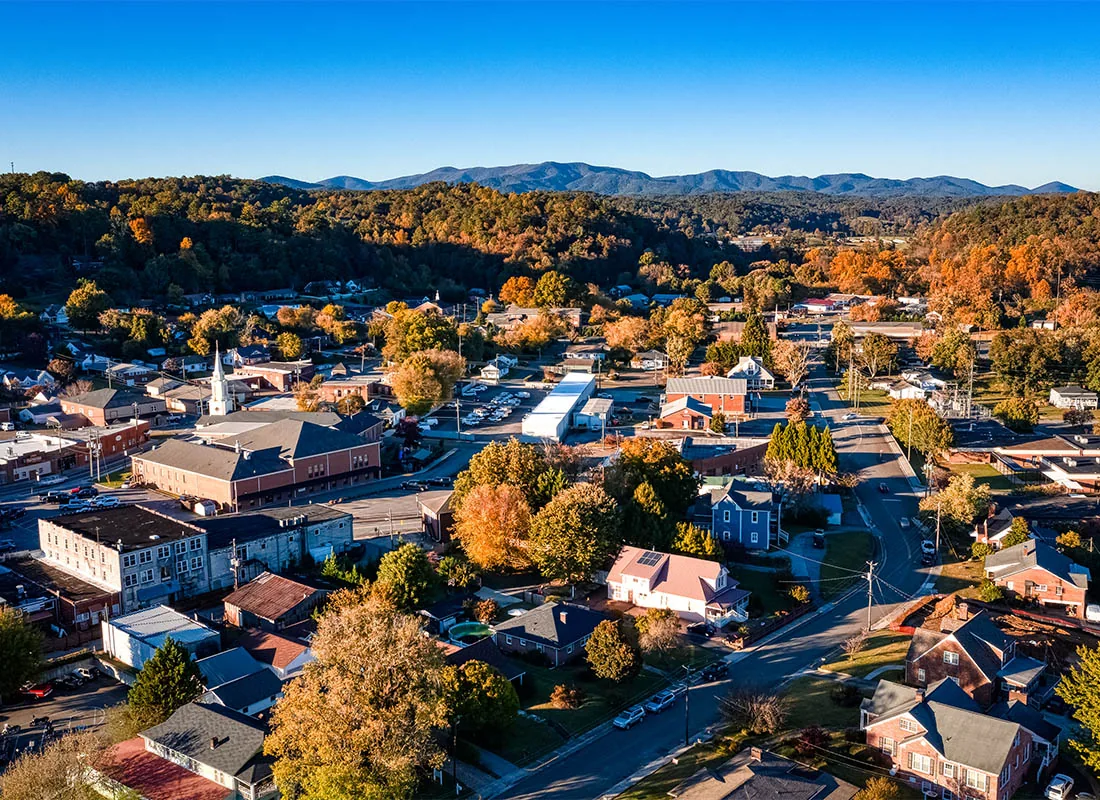
Inspection findings: edges, drains, and downspouts
The walk follows the water. We start at the downspouts and scuppers that shed toward the street or walk. Are they open? Do they discharge onto a splash pad or straight onto concrete? Then we trace each drain plane back across the roof and mark ponding, debris, and soft spots.
Where gutters are present, we check for sag, open joints, and rusted brackets. Interior drains show clogged strainers and cracked bowls. Scuppers show liners set too high. A drain and scupper repair is cheap compared with the damage a clogged outlet causes in a heavy storm. Where board feels soft, we scan for moisture and open a test opening to confirm the layer stack. The opening is small, flashed on the spot, and photographed with a scale. It shows the membrane, the insulation, the cover board if any, and the deck. Without it, a repair is priced against a guess, and guesses at the edge of a wet area are how leaks return.
Scope options: refasten, rebuild the edge, or replace
Most edge problems have three answers. Refasten and reseal the existing metal. Replace the metal and tie the new run into the membrane. Or rebuild the whole perimeter during a roof replacement. The choice follows the age of the system and the wet boundary beneath it.
If the field is sound, edge work alone can restore the roof. Hand-pull tests on the existing membrane near the edge show whether it will accept a new termination. If the sheet is brittle, the new metal needs a stripping ply or a reinforced flashing so the joint does not tear on the first cold snap or the first hot afternoon. If the field is worn and the board is wet, edge work is a stopgap. We say which. We also list what each choice costs in schedule: edge metal can often be done in days, while a replacement needs staging, disposal, and a longer dry-in plan. The GC picks with the numbers in hand.
Access and sequencing: corridor improvements and work zones
A corridor under study can become a corridor under construction. Sidewalk work, lane changes, and utility cuts may reach the front of a building while the roof is open. Coordinate early. Ask the GC which public-way work is scheduled, and place the lift and the dumpster away from it.
Debris control is the first rule over a walk. We use covered chutes or enclosed hoists, set barricades under the work, and keep a spotter at the entry. The same discipline helps on nearby routes into East Point and on the Camp Creek Parkway corridor, where Washington Road is among the routes leading into East Point's commercial core and Camp Creek business area.
Timing: tornado months and the dry-in limit
In March 2018 South Fulton recorded an EF-2 tornado, its track crossing between Fairburn and Campbellton. Tornadoes can touch the region in any month, though most arrive in March, April, and May. Treat that stretch as the busy window for roof edges. Heat matters too. Atlanta's record counts about a week of days above 95 degrees, and hot metal expands, so sealant joints in edge metal are set with that movement in mind. Slotted fasteners and lap joints let each run move without tearing the sealant.
Plan edge repairs for winter, and put a written dry-in limit on each open roof, so a front arriving at midday does not catch a section undone. After a storm, a tornado damage repair or wind check starts with life safety, then the perimeter, then the field. Records from the earlier walk make the comparison quick.
Send the roof plans and the street-side work schedule
Why does the roof edge matter more than the field on a street-facing building?
Wind lifts the perimeter first, and a loose cap can drop onto a public walk. A failing field membrane leaks. A failing edge leaks and falls. We repair the edge first when both are present.
Can edge metal be replaced without replacing the roof?
Yes, if the field is sound and the new metal can be tied into the membrane. We test the field for moisture first. If board is wet, the new edge would sit on a failing roof, and we say so.
How do you keep debris off a sidewalk during tear-off?
Covered chutes, enclosed hoists, barricades under the work, and a spotter at the entry. The staging plan names the walk closure with the GC before the crew mobilizes.
Does the corridor study change what the roof needs?
Not directly. The study describes streets and walking conditions. The roof needs follow from its membrane, drains, and age. But nearby construction can change access, so we ask the GC for the public-way schedule.
What should the GC send to start a corridor scope?
Send roof plans and loading limits first, then occupancy needs and the access window. Drawings of the street face help. A live leak is answered at all hours.