
- Home
- Big-Box Retail Roofing
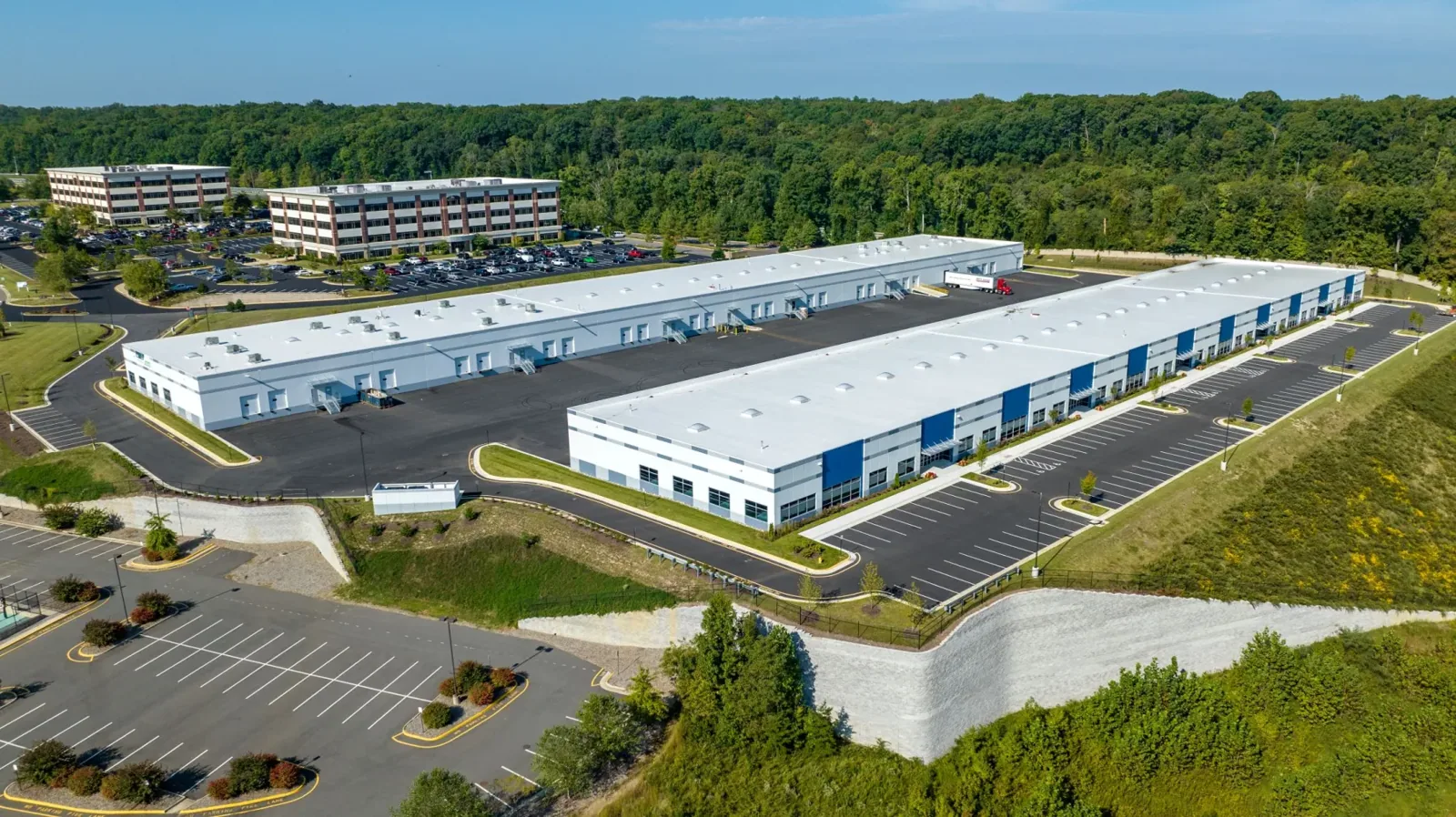
Big-Box Retail Roofing in South Fulton, GA
One store, one deck, one long drainage plane. The sales floor, the stockroom and the lighting all share the same roof, so a leak over any of them reaches the whole operation, while a replacement has no neighboring tenants to schedule around. Thunderstorm wind reaches the South Fulton, GA area in every month, and hot humid summers add heat load on top. A big-box plan starts at two places: the perimeter, where wind lifts, and the drains, where water gathers.
Building use: one floor, rows of equipment, many penetrations
A large store carries a long equipment list overhead. Rooftop units run in rows, exhaust fans vent the stockroom, and a food department adds refrigeration lines that cross the surface. Security, lighting and communications add small penetrations. Every one is a flashing detail waiting to age. Units installed after the roof was laid can sit on curbs flashed to a lesser standard, so the curb schedule is read against the install dates.
Roof zones are tagged by what sits below. Merchandise aisles take a different priority than registers, electrical panels or the receiving dock. A water report from the floor then goes to the right zone without a search, and the repair crew learns which aisle needs a bucket and which needs a tarp.
South Fulton Parkway ranks as the city's largest commercial corridor, and a stretch of the Camp Creek industrial-commercial area lies within its limits, tying the market to the wider Camp Creek employment and retail area. A visit near South Fulton Parkway follows the same steps as a visit anywhere else in town.
Roof mechanism: perimeter uplift and the long drain plane
Wind presses hardest at corners and edges, and on a long low-profile roof the perimeter band is wide. Loose coping or a poorly secured membrane edge starts a peel there. The Peachtree City warning area counts about 19 damaging-wind days a year, spread across all twelve months.
Water is the other mechanism. A broad roof slopes toward a few outlets, so one blocked drain floods a large area. The weight adds up and the water finds seams. A ponding repair is scoped to the cause: a blocked outlet, a sagging deck or a missing tapered section.
Heat comes third. Seven or so days a year top 95°F in Atlanta, and the rest of a Georgia summer stays long and humid. Dark membranes absorb it and seams and sealant age faster. A reflective surface cuts that load, and it is priced beside the standard system at replacement.
Inspection findings: reading a roof in a grid
A roof this wide is walked as a grid. Each cell gets numbered photographs. The sequence runs from the whole roof to each edge, then each row of equipment, then drains and seam runs.
Common findings: loose coping at corners, open seams beside curbs, patches over patches, sealant smeared over failed flashing and cracked pipe boots. Cores show the layers, including whether an earlier recover sits on the deck. Two roofs stacked on one deck hold heat and hide moisture, and a core shows both.
An infrared moisture survey scans the whole deck in hours and draws the wet boundary, and test openings confirm what the scan suggests. That boundary becomes the repair boundary, which keeps the owner from paying to open dry areas.
After hail or wind, the walk repeats against the earlier photographs. Roughly seven days a year bring large hail to north and central Georgia, April most of all, and the comparison separates fresh damage from old wear.
Scope options: section repair, recover or tear-off
Big roofs allow phased scopes. A section rebuild takes one bay down to the deck. A recover lays a new sheet over dry, sound layers. Full tear-off applies when moisture or age runs through the whole roof. A TPO membrane is a common single-ply choice for wide low-slope roofs, with welded seams and a reflective face, but the deck, insulation and drainage still make the decision.
A cover board shields the insulation from hail and foot traffic. Service crews wear paths between the equipment rows, so the board earns its cost along those routes.
Price lines: tear-off, disposal, insulation, access, lift time, equipment handling and weather hold. On a roof this broad the weather hold becomes a real number, so it is shown separately. Walkway pads along service routes carry their own price, a small one next to the wear they prevent.
Access and sequencing: night work and crane days
Stores keep trading, so heavy work moves to nights. Deliveries arrive outside open hours. Staging goes at the back, away from the customer entrance and the receiving dock, and fencing and spotters protect the lot.
Sections are opened one at a time and sealed before dawn, and a forecast storm cancels the open section. Stock gets protection if the manager asks for it.
The crane day is the main handoff. HVAC contractors disconnect the units, we lift them aside, rebuild the curbs and reset the units, and the HVAC contractor reconnects and starts them. Cooling downtime is short and agreed in advance. The crane position, lift order and swing path over the parking lot are drawn on the site plan and shared with the store manager before the first pick.
A leak at two in the morning gets a response, holidays included. The order is dry-in, close-in limit, then the price of the permanent repair.
Code coordination: permits, wind and energy
Plan review in South Fulton uses the 2024 building code set, adopted with Georgia changes at the start of 2026. Georgia's energy code stays at the 2015 IECC with state supplements. Edge attachment and uplift follow the building code. Insulation depth follows the energy code.
Owners with several stores can run one specification across the group. A smaller row of tenants shares the logic in shopping center roofing, and a store with a large refrigerated department shares concerns with grocery store roofing. A wind damage repair starts at the edge metal because uplift begins there.
Send the roof plan, equipment list and store hours
Should a big-box roof be recovered or replaced?
A recover works when the insulation is dry, the deck is sound and the existing layers can carry another sheet. Moisture readings and cores decide. Wet insulation spread across the roof gets trapped by a recover, which leaves tear-off. The report prices both paths with the readings attached.
How are rooftop units lifted without closing the store?
The crane is scheduled at night or before opening. HVAC contractors disconnect the units first. We lift, rebuild each curb and reset, then the HVAC contractor reconnects. Cooling is down for an agreed window, and the owner can arrange temporary cooling if the window runs long.
What causes leaks at roof corners?
Wind pressure peaks there. Loose coping, a lifting membrane edge or a failed corner flashing admits water. Fastener lines and sealant are checked at every corner. A real corner repair re-secures the metal and rebuilds the flashing instead of smearing sealant over the gap.
Can a reflective roof lower the cooling load?
It lowers the roof surface temperature. The effect inside depends on insulation and the equipment. At replacement we price a reflective system beside the standard one so the owner sees installed cost for each. The cool roof option is a decision, not a default.
How is a storm event documented?
The photo walk is repeated and compared with the earlier set. New findings are marked apart from existing conditions, and moisture readings show whether damage reaches the insulation. The owner and an adjuster then read the same record.